fellfolio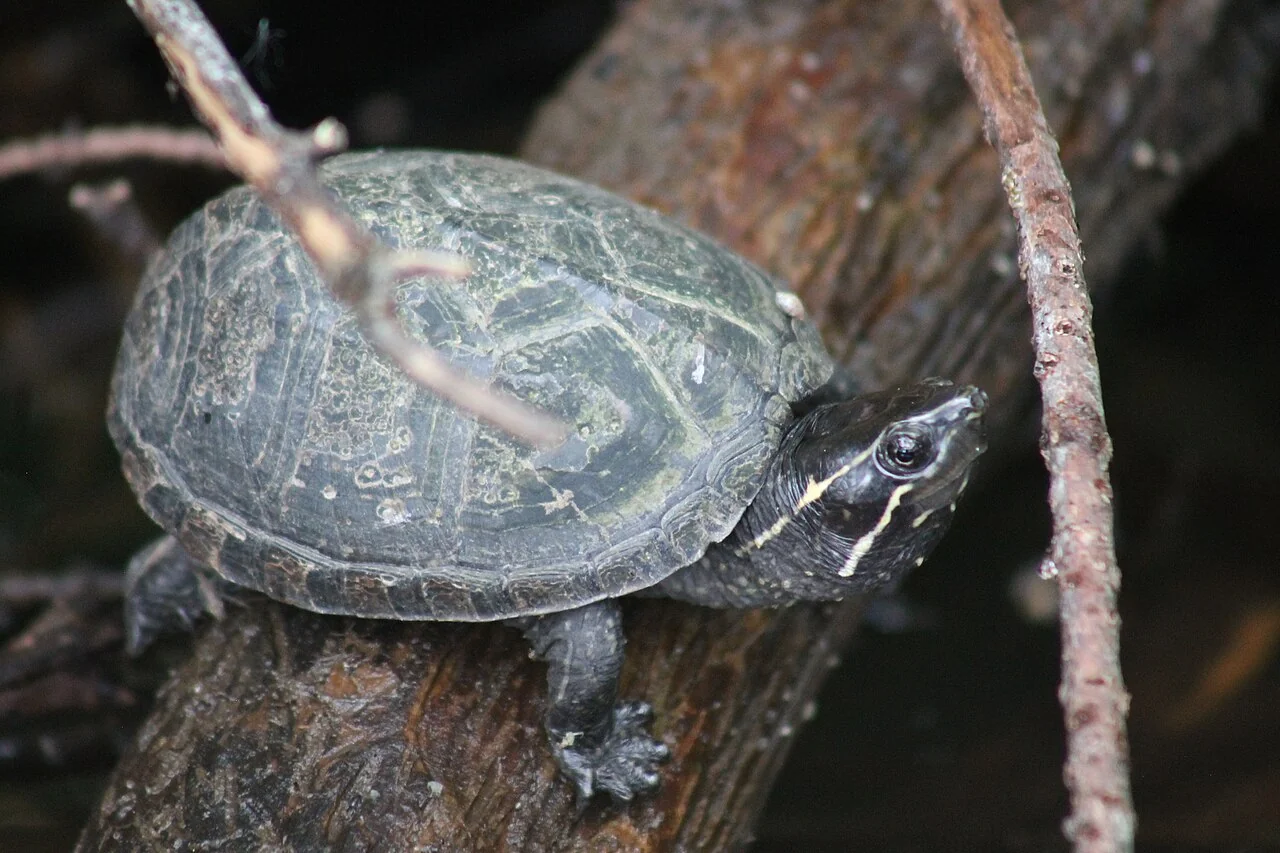
A small turtle from North America
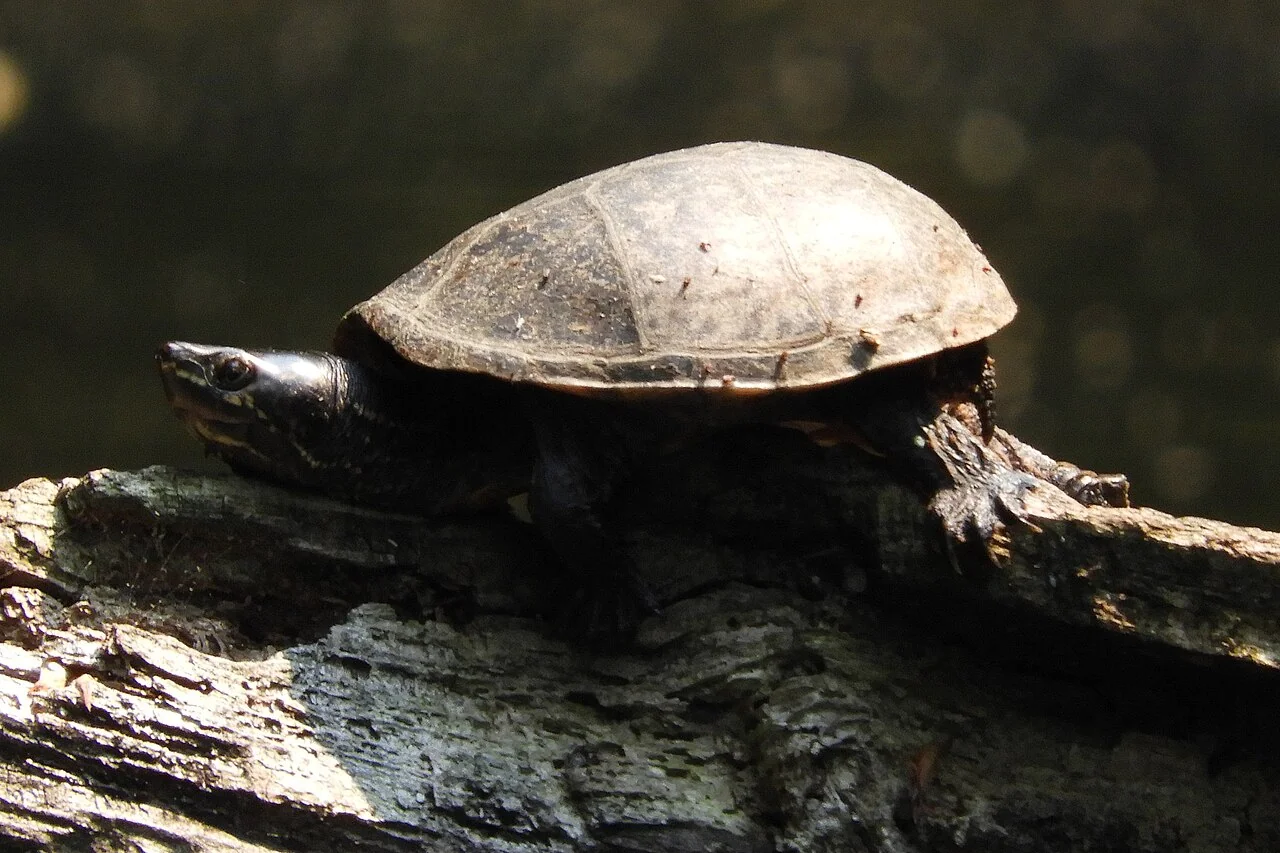
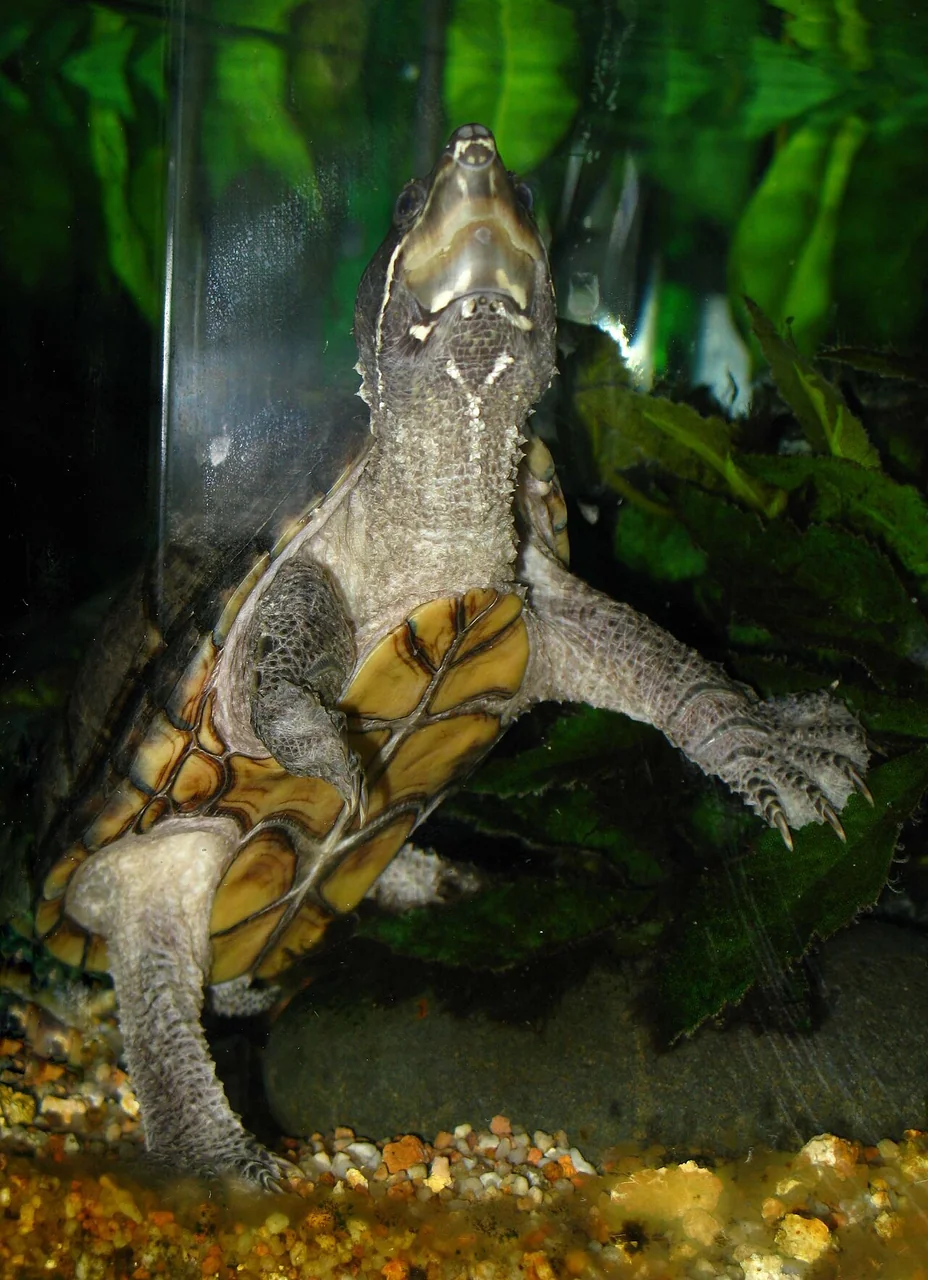
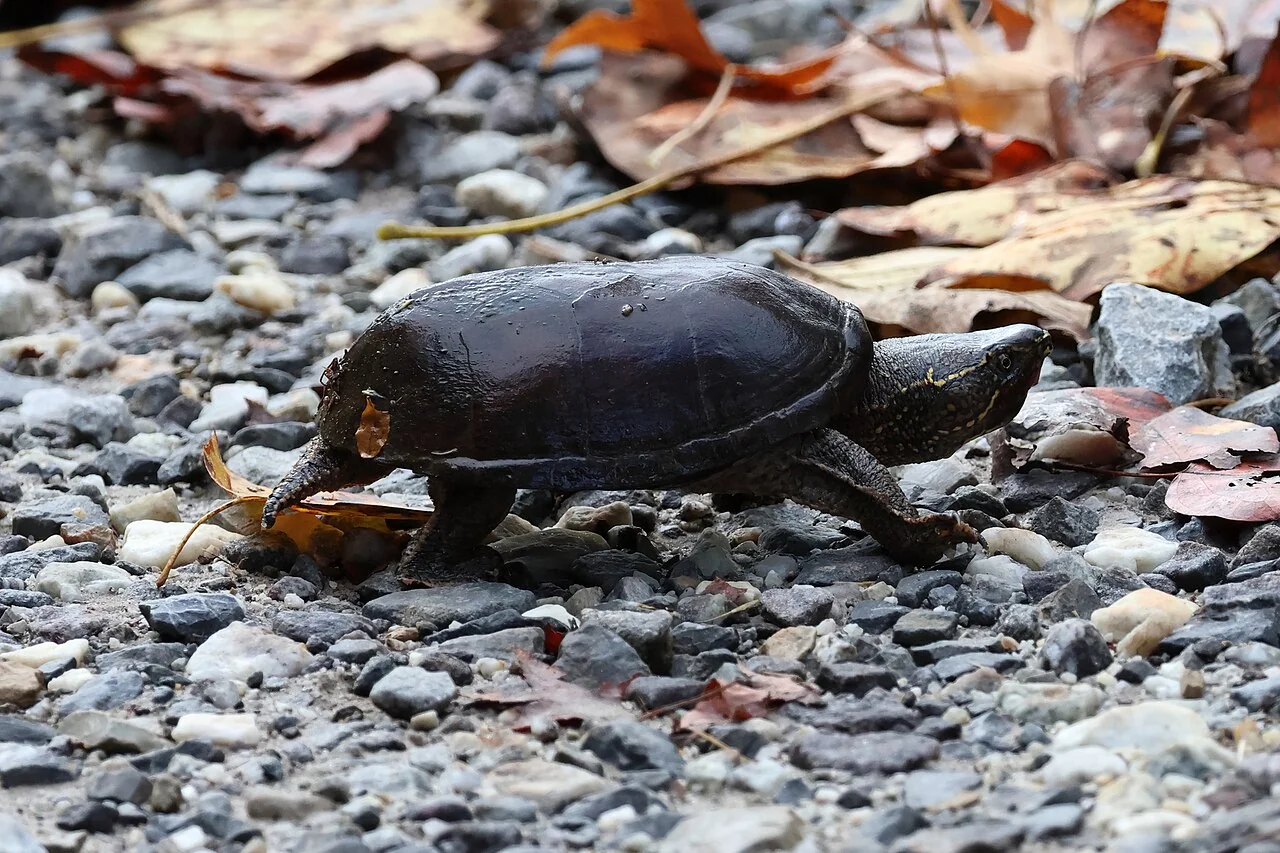
The species occurs from southern Canada into the southern United States. It often inhabits slow or still water with vegetation and soft bottoms. Activity commonly increases towards evening, when a turtle may walk along the bottom looking for food. Two pale stripes along the sides of the head are often conspicuous, although they can fade with age.
Its name comes from a defensive secretion released when the turtle is disturbed. Frequent lifting and unnecessary restraint are best avoided. A persistently unpleasant tank smell calls for a check of food remains and water quality.
Sources for this section
- Common Musk TurtleConnecticut Department of Energy & Environmental Protection
Build routes from the bottom to the surface
RSPCA Brighton specifies an enclosure with a footprint of roughly 120 × 60 cm in its rehoming guidance for an adult. This is a practical husbandry recommendation from that organisation. Secure wood, stable rocks and shelters should create a varied floor without trapping the turtle. Furnishings need to remain stable if the animal digs beneath them.
Alongside deeper swimming water, provide shallow places where the turtle can stand and breathe. Climbing routes towards the surface make the journey easier. For a hatchling in particular, depth needs to suit its strength and the available footholds. An accessible land area must allow the whole turtle to leave the water and become dry.
Read more: Setting up an aquarium for an aquatic turtle
Sources for this section
- Musk Turtle Rehoming PackageRSPCA Brighton Reptile Rescue
- Musk Turtle Care, reviewed December 2024Royal Veterinary College
Plan water temperature, basking and UVB together
For active indoor care, the Royal Veterinary College gives water temperatures of 24 to 26 °C and a basking temperature around 32 °C. Water heaters need protection, with separate thermometers checking conditions. These figures describe active care, not a winter dormancy regime.
Suitable UVB lighting belongs over the accessible basking area, with shade available beside it. The exposure reaching the turtle depends on the lamp, distance, reflector and any intervening mesh. The percentage printed on a box cannot specify a complete installation. Our guide to heat and UVB explains how these parts of the setup work together.
Read more: Getting heat and UVB right in a reptile enclosure
Sources for this section
- Musk Turtle Care, reviewed December 2024Royal Veterinary College
- UVB lighting for reptilesFrances M. Baines, LafeberVet
Give the filter a head start
A biological filter should be cycled before the turtle arrives. This establishes bacteria that process harmful ammonia and then nitrite. A fishless cycle needs an aquarium ammonia product intended for fishless cycling, dosed according to its instructions; simply waiting with clean water does not reliably establish that capacity. Water tests track progress.
Once the tank is occupied, partial water changes remove dissolved waste. Replacement water should be temperature-matched and treated for chlorine where necessary. Biological filter media can be rinsed gently in removed tank water. Replacing all of it at once would also remove many of the helpful bacteria.
Read more: Setting up an aquarium for an aquatic turtle
Sources for this section
Offer a varied diet underwater
Common musk turtles eat mostly animal foods. Suitable complete aquatic turtle pellets can be rotated with earthworms, appropriate feeder insects and snails from controlled feeder supplies, with some suitable plant food offered as well. Meals are served underwater, where the turtle swallows its food. Leftovers should be removed afterwards.
Dried shrimp or pieces of meat alone cannot provide a balanced diet. Muscle meat, for example, is low in calcium relative to phosphorus. Young turtles often need small daily meals, while adults usually eat considerably less often. The Louisiana veterinary care sheet suggests two to three meals weekly as an adult starting point. Portions and frequency should reflect the individual animal’s growth, weight and condition.
Read more: Feeding reptiles: choose food for the species
Sources for this section
- Musk Turtle CareChicago Exotics Animal Hospital
- Feeding Aquatic TurtlesVCA Animal Hospitals
- Mud / Musk Turtle Care SheetAvian & Exotic Animal Hospital of Louisiana
Plan beyond the hatchling stage
An individual enclosure makes feeding and health easier to follow. Musk turtles can harass or bite each other, so another turtle is not an automatic addition. As the animal grows, check that shelters, climbing routes and open floor space still suit its size.
Mature females need access to an appropriate nesting area with diggable substrate even when offspring are not wanted. A dry rock cannot replace that space. Without a suitable laying site, a female may have difficulty depositing her eggs.
In northern parts of their natural range, common musk turtles undergo a cold dormant period. A captive animal’s annual cycle should be planned with a reptile veterinarian, taking its origin, health and previous conditions into account. Allowing an indoor aquarium to cool unpredictably does not provide controlled seasonal care.
Read more: Caring for reptiles as they grow and age · Seasonal rest in reptiles: preparation and monitoring
Sources for this section
- Mud / Musk Turtle Care SheetAvian & Exotic Animal Hospital of Louisiana
- Nesting Sites for Aquatic TurtlesTortoise Trust, Nadine Gill
- Common Musk TurtleConnecticut Department of Energy & Environmental Protection
Notice changes and keep equipment separate
Floating at an angle, gasping or breathing with an open mouth calls for immediate veterinary attention. Soft, damaged or foul-smelling areas of shell also need prompt examination. Dated photographs and notes about appetite or behaviour changes help explain what has happened.
Apparently healthy turtles can carry Salmonella. Hands should be washed with soap after contact with the animal, its water or its furnishings. Aquarium buckets and brushes should be kept apart from kitchen equipment and cleaned away from food preparation areas.
Sources for this section
- Common Diseases of Aquatic TurtlesVCA Animal Hospitals
- Reptiles and AmphibiansCenters for Disease Control and Prevention
Common questions
Does a musk turtle always smell strongly?
No. Its defensive secretion is associated with disturbance. A persistently unpleasant tank smell calls for checks of food remains, water quality and filter maintenance.
Does it need a companion?
Keeping one turtle is a practical option. Other turtles can be injured or excluded from food, so housing two requires more than a little extra space.
Can it live in an outdoor pond throughout the year?
The species name alone cannot answer that. Origin, local climate, pond security and a properly planned annual cycle all matter. The temperatures in this portrait apply to active indoor care.
A closer look
Sources and photo credit
- Common Musk TurtleMaryland Zoo
- Common Musk TurtleConnecticut Department of Energy & Environmental Protection
- Musk Turtle Rehoming PackageRSPCA Brighton Reptile Rescue
- Musk Turtle Care, reviewed December 2024Royal Veterinary College
- UVB lighting for reptilesFrances M. Baines, LafeberVet
- Musk Turtle CareChicago Exotics Animal Hospital
- Feeding Aquatic TurtlesVCA Animal Hospitals
- Mud / Musk Turtle Care SheetAvian & Exotic Animal Hospital of Louisiana
- How to set up and look after a freshwater aquariumOATA
- Nesting Sites for Aquatic TurtlesTortoise Trust, Nadine Gill
- Common Diseases of Aquatic TurtlesVCA Animal Hospitals
- Reptiles and AmphibiansCenters for Disease Control and Prevention
Photo: Sternotherus odoratus 284993684.jpg · Dominic · CC BY 4.0. Resized and converted to WebP; scene unchanged.
Photo: Sternotherus odoratus 285689306.jpg · Elizabeth Green · CC BY 4.0. Resized and converted to WebP; scene unchanged.
Photo: Sternotherus odoratus1.jpg · Laurent Lebois · CC BY 2.0. Resized and converted to WebP; scene unchanged.
Photo: Sternotherus odoratus 434204746.jpg · Andre Knocklein · CC BY 4.0. Resized and converted to WebP; scene unchanged.