 fellfolio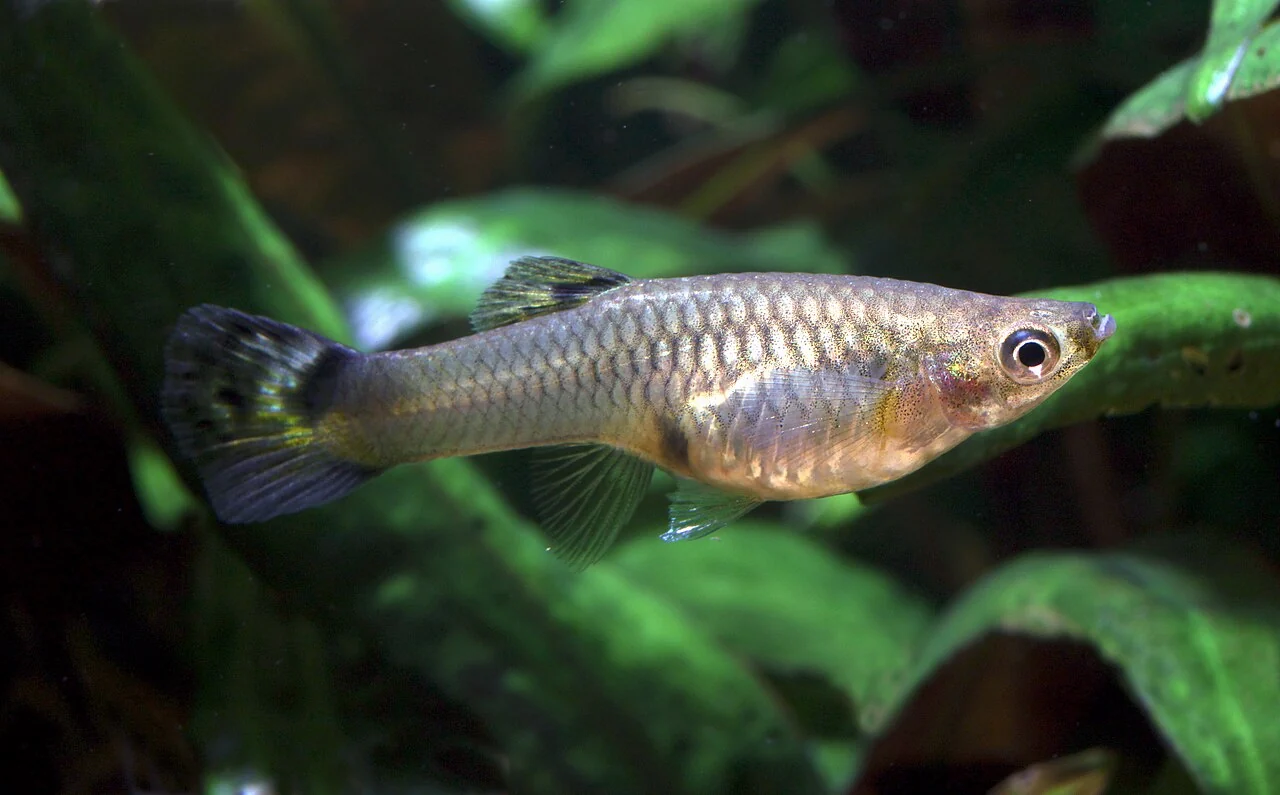
Small fish with varied fins
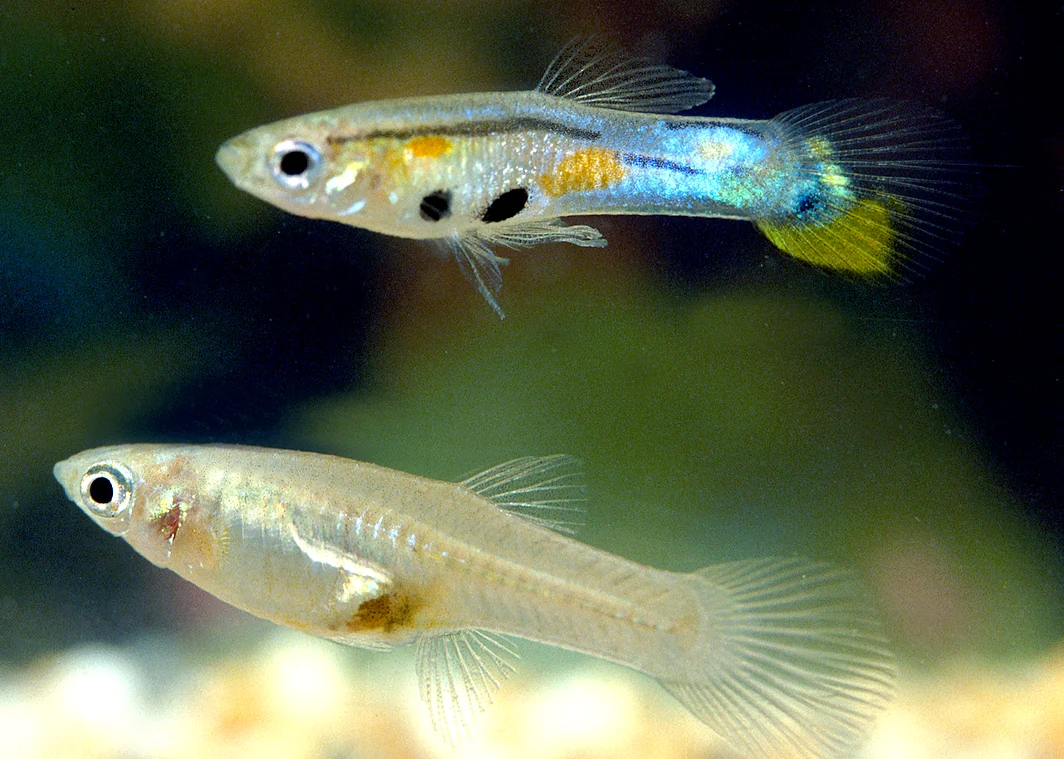
Males often carry brightly coloured tails, while females are usually larger and less conspicuous. Long selected fins can be damaged by sharp furnishings. Look for fish of both sexes that swim freely, breathe steadily and have intact fins. Every fish selected for the group should appear healthy.
Endler guppies are smaller, around two and a half centimetres, and have their own scientific name. Shop lines and labels can be inconsistent. Anyone intending to keep a particular species or preserve a breeding line should establish the identity before purchase.
Sources for this section
- How to look after guppies and molliesOATA
- Freshwater Ornamental Fish Commonly Cultured in FloridaUniversity of Florida IFAS Extension
Mix planted shelter with open routes
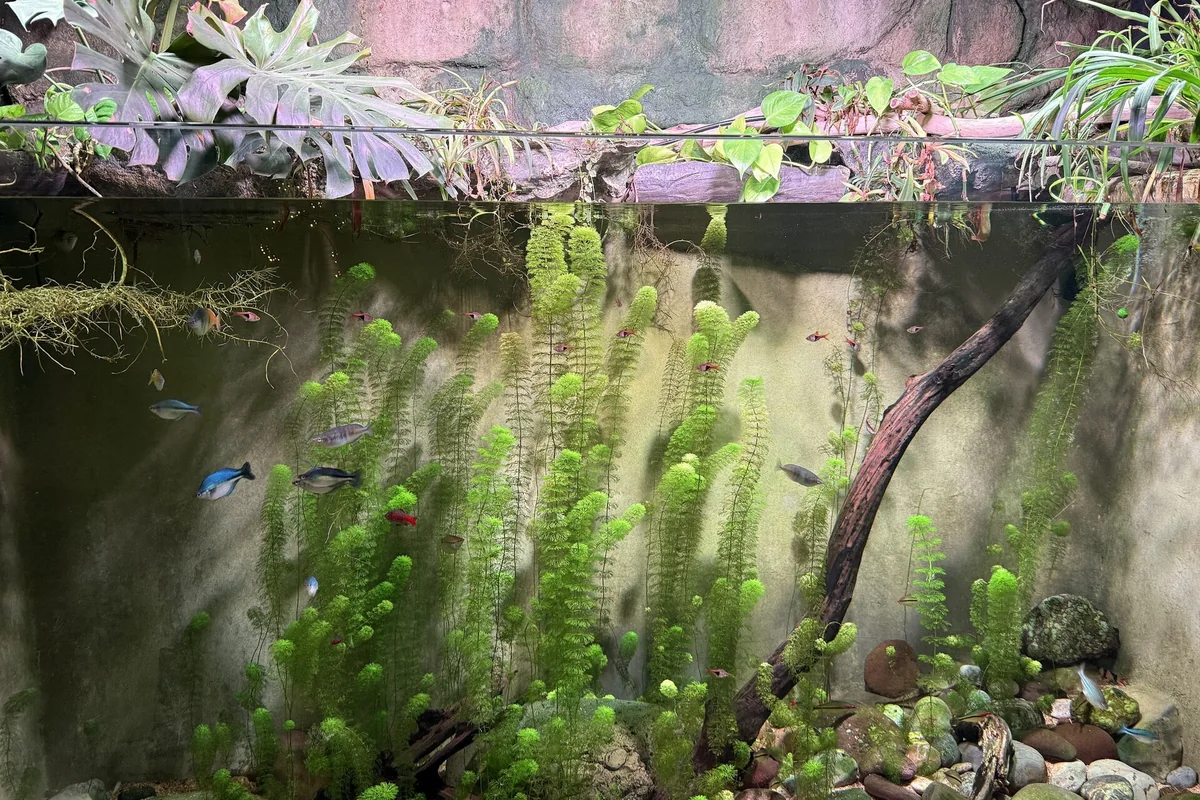
OATA recommends at least 45 litres for a small guppy group. A longer tank with usable swimming space works better than a tall narrow vessel of the same volume. Dense plants provide refuge for pursued fish and fry, while open water in front lets the group move together.
Filtration is essential, but long-finned males should not spend the day pushing against a strong outflow. A spread outlet can create quieter areas. Furnishings should have no sharp edges. A secure lid or equivalent cover prevents a jumping fish from ending up out of water.
Sources for this section
Measure minerals as well as temperature
The UK ornamental aquatics trade association OATA recommends medium-hard water, around 8 to 18 degrees German general hardness, and pH 7 to 8. Hardness measures dissolved calcium and magnesium, while pH indicates how acidic or alkaline the water is. Check both in the local supply. Captive lines may be accustomed to different conditions, but abrupt changes remain risky.
The biological filter should be cycled before guppies arrive. An aquarium product intended as an ammonia source for fishless cycling can be dosed to its instructions. After a dose, tests should show ammonia and nitrite returning to zero through the product’s testing sequence. Partial water changes then remove dissolved waste; condition replacement water where chlorine or chloramine is present.
Read more: Setting up a freshwater aquarium: tank, filter and water · Caring for an aquarium: watch the water, filter and fish
Sources for this section
Offer small varied meals
A complete food in suitably small pieces, including plant ingredients, is a useful base. OATA suggests small live or frozen foods such as daphnia as additions. Pieces must fit the mouth, and feeding in more than one place makes it easier to see whether quieter fish eat.
Remove leftovers before they decay. Overfeeding worsens water quality, especially in a small tank. Body condition and activity are better guides than begging at the glass. A fish that loses interest in food or falls behind its group deserves closer attention.
Sources for this section
- How to look after guppies and molliesOATA
- Routine Health Care of FishMerck Veterinary Manual
Make space for young before they appear
Guppies are livebearers: females release free-swimming young. Dense plants can help more fry survive than first expected. A small mixed group may therefore grow quickly. Decide in advance whether another suitable tank and reliable new homes are available.
Females can produce further broods after a previous mating, even when separated from males. Sex separation does not necessarily stop births immediately. Fry need suitably fine food and dependable water care; leaving every youngster in the original aquarium may create overcrowding.
Sources for this section
- How to look after guppies and molliesOATA
- Freshwater Ornamental Fish Commonly Cultured in FloridaUniversity of Florida IFAS Extension
Watch fins, breathing and group behaviour
Torn or clamped fins, rubbing, new spots, unusual breathing or a fish suddenly lagging behind call for prompt examination of fish and water. Gasping or marked weakness needs immediate aquatic-veterinary help. Appearance alone cannot distinguish poor water, infection and injury with confidence.
New fish can bring pathogens even when they look well. A prepared quarantine space and separate equipment are sensible for an established aquarium. Test records and dated images help an aquatic veterinarian understand the sequence of changes.
Sources for this section
- How to look after guppies and molliesOATA
- Routine Health Care of FishMerck Veterinary Manual
Common questions
How many guppies should live together?
OATA advises at least three. A mixed group needs more females than males; adequate space and attention to any harassed fish still matter.
Can guppies live with neon tetras?
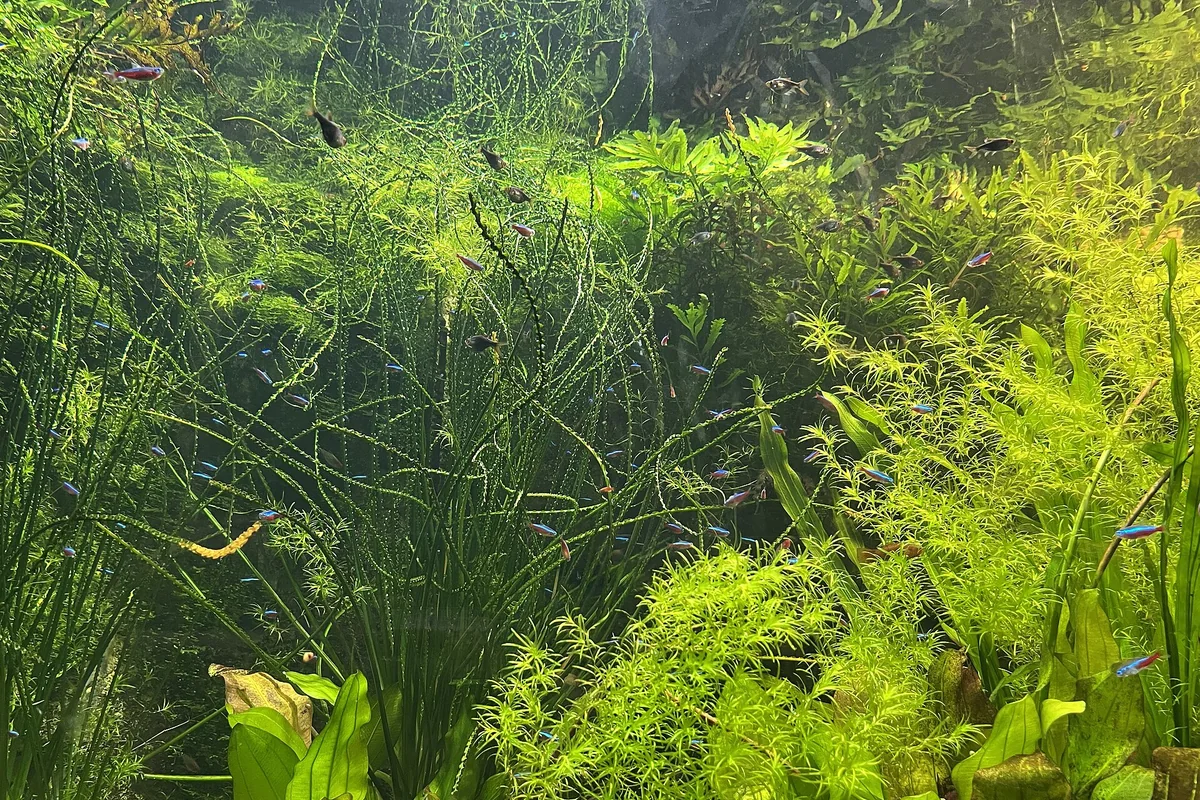
It is not a universally suitable mix. Guppies are often kept in more mineral-rich water, while neons usually prefer softer water. The actual conditions and both species’ requirements need checking first.
Will a separated female definitely stop having fry?
Not necessarily. Females may have further young after an earlier mating. Space and care for them must still be planned.
A closer look
Sources and photo credit
- How to look after guppies and molliesOATA
- Freshwater Ornamental Fish Commonly Cultured in FloridaUniversity of Florida IFAS Extension
- Keeping pet fish togetherRSPCA
- How to set up and look after a freshwater aquariumOATA
- Routine Health Care of FishMerck Veterinary Manual
Photo: Guppy Poecilia reticulata.jpg · Holger Krisp · CC BY 3.0. Converted to WebP; scene unchanged.
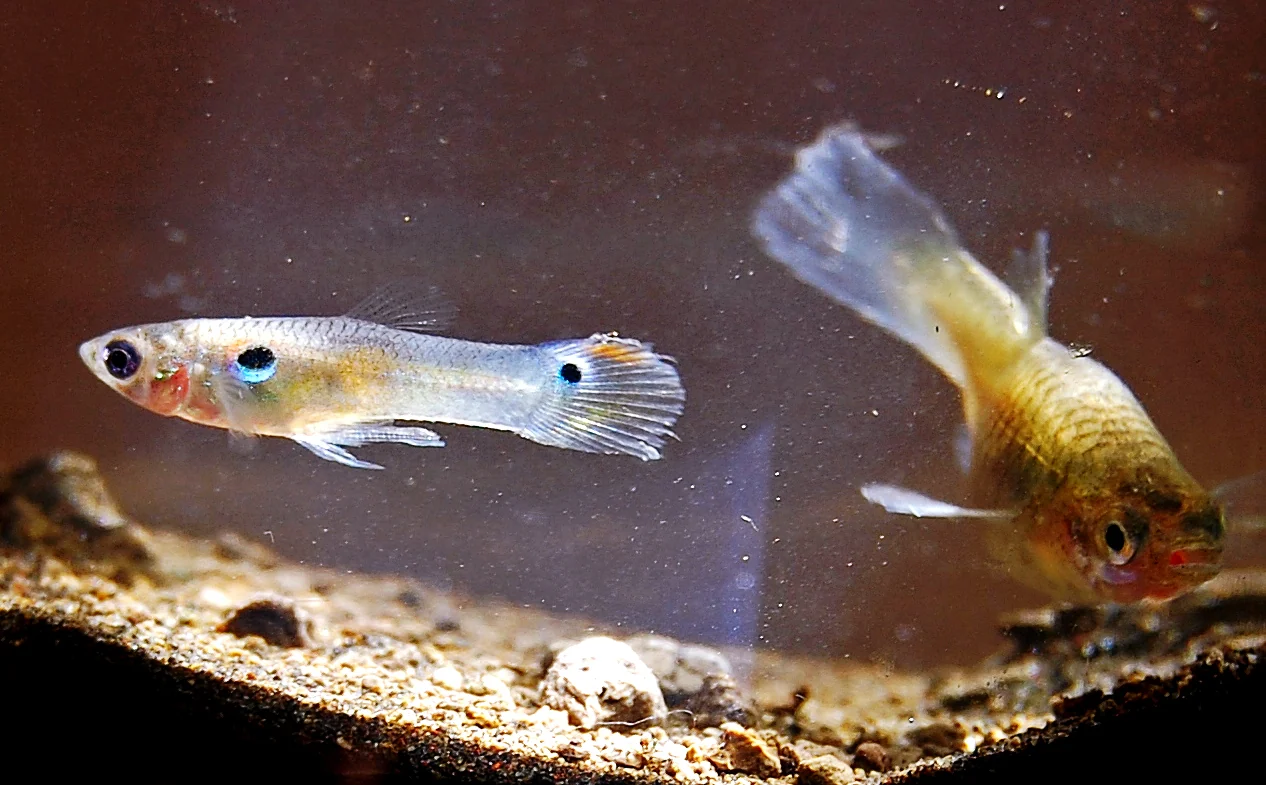
Photo: Poecilia retic 090519-8688 kdBdk.jpg · Wibowo Djatmiko ( Wie146 ) · CC BY-SA 3.0. Converted to WebP; scene unchanged.
Photo: Trinidadian guppy (Poecilia reticulata) male and female.png · Amy E. Deacon, Hideyasu Shimadzu, Maria Dornelas, Indar W. Ramnarine and Anne E. Magurran; 2017 colour adjustment by Togabi · CC BY 4.0. Converted to WebP; scene unchanged.
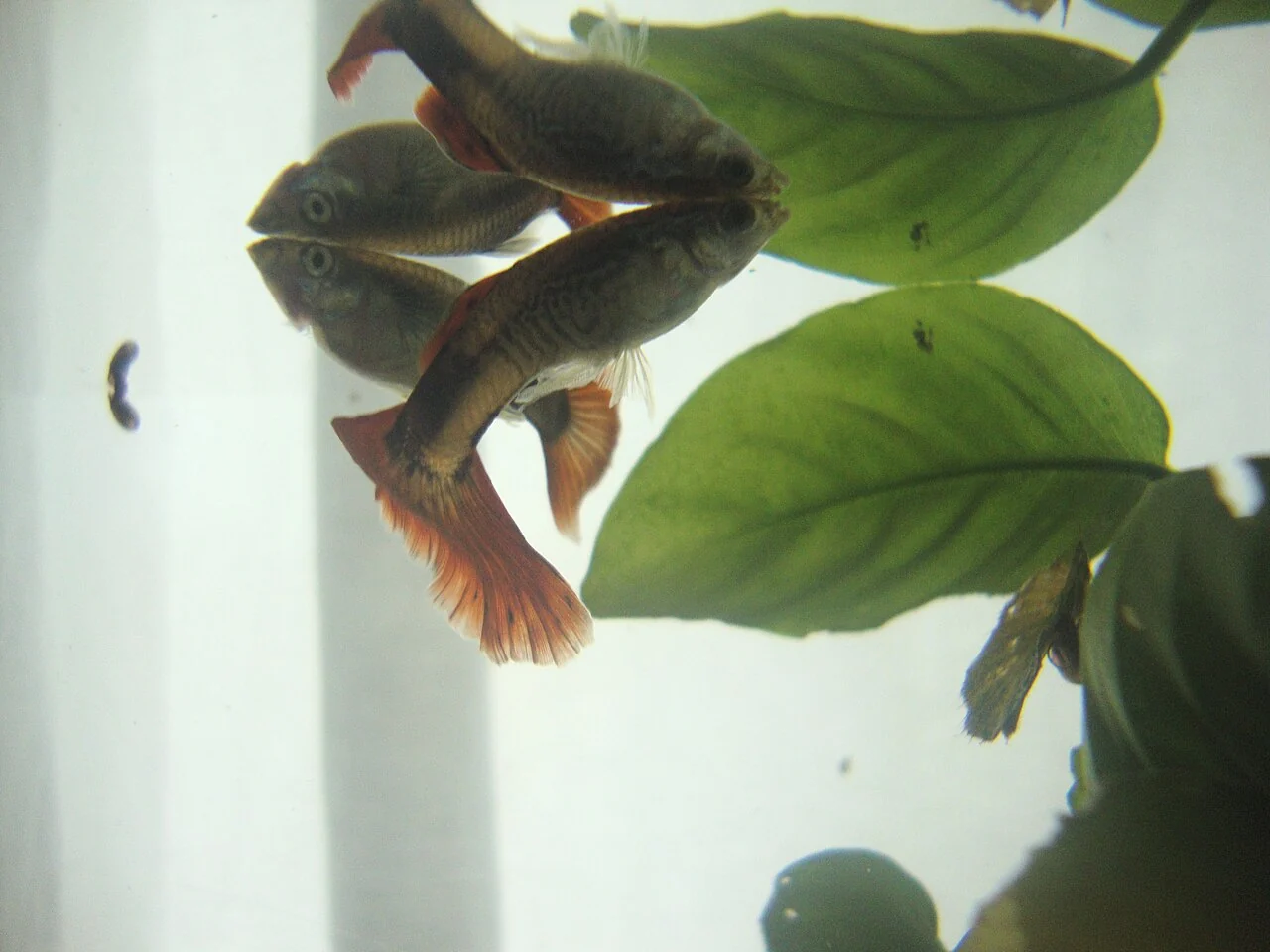
Photo: Poecilia reticulata.JPG · El fosilmaníaco · CC BY-SA 3.0. Converted to WebP; scene unchanged.


_male_and_female.png)

Provide company without constant pursuit
Guppies need their own kind. OATA advises at least three, with roughly two females per male in mixed groups so male attention is spread out. Still watch for a female that is continually pursued or prevented from feeding. More fish also require more room and filter capacity.
An all-male group avoids breeding but some males may pursue others or control access to food. Plants and several open routes allow fish to move away. Potential tankmates need compatible temperature, hardness and activity, with no fin-nipping risk. Include the fish already living in the tank when planning any new additions.
Read more: Six common aquarium fish and the differences that matter
Sources for this section