fellfolio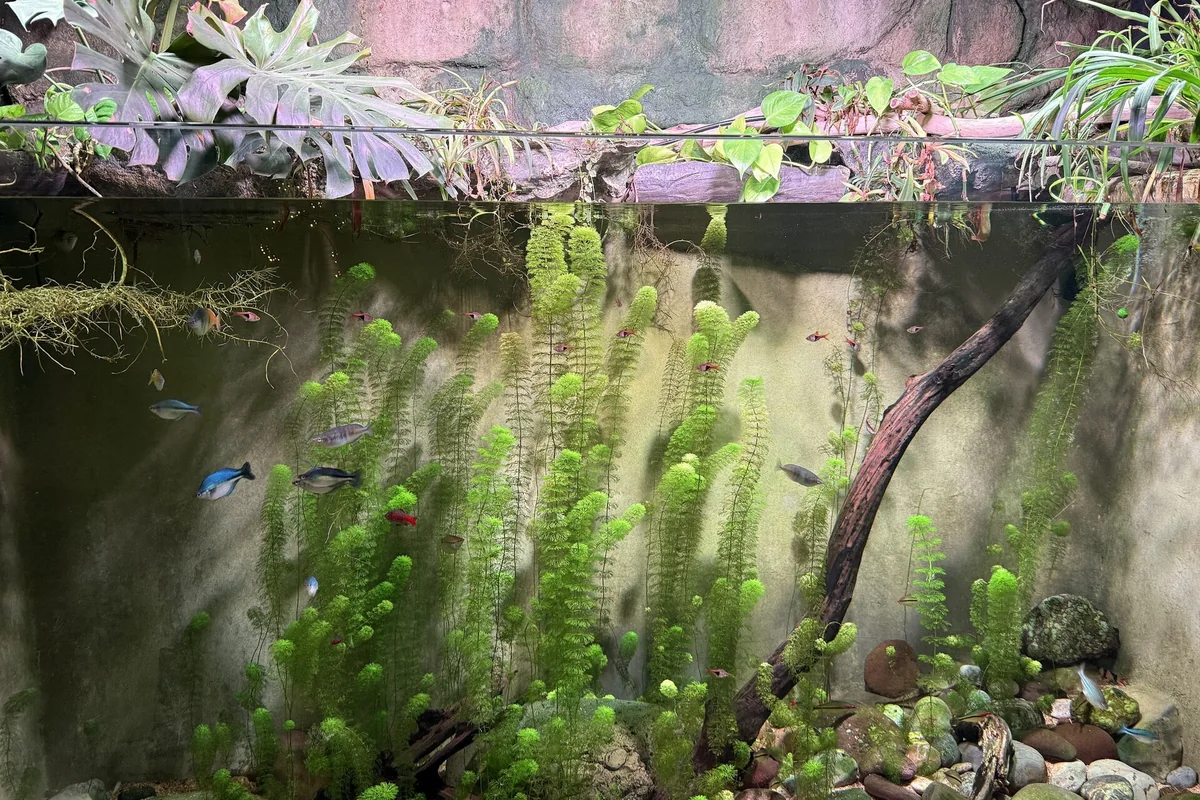
Choose the tank around the fish
A goldfish, a shoal of small tetras and a single betta have different needs. Their adult size, swimming style, social group and preferred water conditions should be clear before a tank is bought. Small bowls and decorative jars offer neither stable water volume nor room for an effective filter. The RSPCA suggests a tank above roughly 40 litres as a starting point; many planned species need considerably more.
A broad surface supports gas exchange and gives fish room to swim. A filled aquarium is heavy and needs a strong, level support. A site away from direct sun, radiators and airborne sprays is easier to manage. What matters is the fishes' future welfare, not how many juveniles fit on the first day.
Fit filtration, lighting and heat for the plan
A filter traps visible particles and also supplies surface area for bacteria. That biological work is the main defence against invisible waste. The filter needs to run continuously and be suited to the tank and intended stock. Plants and stable hiding places add structure while preserving open swimming space. Decorations should have no sharp edges or gaps that could trap fish.
Most tropical species need a controlled heater set for their particular requirements. A separate thermometer checks whether its built-in thermostat is accurate. Lighting follows a regular day-night rhythm and is switched off overnight. Once substrate, plants, equipment and treated water are in place, the actual biological cycling can begin.
What happens inside a maturing filter
Waste from food and fish releases ammonia. One group of bacteria converts it into nitrite; another turns nitrite into nitrate. Ammonia and nitrite are dangerous to fish even at low concentrations. Nitrate is less immediately toxic but can still build up, so later water changes help control it. This sequence is the nitrogen cycle. Clear-looking water cannot tell you whether it is working.
During fishless cycling, the filter runs without fish. Dose an ammonia-based aquarium maturation product according to its instructions; household cleaners or ammonia mixtures with additives do not belong in the tank. A bacterial starter may help. Tests first show an ammonia rise, then a nitrite rise. Both readings should repeatedly remain at zero under continued load before fish arrive. The RSPCA notes that cycling takes at least two weeks; measured results determine readiness.
Use tests to reveal what you cannot see
Reliable ammonia and nitrite tests are basic equipment. Neither substance should be detectable before fish are added. Testing after arrival can reveal a filter struggling with new waste. Temperature, hardness and acidity should also be checked against the intended species; water that suits one fish may not suit another.
Tap water may contain chlorine or chloramine depending on the local supply. Where present, these should be treated with a suitable conditioner before the water enters the tank. At later water changes, bring new water close to tank temperature. If filter media is clogged, gently swish it in water removed from the aquarium; a thorough rinse under the tap may remove much of the useful bacterial community.
Introduce the first fish calmly
Each new fish increases the amount of waste the filter must process. Planned social groups should be added with filter capacity in mind, while the fish are observed and the water is tested after each change. At a retailer, fish swimming freely without wounds in clean, well-kept tanks offer a better starting point than animals with lesions, clamped fins or unusual breathing.
Transport time should be kept short. The RSPCA recommends floating the closed bag in a darkened tank to bring it to temperature, then transferring fish with a net without pouring transport water into the aquarium. A quiet period afterwards allows the fish to settle. Appetite, swimming and water tests over the following days reveal more than an instantly crowded display tank.
Begin a simple care routine immediately
Each day, check temperature, filter operation, fish and uneaten food. Regular partial water changes remove waste that filtration does not eliminate. The appropriate amount depends on the tank, stock and measured conditions. Steady maintenance of water and filter keeps the system working.
If ammonia or nitrite reappears after adding fish, the tank needs prompt attention: keep testing, review feeding and make partial changes with correctly prepared water. Persistent surface gasping, unbalanced swimming or a shoaling fish withdrawing from its group can signal trouble. A vet who treats fish or an experienced aquatic specialist can help assess the cause and the next steps.
Common questions
Is leaving a tank running for two weeks enough?
No. Time alone does not show that biological filtration works. After cycling under load, ammonia and nitrite should have returned to zero before fish arrive.
Why can crystal-clear water still be unsafe?
Ammonia and nitrite are invisible. Only water tests can show whether they are present; clarity is not a water-quality reading.
Sources and photo credit
- Choosing an aquarium for pet fishRSPCA
- Keeping fish as petsRSPCA
- Keeping pet fish togetherRSPCA
- How to set up and look after a freshwater tank / aquariumOrnamental Aquatic Trade Association
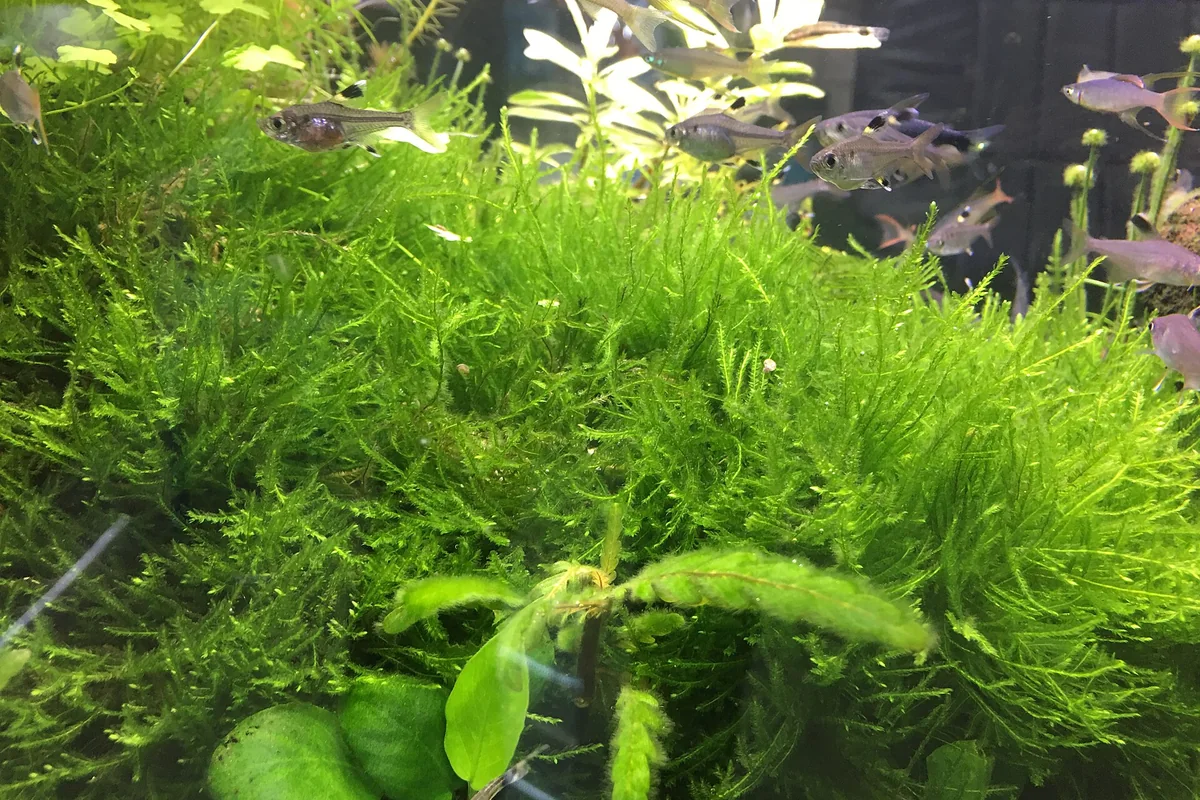
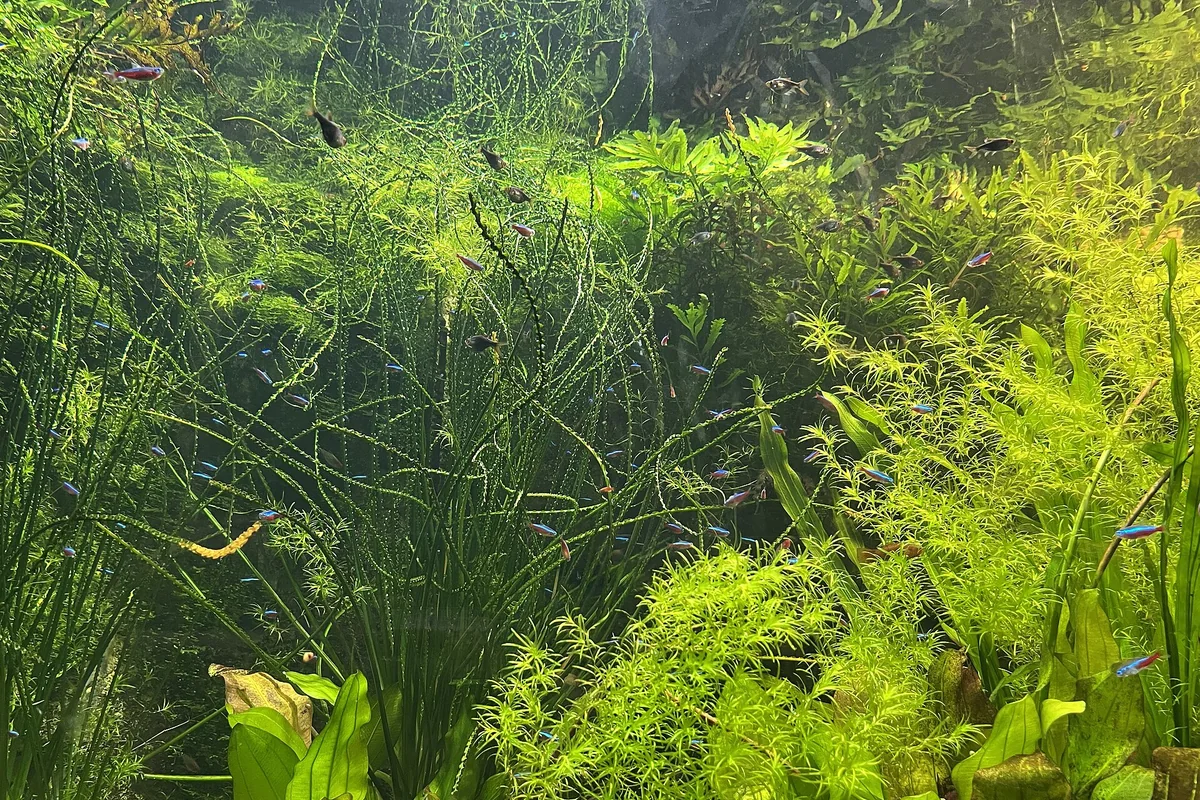
Photo: A freshwater aquarium containing plants and small fish · Netha Hussain · CC0 1.0. Cropped, resized and converted to WebP