fellfolio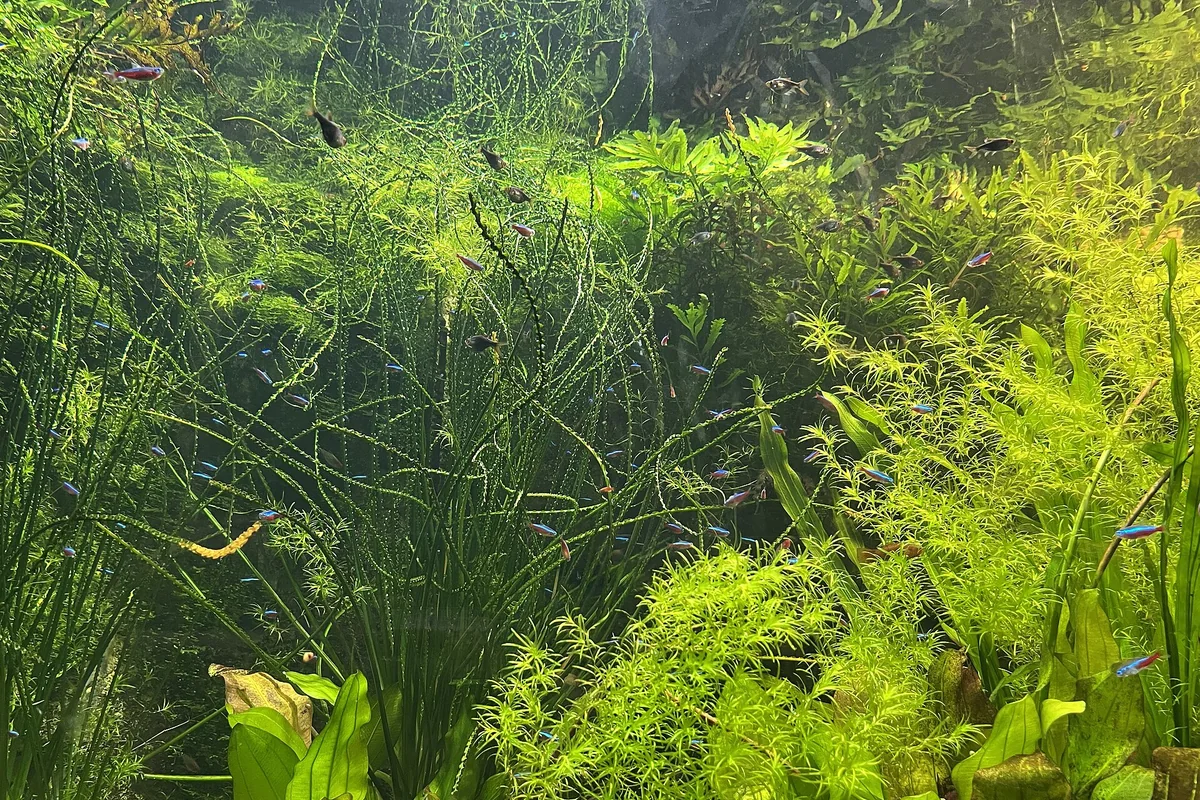
Guppy: colourful fish with a breeding plan
Poecilia reticulata comes in many colours and fin shapes. Males often attract attention first, while females are usually more substantial in build. Guppies favour relatively mineral-rich water. Sharp decorations and neighbours that nip fins are poor choices for long-finned forms. Areas with gentler flow allow them to move without constantly swimming against a current.
Guppies give birth to live young, so a small mixed group can soon produce a larger population. It helps to decide how offspring will be managed before buying the adults. More females than males in mixed groups can reduce persistent attention towards individual females. An all-male group prevents breeding, but still needs suitable space and observation of interactions.
Sources for this section
- How to look after guppies and molliesOATA
- Freshwater Ornamental Fish Commonly Cultured in FloridaUniversity of Florida IFAS Extension
Platy: allow for adult size and offspring
Platies are often labelled Xiphophorus maculatus, although other Xiphophorus species may contribute to domestic varieties. Their deeper body shape distinguishes them from slender guppies. Adults occupy more space than the small youngsters in a shop initially suggest. Planted shelter works well alongside an open area for swimming.
Platies are livebearers too. Before buying them, it is worth planning space for possible offspring and finding out who could provide suitable homes as they grow. More fish increase both the space needed and the load on the biological filter. Anyone hoping to avoid breeding should have the sexes reliably identified and discuss a suitable group.
Sources for this section
- How to look after platies and swordtailsOATA
- Freshwater Ornamental Fish Commonly Cultured in FloridaUniversity of Florida IFAS Extension
Zebra danio: plan for movement
Horizontal stripes make Danio rerio easy to recognise. Zebra danios reach roughly five centimetres and spend much of their time moving. Their group benefits from a long, usable stretch of open water. A tall, narrow water column offers less swimming distance than a tank with a generous footprint.
At least six fish provide a starting point for group planning, with a larger group possible where the aquarium can support it. Their activity also matters when choosing neighbours. Constant movement may unsettle very shy fish. Zebra danios scatter eggs, which adults may eat, so raising young successfully requires additional preparation rather than simply expecting fry to thrive in the community.
Sources for this section
- How to look after danios and white cloud mountain minnowsOATA
- Zebra DanioAquarium Industries
Neon tetra: small fish need a proper group
Paracheirodon innesi is particularly striking moving among plants with others of its kind. Keeping isolated individuals as splashes of colour in different tanks does not meet that social need. Around eight to ten can be a useful initial group to plan for, provided tank length and the rest of the stocking are appropriate. Neighbours large enough to swallow them are unsuitable.
Neon tetras favour relatively soft water and moderate warmth. Seriously Fish gives 21 to 25 °C for this species. Plants and shaded areas provide retreat without filling all the swimming space. The similarly named cardinal tetra is a different species. Checking the scientific name avoids treating related fish as interchangeable when deciding on water conditions.
Sources for this section
- Paracheirodon innesiSeriously Fish
- How to look after tetras and pencilfishOATA
Harlequin rasbora: plants and peaceful company
Trigonostigma heteromorpha has a dark wedge-shaped marking on the rear half of its body. These fish reach roughly four to five centimetres and should live in a group. Dense planted areas and open swimming space serve different purposes: the fish can find cover, then move back into open water together.
Their south-east Asian habitats have relatively little dissolved mineral content. Soft water and about 23 to 26 °C provide a common starting point for aquarium care. Boisterous or intimidating neighbours are a less comfortable match for their quiet behaviour. During feeding, it is worth checking that each fish reaches food of an appropriate small size.
Sources for this section
- Harlequin RasboraAquarium Industries
- How to look after rasborasOATA
Siamese fighting fish: respect territorial behaviour
Captive Betta splendens are familiar for their colours and varied fin shapes. Males defend territory against other males, so two should not share an aquarium. A well-planted tank planned around one male is a clear starting point. Females are not automatically compatible with one another, and keeping a group is not an easy substitute.
A labyrinth organ lets bettas take oxygen from air at the surface as well as using their gills. This does not reduce their need for space or care. They still require filtered water at an appropriate temperature, access to the surface and gentle flow. Suitable resting places near the surface are especially helpful for long-finned fish. Small sales containers represent temporary accommodation, rather than a model for a permanent home.
Sources for this section
Turn the comparison into a plan for your tank
A short record of the actual aquarium makes the next decision easier: dimensions, measured temperature and hardness, the preferred species and proposed group size. Adult growth, food and possible conflict belong alongside those details. This gives a knowledgeable adviser something concrete to work with before fish are chosen.
The biological filter needs to mature before fish arrive. Bacteria develop that will later process fish waste. During fishless cycling, a measured source of food for these bacteria is added following suitable instructions. Water tests then show whether the filter reliably processes ammonia and nitrite. The linked aquarium setup guide explains this preparation in more detail. A well-chosen group already offers plenty to watch, from coordinated swimming to feeding and the use of plants for cover.
Read more: Setting up a freshwater aquarium: tank, filter and water · Choosing aquarium fish that can live well together · Caring for an aquarium: watch the water, filter and fish
Sources for this section
Common questions
Do different colours mean different species?
Often they are domestic varieties of one species. Very different-looking guppies may all be Poecilia reticulata. Similar common names can also refer to different species, which is why a scientific name helps.
Can several species make up one small shoal?
Other fish do not replace the required number of the same species. Two neon tetras and two harlequin rasboras do not form an adequate group of either. First allow room for an appropriate group of the chosen species.
Sources and photo credit
- How to look after guppies and molliesOATA
- How to look after platies and swordtailsOATA
- How to look after danios and white cloud mountain minnowsOATA
- Zebra DanioAquarium Industries
- How to look after tetras and pencilfishOATA
- Paracheirodon innesiSeriously Fish
- How to look after rasborasOATA
- Harlequin RasboraAquarium Industries
- How to look after Siamese fighting fish (Bettas)OATA
- Freshwater Ornamental Fish Commonly Cultured in FloridaUniversity of Florida IFAS Extension
- Keeping pet fish togetherRSPCA
- Choosing an aquarium for pet fishRSPCA
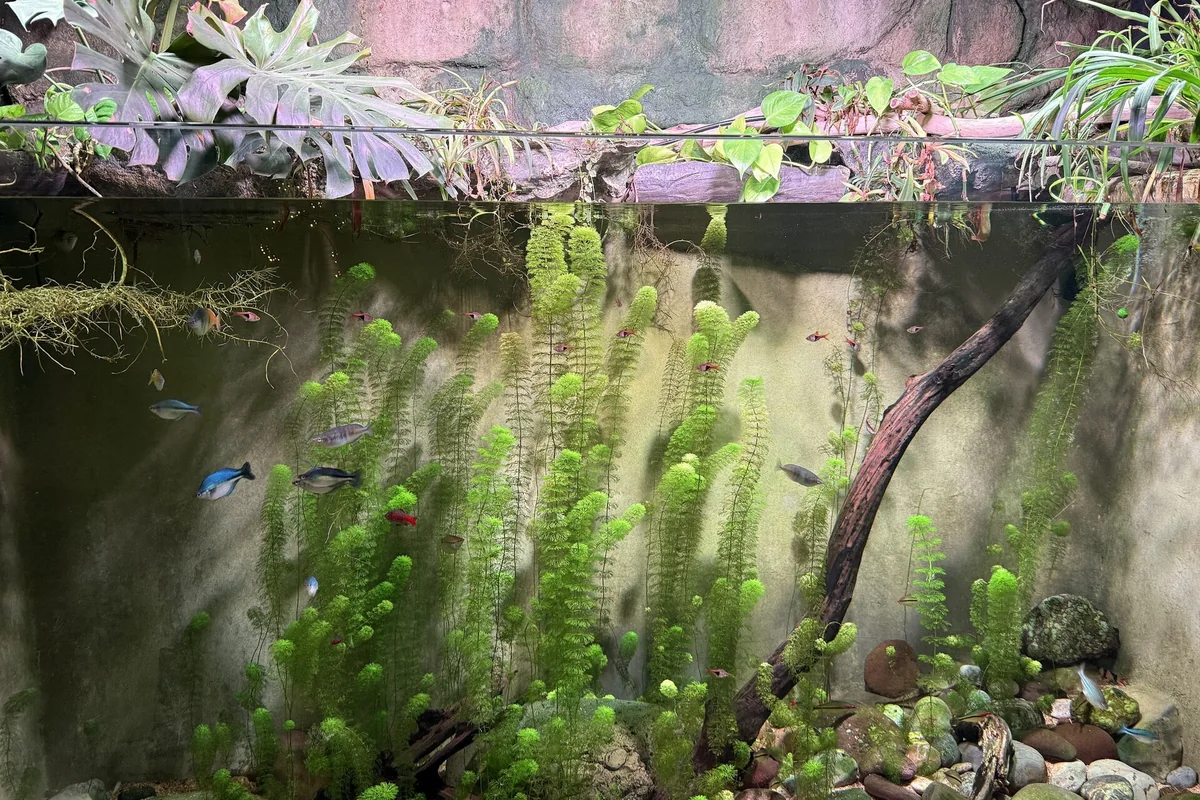
Photo: Aquatic Plants and Fish in a Closed Ecosystem · Adiyazzz · CC0 1.0. Cropped, resized and converted to WebP