 fellfolio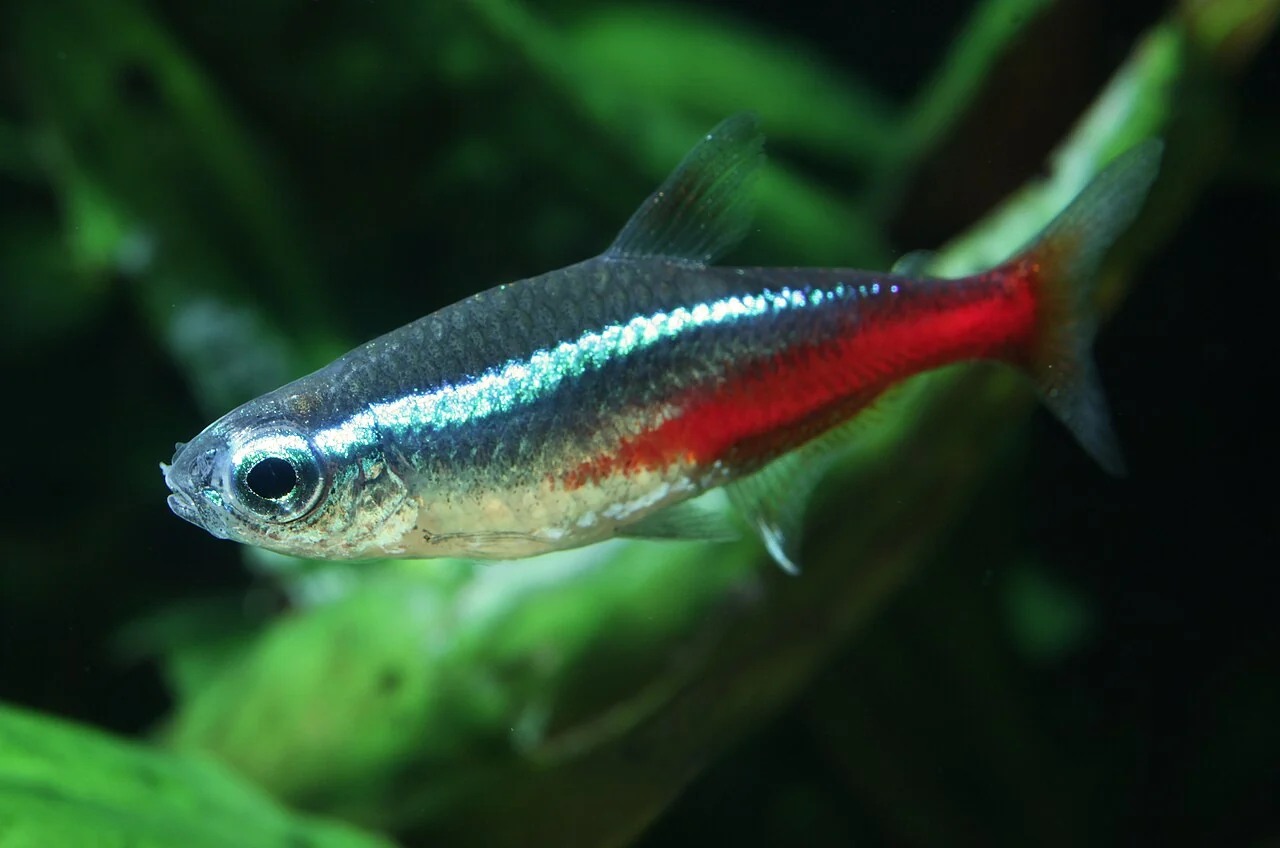
Recognising a neon tetra
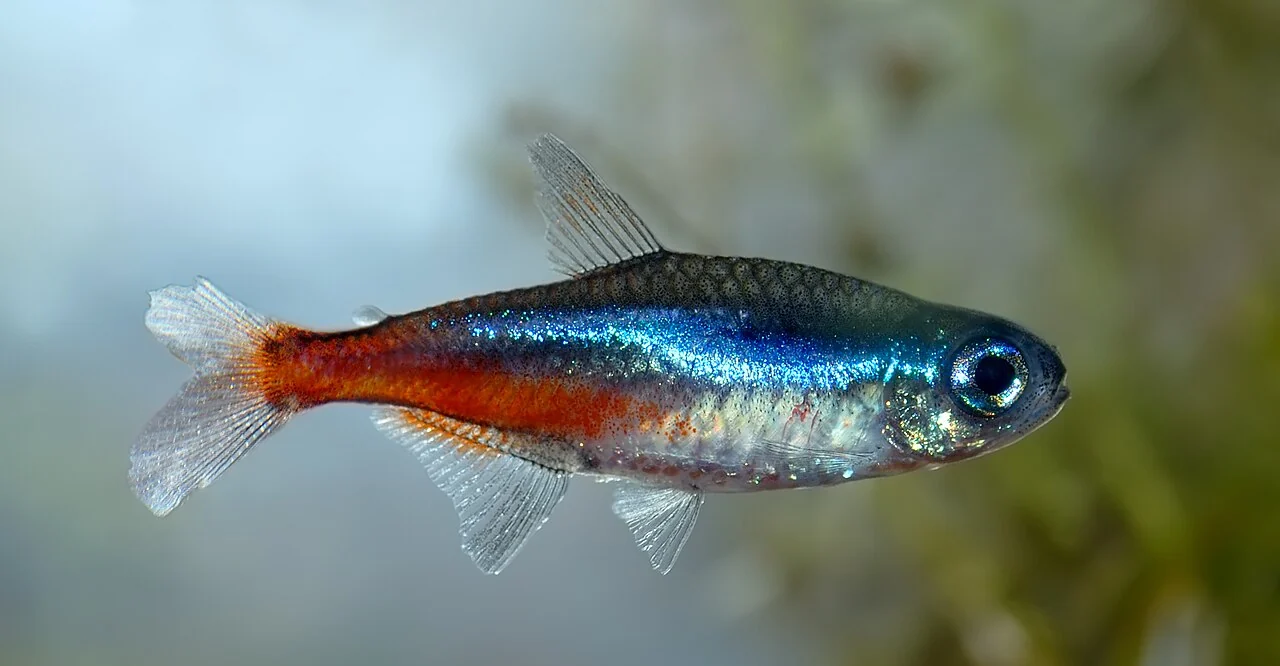
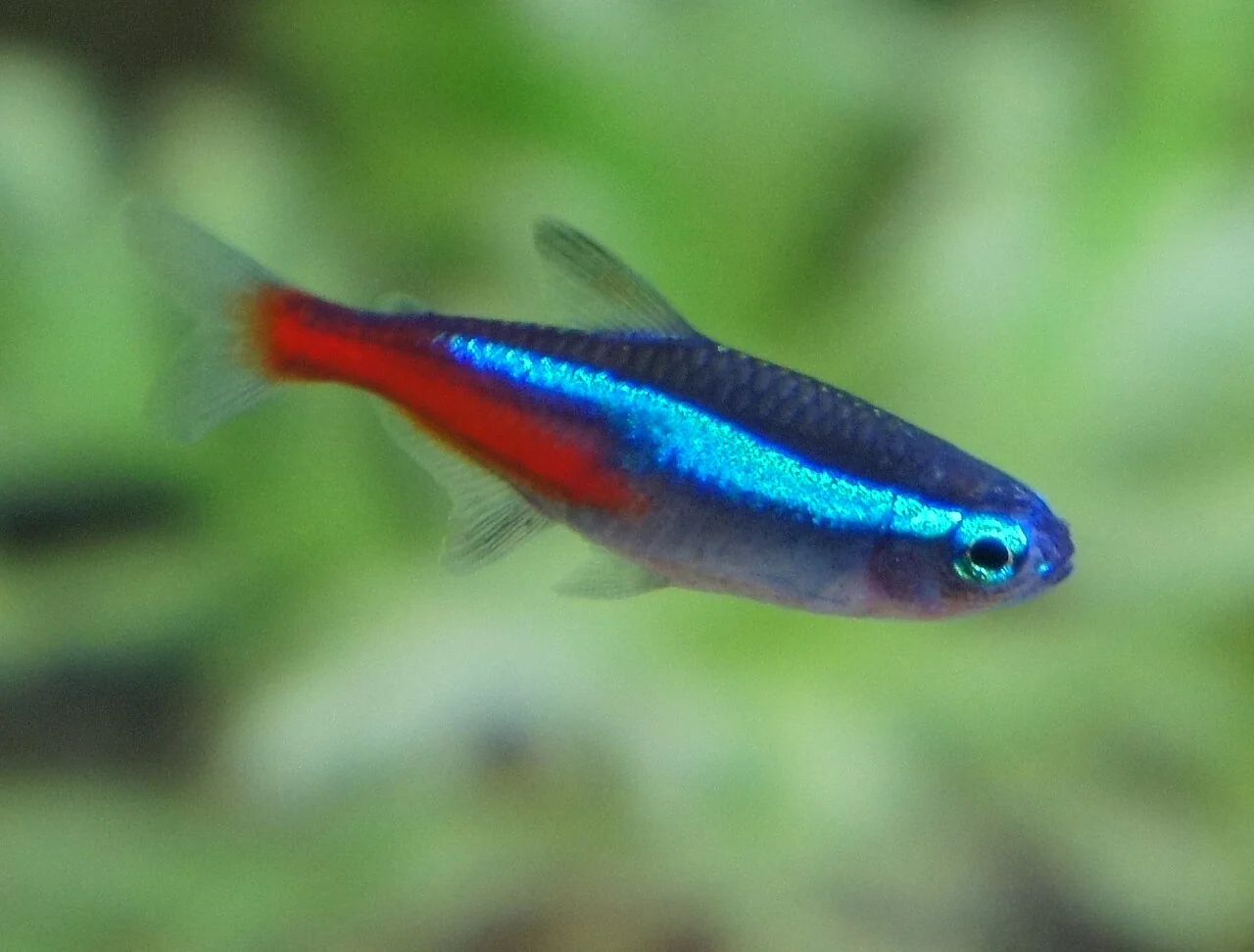
FishBase records a body length up to 2.5 cm excluding the tail fin. The slim body, blue stripe and red markings help identify Paracheirodon innesi. In a tank, the whole shoal needs room to cross open water together and return to cover among plants.
Aquarium Industries, an Australian aquatics supplier, lists neon and cardinal tetras as separate species. The cardinal is Paracheirodon axelrodi. University of Florida research describes soft, slightly acidic water in the natural habitats and breeding of P. innesi. In an aquarium, regular tests help maintain suitable conditions without abrupt changes.
Sources for this section
- Neon TetraAquarium Industries
- Tetra or Characin care sheetAquarium Industries
- UF Scientists Figure Out How To Breed Neon Tetras ProfitablyUniversity of Florida IFAS
- Paracheirodon innesi species summaryFishBase
How large should the shoal be?
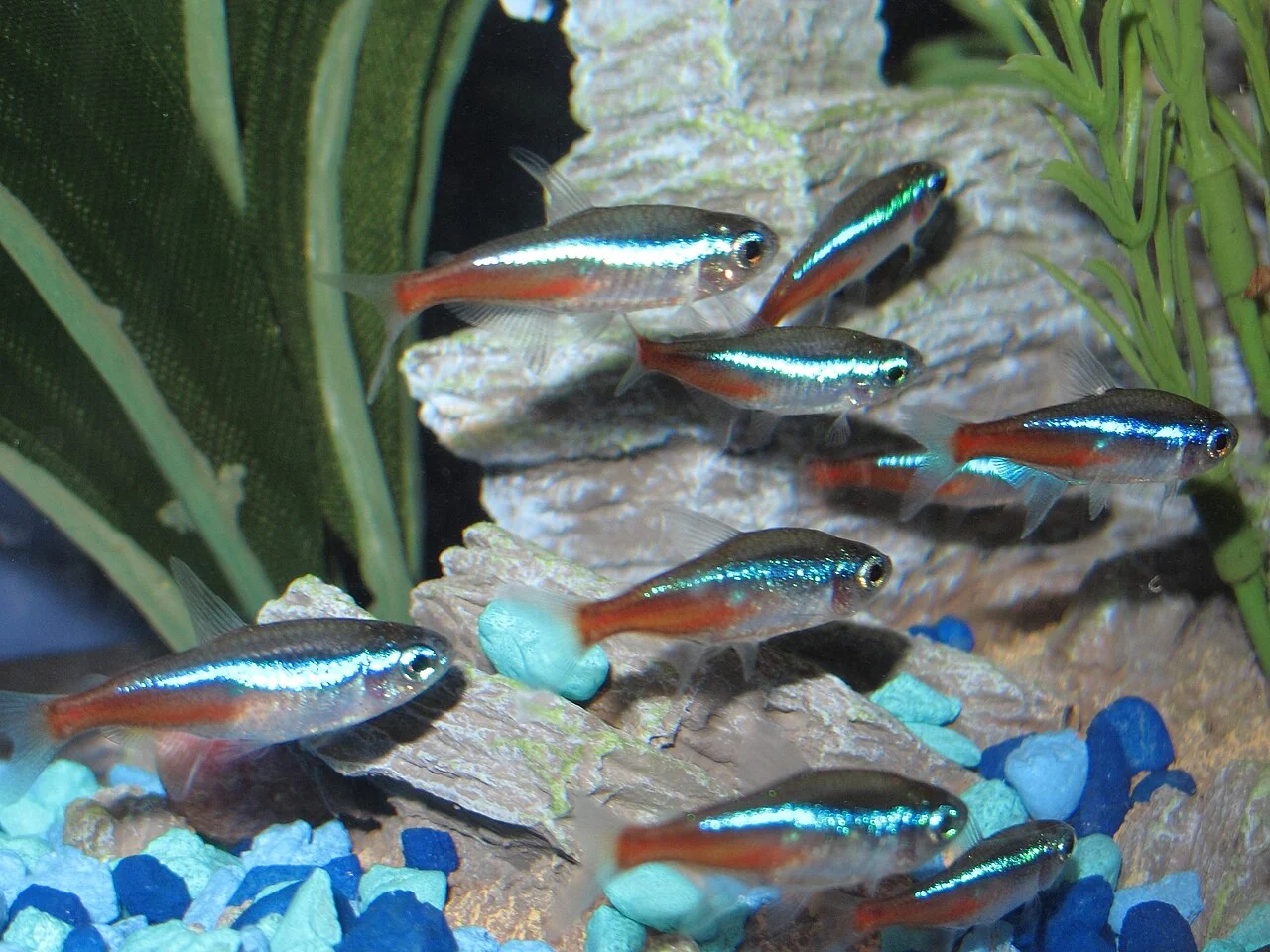
Aquarium Industries recommends at least six neon tetras. Eight to ten form a visible shoal in a suitable longer tank. Allow separately for the room and filter load of any other species. Introduce the neon tetras as a complete group.
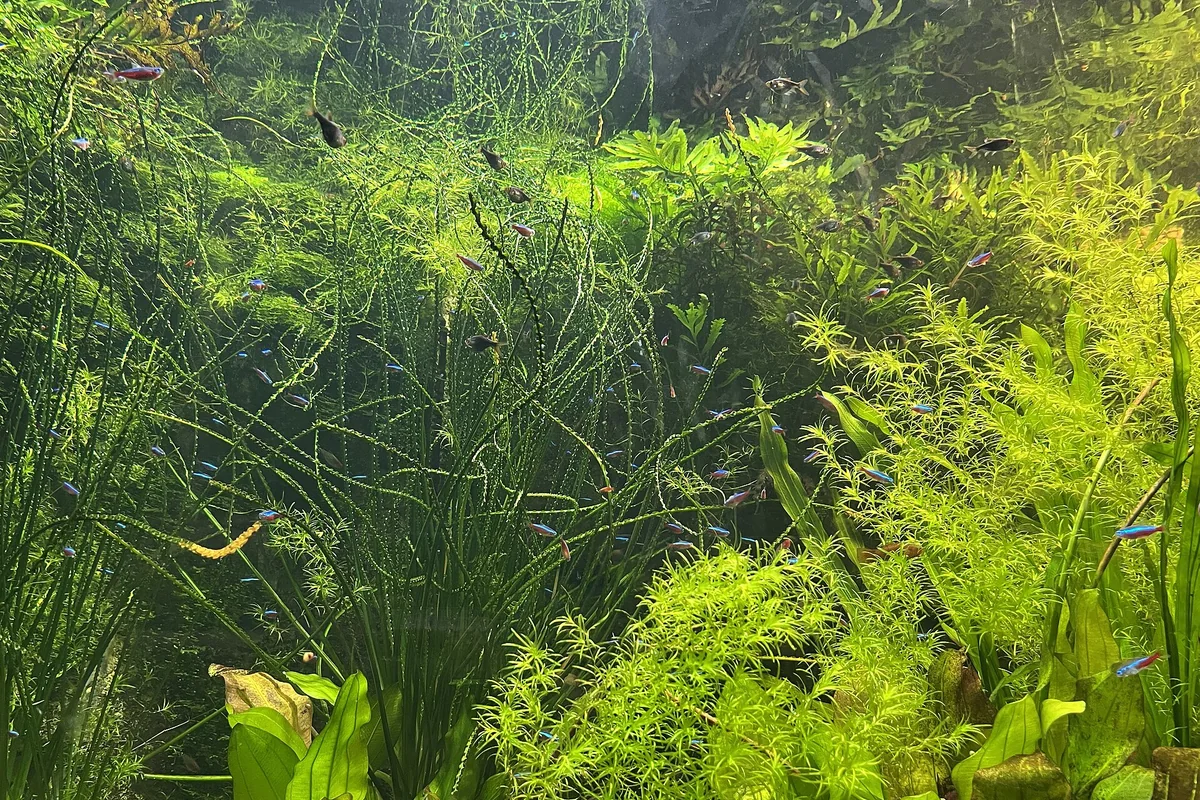
Plants provide cover, with open routes between them. If one fish remains apart, hides persistently or misses meals, check water readings, tankmates and group size.
Sources for this section
- Neon TetraAquarium Industries
- How to look after tetras and pencilfishOATA
- Keeping pet fish togetherRSPCA
Set planting around open swimming water
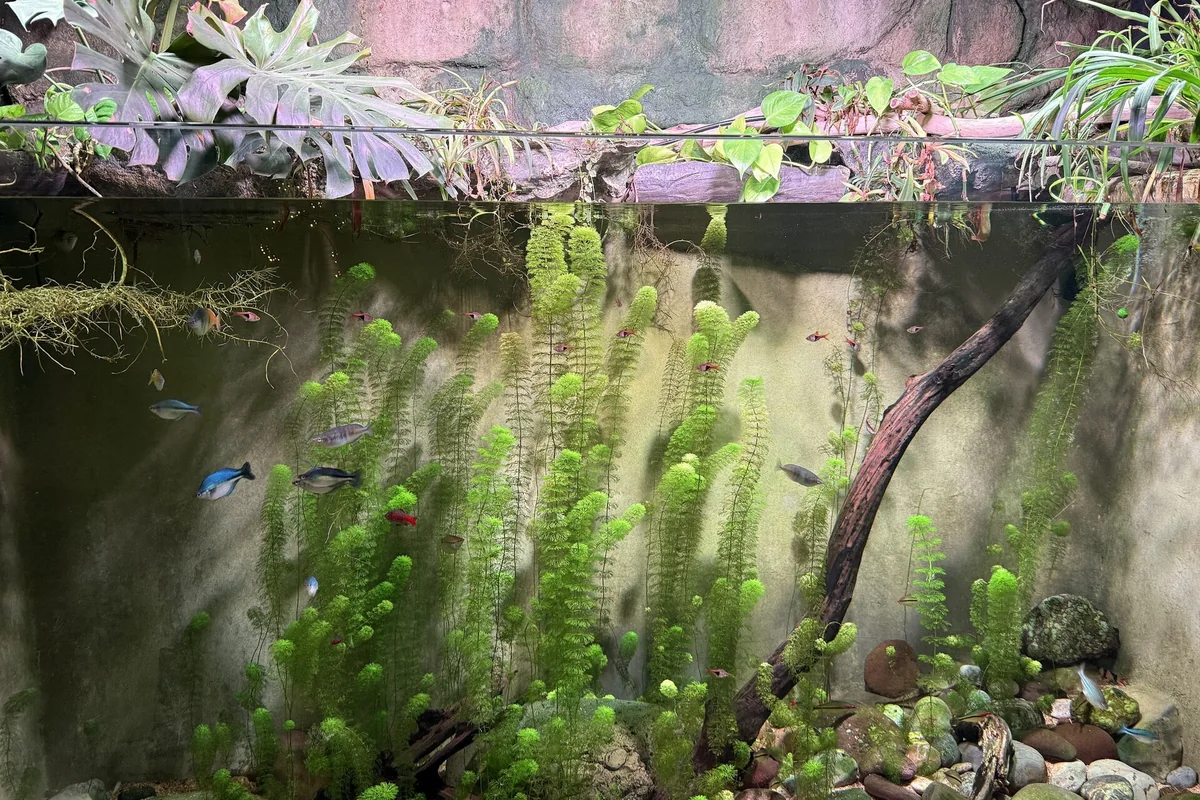
FishBase lists 60 cm as a minimum aquarium length for neon tetras. A tank around 60 cm long and roughly 60 litres is therefore a practical starting point for eight to ten fish with no other stock. Planting along the sides and back gives shade while leaving the middle open. The filter should move water without pushing the shoal into a constant strong current.
Have planting and furnishings settled before fish arrive. A major rearrangement later removes familiar refuge. Introduce new fish gradually to the tank’s temperature and chemistry, keeping as little transport water as possible out of the established system.
Sources for this section
Soft water and a mature filter
FishBase lists 20 to 26 °C for neon tetras. Keep a stable temperature within that range alongside soft, slightly acidic water. Measure temperature, pH and hardness before buying fish. The pH value describes acidity or alkalinity; general hardness mainly reflects dissolved calcium and magnesium salts. Any substantial change should be made gradually.
Cycle the biological filter without fish before stocking. Dose a designated aquarium ammonia product according to its instructions. Ammonia and then nitrite rise at first; after each measured dose, both should return to zero within the specified testing sequence. Regular tests after stocking show whether the filter can handle the shoal and its food load. Partial water changes remove dissolved waste.
Read more: Setting up a freshwater aquarium: tank, filter and water · Caring for an aquarium: watch the water, filter and fish
Sources for this section
- Tetra or Characin care sheetAquarium Industries
- UF Scientists Figure Out How To Breed Neon Tetras ProfitablyUniversity of Florida IFAS
- How to set up and look after a freshwater aquariumOATA
- Paracheirodon innesi species summaryFishBase
Use food that fits a small mouth
Finely broken complete flake or granule can be the main diet. Small live or frozen foods such as daphnia offer variety. Large pieces may sink untouched or be eaten only by bigger tankmates.
Small portions offered at several points reveal whether the entire group eats. Remove leftovers before they decay. A fish repeatedly missing food may face competition, illness or unsuitable current; check the observation alongside water readings.
Sources for this section
- How to look after tetras and pencilfishOATA
- Tetra or Characin care sheetAquarium Industries
- Routine Health Care of FishMerck Veterinary Manual
Check the size and water needs of neighbours
OATA, the UK ornamental aquatics trade association, advises against keeping small tetras with fish large enough to swallow them. A seemingly calm large fish is still a risk if a neon fits in its mouth. Very active species may also keep the shoal driven into the plants.
Tankmates must share suitable temperature and hardness. A markedly harder guppy aquarium is not automatically a good home for neons. For any mixed stock, compare measured conditions, behaviour and the free space available to each complete group.
Read more: Six common aquarium fish and the differences that matter · Choosing aquarium fish that can live well together
Sources for this section
- How to look after tetras and pencilfishOATA
- Keeping pet fish togetherRSPCA
- Tetra or Characin care sheetAquarium Industries
Track colour, breathing and shoal behaviour
Temporary fading can accompany light changes or stress. Persistent dullness, unusual swimming, clamped fins, white patches or a fish separating from the shoal call for prompt assessment. Marked breathing difficulty or severe weakness needs immediate aquatic-veterinary help.
Check temperature, ammonia, nitrite and filter operation first. New fish may introduce disease; separate observation before they enter an established shoal reduces the risk to it. Dated images and test results assist veterinary assessment.
Sources for this section
- How to look after tetras and pencilfishOATA
- Routine Health Care of FishMerck Veterinary Manual
Common questions
How many neon tetras should I keep?
Aquarium Industries recommends at least six. In a cycled tank around 60 cm long and roughly 60 litres, eight to ten fish with no other stock are a practical starting group. Additional species need further room and matching water conditions.
Is a cardinal tetra the same species?
No. The cardinal tetra is Paracheirodon axelrodi. Scientific names help avoid confusion when choosing fish and checking water requirements.
Why does a neon hide?
Using cover among plants is normal. Persistent isolation, refusal of food or altered breathing needs checking alongside water readings and the other fish’s behaviour.
A closer look
Sources and photo credit
- How to look after tetras and pencilfishOATA
- Neon TetraAquarium Industries
- Tetra or Characin care sheetAquarium Industries
- UF Scientists Figure Out How To Breed Neon Tetras ProfitablyUniversity of Florida IFAS
- Keeping pet fish togetherRSPCA
- How to set up and look after a freshwater aquariumOATA
- Routine Health Care of FishMerck Veterinary Manual
- Paracheirodon innesi species summaryFishBase
Photo: Neonsalmler Paracheirodon innesi.jpg · Holger Krisp · CC BY 3.0. Converted to WebP; scene unchanged.
Photo: Paracheirodon innesi (aka).jpg · André Karwath aka Aka · CC BY-SA 2.5. Converted to WebP; scene unchanged.
Photo: NeonTetra.JPG · Corpse89 · CC BY-SA 3.0. Converted to WebP; scene unchanged.
Photo: Paracheirodon innesi group.jpg · Brandy Dopkins · CC BY-SA 2.0. Converted to WebP; scene unchanged.

.jpg)

