 fellfolio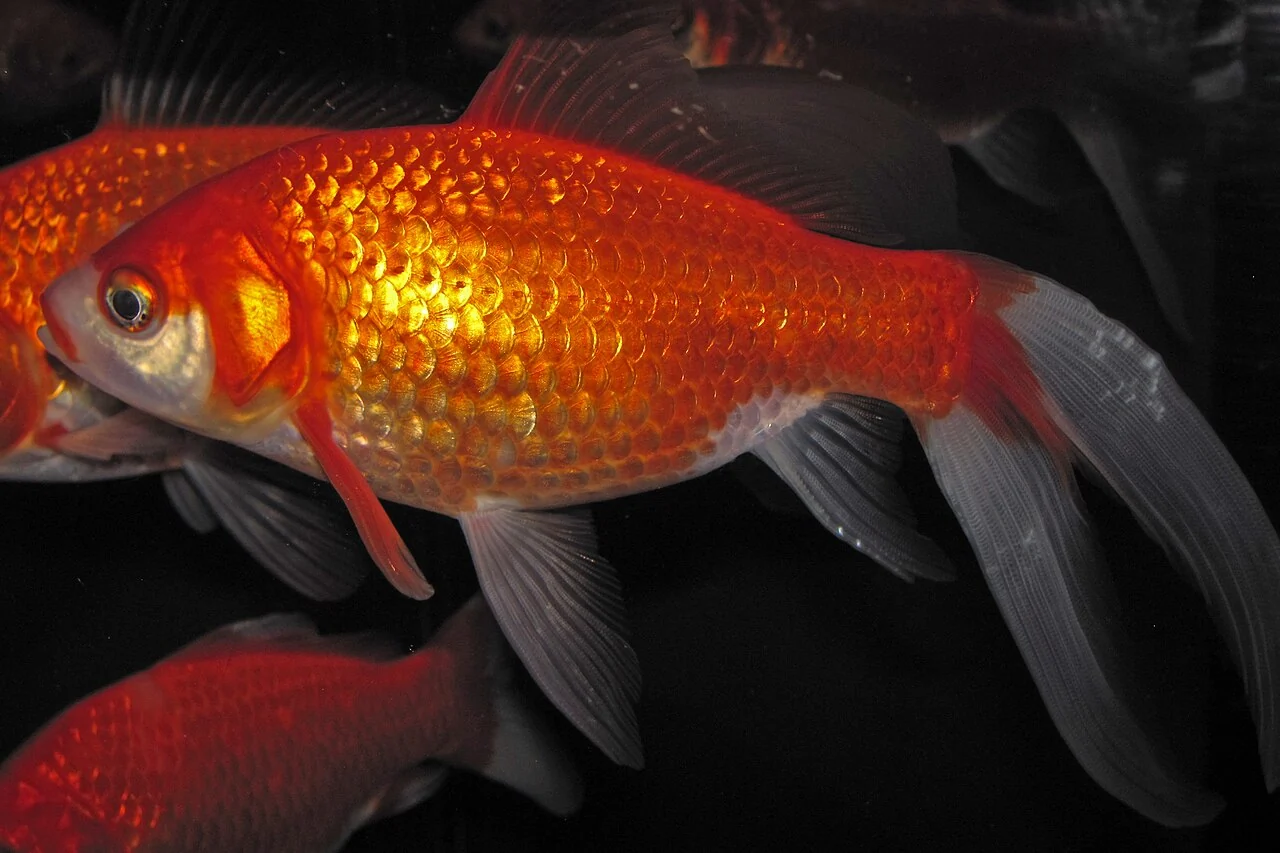
One species, very different body shapes
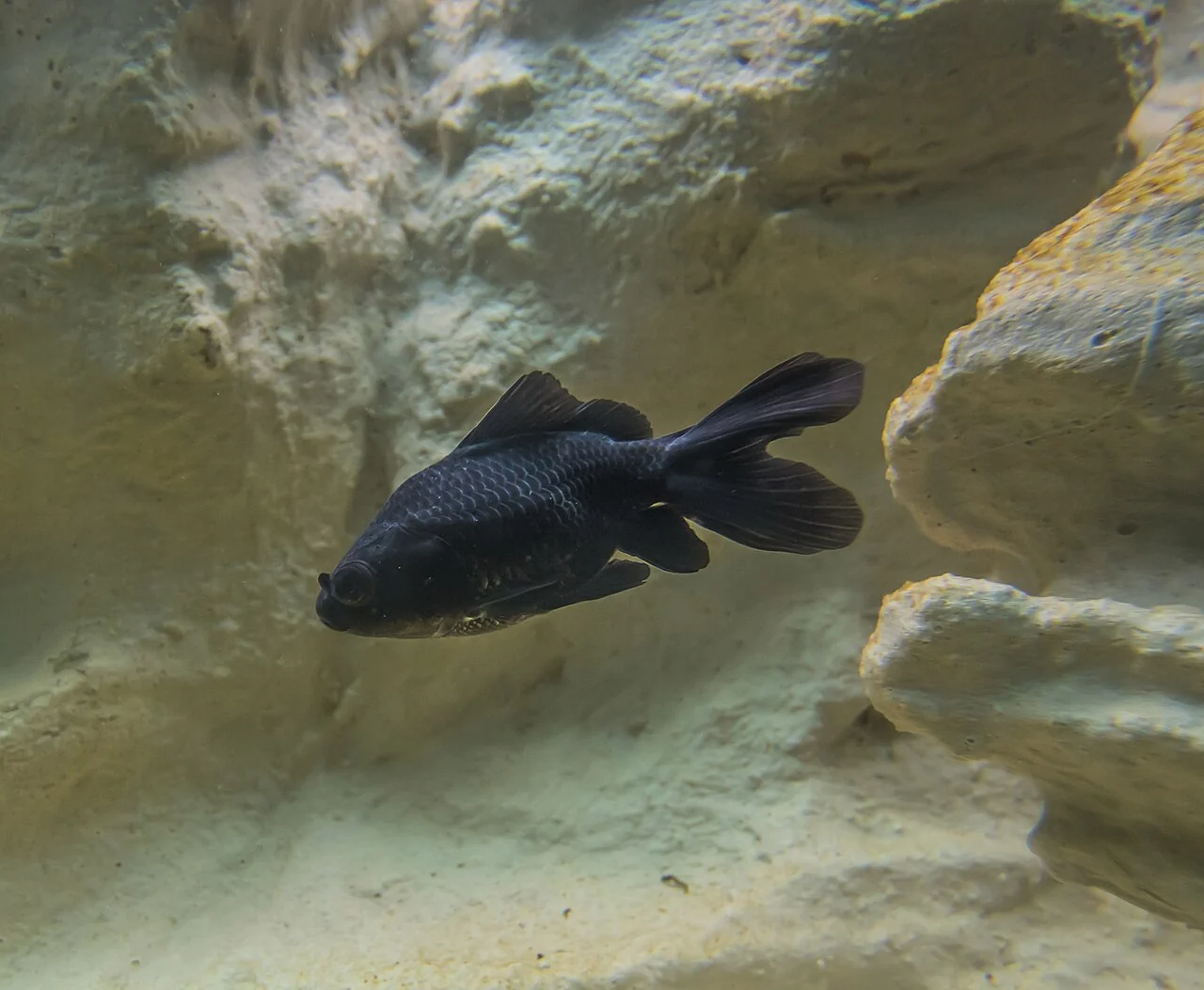
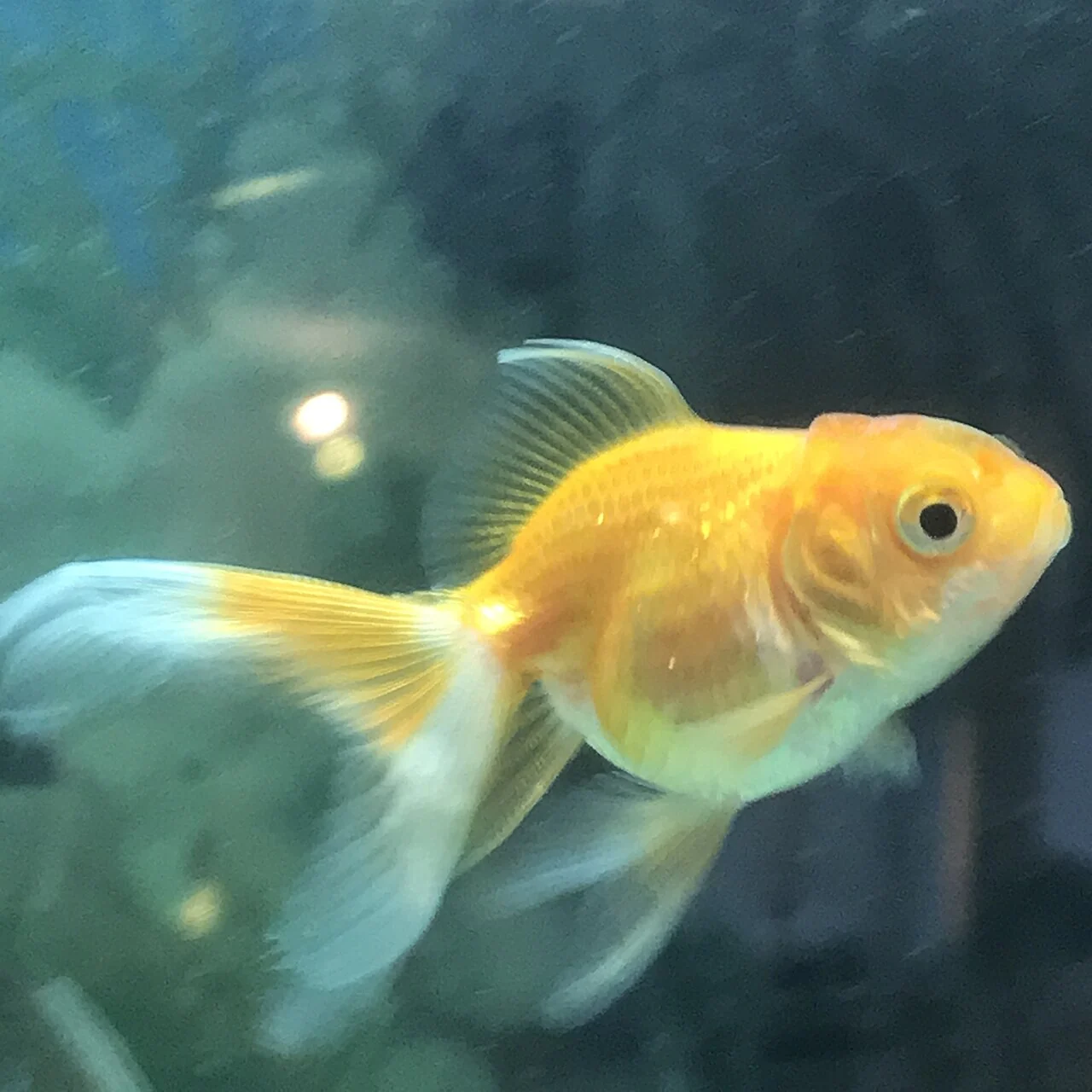
Round-bodied fish with modified eyes or long fins belong to the same species as a common goldfish. These selected traits can affect movement and the chance of injury. When choosing a fish, look for controlled swimming, intact fins and unobstructed vision. Particularly extreme features can complicate care.
The UK ornamental aquatics trade association OATA describes common goldfish around 25 cm in aquaria, with much larger individuals also reported. Its fancy goldfish sheet places many fancy adults around 20 cm. Both may live for years. Plan for the eventual fish, rather than treating its juvenile size as a stocking guide.
Sources for this section
Allow room to swim and explore
For one adult fancy goldfish, OATA gives at least 100 litres, with another 50 litres for each additional adult. For two fish, that means at least 150 litres. Alongside volume, provide a swimming length in which the adult fish can turn and move freely. Footprint, filter capacity and the adult size of the particular variety matter too. A large, active common goldfish may be better suited to a properly designed pond than a typical domestic tank.
Open water lets fish turn and move together. Sturdy plants and smooth furnishings can provide cover around it. Sharp ornaments and hard plastic plants are risky for long fins or protruding eyes. Goldfish sift through substrate, so an appropriate fine bottom that can be cleaned supports that behaviour.
Sources for this section
Clear water does not reveal every hazard
Waste releases ammonia or ammonium. Beneficial filter bacteria convert this to nitrite and then nitrate. Ammonia and nitrite should be undetectable in an occupied aquarium. Before fish arrive, the filter can be cycled without animals using an aquarium product intended as an ammonia source, dosed to its instructions. After each dose, tests should show the filter bringing ammonia and nitrite back to zero within the product’s testing sequence.
Goldfish create considerable waste. A suitably sized filter, partial water changes and regular testing need to work together. New tap water needs conditioning where chlorine or chloramine is present, and temperature shifts should be gentle. OATA gives roughly 15 to 23 °C as the preferred range for fancy goldfish; place the tank out of direct sunlight to limit overheating.
Read more: Setting up a freshwater aquarium: tank, filter and water · Caring for an aquarium: watch the water, filter and fish
Sources for this section
Feed a balanced diet and remove leftovers
A complete goldfish pellet or granule provides a practical base. Suitable aquatic plants, a little blanched lettuce and occasional daphnia add variety. Some fancy fish benefit from slow-sinking feed if surface feeding makes them swallow air. Persistent buoyancy trouble needs veterinary assessment.
Small portions offered in more than one place can help several fish reach food. Uneaten feed decomposes and should be removed. A fish searching the bottom is not necessarily hungry: foraging is part of normal goldfish behaviour between meals. Watch body condition as well as appetite when adjusting portions.
Sources for this section
- How to look after fancy goldfishOATA
- How to look after goldfish in an aquariumOATA
- Routine Health Care of FishMerck Veterinary Manual
Choose companions for shape and conditions
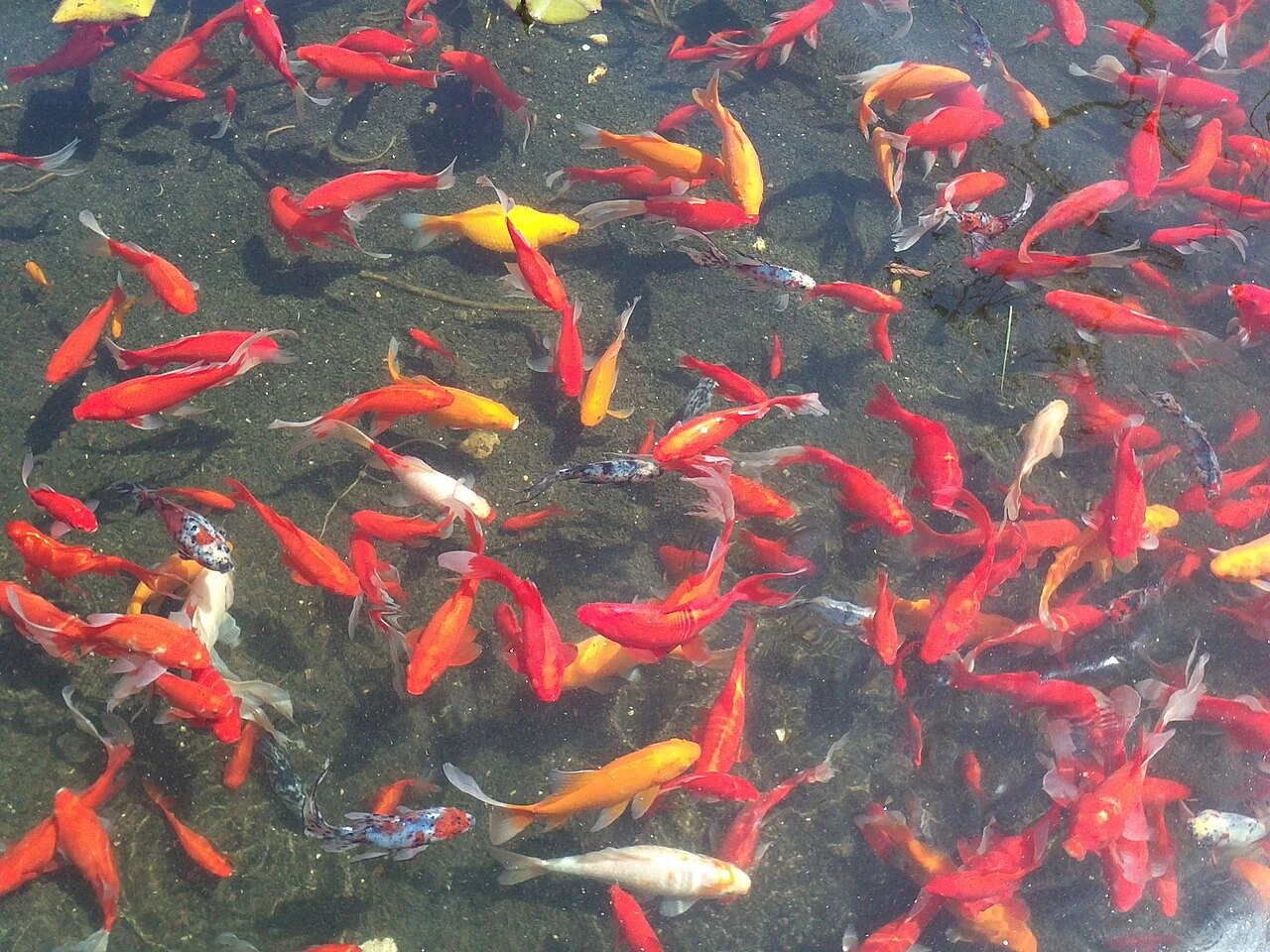
RSPCA Australia advises keeping at least two goldfish when there is sufficient space for both adults. Fast common goldfish may outcompete slower fancy fish at feeding time or nip their fins. A companion should suit the resident fish in swimming ability and care needs. Sharing a species name does not automatically make two varieties a good pair.
Tropical fish often need different temperatures and water chemistry. Small fish may eventually become prey, while fin-nipping species can injure fancy goldfish. Check adult size, activity, food access and measured water conditions before adding any other fish. Observing new fish separately first also lowers the risk of introducing disease into an established group.
Read more: Choosing aquarium fish that can live well together
Sources for this section
- How should I care for my goldfish?RSPCA Australia
- How to look after fancy goldfishOATA
- Routine Health Care of FishMerck Veterinary Manual
Notice changes while there is time to act
A healthy goldfish swims with control, breathes steadily and shows interest in food. Clamped fins, rubbing, new marks, altered gill movements or remaining on the bottom deserve prompt investigation. Gasping at the surface, marked breathing difficulty or a sudden severe loss of swimming control requires immediate expert help.
Check ammonia, nitrite, temperature and filter operation at the same time. Those measurements help an aquatic veterinarian assess the problem but do not replace an examination. Dated photos and a brief record of feed and water changes make trends easier to describe.
Sources for this section
- How to look after fancy goldfishOATA
- Routine Health Care of FishMerck Veterinary Manual
Common questions
Can a goldfish live in a bowl?
A bowl offers too little useful swimming space and little scope for stable filtration. A suitably large rectangular tank or appropriate pond supports movement and reliable water care.
Can a fancy goldfish live with a common goldfish?
Often this works poorly. Streamlined fish usually reach food first and may harass long-finned forms. Similar swimming ability and matching water needs are better starting points.
How often should I test the water?
The UK ornamental aquatics trade association OATA recommends testing ammonia and nitrite at least weekly. Test more closely after stocking, increased feeding or a change in behaviour.
A closer look
Sources and photo credit
- How to look after goldfish in an aquariumOATA
- How to look after fancy goldfishOATA
- How should I care for my goldfish?RSPCA Australia
- How to set up and look after a freshwater aquariumOATA
- Routine Health Care of FishMerck Veterinary Manual
Photo: Carassius auratus auratus (goldfish) 2.jpg · James St. John · CC BY 2.0. Converted to WebP; scene unchanged.
Photo: Carassius auratus black telescope.jpg · IssamBarhoumi · CC BY-SA 4.0. Converted to WebP; scene unchanged.
Photo: Goldf.jpg · Yaroslava Kotenko · CC BY 4.0. Converted to WebP; scene unchanged.
Photo: Carassius auratus in the pond in Rabin square.jpg · Юкатан · CC BY-SA 3.0. Converted to WebP; scene unchanged.
_2.jpg)


