fellfolio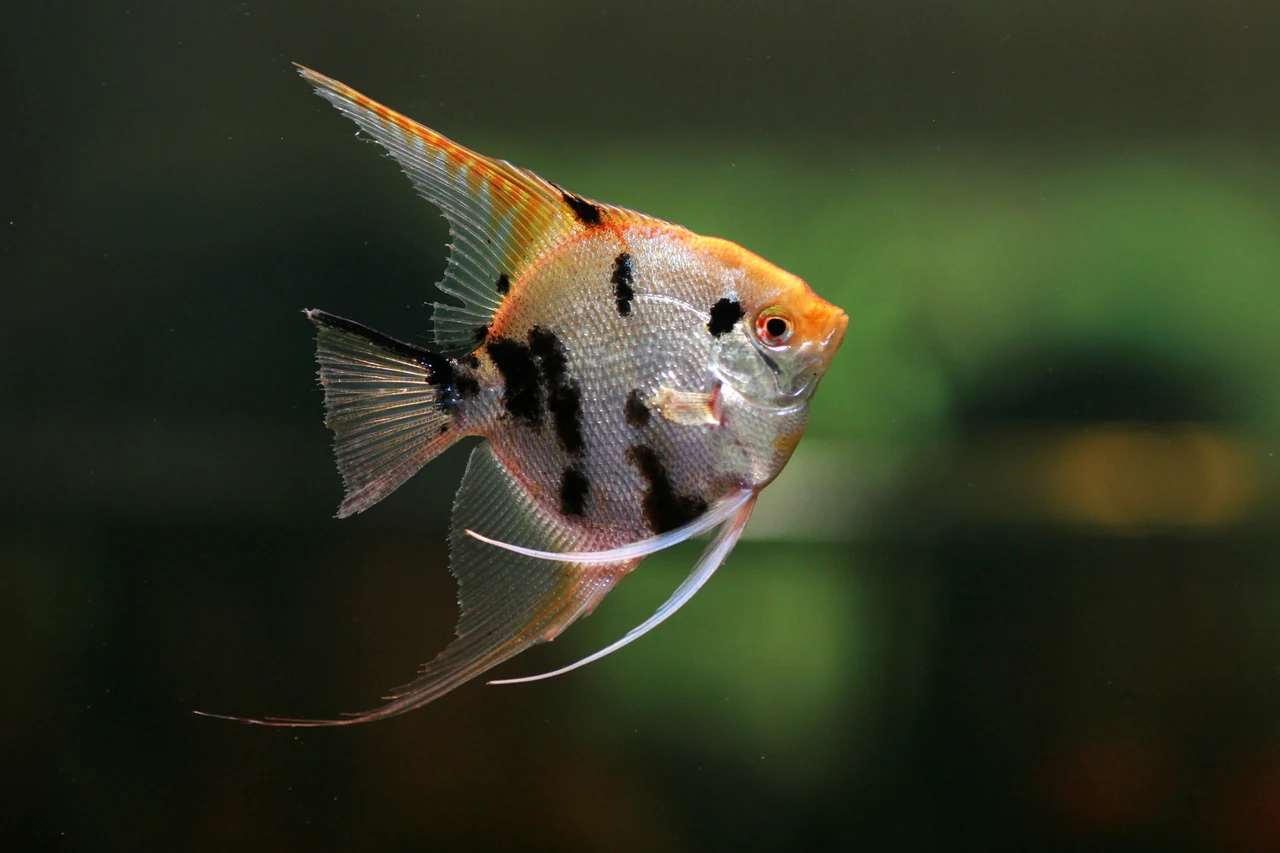
Why height matters for angelfish
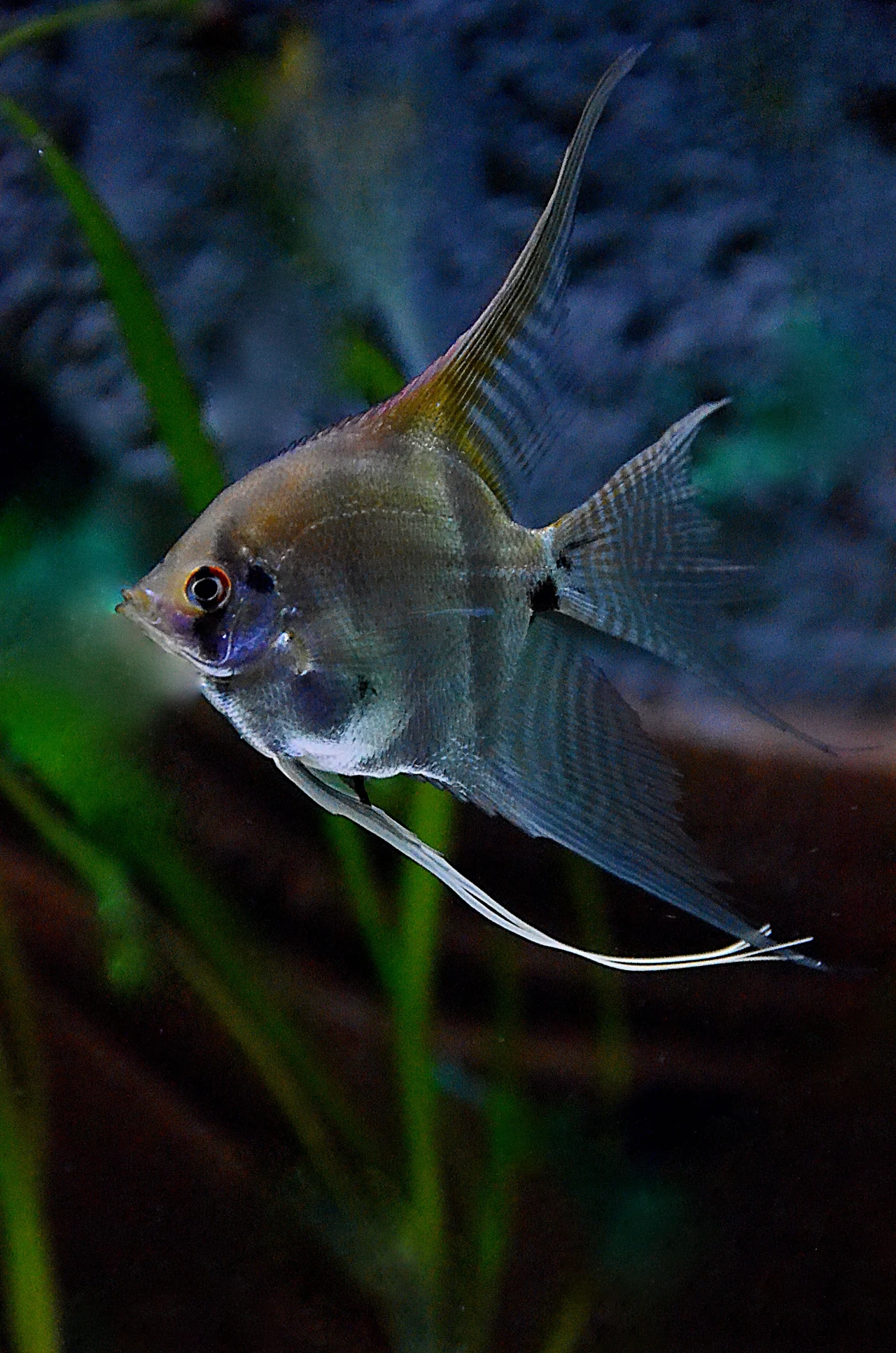
Viewed head on, an angelfish is surprisingly narrow. From the side, its body forms a broad surface framed by the dorsal fin on its back and the anal fin underneath, behind the belly. Together with the long pelvic fins, these give the fish its familiar outline. This shape allows it to move among plant stems and roots with considerable agility.
Adults reach roughly 13 to 15 cm in length, but height matters just as much when furnishing their home. Including the fins, around 20 cm is possible, and some individuals and varieties with longer fins are taller. An angelfish should be able to turn and spread its fins comfortably without repeatedly brushing the substrate or decoration. Its unhurried swimming style does not mean it needs little space.
Which angelfish are you bringing home?
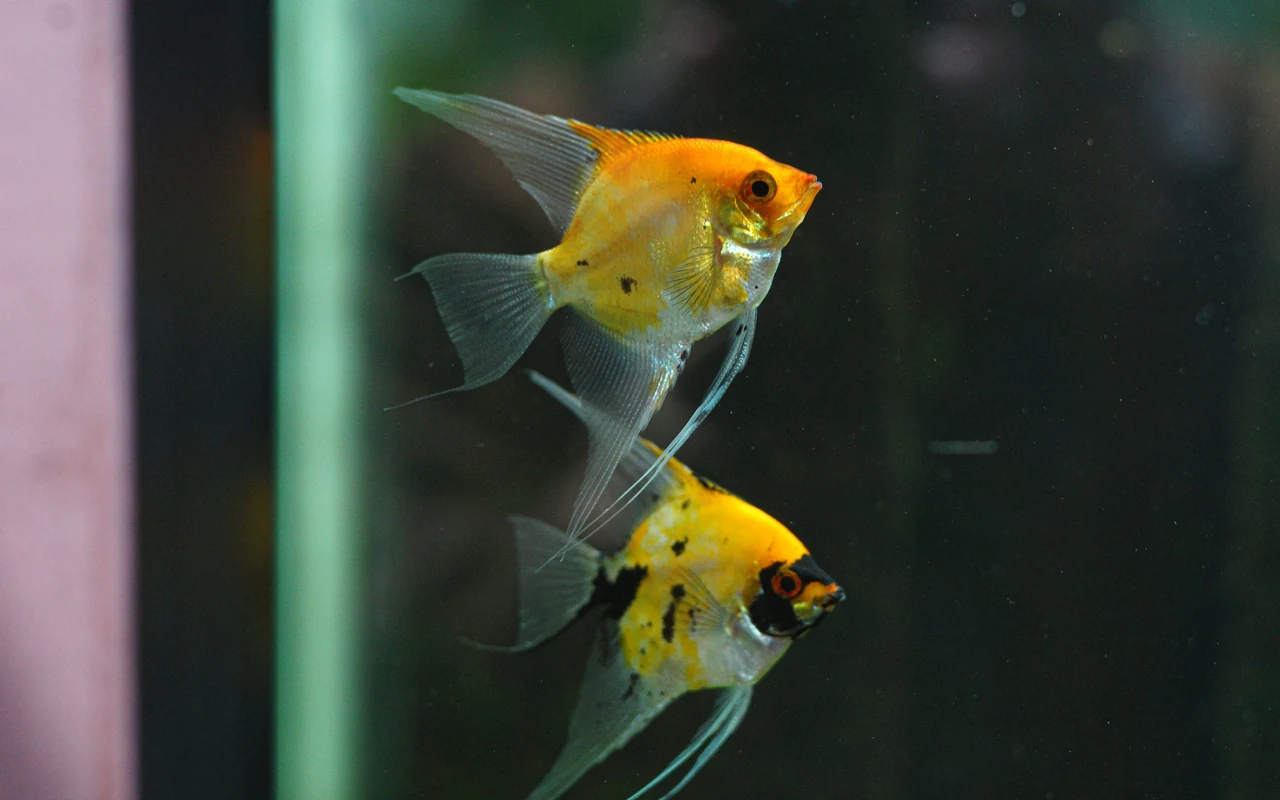
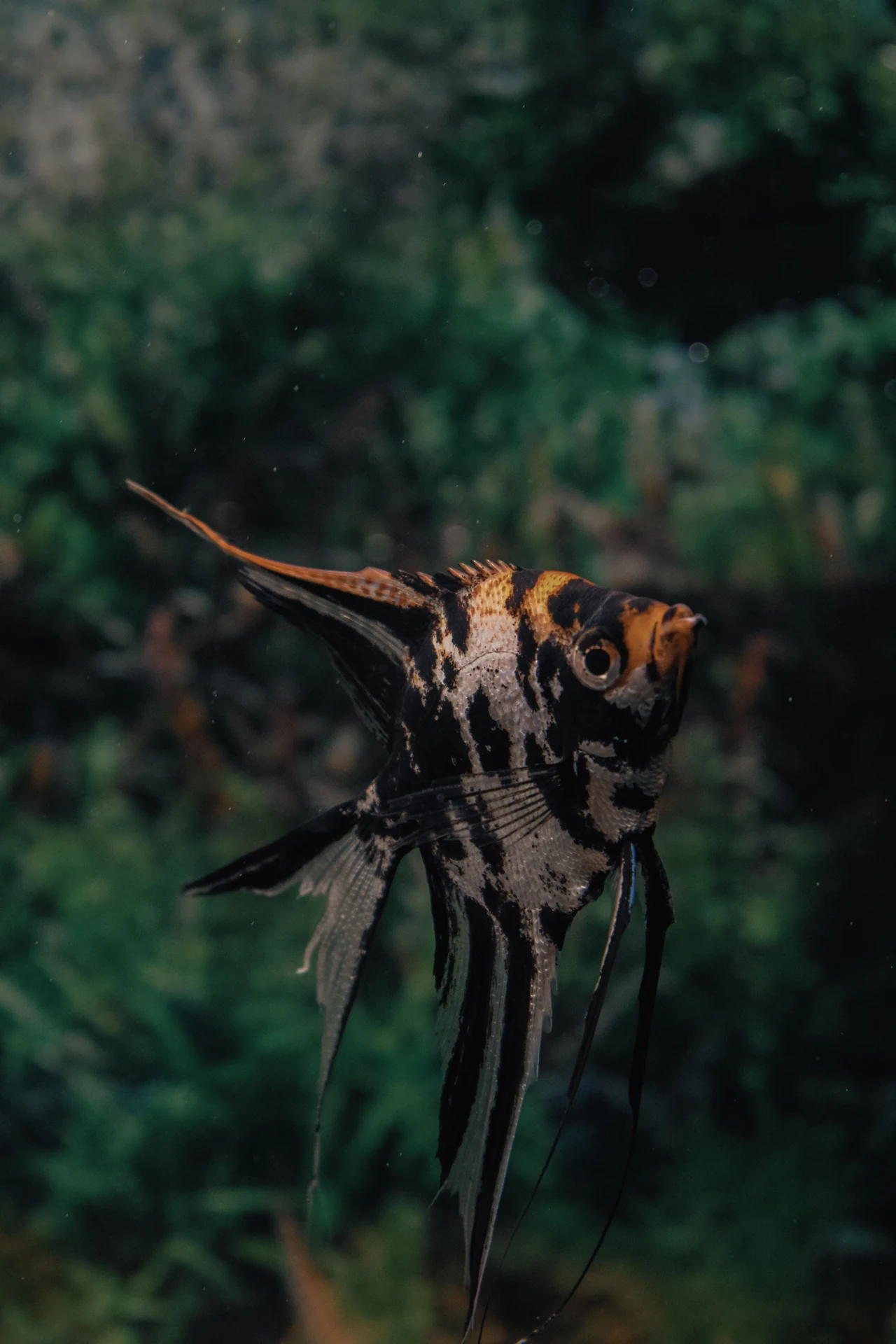
Pterophyllum scalare is a South American freshwater fish in the cichlid family. Its natural range lies in northern South America and includes the Amazon basin. Most angelfish sold for aquariums today are captive bred. Selective breeding has produced black, gold and marbled varieties alongside silver fish with dark vertical bars.
The other two species of freshwater angelfish are Pterophyllum altum, the much taller altum angelfish, and Pterophyllum leopoldi. Each is a separate species with its own care needs. An unusual trade name or especially long fins is not enough to identify one. Before buying, you should therefore confirm the scientific name. It is also worth asking where the fish were raised, what water conditions they are used to and which foods they currently eat.
A tall aquarium with room to retreat
For an established compatible adult pair, you could plan an aquarium measuring about 120 × 50 × 60 cm, for example. Those measurements are length, front to back depth and height. They give a calculated gross volume of 360 litres. The actual water volume will be lower because substrate and decoration occupy space and the tank is not filled to its rim. The remaining water depth should still allow plenty of vertical room.
Tall plants and upright pieces of aquarium wood can divide the space into different areas. They should be arranged so that one fish can swim behind them and out of the other's view. A single plant in the centre offers little effective cover. There should also be a connected area of open water for swimming. Smooth surfaces and generous gaps between pieces of wood help protect the long fins from injury.
This example assumes the two fish already get along. Two angelfish chosen at random will not necessarily form a pair. A permanent group of adults needs substantially more room, with aquaria around 500 litres and above worth considering. The number that can live together also depends on the tank's dimensions, its layout and the relationships between the fish.
Read more: Setting up a freshwater aquarium: tank, filter and water
As young angelfish mature
Young angelfish can grow up in a group and later choose partners from it. Before buying such a group, you should decide what will happen to the remaining fish once pairs start claiming territories. An aquarium that initially suits several small angelfish will not necessarily suit that same group when they are fully grown.
Briefly driving another fish away is different from persistent harassment. If a fish is chased whenever it moves, spends its time behind the filter or can no longer reach food, the situation needs prompt attention. Extra barriers that break up lines of sight may help. If the chasing continues, the fish need separate suitable aquariums or one needs another appropriate home. A spare aquarium for this purpose should have heating and an established biological filter.
Relationships can change even within a settled pair. Angelfish do not invariably keep the same partner for life. Both fish are worth watching at feeding time and while resting, even if they previously guarded eggs together.
Warm water is only the beginning
For Pterophyllum scalare, 25 to 28 °C is a useful working range. A separate thermometer shows whether the actual temperature matches the heater setting. Soft to moderately mineralised water with a slightly acidic to neutral pH suits many captive bred angelfish. The pH tells you how acidic or alkaline the water is. Around pH 6.5 to 7 is a sensible starting point for planning, but should be considered alongside the conditions the fish are already used to.
Water hardness involves two different measurements. General hardness, or GH, mainly describes dissolved calcium and magnesium. Carbonate hardness, or KH, indicates how well the water can buffer acids and resist large changes in pH. Both should be tested. If your tap water is considerably harder than suits the fish, it is worth getting knowledgeable advice on suitable water preparation before buying them.
The aquarium should be cycled without fish before they arrive. During cycling, bacteria develop, particularly in the filter, that break down harmful ammonia and nitrite. Aquarium ammonia products are available for this preparation and should be used according to their instructions. Before adding the fish, repeated checks following the product instructions should show that the added ammonia is being broken down and nitrite is no longer detectable either. Our aquarium setup guide explains the process and the checks involved.
Ongoing care includes water testing and regular partial water changes, which replace some of the water rather than all of it. Setting aside time each week helps you notice changes. The right amount to replace depends on factors including the fish present, feeding and test results. New water should be at a suitable temperature and treated for chlorine where necessary. When filter media need cleaning, a gentle rinse in removed aquarium water helps preserve the useful bacteria.
Read more: Setting up a freshwater aquarium: tank, filter and water · Caring for an aquarium: watch the water, filter and fish
Small tetras can become prey
Wild angelfish eat small fish as part of their diet. A seemingly peaceful angelfish may therefore see a neon tetra or a young cardinal tetra as prey. Seeing them swim together at first tells you little about what a larger angelfish may later be able to eat. If your main aim is to keep a shoal of small tetras, choosing different companions is the better plan.
The reverse problem comes from fish that nip at the fins of their tank mates. They can harass and injure angelfish. Adult size, behaviour and similar temperature and water needs therefore matter when choosing companions, along with the space each additional fish will need. A label such as community fish does not answer those questions. The individual species guides and our guide to choosing aquarium fish can help you plan a compatible group of fish.
Read more: Choosing aquarium fish that can live well together · Neon tetra care: plan a complete shoal · Cardinal tetra care: tank setup, water and tankmates
Watch what happens at feeding time
A suitable complete food for angelfish or similar tropical cichlids can form the main diet. Slowly sinking granules or flake foods the fish readily accept should be small enough for the fish to eat comfortably. Small portions of frozen foods such as daphnia, brine shrimp or suitable mosquito larvae add variety. Daphnia are tiny freshwater crustaceans, while brine shrimp are small crustaceans commonly sold as fish food.
Making sure every fish eats matters more than putting plenty of food in one place. If they compete, offering small portions in several areas may help. If one angelfish is still excluded, the cause of the conflict needs attention. Young fish need small meals more frequently than adults. Uneaten food should be removed before it decomposes and adds to the waste in the water.
When a pair guards eggs on a leaf
Before spawning, a pair often cleans a broad leaf or another suitable surface thoroughly. The female lays eggs there and the male fertilises them. The parents may fan fresh water over the eggs and drive other fish away. A previously quiet part of the aquarium then becomes a defended territory. Sometimes the parents eat the eggs, particularly during early spawning attempts.
Young angelfish cannot be reliably sexed by the shape of their heads or fins. Around spawning time, the genital papilla is easier to see. This is a small projection underneath the body through which eggs or sperm are released. Identifying the sexes still does not tell you whether two particular fish will remain compatible.
If you want to raise young angelfish, suitable additional space, very small foods for the fry and eventual homes should be arranged in advance. One spawning can produce many youngsters. They will need more room and care as they grow. Watching parental care is fascinating, but the decision to raise the offspring should come before a deliberate breeding attempt.
Noticing small changes early
A daily look at the aquarium should include the temperature, but also whether both fish are breathing normally, holding their fins as usual and coming for food. Sudden hiding, faster breathing or damaged fins can reflect water problems, conflict or illness. Water tests and the behaviour of other fish should therefore be considered together. Persistent changes or injuries call for knowledgeable help, with a vet experienced in fish if illness is suspected.
Brief notes make changes easier to follow. Useful details include the date, test results, the last water change and a specific observation such as: The darker fish was driven away from food twice today. This helps you trace when a problem began and what has changed in the aquarium since.
Read more: Caring for an aquarium: watch the water, filter and fish
Common questions
Can I keep any two angelfish together?
Two fish do not automatically form a compatible pair. With adults, choosing an established pair and asking about their behaviour is sensible. Even then, both should be watched to make sure they can feed and rest undisturbed. You need a suitable way to separate them if conflict persists.
Is 360 litres enough for a group?
The example measuring 120 × 50 × 60 cm, with a calculated gross volume of 360 litres, is for an established compatible adult pair. It is not a recommendation for a permanent group of adult angelfish. Such a group needs substantially more room, with aquaria around 500 litres and above as a starting point, sufficient height, cover and a plan for incompatible fish.
Can angelfish live with neon or cardinal tetras?
Adult angelfish can eat small tetras. Young tetras are particularly vulnerable. Even if the fish initially live together successfully, their relative sizes can change. Angelfish are therefore not a reliably compatible choice for an aquarium centred on these small shoaling fish.
Are gold or marbled angelfish different species?
The familiar captive colour varieties belong to Pterophyllum scalare. Pterophyllum altum and Pterophyllum leopoldi are separate species. You should confirm the scientific name before buying because a trade name alone does not reliably identify a fish or explain its care needs.
A closer look
Sources and photo credit
- Eschmeyer's Catalog of Fishes: PterophyllumCalifornia Academy of SciencesWhich angelfish are you bringing home?
- Keeping Freshwater AngelfishFluval, Tom SaracWhy height matters for angelfish · As young angelfish mature · Warm water is only the beginning · Watch what happens at feeding time · When a pair guards eggs on a leaf
- Angel FishAquarium IndustriesWhy height matters for angelfish · Which angelfish are you bringing home? · Warm water is only the beginning · Small tetras can become prey · Watch what happens at feeding time
- Angel Fish: Pterophyllum scalareMaidenhead Aquatics / FishkeeperWhich angelfish are you bringing home? · A tall aquarium with room to retreat · Warm water is only the beginning · Small tetras can become prey · Watch what happens at feeding time · When a pair guards eggs on a leaf
- How to look after American cichlidsOrnamental Aquatic Trade AssociationWarm water is only the beginning · Watch what happens at feeding time · Noticing small changes early
- Artgerechte Haltung, Pflege und Fütterung von SkalarenJBL, Tim WierczinskiWhy height matters for angelfish · Which angelfish are you bringing home? · A tall aquarium with room to retreat · As young angelfish mature · Small tetras can become prey · When a pair guards eggs on a leaf
- Skalare verhalten sich apathischsera, Dr Bodo SchnellA tall aquarium with room to retreat · As young angelfish mature · Noticing small changes early
- Mating system of the amazonian cichlid angel fish, Pterophyllum scalareBrazilian Journal of Biology, Cacho and colleaguesAs young angelfish mature · When a pair guards eggs on a leaf
- How to set up and look after a freshwater tank / aquariumOrnamental Aquatic Trade AssociationWarm water is only the beginning
Photo credits
Photo: Fresh Water Fish in Close Up Photography · Jeffry Surianto · Pexels License. Image format adapted.
Photo: Close-up of Golden Angelfish in Aquarium · Kostiantyn Klymovets · Pexels License. Image format adapted.
Photo: Close-up of Marble Angelfish in Aquarium · Berna · Pexels License. Image format adapted.
Photo: Close Up Photo of a Freshwater Fish · Jiří Mikoláš · Pexels License. Image format adapted.