fellfolio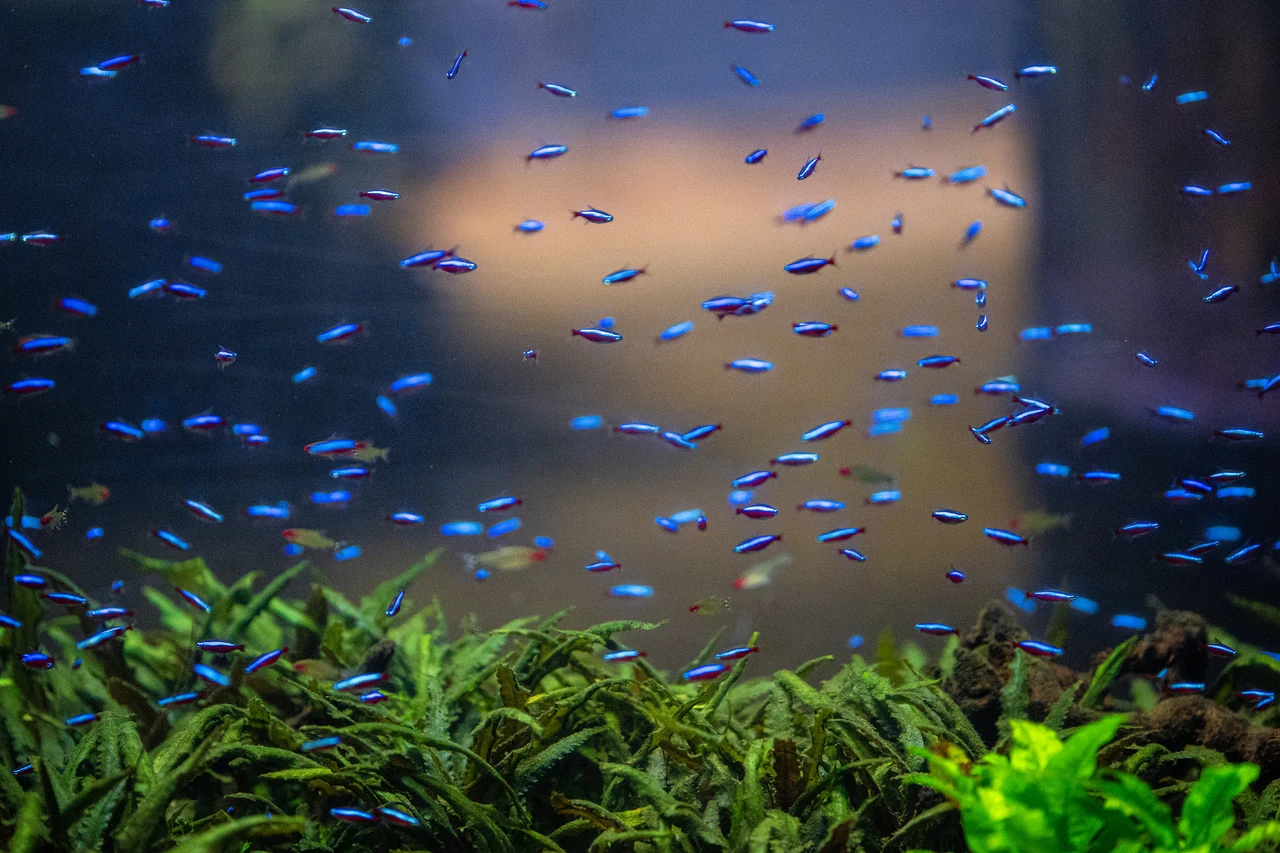
Cardinal tetra or neon tetra?
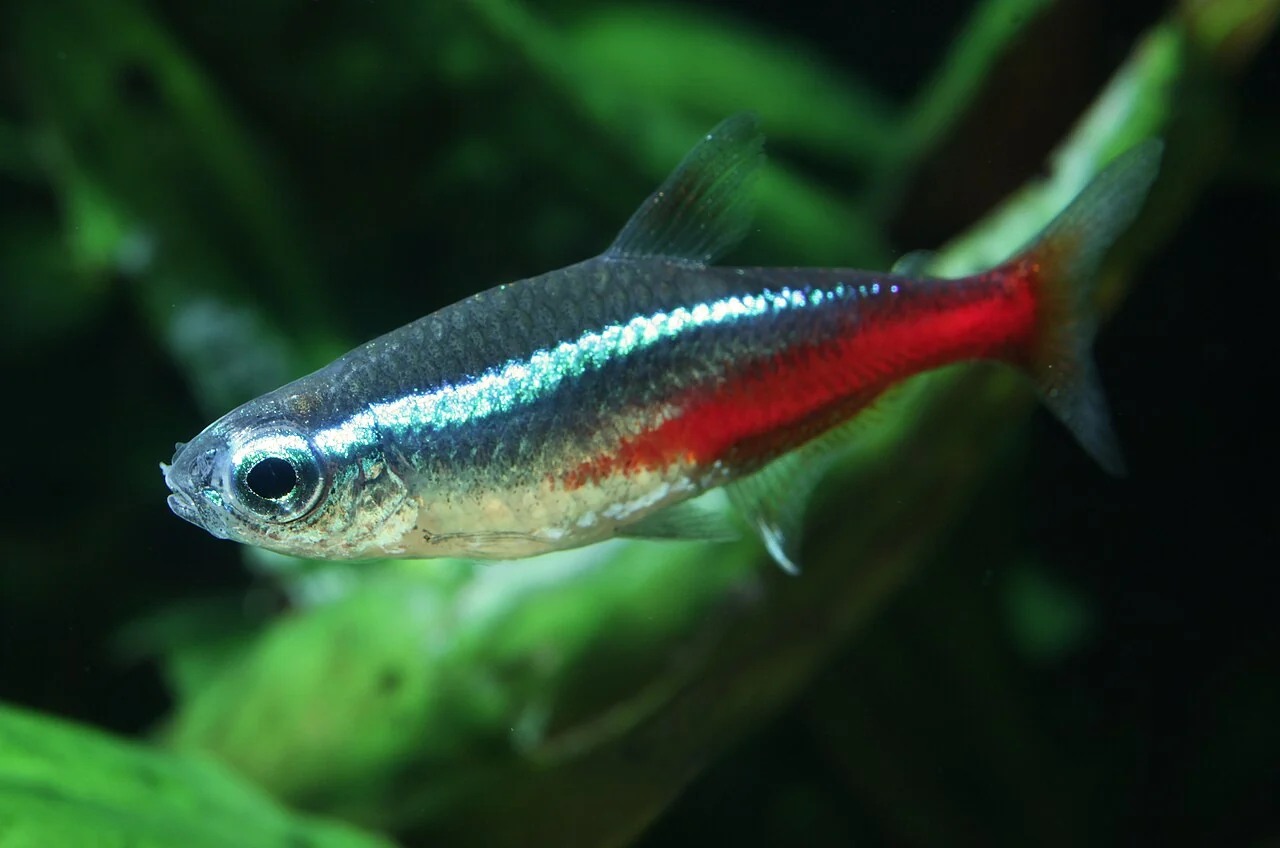
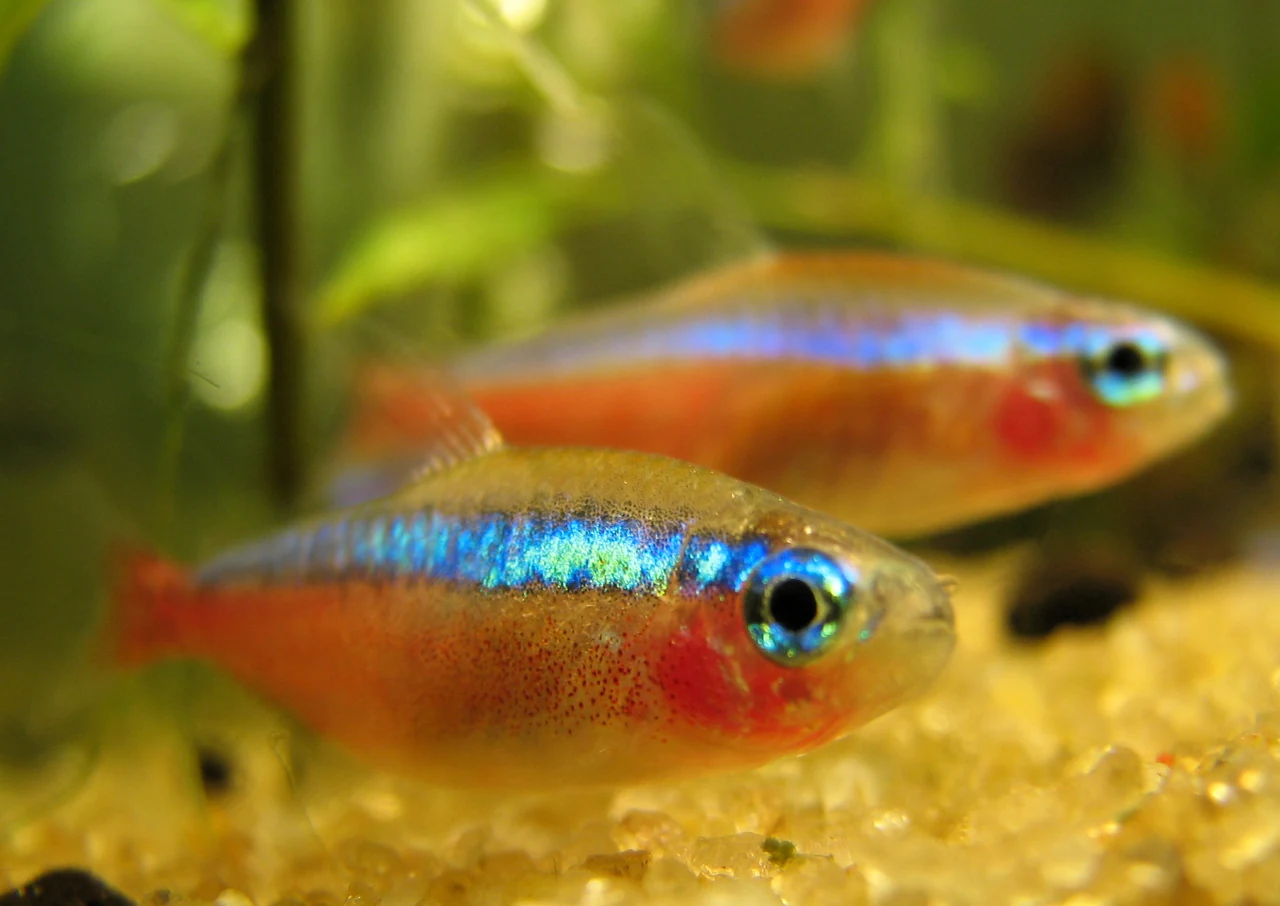
The cardinal tetra is Paracheirodon axelrodi. Its red band extends from the front of the belly towards the base of the tail. In the neon tetra, Paracheirodon innesi, the red starts much farther back. Both have a brilliant blue stripe above it. These are separate species with somewhat different care requirements.
An adult cardinal can reach around five centimetres, including the tail fin. The small fish in a shop may therefore still have some growing to do. Look for Paracheirodon axelrodi on the label. The scientific name helps you check the right care information even when a shop uses “neons” loosely for several species.
Read more: Neon tetra care: plan a complete shoal
What their natural habitat tells us
Cardinals come from the Rio Negro and upper Orinoco river basins in Brazil, Colombia and Venezuela. They inhabit shaded waters, including gently flowing streams. Flooded roots, plants and fallen leaves provide places to shelter and search for tiny prey. As water levels change, different areas become available to them.
Some of these habitats contain blackwater. Dissolved substances from leaves and other plant material give the water a brown tint, rather like weak tea. The name refers to that natural colouring. In an aquarium, neither brown water nor crystal clear water tells you much about water quality on its own. Tests are needed to check hardness, acidity and waste compounds.
Plan a tank for twelve cardinals
For a new cardinal tetra aquarium, we recommend a group of twelve. A tank around 80 cm long, 35 cm wide and 40 cm high is a useful starting point. Those dimensions give a calculated volume of 112 litres. The tank will hold less water once you allow for substrate and furnishings. This example is planned around the cardinal group. Any additional species need space suited to their behaviour and eventual adult size.
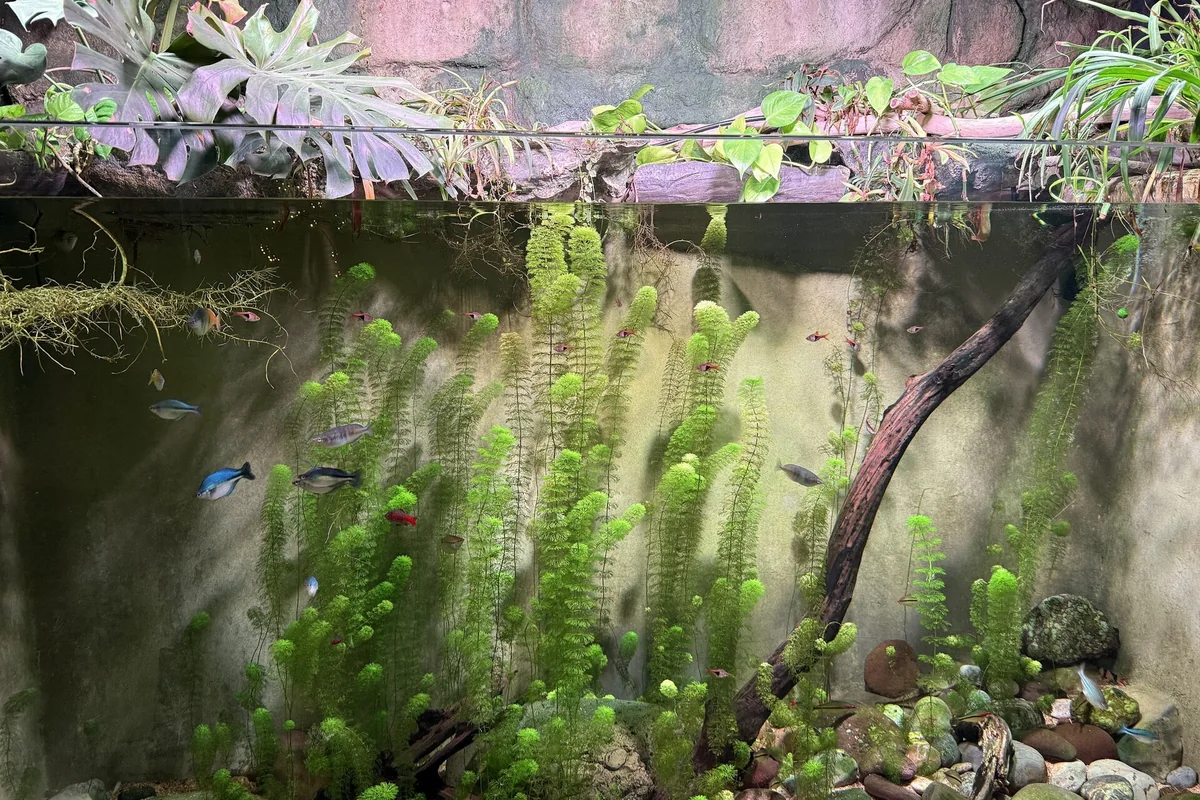
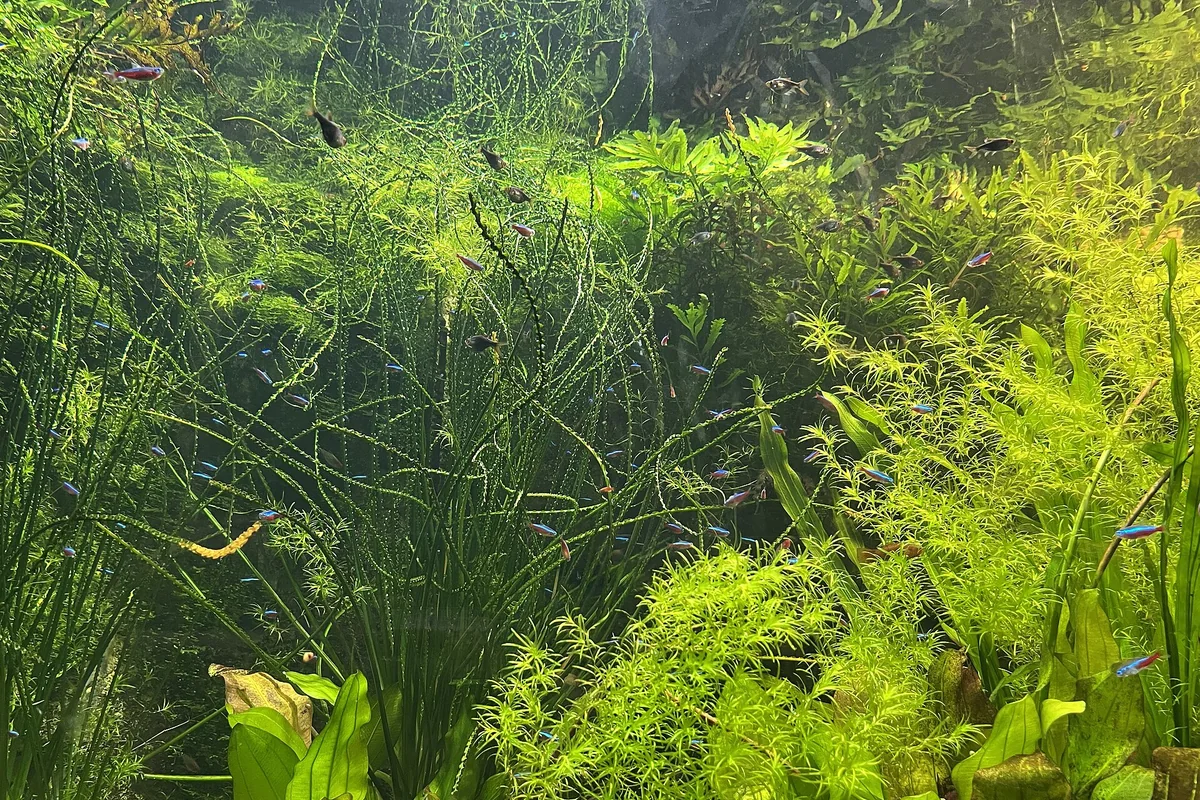
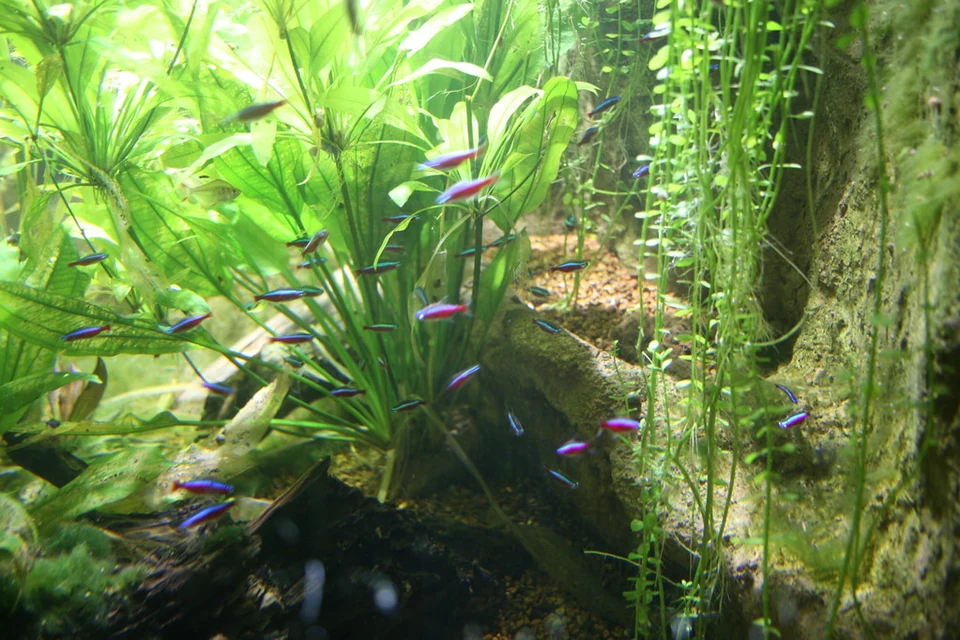
Plants along the back and sides can form sheltered patches that the fish can disappear into. A single thin plant stem in the middle of the tank offers little of that cover. Leave a broad, uninterrupted swimming route in front of the planted areas. Wood and plants of different heights can create a mix of shade and brighter spaces. Position the filter outlet so the fish have calm areas and do not have to spend their time fighting a strong current.
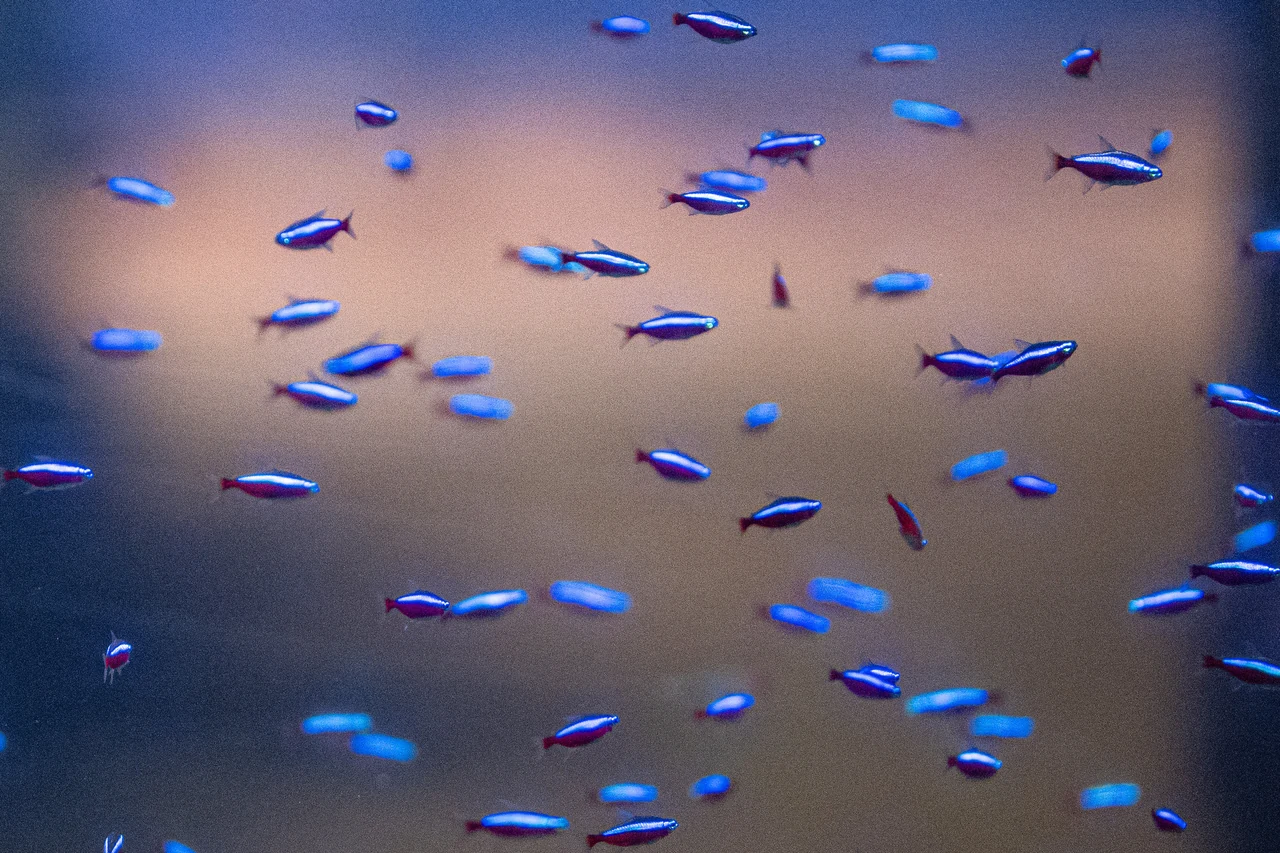
Cardinals are social, but they do not spend every moment in a tight formation. Wild fish also spread out at times. Watch for a while and you may see some moving together through open water while others search among the plants. The group does not need to swim back and forth as one unit all day. Other tetra species should not replace companions of their own species.
Read more: Choosing aquarium fish that can live well together
Understanding temperature, hardness and pH
A temperature of 24 to 27 °C is a useful guide for routine care. An aquarium heater can maintain the temperature you choose. Check the actual water temperature regularly with a thermometer. Any other inhabitants need to be comfortable at that temperature too.
Cardinals prefer soft, acidic water. General hardness, usually shortened to GH, mainly reflects the amount of dissolved calcium and magnesium. Lower amounts mean softer water. Aquarium tests often report general hardness in °dGH. The pH value measures something different: how acidic or alkaline the water is. A pH of 7 is neutral, and values below it are acidic. A low pH alone does not tell you how hard the water is.
Before buying, test the planned aquarium and ask the supplier about the water in which the fish have been kept. Cardinals from different sources may be accustomed to different conditions. If your tap water is hard, discuss a workable preparation method with an experienced aquatics specialist first. You will need suitable water for every later water change as well as for the first fill. Very low pH readings from wild habitats should not become targets for your aquarium. Substantial changes in water conditions should be made gradually so the fish have time to adjust.
Read more: Setting up a freshwater aquarium: tank, filter and water · Caring for an aquarium: watch the water, filter and fish
Why the filter needs a head start
A newly filled aquarium can look clear while still being unprepared for fish. Fish waste and uneaten food release harmful compounds. Bacteria in the filter and on other surfaces convert ammonia into nitrite and then nitrate. Ammonia and nitrite are dangerous to fish. The bacterial population needs time to establish before the fish arrive. This preparation is known as cycling.
During cycling without fish, an aquarium product intended for the purpose supplies ammonia to the bacteria. Follow its directions for use and testing. A single zero reading just after filling the tank proves little. The filter is ready for the first fish when later tests after further instructed doses repeatedly find no detectable ammonia or nitrite. The linked setup guide explains the stages in more detail. Keep testing after the group arrives, when the fish and their food add a new waste load. Regular partial water changes remain part of ongoing care.
Read more: Setting up a freshwater aquarium: tank, filter and water · Caring for an aquarium: watch the water, filter and fish
What to feed cardinal tetras
In the wild, cardinals search among leaves, roots and plants for tiny invertebrates. These include small crustaceans and insect larvae. When a fish picks at a plant surface, it may be looking for those animals. This does not make it an algae eater that can find all its own food in an aquarium.
Fine granules or crushed flakes labelled as a complete food can form the daily diet. A complete food is formulated to provide the nutrients the fish need. Small frozen foods can add variety. Daphnia, tiny crustaceans sold as fish food, are one example. Food pieces should be small enough for the smaller fish to take as well. Offering little portions in several places makes it easier to see whether every fish gets some. Uneaten leftovers should be removed before they pollute the water.
Choose tankmates by water needs and behaviour
Cardinals can live with other small, peaceful fish whose water requirements also match. Consider temperature, hardness and behaviour together. Each additional social species needs enough companions of its own and room for the whole group. An aquarium that already houses several species may have little room left for another shoal.
Larger fish may see cardinals as prey. That includes an angelfish that looks small in the shop but will grow considerably. Even a placid fish can eat a cardinal small enough to swallow. Very active fish can also take the food before the cardinals reach it. When planning your first setup, it is easier to begin with one suitable group and take time to compare any potential additions.
Read more: Choosing aquarium fish that can live well together · Six common aquarium fish and the differences that matter
Ask where the fish came from
Cardinals sold in shops may have been raised in breeding tanks or collected from their natural waters. These are described as captive bred and wild caught fish respectively. When choosing, it is worth looking at the particular source and the care the fish have received. After a long journey, they should have time to recover and be feeding well before being offered for sale.
On the Rio Negro, Project Piaba studies and supports the local ornamental fish trade. The project describes how income from a carefully managed fishery can give communities a reason to protect forests and waterways. This concerns particular fishing areas and supply routes. Ask about the collection area or breeding operation and how long the fish have been with the seller. It is also useful to see them taking the food on offer.
Keep an eye on the whole group
Feeding time gives you a regular chance to watch the fish. Do they all come out from the plants, do smaller fish reach the food, and are they swimming as they have on previous days? If one repeatedly misses meals or is constantly bothered by others, look more closely at the cause. Test the water and check the behaviour of its tankmates and the strength of the current.
A short dated note can help you make sense of later changes. For example, record when you changed water, the readings afterwards and any difference in feeding. Someone looking after the aquarium while you are away will also need the usual food portion and the essential care steps. There should be time to go through that routine together before you leave.
Read more: Caring for an aquarium: watch the water, filter and fish
Common questions
How many cardinal tetras should I keep?
For a new aquarium, we recommend twelve. A long tank around 80 × 35 × 40 cm can be arranged with shelter and clear swimming space. That gives a calculated volume of 112 litres before substrate and furnishings. Any extra species need suitable additional space. This recommendation is for a group of cardinals together.
Can I keep cardinals in tap water?
That depends on your tap water. Cardinals prefer soft, acidic conditions. Test general hardness and pH, then compare the results with the water in which the fish have been kept. If your water is hard, plan its preparation before buying. You will need suitable water regularly for partial changes too.
Do cardinal tetras need brown water?
Their aquarium does not have to look brown. Suitable water conditions, good water quality and sheltered areas matter. Colour alone does not tell you whether the water is soft or acidic. Natural habitats of this species also vary in appearance.
Why do my cardinals not always swim close together?
Cardinals can spread out while exploring and searching for food. Constantly tight schooling is therefore not a useful goal. Watch whether they all eat, use shelter and move freely. A fish that stays apart continually or repeatedly loses out at feeding time is a reason to check the water and watch interactions more closely.
A closer look
Sources and photo credit
- Eschmeyer's Catalog of Fishes: Paracheirodon axelrodiCalifornia Academy of SciencesCardinal tetra or neon tetra? · What their natural habitat tells us
- Cardinal TetraAquarium IndustriesCardinal tetra or neon tetra?
- The food spectrum of the cardinal tetra in its natural habitatActa Amazonica / Instituto Nacional de Pesquisas da AmazôniaWhat their natural habitat tells us · Understanding temperature, hardness and pH · What to feed cardinal tetras
- Cardinal Tetras in Their Natural HabitatTropical Fish HobbyistWhat their natural habitat tells us · Plan a tank for twelve cardinals
- Cardinal TetraNational Aquarium, BaltimoreCardinal tetra or neon tetra? · Choose tankmates by water needs and behaviour
- How to look after tetras and pencilfishOrnamental Aquatic Trade AssociationWhat their natural habitat tells us · Plan a tank for twelve cardinals · Understanding temperature, hardness and pH · Why the filter needs a head start · What to feed cardinal tetras · Choose tankmates by water needs and behaviour · Keep an eye on the whole group
- About Project PiabaProject PiabaAsk where the fish came from
- Project Piaba Advances New Rio Negro Verification ProgramProject PiabaUnderstanding temperature, hardness and pH · Ask where the fish came from
- Species Spotlight: Cardinal TetraFluval / Rolf C. HagenPlan a tank for twelve cardinals · Understanding temperature, hardness and pH · What to feed cardinal tetras · Choose tankmates by water needs and behaviour · Ask where the fish came from
- Cardinal Tetra: Paracheirodon axelrodiMaidenhead Aquatics / FishkeeperPlan a tank for twelve cardinals · Understanding temperature, hardness and pH · What to feed cardinal tetras · Ask where the fish came from
- Cardinal Tetra: The Most Popular Aquarium FishFluvalCardinal tetra or neon tetra? · Ask where the fish came from
- How to set up and look after a freshwater tank / aquariumOrnamental Aquatic Trade AssociationWhy the filter needs a head start
Photo credits
Photo: Cleveland Metroparks Zoo · Erik Drost · CC BY 2.0. Image format adapted.
Photo: Waking up · Henrique Pinto · CC0 1.0. Image format adapted.
Photo: Cardinal Tetra (Pacheirodon axelrodi) · Cliff / cliff1066™ · CC BY 2.0. Image format adapted.
Photo: Cleveland Metroparks Zoo · Erik Drost · CC BY 2.0. Image format adapted.