fellfolio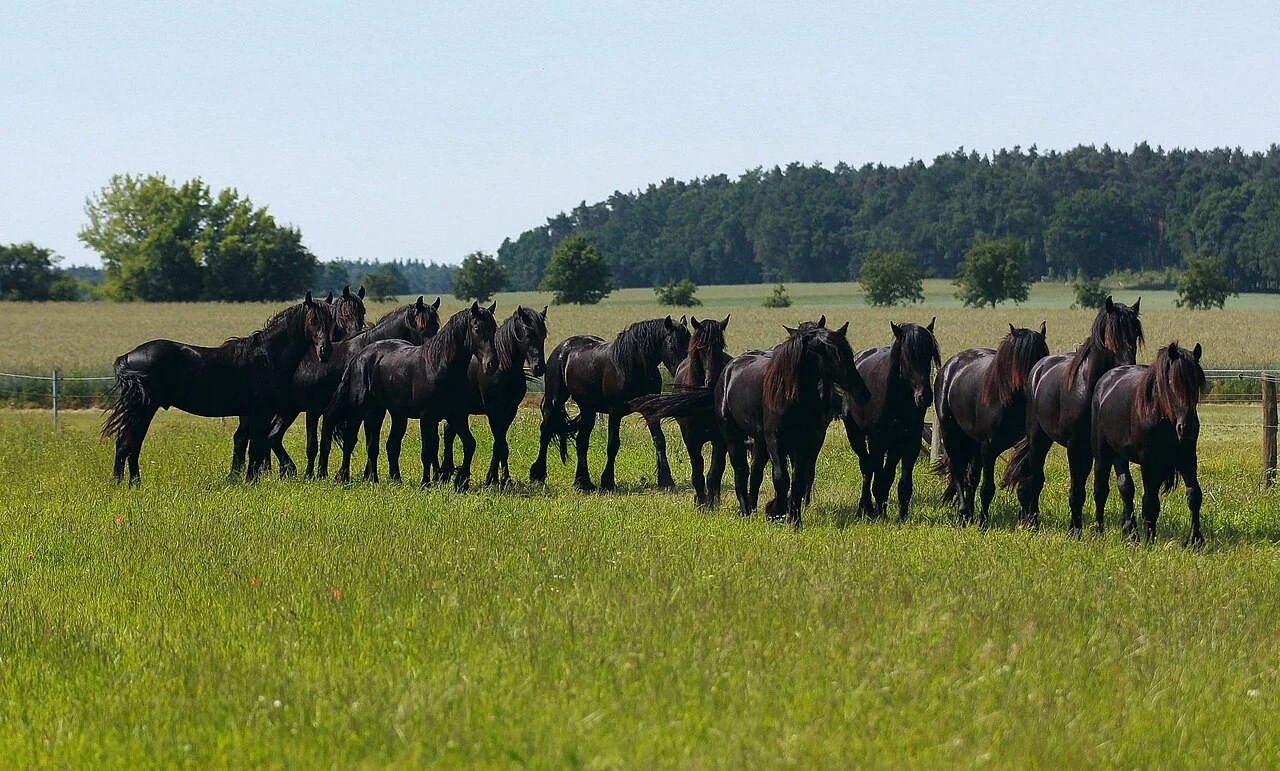
From Friesland to riding and driving
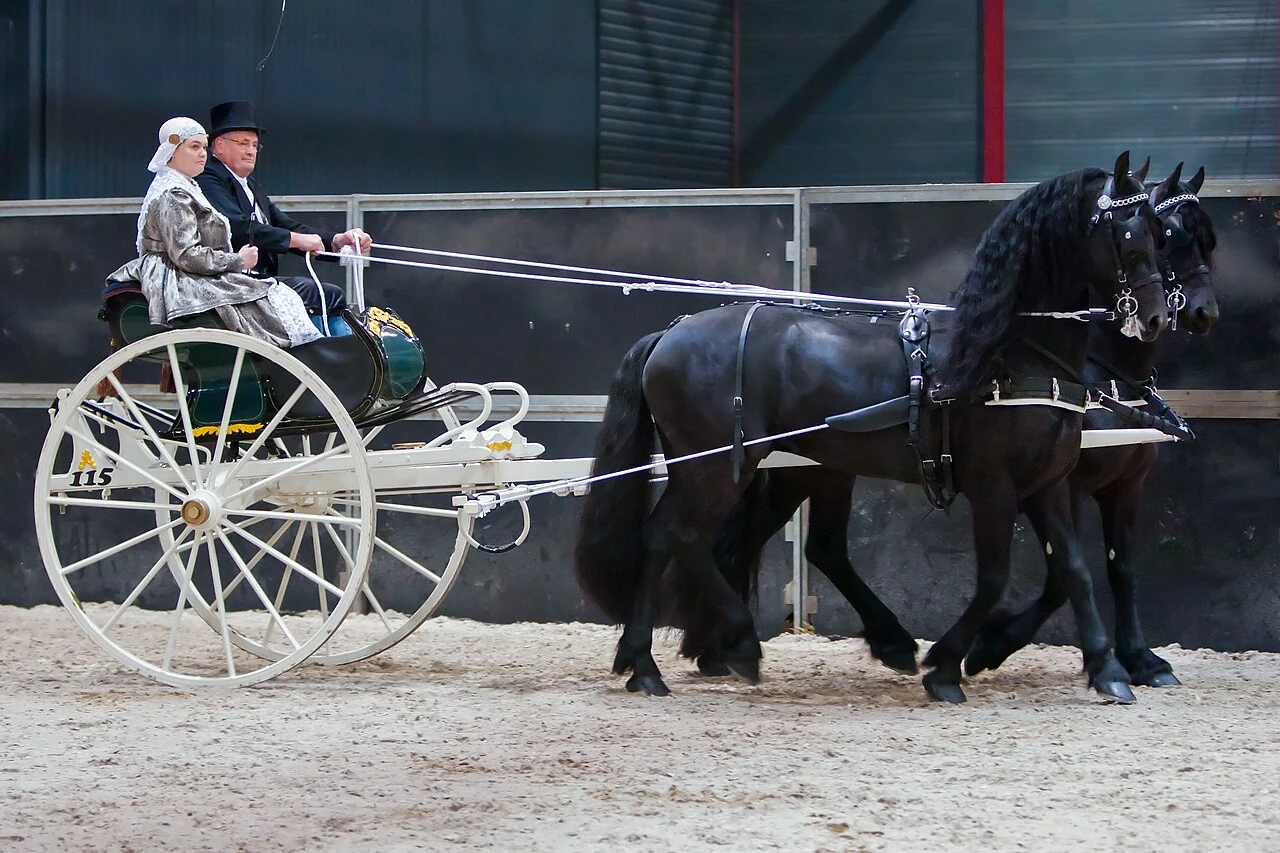
The breed’s history is closely associated with the Dutch region of Friesland. Agriculture, transport and driving were among its earlier uses. The studbook was established in 1879. Today Friesians are ridden and driven, with breeding direction and individual variation influencing their build.
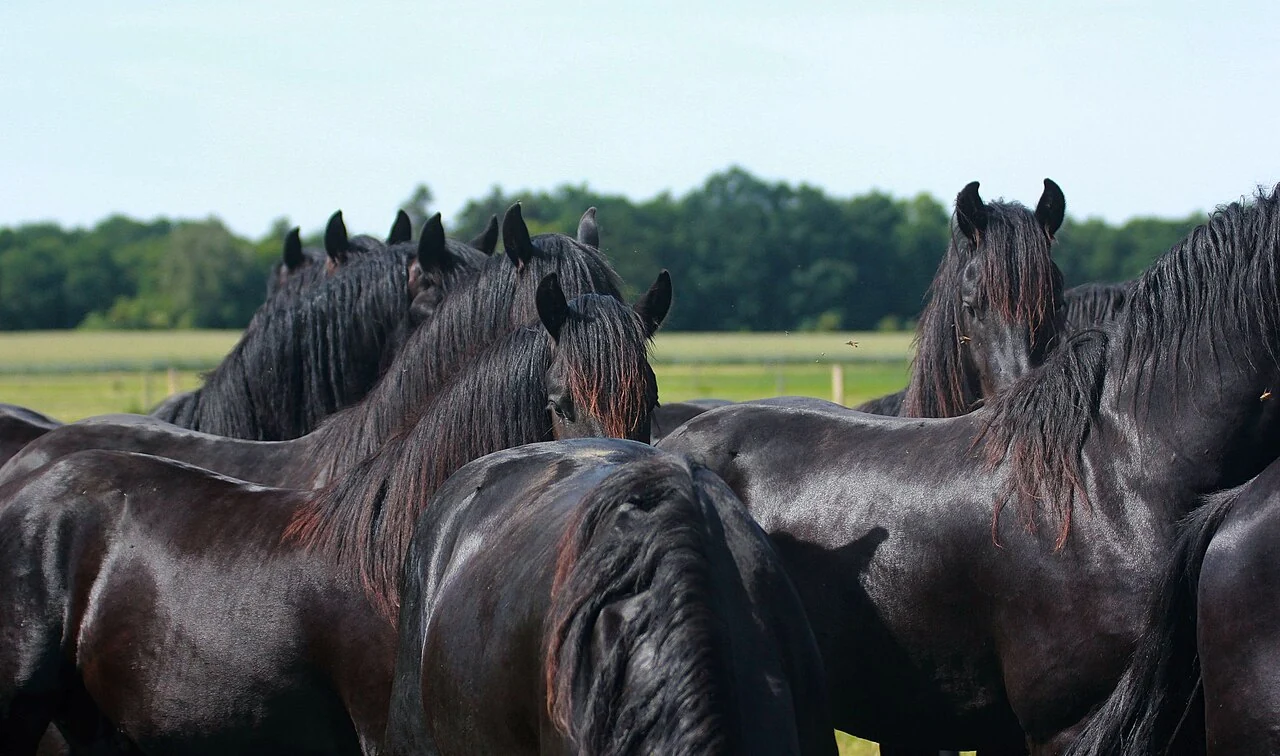
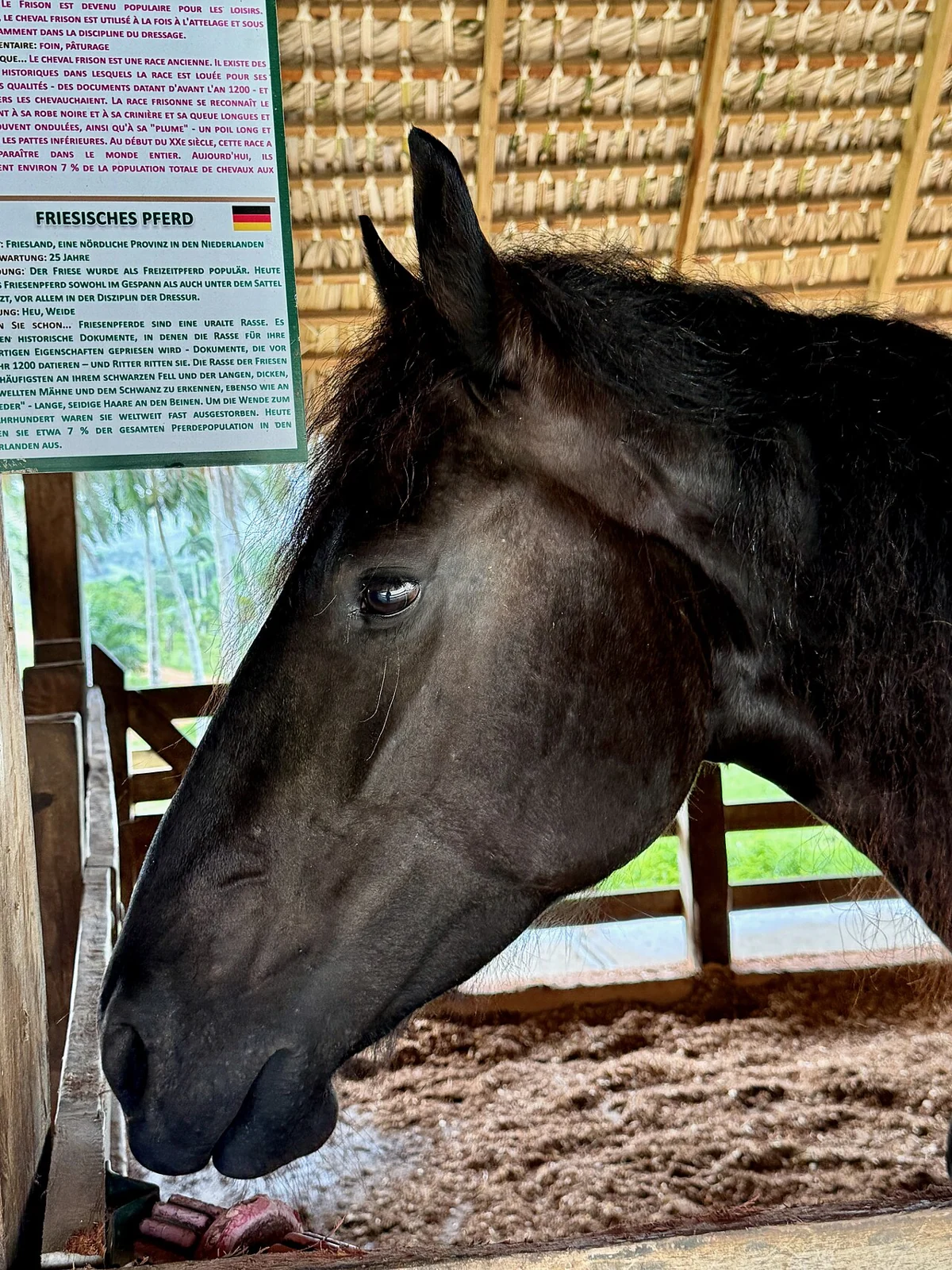
The familiar black coat and long mane are strongly associated with the breed. They do not establish a particular education or a uniform temperament. A horse used in performances may have different experiences from a leisure horse regularly ridden on trails. Pedigree and previous use therefore belong alongside direct observation of the individual. A dramatic appearance can be the start of an interest, while a suitable partnership depends on much more ordinary details.
Sources for this section
- Friesian HistoryFriesian Horse Association of North America
- Guide to buying a horseBritish Horse Society
Looking beneath the mane and feathering
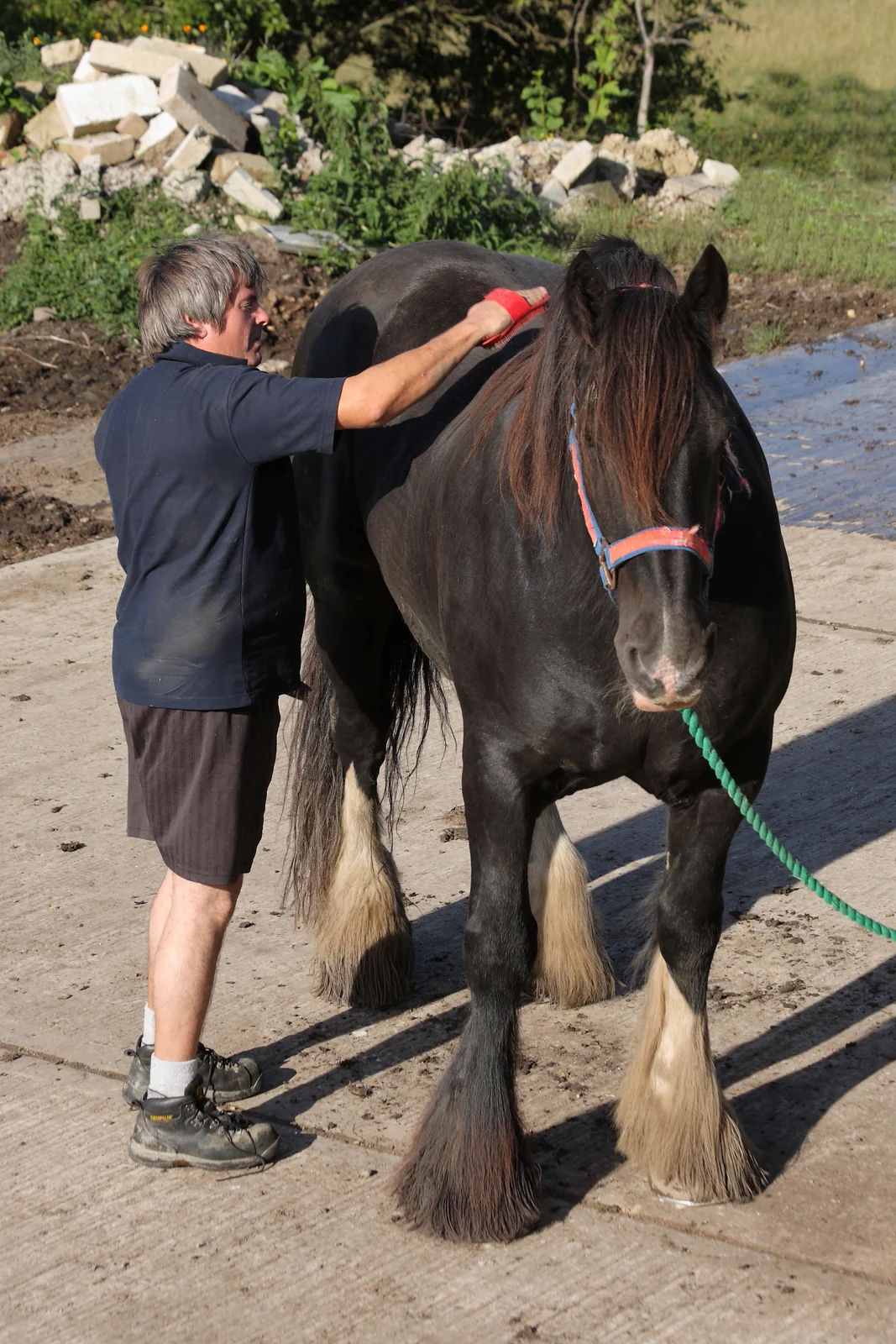
Long hair can conceal dirt, dampness or irritated skin. Parting it gently during grooming makes the skin visible. The lower legs particularly benefit from a quiet check for crusting, swelling or tender areas. Painful or recurring changes deserve veterinary assessment so that treatment addresses the cause.
Mane and tail can be detangled carefully without pulling against knots. If hair is secured for an activity, the arrangement should avoid tension on the skin or rubbing fastenings and be checked again afterwards. A continually wet, dirty resting area makes coat care much harder. Dry places to rest and appropriately surfaced routes therefore improve both the horse’s daily conditions and the practical work of caring for it. Enough time for these checks should be included when arranging shared care or holiday cover.
Read more: Daily horse care: noticing what changes
Sources for this section
- Stage 1 Care syllabusBritish Horse Society
- Where to keep your horseBritish Horse Society
Developing appropriate work gradually
An expressive trot can be impressive. Fitness for longer riding or driving still has to develop progressively. With a young horse, a return after a break or an unfamiliar task, duration and difficulty should reflect current condition. Rest and free movement belong within the programme.
A riding trial should show whether horse and rider can manage the movements and cues involved comfortably. Driving requires its own education, knowledgeable supervision, correctly fitted harness and a suitable vehicle. A Friesian is not already a trained driving horse simply because of its breed. Someone learning the activity should arrange lessons and dependable support. An experienced individual with appropriate training may provide a useful starting point, while both partners continue to develop their skills.
Read more: Reward-based horse training: clear steps for everyday care · Foals and young horses: growing up, handling and early learning
Sources for this section
- Guide to buying a horseBritish Horse Society
- Where to keep your horseBritish Horse Society
- Training: how do horses learn?World Horse Welfare
Useful health questions before buying
Genetic tests are available for particular inherited conditions in Friesians. The University of California, Davis panel includes inherited dwarfism, hydrocephalus involving severe fluid accumulation in the brain, and distichiasis. In the last condition, eyelashes grow from an unusual position and may irritate the surface of the eye. These tests examine specific genetic associations.
A laboratory report should be interpreted with professional help, especially before breeding. The significance of a result depends on the condition and its pattern of inheritance. Clear findings for named variants do not replace examination of the heart, movement, skin or eyes. Previous reports and the proposed use should be discussed openly before purchase. A painful, watering or partly closed eye warrants prompt veterinary advice rather than waiting for the next routine appointment.
Sources for this section
- Friesian Health PanelUC Davis Veterinary Genetics Laboratory
- Guide to buying a horseBritish Horse Society
Daily life beyond the photograph
A suitable yard provides space, compatible company, forage and dry areas for rest. Gates, grooming facilities and transport should be checked practically for a larger or more substantial horse. If previous living arrangements were different, the transition needs planning with the yard team. The horse’s response helps identify adjustments that may be needed.
Feeding reflects body condition, workload and forage quality. A glossy coat alone is insufficient to assess nutrition. The rib area, neck and muscle condition need regular visual and hands-on checks. Later in life, teeth, weight and comfortable movement may require closer attention. More time for grooming or easier access to feeding positions can then be helpful. Sudden changes deserve investigation so that treatable problems are not prematurely attributed to age. Familiar companionship remains valuable throughout these adjustments.
Read more: Choosing the right yard for your horse · Older horses: adapting feeding, movement and daily care
Sources for this section
- Where to keep your horseBritish Horse Society
- Feeding horsesBritish Horse Society
- Essential care for your horse’s hoovesBritish Horse Society
Common questions
Are Friesians always quiet?
Individuals differ considerably. Experience, training, health and management influence behaviour. A calm appearance in familiar surroundings does not answer every question about suitability for a new person.
Does the long hair take much work?
It requires extra time for detangling and checking the skin beneath. Dry, clean living conditions make care easier. Recurring skin problems need investigation and treatment of their cause.
A closer look
Sources and photo credit
- Where to keep your horseBritish Horse Society
- Feeding horsesBritish Horse Society
- Essential care for your horse’s hoovesBritish Horse Society
- Stage 1 Care syllabusBritish Horse Society
- Guide to buying a horseBritish Horse Society
- Friesian HistoryFriesian Horse Association of North America
- Friesian Health PanelUC Davis Veterinary Genetics Laboratory
- Training: how do horses learn?World Horse Welfare
Photo: Friesian horses on a pasture.jpg · SudholtVerlag, Andé Sudholt · CC BY-SA 4.0. Resized and converted to WebP; scene unchanged.
Photo: Friesian Sjees.jpg · Fixating · CC0. Resized and converted to WebP; scene unchanged.
Photo: Friesian horses heads.jpg · SudholtVerlag · CC BY-SA 4.0. Resized and converted to WebP; scene unchanged.
Photo: Friesian horses head.jpg · Oleg Yunakov · CC BY-SA 4.0. Resized and converted to WebP; scene unchanged.