 fellfolio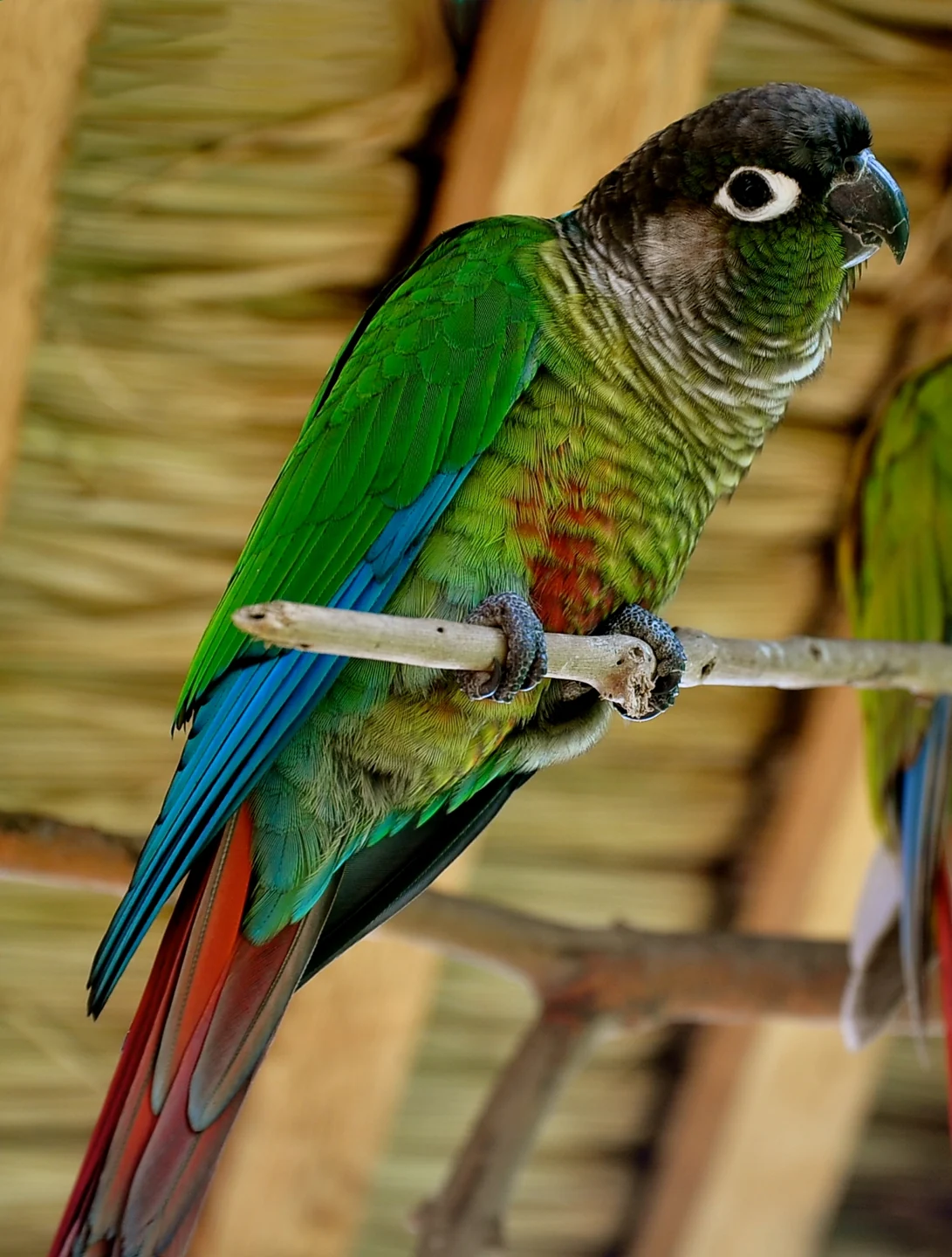
Identification and origins
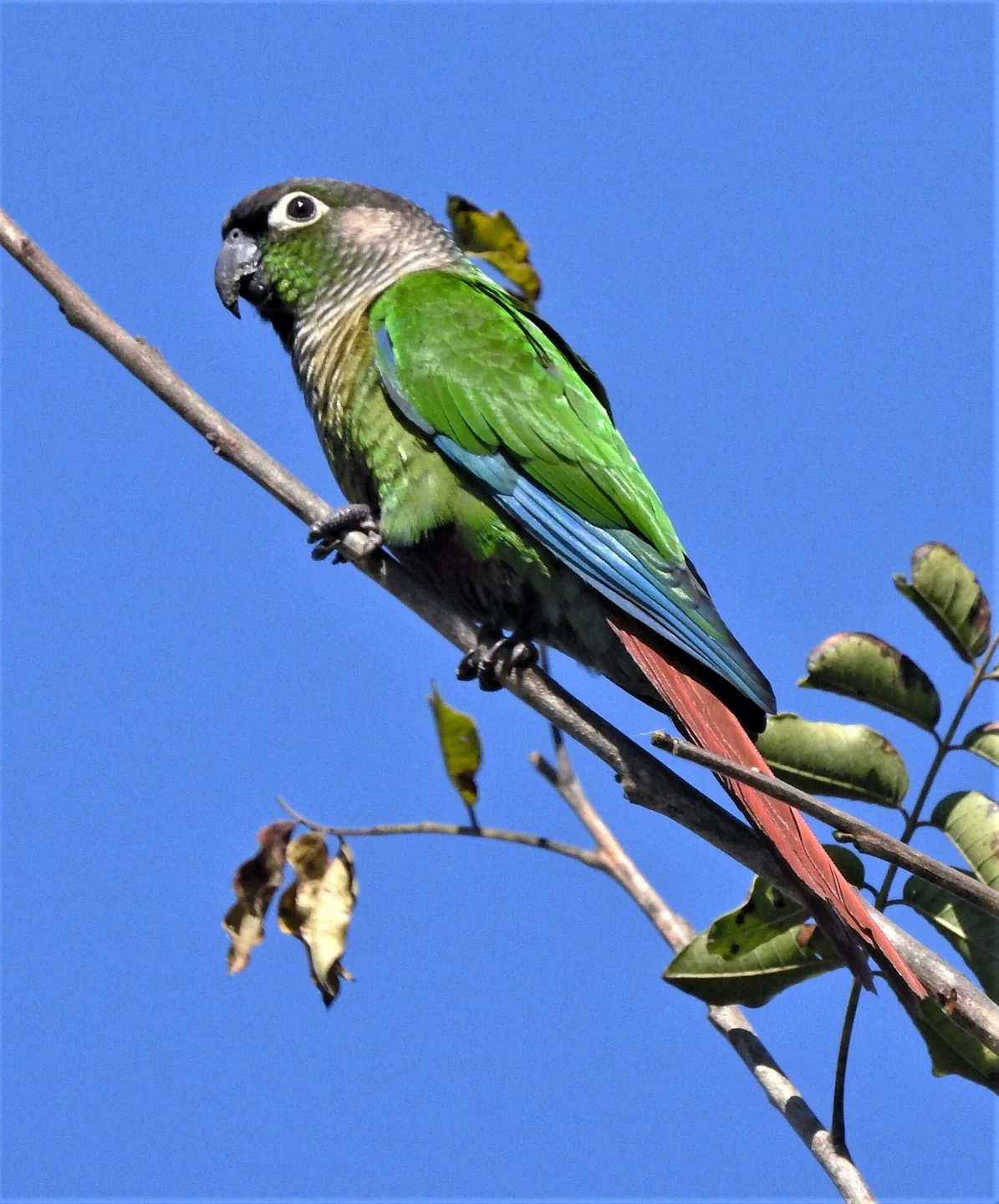
The green-cheeked conure’s scientific name is Pyrrhura molinae. Natural colouring combines green cheeks and wings with a scalloped-looking chest, dark head and reddish tail. Several subspecies and many captive colour mutations exist. A different colour name therefore does not necessarily identify a different species.
Its natural range includes parts of Bolivia, Brazil and Argentina. The World Parrot Trust describes social groups, feeding in treetops and a body length around 26 centimetres. At home, activity takes the form of climbing, bathing and investigating available objects. Before acquiring birds, time spent with an experienced keeper can reveal what their calls, mess and daily workload are actually like.
The practical commitment includes both routine care and cover for holidays or illness. A pair needs a caregiver confident enough to manage doors, food and flight safely, even when the birds behave differently from their usual routine.
Sources for this section
- Green-cheeked ConureWorld Parrot Trust
Choosing companions and watching relationships
A compatible companion of the same species enables shared rest, preening and the communication these parrots are equipped for. An established pair from a responsible rescue can be easier to assess than two birds brought together later at random. Hand-rearing or a long history of solitary housing can influence how an introduction develops.
A new bird should have an avian veterinary assessment before contact with residents. Health checks, initial separation and introductions need an individual plan. Several resting and feeding places should remain available afterwards. Persistent pursuit, exclusion from food or injuries call for safe separation and knowledgeable help.
People can offer activities and voluntary training to both birds. Repeated stroking along the back or access to dark cavities may encourage reproductive behaviour. Physical contact should therefore be handled thoughtfully. Retreating, freezing or a clear defensive posture should be respected before a bird needs to escalate to biting.
Sources for this section
- Living with other birdsRSPCA
- The power of positive reinforcementWorld Parrot Trust
An aviary with clear flight routes
The World Parrot Trust specifies a minimum aviary length of two metres for green-cheeked conures. This is a starting point for space planning rather than a complete housing specification. Width, height, furnishing, bird numbers and additional flight opportunities determine how much useful movement is available. A walk-in bird area with longer flight routes offers substantially more than a narrow cage.
Branches of varied thickness can be spaced to encourage flying between them. Climbing structures and fresh suitable twigs belong where they leave the central area open. Mesh and fittings need nontoxic materials suitable for parrots, and catches should resist a bird’s efforts to open them.
Many green-cheeked conures enjoy a shallow bath. It needs clean water and an easy exit. A protected, quiet sleeping place, predictable lighting and a secure room for daily flight are also part of the plan. Windows, fans, cooking fumes and open water containers require particular attention. A safe setup should remain practical for whoever provides holiday care.
Read more: Setting up a bird room: safe flight and good landing places
Sources for this section
- Green-cheeked ConureWorld Parrot Trust
- Housing and environments for pet birdsRSPCA
Balanced feeding with opportunities to search
A suitable complete parrot food together with vegetables can form the foundation of the diet. This means pellets formulated for the species: small pieces of compound food with the nutrients distributed throughout each piece. Seeds and other energy-rich favourites should make up only a controlled portion. An avian veterinary practice can review the plan in relation to weight, activity and previous feeding.
Part of the usual ration can be presented as a simple foraging task. A clearly visible piece in a safe paper cup is easier to understand initially than a fully closed container. The task can gradually require more effort as the birds learn. This connects eating with activity without adding unlimited treats on top of the daily ration.
During a diet change, each bird needs to be observed eating the new food. Familiar food should remain available initially, with regular weights helping monitor progress. Fresh leftovers need removing and dishes need cleaning. Salty human meals, chocolate and caffeinated drinks have no place in the feeding routine. Any supplements should be checked against the complete diet already offered.
Sources for this section
- Conures: FeedingVCA Animal Hospitals
Building useful skills through small successes
A familiar perch makes a useful training starting point. Rewarding voluntary approaches to an offered hand or transport perch immediately makes the next step understandable. The hand should stay steady, and the bird should be able to step back to its original position. Short successful attempts can later join into a complete routine.
Three practical skills are especially valuable: entering a carrier, standing on scales and moving to a familiar station. A sudden loss of participation may also signal a change in wellbeing. New movement problems, reduced appetite or altered breathing call for an avian veterinary assessment. Laboured breathing requires immediate contact with an avian vet or emergency veterinary service.
Young birds should arrive with reliable independent feeding and appropriate social experience. Later in life, accessible perches and easier food-searching tasks may become useful. Contact with a familiar companion and opportunities to make choices remain worthwhile as physical abilities change. Training can be adjusted to those abilities instead of repeating an exercise the bird now finds uncomfortable.
Read more: Bird training: confidence, carriers and cooperative care · Bird life stages: from youngster to older companion
Sources for this section
- Step upWorld Parrot Trust / Barbara Heidenreich
- Geriatric diseases of pet birdsMerck Veterinary Manual
- Weaning baby parrotsAssociation of Avian Veterinarians
Common questions
Are green-cheeked conures quiet?
They can make conspicuous calls despite their small size. Descriptions of them as quiet do not replace spending meaningful time around the species.
Should they learn to talk?
Speech imitation is not necessary for a good relationship. Voluntary interaction, returning safely to the aviary and cooperating with routine care are more useful goals.
A closer look
Sources and photo credit
- Green-cheeked ConureWorld Parrot Trust
- Conures: FeedingVCA Animal Hospitals
- Housing and environments for pet birdsRSPCA
- Living with other birdsRSPCA
- Weaning baby parrotsAssociation of Avian Veterinarians
- Geriatric diseases of pet birdsMerck Veterinary Manual
- The power of positive reinforcementWorld Parrot Trust
- Step upWorld Parrot Trust / Barbara Heidenreich
Photo: Pyrrhura molinae -captive-perch-8a-1cp.jpg · Brandon Lim; derivative by Snowmanradio · CC BY 2.0. Resized proportionally and converted to WebP. The layout may crop the image.
Photo: Green-cheeked Parakeet (Pyrrhura molinae australis), Santa Bárbara, Jujuy, Argentina 1.jpg · hhulsberg · CC0. Resized proportionally and converted to WebP. The layout may crop the image.
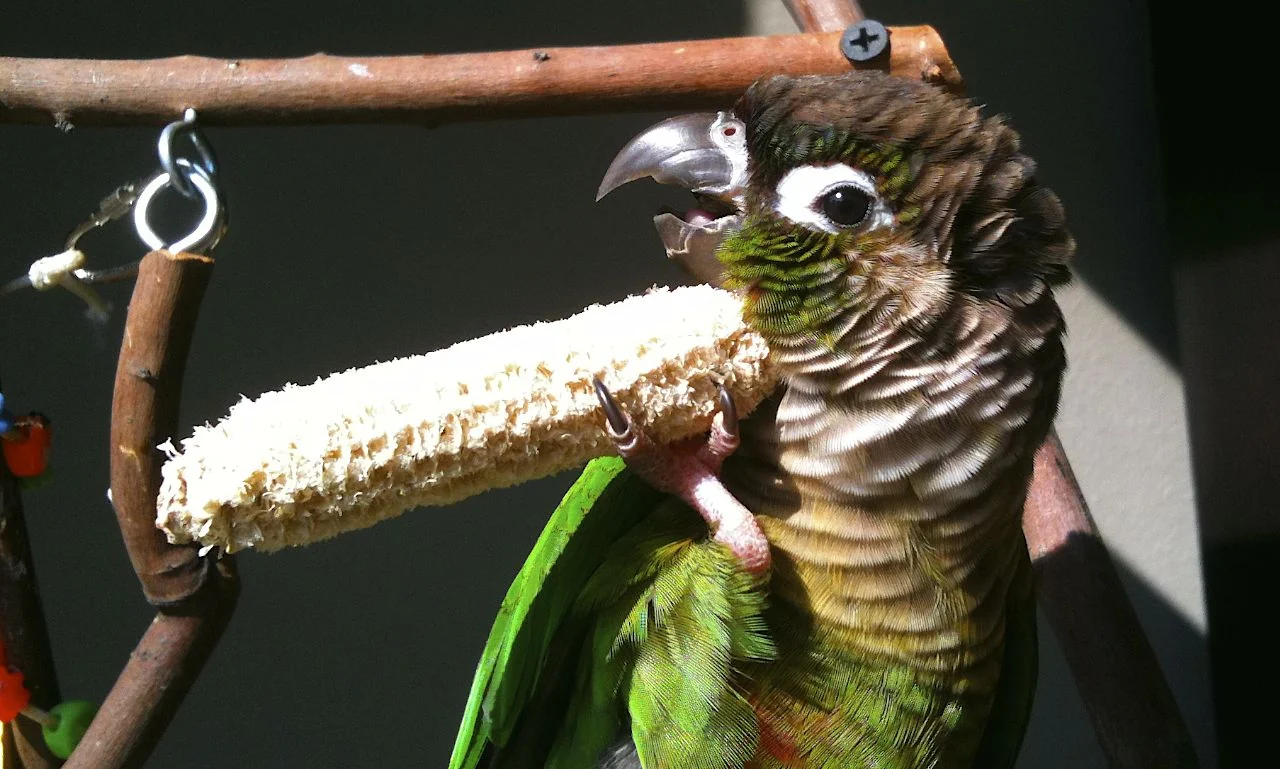
Photo: Pyrrhura molinae -pet with corn cob-8a.jpg · J-a-x at English Wikipedia - Jackson Myers · CC BY-SA 3.0. Resized proportionally and converted to WebP. The layout may crop the image.
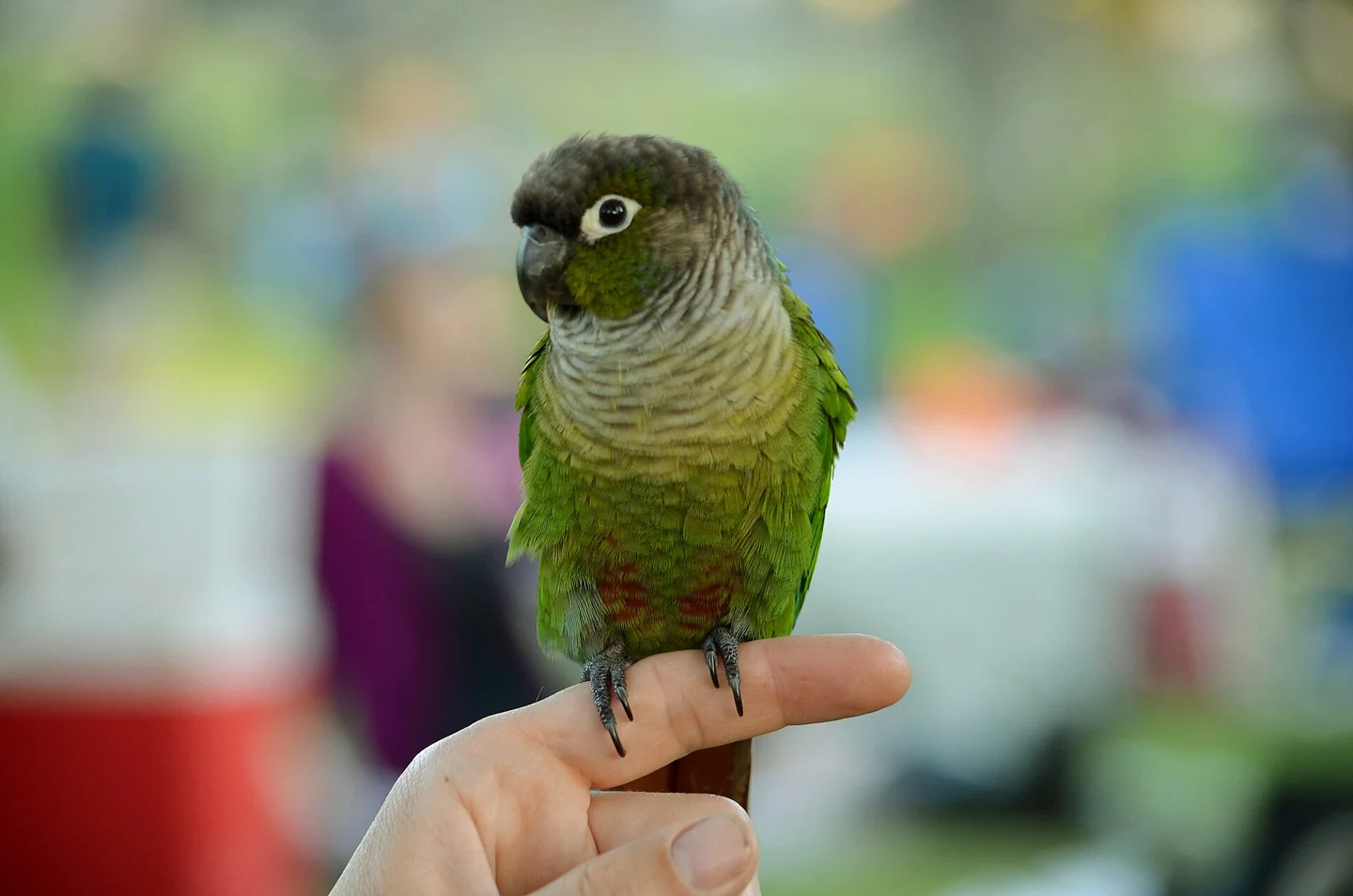
Photo: Pyrrhura molinae -pet-8a.jpg · Eric Sonstroem from California, USA · CC BY 2.0. Resized proportionally and converted to WebP. The layout may crop the image.

,_Santa_B%C3%A1rbara,_Jujuy,_Argentina_1.jpg)

