fellfolio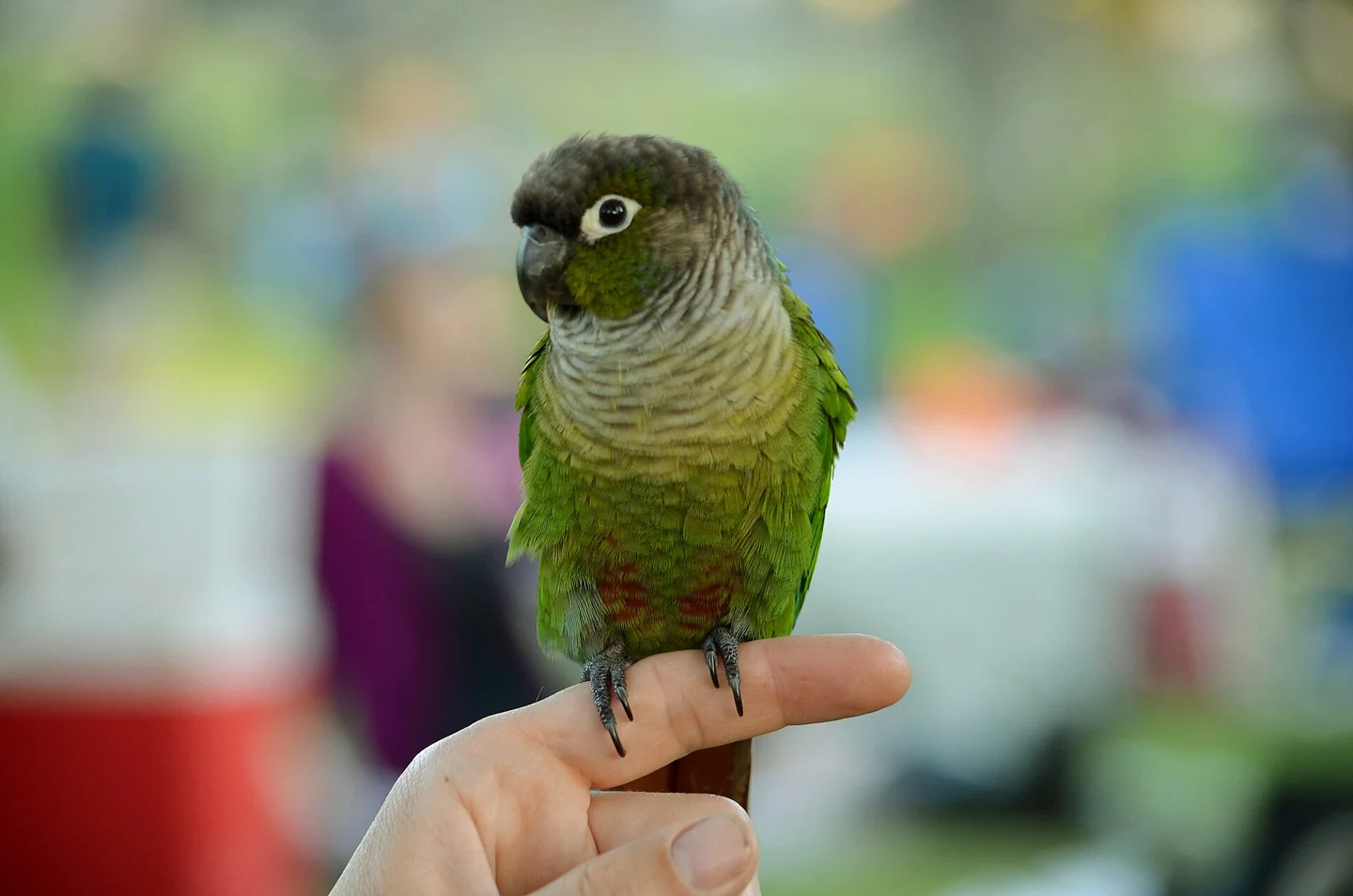
Make the learning situation comfortable
A familiar perch and a quiet moment provide a good starting point. The bird should be awake and interested without being occupied by a new environment or a social dispute. Its usual retreat remains available. Doors and windows are secure, and other household animals are outside the room.
A tiny piece of suitable favourite food can serve as a reward, counted within the normal feeding plan. Regular meals should not be withheld to force participation. Some birds also enjoy attention or a particular activity; the individual’s response indicates what is genuinely rewarding.
Group sessions need enough organisation to prevent one bird crowding another or taking every reward. Long separations from familiar companions are unnecessary. Separate stations with comfortable space between them may provide enough clarity. A calm setup also helps the person notice the moment worth rewarding instead of managing several competing movements at once.
Sources for this section
- The power of positive reinforcementWorld Parrot Trust
- Living with other birdsRSPCA
Understand rewards and targets
Positive reinforcement describes a straightforward relationship: something pleasant follows an action, making the bird more likely to repeat it. A brief word or quiet click can mark the exact moment. At first, the signal should consistently be followed by the reward. Special equipment is optional.
A target is a safe object whose end the bird learns to touch voluntarily with its beak. The first reward might follow looking towards it, then approaching and eventually touching. Each useful intermediate movement can be recognised.
The target should stay at a comfortable distance rather than being pushed towards the bird’s face. Gradually, the bird may learn to follow it for a few steps. With small finches, a familiar perch or feeding station can be a more practical starting point than approaching a hand. The task should make sense within the species’ natural movements and the individual’s experience.
Sources for this section
- Step upWorld Parrot Trust / Barbara Heidenreich
- Empowering parrotsWorld Parrot Trust / Susan G. Friedman
Step onto a perch or hand
Some birds find a stable offered perch more comfortable than a hand. It can be held still at an easily reached height beside the familiar resting place. A voluntary movement towards it is rewarded, followed later by one foot on the perch and eventually a full transfer.
Stepping back belongs in the exercise from the beginning. The bird learns that its familiar place remains accessible. Once stepping up is relaxed, the perch can move a small distance. Being carried further is a later task.
Leaning away, tightly held feathers or visible preparation to flee suggest that the exercise should become easier or pause. Pressing a hand against the body until the bird has to step up removes choice and can increase defensive responses. A bird already fearful of hands may need very small changes and more repetitions at a comfortable distance. Progress should remain based on its response rather than a fixed deadline.
Sources for this section
- Step upWorld Parrot Trust / Barbara Heidenreich
- Empowering parrotsWorld Parrot Trust / Susan G. Friedman
Make transport and weighing familiar early
A carrier can initially sit open near the bird’s normal activity area. The first task is simply becoming comfortable with its presence. Approaching, resting near the entrance and entering can then be rewarded separately. Brief door closure follows only after the interior is familiar. Lifting, carrying and short journeys are introduced as separate stages.
Suitable digital scales need a secure nonslip perch or platform. Its weight is deducted or removed using the tare function. The bird can first become familiar with the platform away from the scales before the two are combined.
Weights are easier to compare when recorded at a similar time of day. Very small birds need appropriately sensitive scales. An avian veterinary practice can advise on suitable resolution and how weight changes should be interpreted for that species. A concerning decline should prompt health advice rather than repeated attempts to improve the training performance.
Read more: Bird life stages: from youngster to older companion
Sources for this section
- Empowering parrotsWorld Parrot Trust / Susan G. Friedman
- Geriatric diseases of pet birdsMerck Veterinary Manual
Prepare for cooperative veterinary care
Cooperative care training introduces small parts of future husbandry or examinations voluntarily. Staying at a station, briefly presenting a foot or tolerating a towel nearby may all be useful. The starting step should be small enough for relaxed participation. A towel is initially shown without wrapping it around the bird.
The treating practice should help identify medically useful exercises. Anyone who will give medicine by syringe needs direct instruction; training advice does not supply a dose or replace safe administration technique. Even a well-trained bird may still need professional restraint or another veterinary procedure during an urgent examination.
For an older bird or one recovering from illness, duration and physical effort should match its abilities. A few comfortable repetitions may achieve more than one prolonged attempt. Turning away or retreating should be respected. Brief notes about the last comfortable step make the next session easier to plan and help a second caregiver use a consistent approach.
Sources for this section
- Geriatric diseases of pet birdsMerck Veterinary Manual
- The power of positive reinforcementWorld Parrot Trust
Common questions
Can finches learn through training?
Yes. Predictable routines and rewards can support learning. Visiting a feeding station or returning calmly to an aviary can be suitable goals without making physical contact the objective.
How long should a session last?
Attention and body language guide the useful duration. A few relaxed repetitions can be enough initially. Moving away or losing interest should be allowed to lead to a break.
Sources and photo credit
- Living with other birdsRSPCA
- Geriatric diseases of pet birdsMerck Veterinary Manual
- The power of positive reinforcementWorld Parrot Trust
- Step upWorld Parrot Trust / Barbara Heidenreich
- Empowering parrotsWorld Parrot Trust / Susan G. Friedman
Photo: Pyrrhura molinae -pet-8a.jpg · Eric Sonstroem from California, USA · CC BY 2.0. Resized proportionally and converted to WebP. The layout may crop the image.