 fellfolio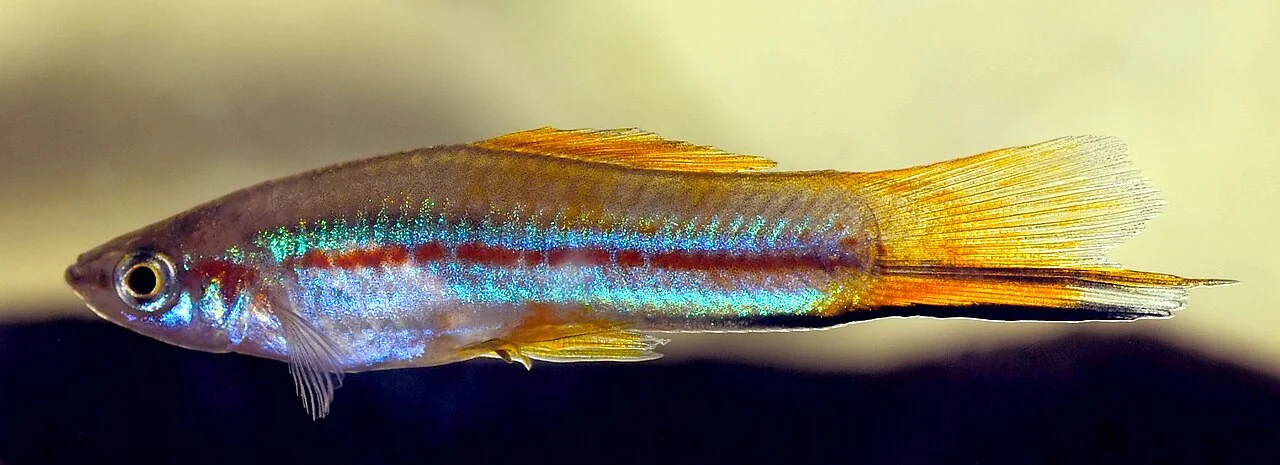
The sword is one clue to identity
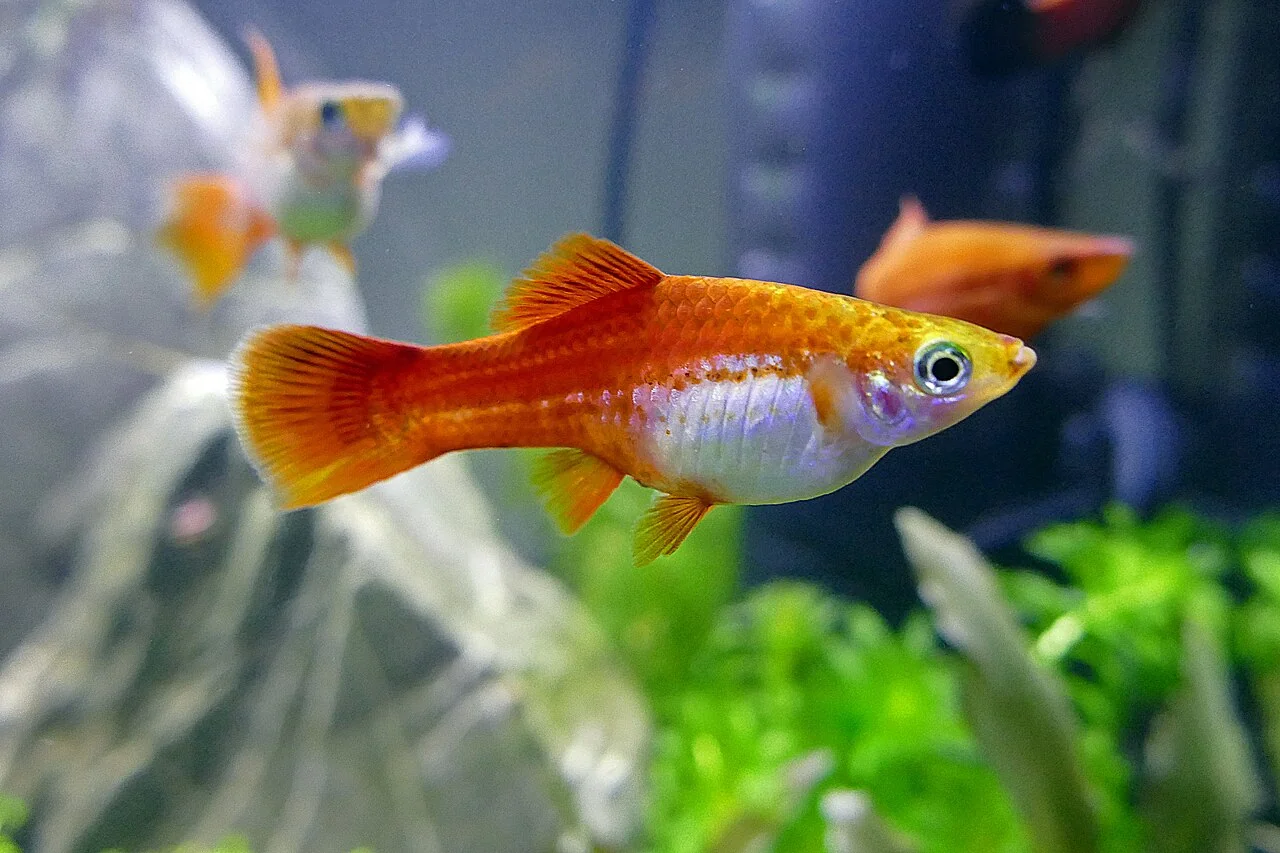
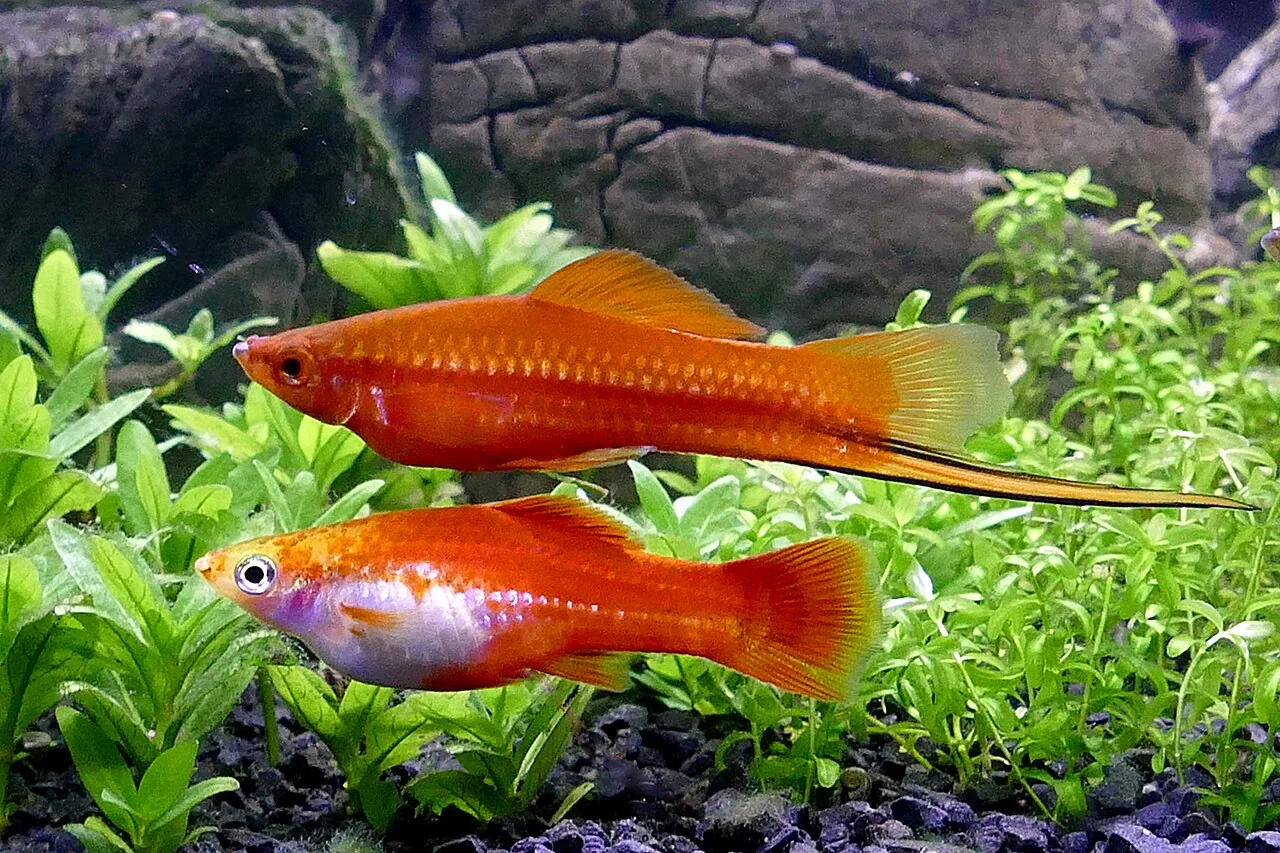
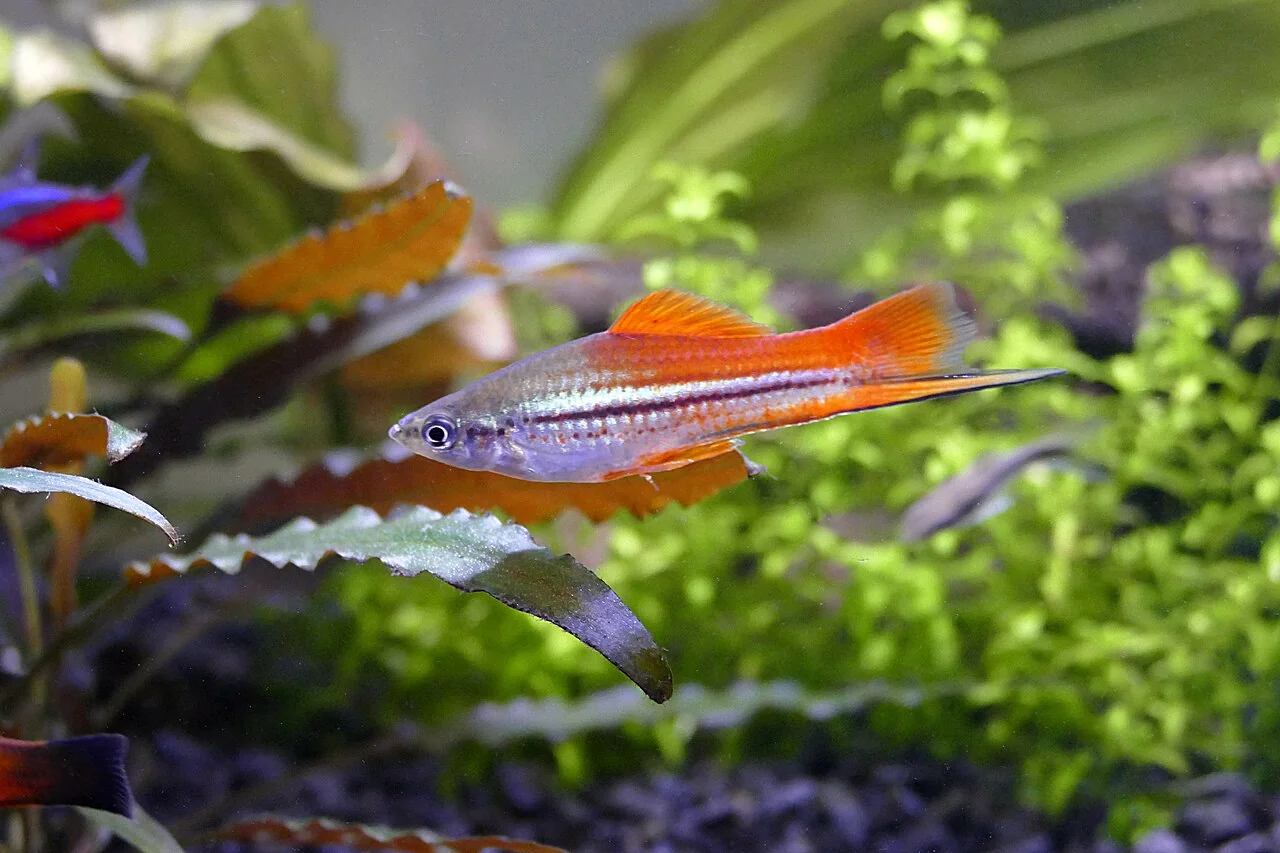
The sword is the extended lower portion of the tail fin and is characteristic of adult males. Females and young fish lack this extension. The anal fin underneath the rear of the body should also be examined when identifying sex. In males it develops into a narrow reproductive organ called the gonopodium. In females it remains fan-shaped.
Red, spotted and other breeding forms can have more complex ancestry than their colour names suggest. Swordtails and platies can be crossed, as documented in scientific breeding stocks. You should ask how the fish have been identified before buying, particularly if you intend to breed a specific species or line.
Choose swimming length for the adult group
OATA, the UK ornamental aquatics trade association, describes swordtails as usually eight to twelve centimetres long and recommends at least 80 litres. The research database FishBase also records larger fish, including females up to 16 centimetres in total length. Your aquarium plan should therefore allow for larger adults too. The chosen tank should accommodate the group when fully grown.
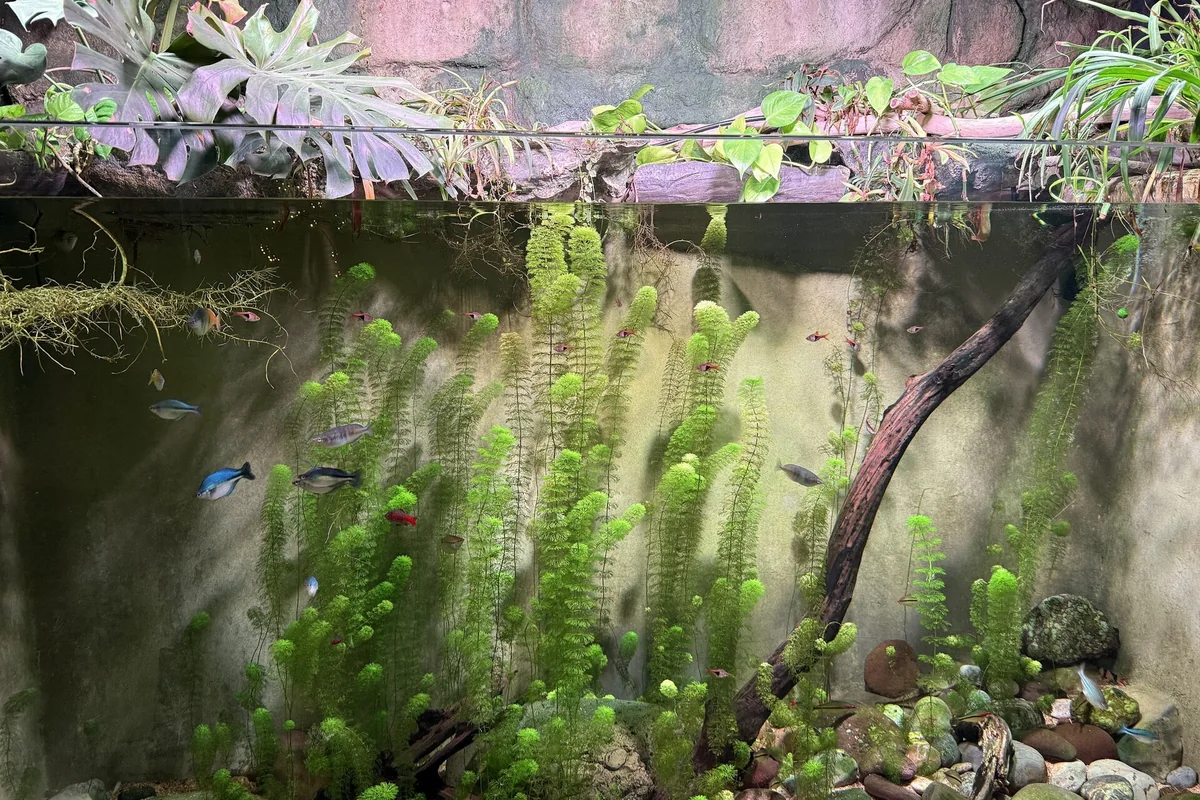
A long open swimming route should be part of the layout. Plants and other suitable structures should create several sheltered areas along the sides. A fish can then move away without repeatedly swimming through the centre of the group. A tall, narrow tank offers less distance at the same volume. You should seek knowledgeable advice on actual dimensions, the number of fish and any other inhabitants together.
Read more: Setting up a freshwater aquarium: tank, filter and water
Settle on suitable, steady water conditions
OATA lists 22 to 27 °C and pH 7 to 8 for swordtails. The pH value describes how acidic or alkaline water is. General hardness should also be measured. It mainly reflects dissolved calcium and magnesium. You should discuss your readings and the previous conditions of the fish being offered before buying. Hardness figures differ between general care sheets and records of natural habitats.
The filter should be cycled without fish before they arrive. During cycling, bacteria establish and turn ammonia from waste into harmful nitrite and then less toxic nitrate. An ammonia product intended for cycling is used according to its instructions. Repeated checks after the further prescribed additions should show no detectable ammonia or nitrite before the first fish arrive.
Testing and regular partial water changes remain necessary afterwards. Replacement water should be adjusted to a suitable temperature. If tap water contains chlorine or chloramine, an appropriate conditioner should be used. These disinfectants are harmful to fish and the useful filter bacteria.
Read more: Caring for an aquarium: watch the water, filter and fish
Distinguish brief chasing from persistent harassment
Male swordtails can come into conflict with one another. In a mixed-sex group, OATA recommends roughly two females per male to spread his attention. You should still watch whether individual fish are repeatedly chased and rarely get a rest. If a female stays in one corner or cannot reach food, you should review the layout and provide separate accommodation if needed.
For additional species, temperature, hardness, adult size and behaviour should all fit the planned aquarium. Active swordtails may disturb very timid companions by chasing them or competing at feeding time. Before combining species, you should consider where each feeds and can find shelter. Adding more fish is not a dependable way to resolve an existing problem.
Read more: Choosing aquarium fish that can live well together
Make feeding work for the whole group
Swordtails eat both plant and animal material. Suitable complete flakes or granules should provide their daily nutrients. Small portions of appropriate frozen food can supplement them. Pieces should be small enough for the smaller fish to eat too. Food formulated for a different group should not be chosen just because it looks similar.
Offering food in several places can help you assess group behaviour. You can see whether one dominant fish takes everything first or others get a share. Leftovers should be removed and the next portion reduced accordingly. When care is shared, set portions should be agreed so that each person does not feed the group again.
Growing fry need their own space
Swordtails do not lay their eggs in the aquarium. The young develop inside the female and are born able to swim. Some may grow among well-arranged plants without initially being noticed. If you intend to raise offspring, suitable additional accommodation should already be prepared. It needs an established filter and food small enough for their mouths.
As each young fish grows, the aquarium's waste load increases. More feeding also produces more waste. You should follow fish numbers and water readings and arrange suitable new homes in good time. Keeping young fish indefinitely in a small breeding box, a separate container within the aquarium, does not provide enough space for growth.
Look at the fish and their equipment
During daily care, you should watch for changes in swimming, loss of appetite and injuries. A fish staying unusually apart may be responding to group pressure or a health problem. Repeated rubbing, new spots or markedly faster breathing should be assessed by a vet who treats fish.
If several fish suddenly struggle to breathe, they need immediate help. While contacting a suitable vet, you should check the equipment and water readings. A failed filter or heater matters to the assessment, as do recent arrivals. Dates, test results and photographs help you describe what has changed clearly.
Common questions
Is a swordtail without a sword female?
Not necessarily. A young male may not yet have a clearly extended tail fin. The anal fin should also be assessed. Knowledgeable identification of sex is particularly important if you do not plan to raise offspring.
Will 80 litres suit every group?
80 litres is the lower recommendation in OATA's care sheet. Tank dimensions, the number of adult fish, shelter and other inhabitants must also be considered. A mixed-sex group may need more accommodation when offspring arrive.
Can swordtails breed with platies?
Crosses between swordtails and platies are possible. If you want to maintain separate species or particular lines, they should be kept separately for breeding. The resulting young also need a long-term housing plan.
A closer look
Sources and photo credit
- How to look after platies and swordtailsOrnamental Aquatic Trade AssociationThe sword is one clue to identity · Choose swimming length for the adult group · Settle on suitable, steady water conditions · Distinguish brief chasing from persistent harassment · Growing fry need their own space
- Xiphophorus hellerii species summaryFishBaseChoose swimming length for the adult group · Settle on suitable, steady water conditions · Distinguish brief chasing from persistent harassment · Make feeding work for the whole group
- Freshwater Ornamental Fish Commonly Cultured in FloridaUniversity of Florida IFAS ExtensionThe sword is one clue to identity · Growing fry need their own space
- Management of Aquarium FishMerck Veterinary ManualLook at the fish and their equipment
- Routine Health Care of FishMerck Veterinary ManualLook at the fish and their equipment
- Emergencies of FishMerck Veterinary ManualLook at the fish and their equipment
- Keeping pet fish togetherRSPCADistinguish brief chasing from persistent harassment
- Choosing an aquariumRSPCAChoose swimming length for the adult group · Growing fry need their own space
- What to feed your fishRSPCAMake feeding work for the whole group
- A Summary of Water Quality Tests and Recommended UseMerck Veterinary ManualSettle on suitable, steady water conditions
- XGSC Stocks: Xiphophorus hellerii breeding stocksTexas State University Institute for Molecular Life SciencesThe sword is one clue to identity
- How to set up and look after a freshwater tank / aquariumOrnamental Aquatic Trade AssociationSettle on suitable, steady water conditions · Growing fry need their own space
- Providing a Home for FishMerck Veterinary ManualSettle on suitable, steady water conditions · Make feeding work for the whole group
Photo credits
Photo: Xiphophorus helleri (aka).jpg · André Karwath (Aka) / Togabi · CC BY-SA 2.5. Image format adapted.
Photo: Xiphophorus hellerii red female 01.jpg · Wojciech J. Płuciennik · CC BY-SA 4.0. Image format adapted.
Photo: Xiphophorus hellerii red male female 01.jpg · Wojciech J. Płuciennik · CC BY-SA 4.0. Image format adapted.
Photo: Xiphophorus hellerii young male 01.jpg · Wojciech J. Płuciennik · CC BY-SA 4.0. Image format adapted.
.jpg)


