 fellfolio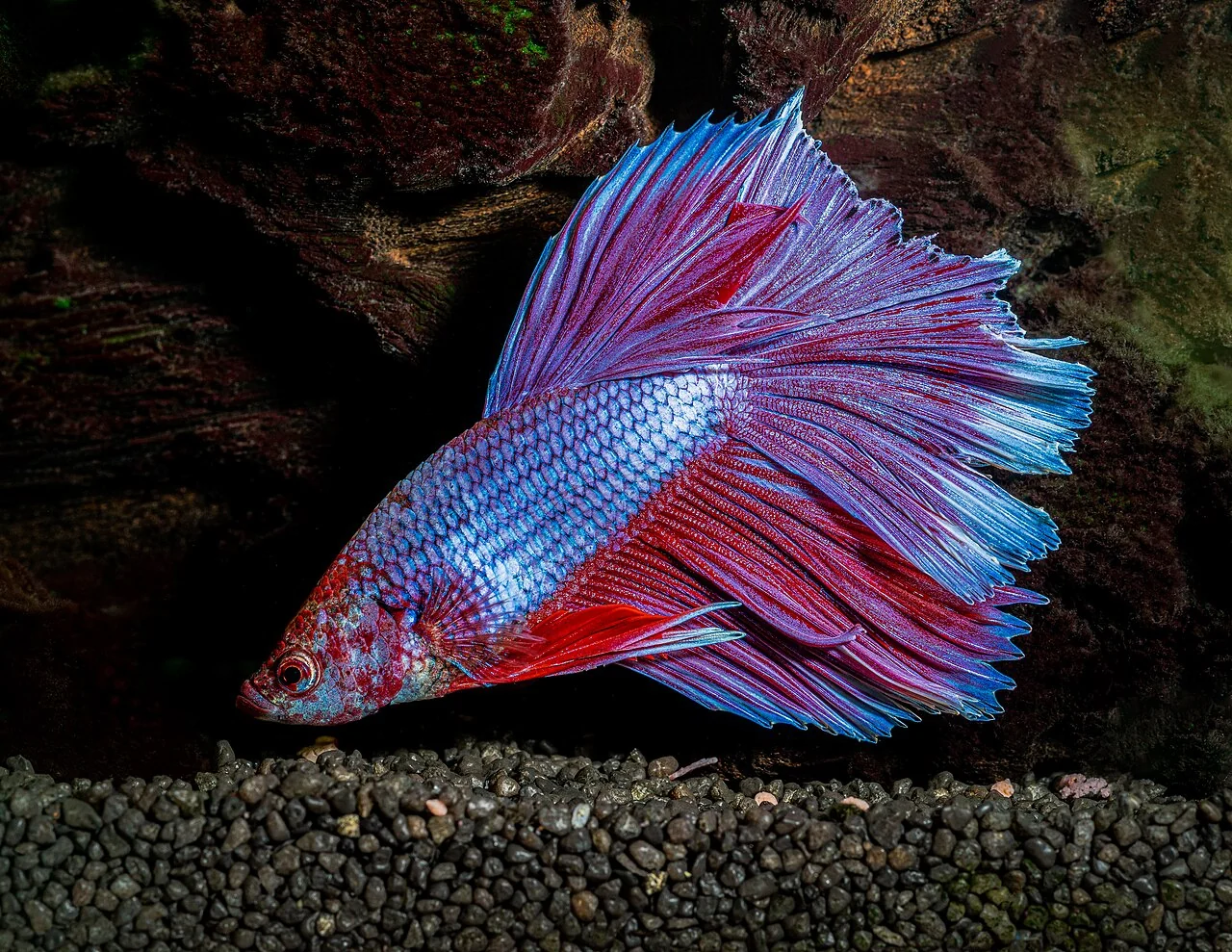
Assess the body as well as the fins
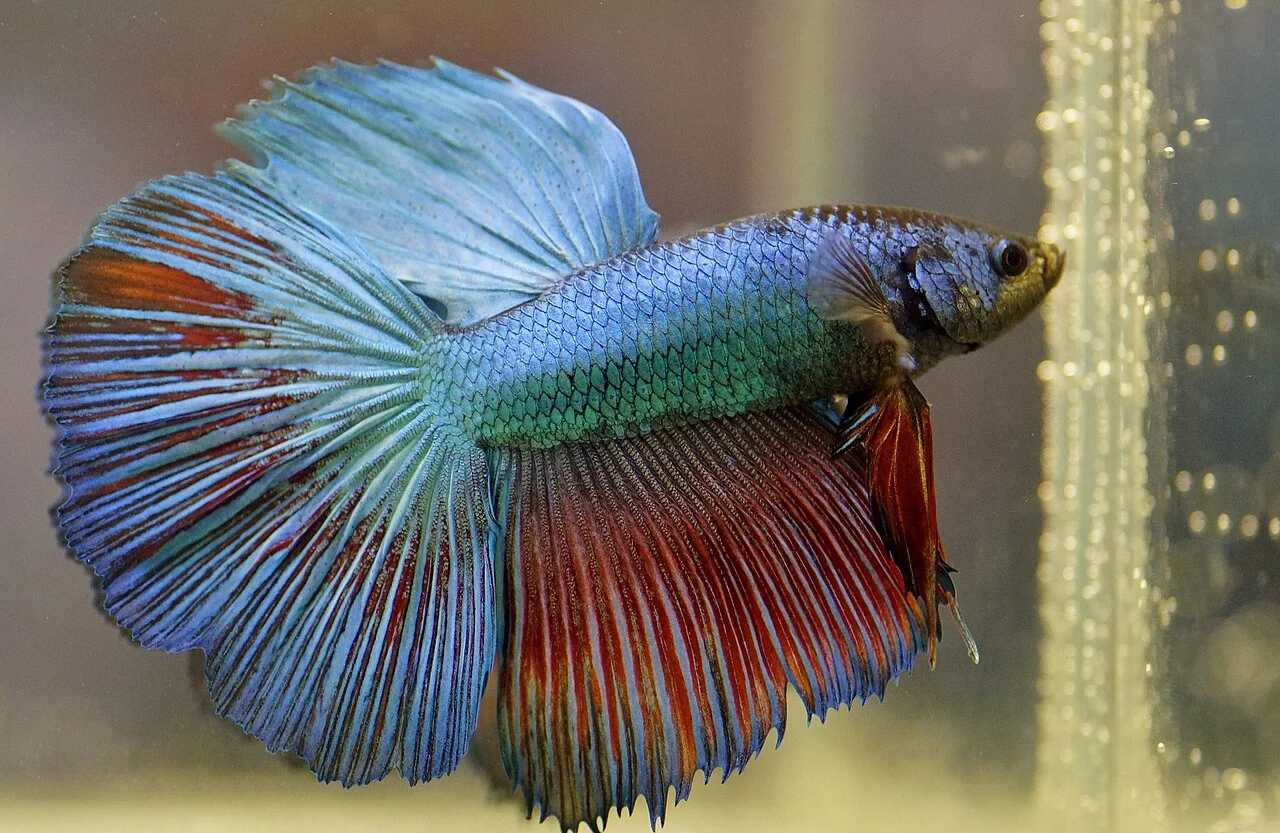
Betta splendens comes in many selected colours and fin forms. Very long or heavy fins can impede movement and catch on rough furnishings. A fish should swim with control, reach food and move its fins without obvious damage. RSPCA Australia documents welfare concerns associated with exaggerated selected traits in bettas.
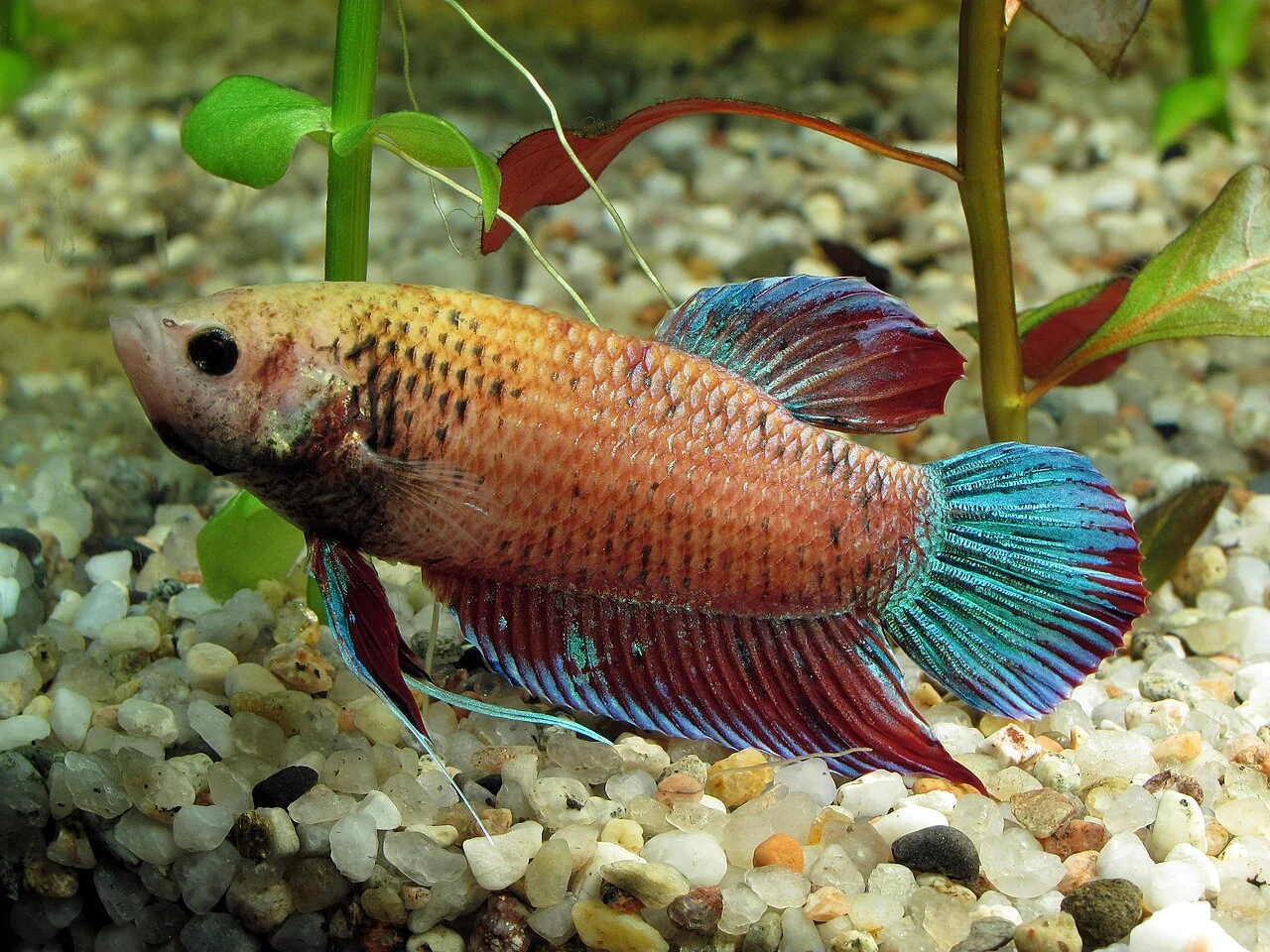
Males are often highly coloured and territorial. Females commonly have shorter fins but are not automatically peaceful with one another. A female group is not an easy answer for someone wanting several bettas; conflict can occur there too. A single betta can be kept successfully in a spacious, planted aquarium.
Sources for this section
Leave room to explore and rest
OATA gives 20 litres as a lower recommendation for a single male. A larger aquarium with useful floor area makes room for plants, open routes and steadier water. Leaves, wood and safe resting places near the surface help a fish that frequently rises to breathe. Sharp plastic plants and narrow holes can damage fins.
The filter outlet should create gentle flow, while still filtering the water effectively. A secure cover keeps the fish in the tank, with a small air space above the surface. The fish needs access to this air space to breathe with its labyrinth organ.
Sources for this section
Keep temperature and water quality stable
RSPCA Australia recommends 24 to 26 °C as a stable everyday temperature for Betta splendens. A heater and thermometer maintain it overnight; ordinary room temperature is often too cool and variable. OATA, the UK ornamental aquatics trade association, gives pH 6 to 8 and soft to medium-hard water as a broad guide for captive-bred fish. The pH value describes how acidic or alkaline water is; hardness mainly reflects dissolved calcium and magnesium salts. Match the measured conditions to the individual and keep them steady.
Before arrival, cycle the biological filter without fish using an aquarium ammonia source dosed to its directions. After a dose, tests should show ammonia and nitrite returning to zero through the product’s testing sequence. Later, partial changes remove dissolved waste. Condition fresh tap water where chlorine or chloramine is present, and rinse biological media gently in removed tank water.
Read more: Setting up a freshwater aquarium: tank, filter and water · Caring for an aquarium: watch the water, filter and fish
Sources for this section
Respect a defended territory
Two male Betta splendens can inflict serious injuries and should never share a tank. Continual sight of another male through glass can also provoke repeated displays. An individual, well structured aquarium is a dependable option for many keepers.
Any other fish must suit the temperature and water, avoid nipping fins and allow the betta to reach food. Very active species are often poor companions. If a mixed tank is considered, it needs much more space and screened areas. The fish’s actual interactions determine whether separation is needed.
Read more: Six common aquarium fish and the differences that matter
Sources for this section
Serve portions the fish can finish
A good-quality complete betta pellet in small pieces can form the main diet. OATA suggests small live or frozen foods such as daphnia for variety. Portions need to fit the fish and be eaten within a few minutes; leftovers degrade water quickly in a small tank.
Feeding time reveals whether the fish seeks food and can reach it easily. Repeated spitting, persistent refusal or a change in body shape should be assessed alongside water readings and overall activity, with aquatic-veterinary advice if the problem continues.
Sources for this section
- How to look after Siamese fighting fish (Bettas)OATA
- Routine Health Care of FishMerck Veterinary Manual
Recognising a bubble nest
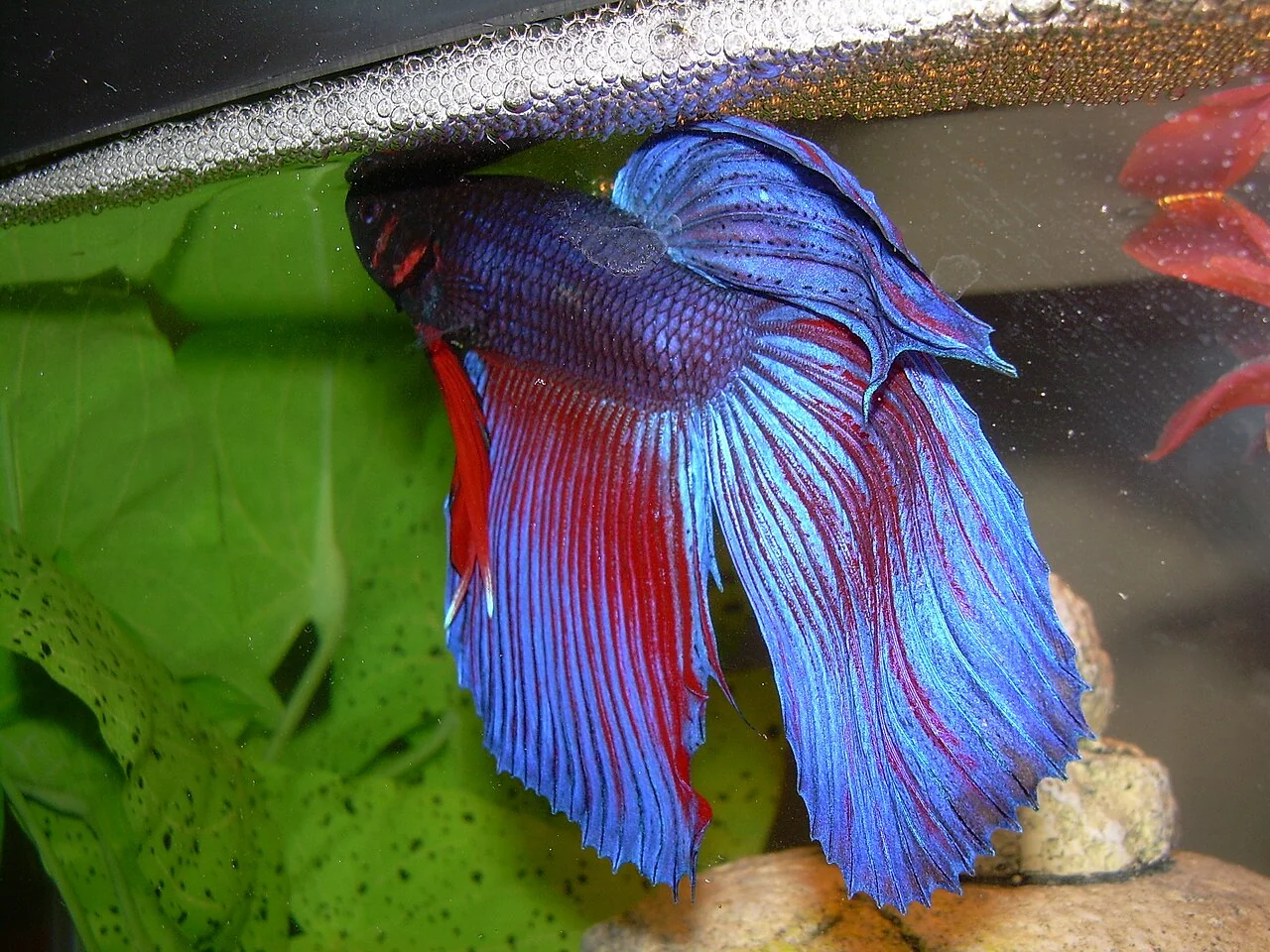
A male may make a nest of small bubbles near the surface. This is reproductive behaviour and can occur without a female present. Intentional breeding would need prepared separate tanks, specialist food for fry and close observation because adults can injure each other.
A keeper who does not intend to breed need not add a female. Leaves and quiet surface areas remain useful regardless of nest building. Controlled swimming, feeding and the option to withdraw in the territory are better daily observations.
Sources for this section
Follow fins, breathing and activity
Torn fins, new growths, rubbing or a fish suddenly staying on the bottom deserve prompt expert assessment. Regular brief trips to the surface are normal; laboured gasping, severe weakness or loss of swimming control are not and need immediate help.
Check temperature, ammonia, nitrite and filter operation at the same time. Air breathing does not protect the fish from pollutants in the water. Dated images and water readings kept as notes help an aquatic veterinarian.
Sources for this section
- How to look after Siamese fighting fish (Bettas)OATA
- Routine Health Care of FishMerck Veterinary Manual
- How should I care for my Siamese fighting fish?RSPCA Australia
Common questions
Is a jar or vase enough for a betta?
No. Even a fish with a labyrinth organ needs swimming room, stable warmth, biological filtration and suitable furnishings. A temporary sales container is not a home.
Does a male need a female companion?
No. A male can live alone in a well furnished aquarium. Introducing a female for breeding requires preparation and supervision because injuries are possible.
Why does it take air at the surface?
The labyrinth organ allows atmospheric breathing. Brief regular trips up are normal. Laboured gasping or marked weakness needs immediate investigation.
A closer look
Sources and photo credit
- How to look after Siamese fighting fish (Bettas)OATA
- Does extreme breeding affect animals beyond cats and dogs?RSPCA Australia
- Keeping pet fish togetherRSPCA
- How to set up and look after a freshwater aquariumOATA
- Routine Health Care of FishMerck Veterinary Manual
- How should I care for my Siamese fighting fish?RSPCA Australia
Photo: Bojownik syjamski.jpg · Henryk Niestrój · CC BY 4.0. Converted to WebP; scene unchanged.
Photo: Siamese fighting fish (Betta splendens) female orange.JPG · Bernard Ladenthin · CC BY 4.0. Converted to WebP; scene unchanged.
Photo: Male Betta -34245661920.jpg · ivabalk https://pixabay.com/pt/users/ivabalk-782511/ · CC0. Converted to WebP; scene unchanged.
Photo: Betta splendens male with bubble nest.jpg · ErgoSum88 · Public domain. Converted to WebP; scene unchanged.

_female_orange.JPG)


