 fellfolio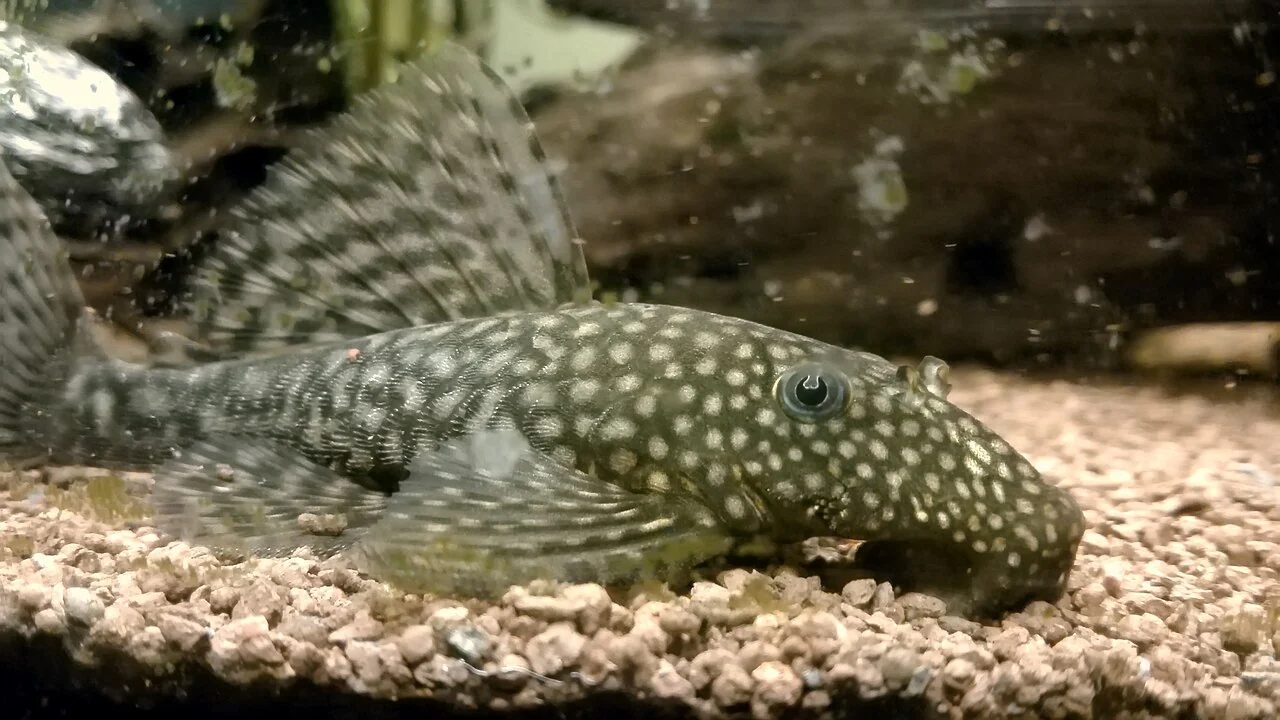
Identify the catfish being sold
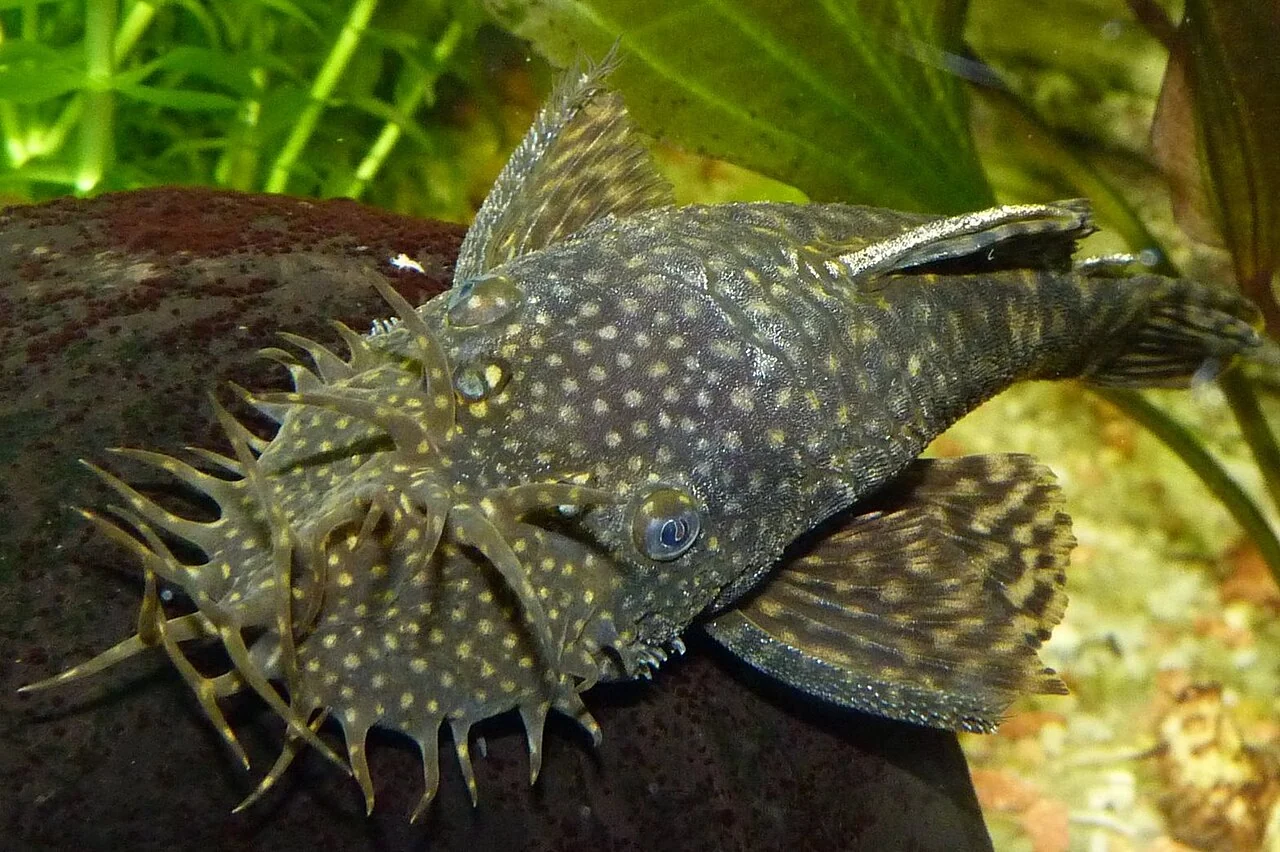
Males of many trade forms develop conspicuous head bristles, giving the fish its common name. Females usually have fewer or none. This feature does not identify an exact Ancistrus species. Selected colour and long-fin forms retain the same basic needs for cover, clean water and food.
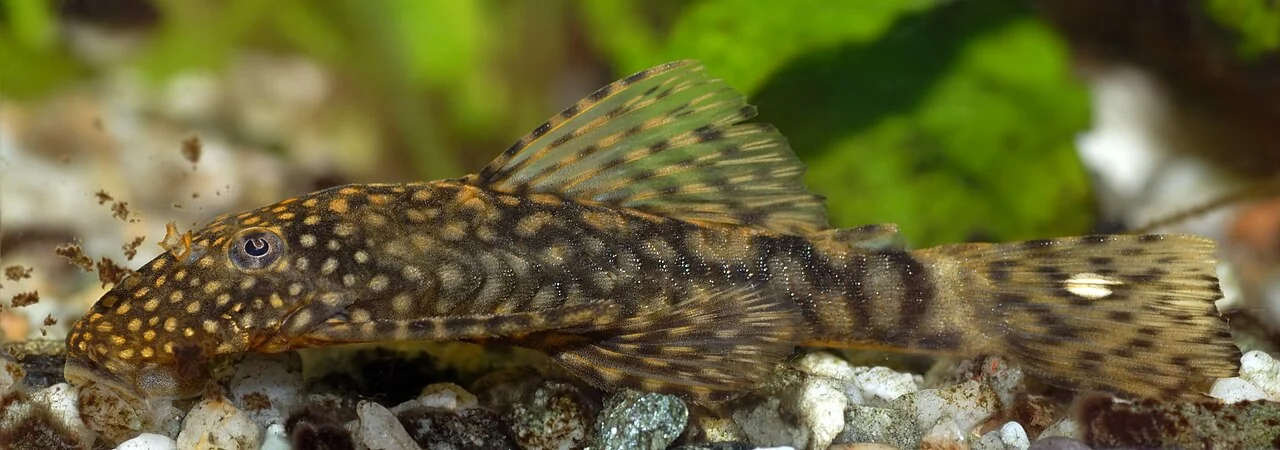
University of Florida distinguishes smaller Ancistrus from larger Hypostomus and Pterygoplichthys sold under similar pleco labels. A fish called simply “pleco” may therefore have very different adult dimensions. Establish at least the genus before buying.
Sources for this section
- Freshwater Ornamental Fish Commonly Cultured in FloridaUniversity of Florida IFAS Extension
- How to look after tropical algae eatersOATA
Floor space, wood and hiding places
OATA gives 80 litres as a lower guide for smaller plecos. For a fish reaching around 15 cm, footprint, open routes and filter capacity matter more than volume alone. A tall narrow tank may contain the same litres with too little useful floor. Caves and aquarium-safe wood should remain stable when the fish works beneath them.
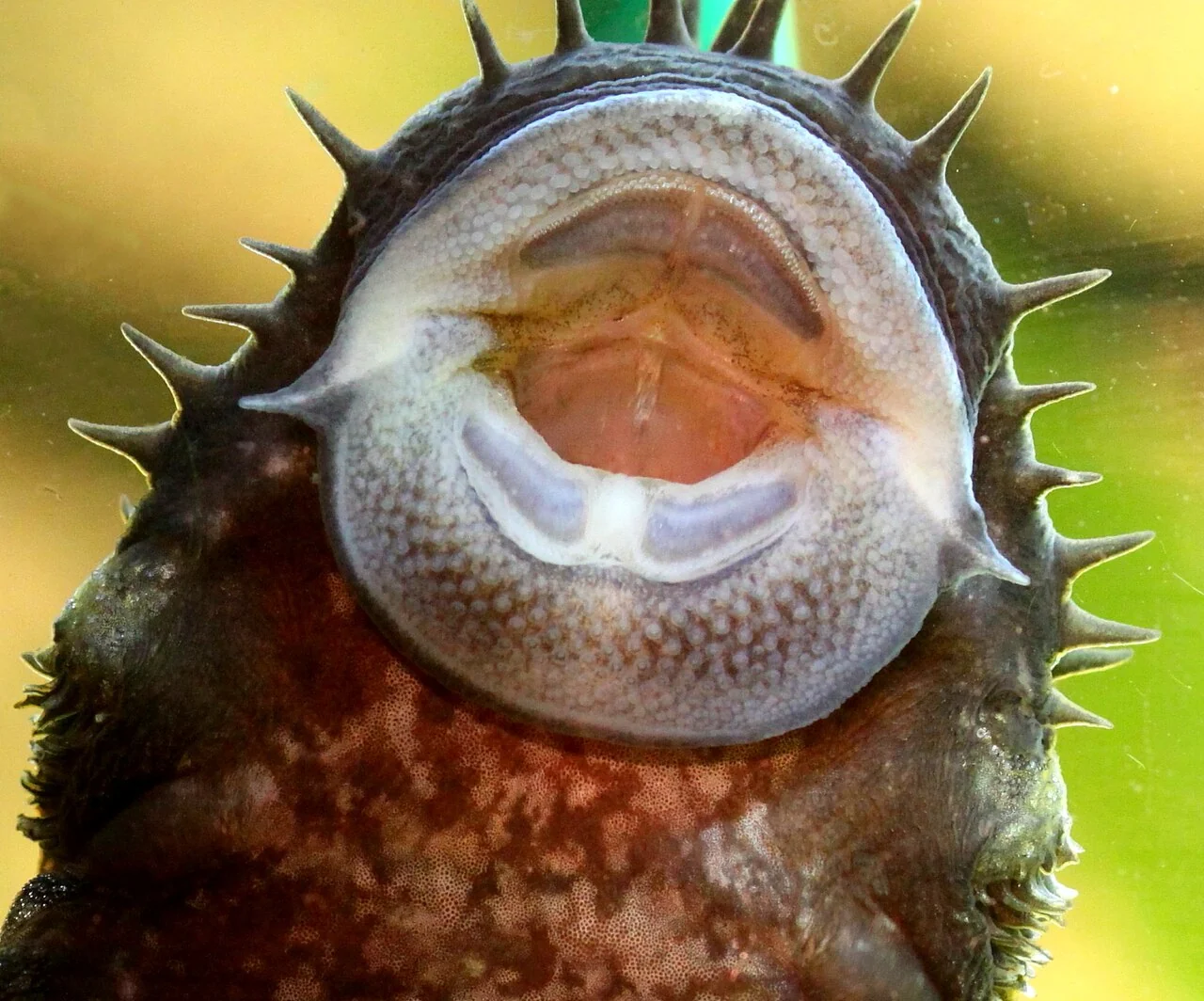
Plants, caves and roots can screen parts of the tank. Not every place needs to be visible all day; this reserved fish may emerge more clearly at dusk. Fine, smooth substrate helps protect the sensitive underside. Feeding spots must stay accessible without other fish blocking the way back to shelter.
Sources for this section
- How to look after freshwater catfishOATA
- How to look after tropical algae eatersOATA
- Freshwater Ornamental Fish Commonly Cultured in FloridaUniversity of Florida IFAS Extension
Provide oxygenated filtered water
OATA, the UK ornamental aquatics trade association, gives roughly 22 to 27 °C, pH 6 to 8 and soft to medium-hard water for bristlenose forms. The pH value describes acidity or alkalinity; hardness mainly reflects dissolved calcium and magnesium salts. Confirm conditions for the actual stock and keep them stable. Gentle surface movement helps oxygen exchange with the air, while the filter processes fish waste. Test the water even when the catfish is grazing actively on the glass.
Cycle the biological filter without animals before the fish arrives. Dose an aquarium ammonia product intended for this purpose according to its instructions. Following the initial rise, ammonia and nitrite must return to zero through the specified test sequence. Partial water changes and gentle cleaning of biological media preserve that capacity.
Read more: Setting up a freshwater aquarium: tank, filter and water · Caring for an aquarium: watch the water, filter and fish
Sources for this section
What to feed alongside algae
Bristlenose catfish graze surfaces, but a clean aquarium cannot supply a complete diet. Suitable sinking catfish feed or algae wafers and small pieces of thoroughly washed vegetables, such as cucumber, provide supplements. Aquarium-safe untreated wood offers a grazing surface.
Food can be placed near shelter in the evening. Check the next morning what has actually been eaten. Remove decaying vegetables and tablet remains. In a mixed tank, faster fish may take the portion first. Even a shy catfish must have dependable access to suitable food.
Sources for this section
- How to look after tropical algae eatersOATA
- Freshwater Ornamental Fish Commonly Cultured in FloridaUniversity of Florida IFAS Extension
- How to look after freshwater catfishOATA
Allow for cave territories
One bristlenose can live on its own. A pair or small group needs additional floor and more retreats. OATA generally recommends only one male per group because competition over caves and territories may arise. Eggs may be laid in a cave, with fry appearing even in a community aquarium under suitable conditions.
Other fish must share the temperature and water conditions and not block the bottom dweller from food. Adding a “cleaner fish” does not reduce the tank’s biological load; it increases it. Glass cleaning, appropriate stocking and water changes remain part of caring for the aquarium.
Read more: Choosing aquarium fish that can live well together
Sources for this section
Plan for the adult, not the shop juvenile
Juveniles may look suitable for many tanks. As they grow, wood, caves and underpasses become tighter. A refuge should admit the whole fish without bending fins or trapping it. Plan the final setup around the adult rather than waiting for a cramped cave to make growth obvious.
A young catfish in a new tank may find very little established growth on the surfaces. Supplementary feeding and observation are especially important then. Test water more closely after growth, additions to the stock or increased feeding: the filter needs to handle the changed load.
Sources for this section
Watch feeding and health
A fish that hides is not necessarily unwell. What matters is whether it feeds regularly, swims with control and has intact skin. A visibly sunken belly, injury, unusual breathing or prolonged absence from food calls for prompt aquatic-veterinary advice. Gasping or severe weakness requires immediate veterinary help.
Check ammonia, nitrite, temperature, filter operation and food access when a concern appears. Observe newly acquired catfish separately before they enter an established group to reduce the risk of disease transmission. Dated images and readings give an aquatic veterinarian a clearer history.
Sources for this section
- How to look after tropical algae eatersOATA
- Routine Health Care of FishMerck Veterinary Manual
Common questions
Are tank algae enough to feed a bristlenose?
No. Algae and surface growth are only part of its diet. Offer suitable sinking feeds and small pieces of washed vegetables, and check that they are actually eaten.
Does a bristlenose need a partner?
Keeping one is possible. More fish need more floor area and separate shelters; two males may compete for caves.
Is every “pleco” a bristlenose?
No. The shop label can include other genera whose adults grow much larger. At least the Ancistrus identification should be reliable before purchase.
A closer look
Sources and photo credit
- How to look after tropical algae eatersOATA
- How to look after freshwater catfishOATA
- Freshwater Ornamental Fish Commonly Cultured in FloridaUniversity of Florida IFAS Extension
- Keeping pet fish togetherRSPCA
- How to set up and look after a freshwater aquariumOATA
- Routine Health Care of FishMerck Veterinary Manual
Photo: Ancistrus sp. in aquarium.jpg · Júlio Reis · CC BY-SA 4.0. Converted to WebP; scene unchanged.
Photo: Antennenwels auf einer Kokosnussschale Ancistrus dolichopterus P1010134-1.jpg · JanRehschuh · CC BY-SA 3.0. Converted to WebP; scene unchanged.
Photo: Catfish detail.JPG · Beniben82 · CC BY-SA 4.0. Converted to WebP; scene unchanged.
Photo: Ancistrus sp. (aka).jpg · André Karwath aka Aka · CC BY-SA 2.5. Converted to WebP; scene unchanged.


.jpg)