 fellfolio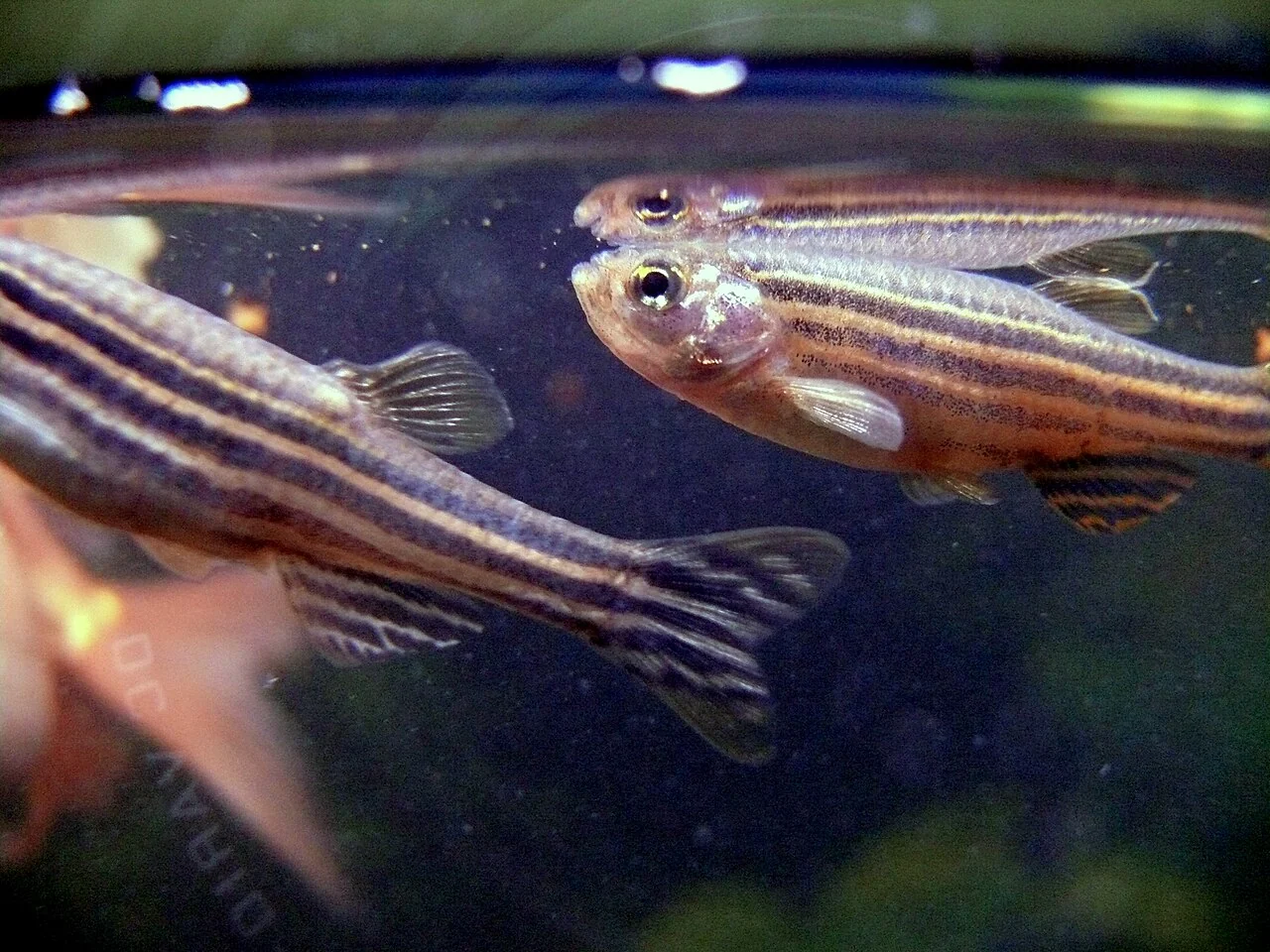
A striped group fish from South Asia
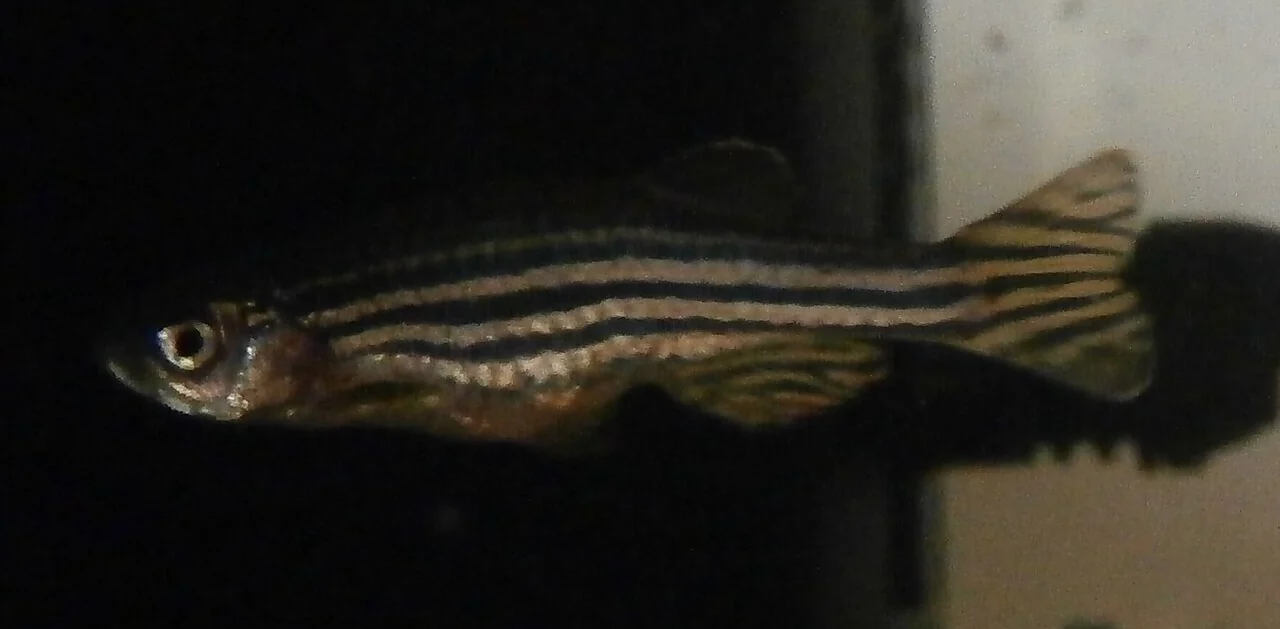
The typical form has dark blue horizontal stripes extending into the tail. Selected varieties may have long fins or other colours. Confirm Danio rerio at purchase because larger danio species need different tank dimensions. The Australian aquatics supplier Aquarium Industries gives an adult length of about five centimetres.
Ecological studies describe zebrafish in shallow waters of the Indian subcontinent. They live in groups and scatter eggs among plants or onto the bottom without tending a nest. In an aquarium, open swimming routes and shelter allow those movements to be seen.
Sources for this section
- Zebra DanioAquarium Industries
- The behaviour and ecology of the zebrafish, Danio rerioZebrafish Information Network, Spence et al.
Keep a group of eight to ten
Aquarium Industries, an Australian aquatics supplier, recommends at least six. Fluval suggests eight to ten zebrafish in a group. This number suits a longer, well filtered tank; other species would add to the space and filter load.
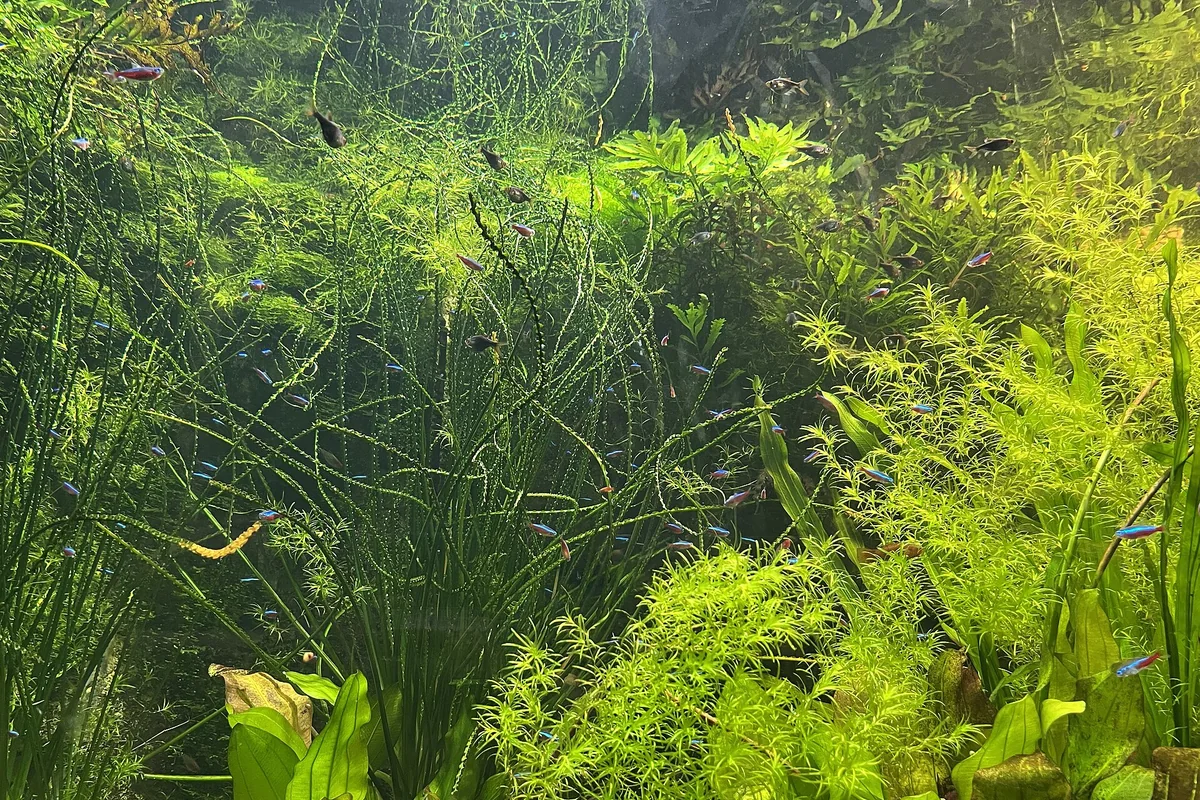
Fish often move together but may spread out briefly. Plants along the margins provide retreat and break sightlines, leaving the middle open. If an individual is repeatedly chased away, misses meals or stays apart, examine both group composition and tank conditions.
Sources for this section
- Zebra DanioAquarium Industries
- How to look after danios and white cloud mountain minnowsOATA
- The behaviour and ecology of the zebrafish, Danio rerioZebrafish Information Network, Spence et al.
- Species Spotlight: Zebra DanioFluval
Prioritise length and a secure top
FishBase lists 60 cm as a minimum aquarium length, while OATA, the UK ornamental aquatics trade association, gives 45 litres as a lower guide for a small shoal of smaller danios. For eight to ten active zebrafish, a longer tank around 80 cm across the front and roughly 100 to 120 litres is a more useful practical plan. Plants at the edges leave the middle open. More fish or other species need further room.
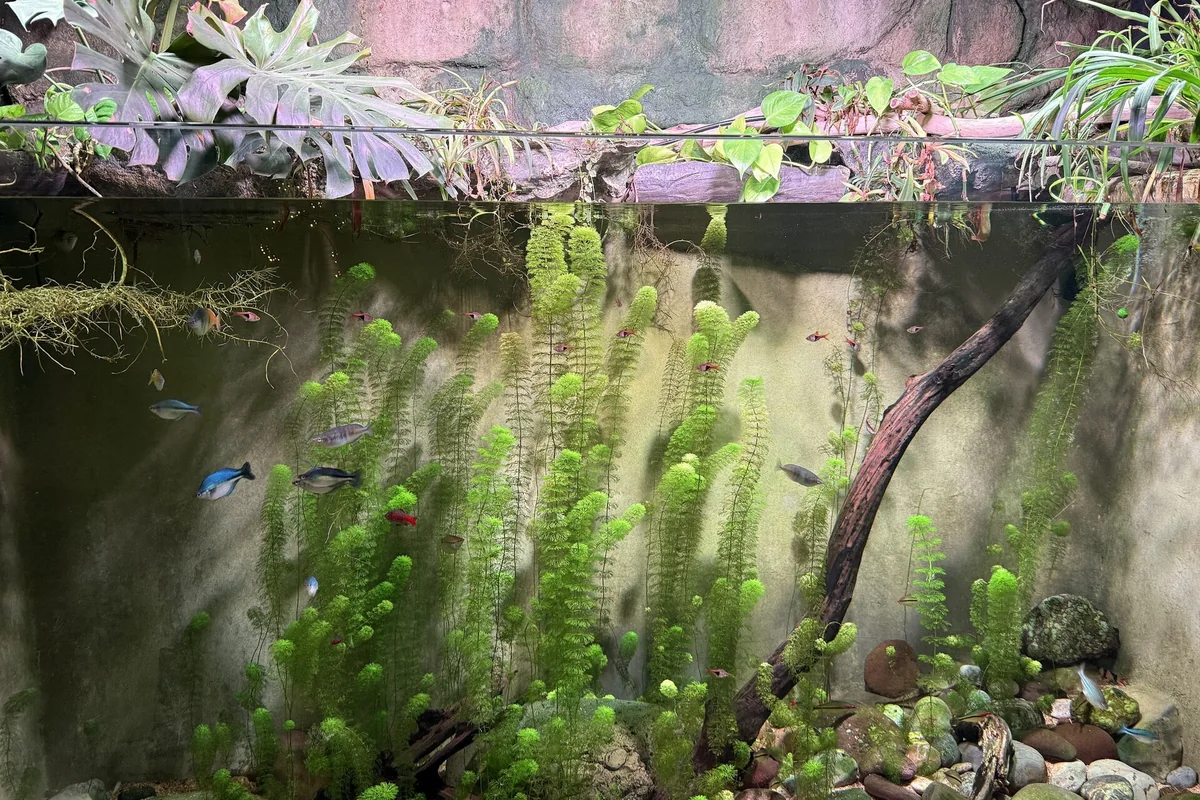
Moderate water movement and good oxygen supply suit their activity, with quieter areas available too. Plants and smooth furnishings add structure without blocking routes. A secure lid or comparable cover is sensible: a fast-moving fish can leave the water near the surface.
Sources for this section
- How to look after danios and white cloud mountain minnowsOATA
- Zebra DanioAquarium Industries
- Keeping pet fish togetherRSPCA
- Danio rerio species summaryFishBase
- Species Spotlight: Zebra DanioFluval
Temperature and water quality
Fluval lists 18 to 25 °C and pH 6 to 8 for Danio rerio. The pH value describes how acidic or alkaline the water is. Regular tests help reveal changes early and maintain stable conditions. If other species join, their water and temperature needs should fit the same setting.
Cycle the filter without fish before stocking. Dose a designated aquarium ammonia product to its directions. Ammonia and then nitrite initially rise and need to return to zero through the specified test sequence. After stocking, regular readings and partial changes show whether the filter still handles the added food and fish.
Read more: Setting up a freshwater aquarium: tank, filter and water · Caring for an aquarium: watch the water, filter and fish
Sources for this section
Make food accessible across the shoal
A complete small-particle flake or granule can form the base. OATA suggests small live or frozen foods for variety. The group’s pace may let assertive fish reach food first; several small feeding spots reveal whether quieter fish get a share.
Leftovers degrade water and should not collect in the substrate. Adjust portions to the group’s condition and the amount actually eaten. A fish repeatedly ignoring food should be assessed with its water readings and breathing.
Sources for this section
- How to look after danios and white cloud mountain minnowsOATA
- Zebra DanioAquarium Industries
- Routine Health Care of FishMerck Veterinary Manual
Match tankmates to an energetic pace
Zebrafish swim fast and often. Very quiet or long-finned fish may be unsettled or miss food beside them. Suitable tankmates need similar temperature, hardness and current, with enough room of their own.
Large predatory fish are unsuitable companions. Even with peaceful species, check shared water conditions and access to food before stocking; keep the zebrafish shoal complete.
Read more: Choosing aquarium fish that can live well together
Sources for this section
Spot a change in the movement pattern
An active shoal offers a clear comparison for each member. A fish suddenly swimming crookedly, clamping fins, rubbing, missing food or breathing unusually calls for prompt assessment and water checks. Gasping or severe weakness needs immediate help.
Check temperature, ammonia, nitrite and filter operation whenever a concern appears. New fish may introduce pathogens; observing them separately reduces the risk to the existing group. Notes and dated photographs help an aquatic veterinarian follow the sequence.
Sources for this section
- How to look after danios and white cloud mountain minnowsOATA
- Routine Health Care of FishMerck Veterinary Manual
Common questions
Are zebrafish shoaling fish?
Yes. Fluval recommends eight to ten fish. A well filtered tank around 80 cm long with open swimming room is a practical starting point; plan more space for additional stock.
Do they need strong current?
Moderate movement and good oxygen supply are useful. Danio rerio also occurs naturally in shallow slow-flowing water. Offer open routes and quieter places together.
Can they live with very calm fish?
It may be difficult because zebrafish swim quickly and frequently. Compare temperature, hardness, food access and both species’ behaviour first.
A closer look
Sources and photo credit
- How to look after danios and white cloud mountain minnowsOATA
- Zebra DanioAquarium Industries
- The behaviour and ecology of the zebrafish, Danio rerioZebrafish Information Network, Spence et al.
- Keeping pet fish togetherRSPCA
- How to set up and look after a freshwater aquariumOATA
- Routine Health Care of FishMerck Veterinary Manual
- Danio rerio species summaryFishBase
- Species Spotlight: Zebra DanioFluval
Photo: Danio rerio.JPG · Pogrebnoj-Alexandroff · CC BY-SA 3.0. Converted to WebP; scene unchanged.
Photo: Kiefer - Danio rerio.jpg · Kiefer the Cactus · CC BY-SA 3.0. Converted to WebP; scene unchanged.
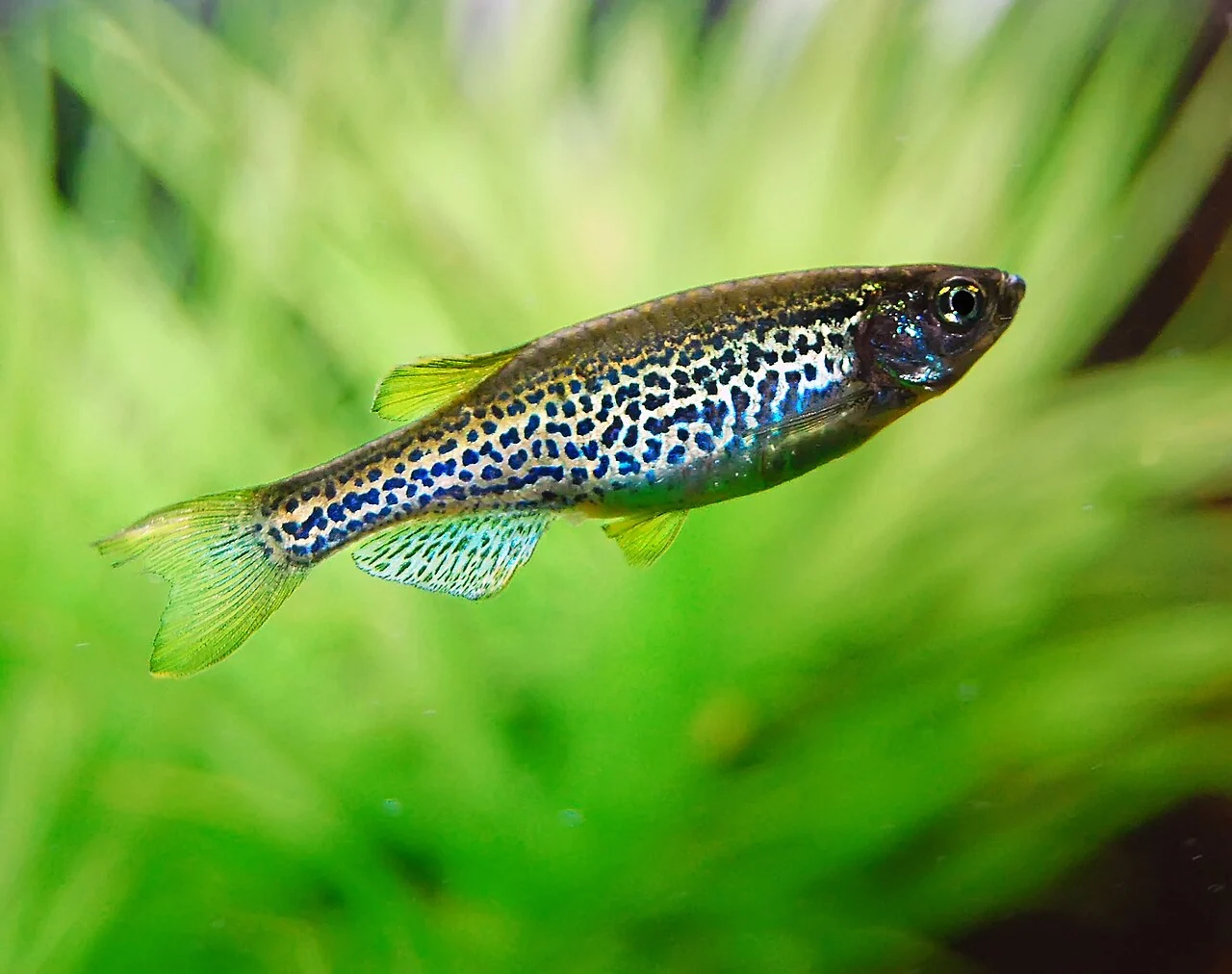
Photo: Leopard Danio (4050116019).jpg · carolineCCB · CC BY 2.0. Converted to WebP; scene unchanged.
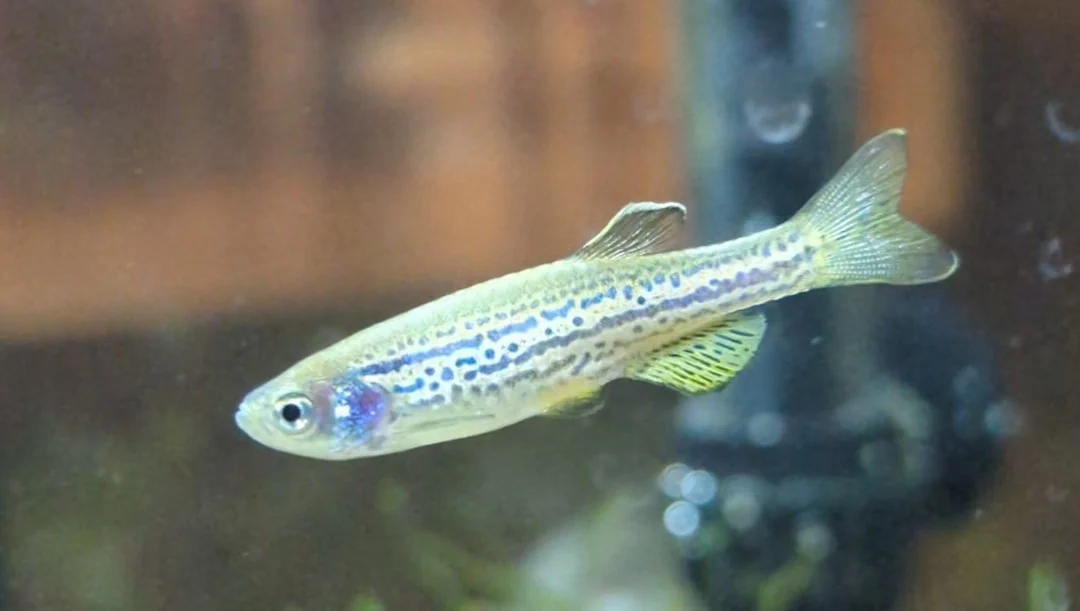
Photo: Leopard danio (cropped).jpg · Roundish · CC0. Converted to WebP; scene unchanged.


.jpg)
.jpg)