fellfolio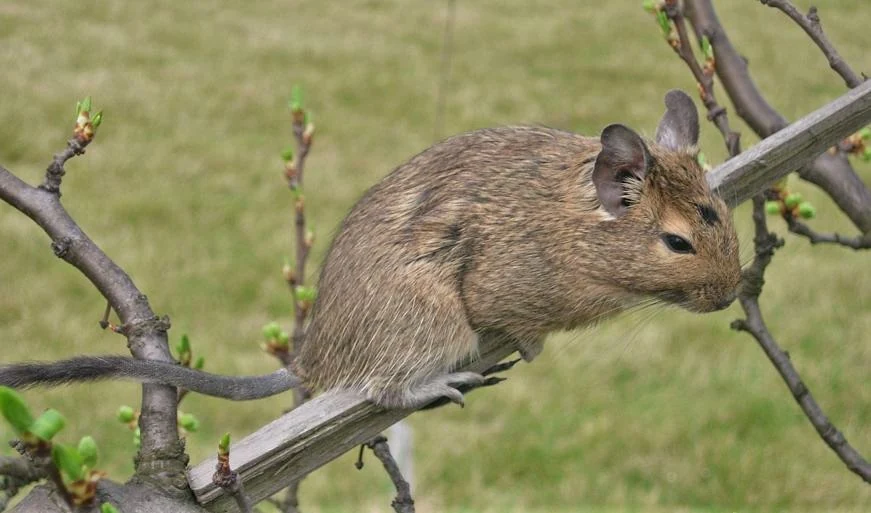
Company with room to step aside
Mutual grooming and resting together are parts of degu social life that people cannot provide. Compatible same-sex groups, or carefully selected groups with neutered males, prevent unplanned breeding. After neutering, the vet’s waiting period must be completed before a male joins females.
New animals should not be added to an existing group without preparation. An experienced rescue can help select companions and guide introductions. Several shelters and accessible feeding points allow one animal to move elsewhere while another occupies a favourite spot. Persistent chasing or injuries require safe separation and knowledgeable advice.
Create several usable habitats within one enclosure
Zürcher Tierschutz recommends at least 0.7 square metres of floor space and a height of 140 centimetres for up to four degus, including a digging area of at least 0.5 square metres with bedding at least 30 centimetres deep. These are starting dimensions. More continuous space makes a generous arrangement easier.
Secure branches, broad platforms and short, safe connections put the height to use. A deep area of low-dust bedding with material that helps hold its structure allows digging. Heavy stones and houses need firm supports so that excavations cannot undermine them. Degus are determined chewers, making exposed plastic bases, vulnerable wooden edges and insecure catches important details to assess before purchase.
The location should be bright, quiet and ventilated without direct sun or strong draughts. A sand bath belongs on a stable surface. Food and water should remain accessible even after the group has enthusiastically rearranged its bedding.
Why sweet treats are a poor fit
Degus are adapted to fibrous plant foods and are prone to metabolic problems, including diabetes, with unsuitable feeding. Hay should always be available. Appropriate leaves, herbs and a carefully measured amount of suitable supplementary food can complete the diet. Ingredient lists matter: molasses, dried fruit and added sugar are reasons to reject a product for this purpose.
Fruit should not be part of the reward routine. Small-pet snacks marketed as healthy can still contain substantial sugar. A tiny amount of an already tolerated suitable food can be used for friendly handling practice instead. New ingredients should be introduced gradually. Fresh water needs to be available at all times; checking a bottle means confirming that its valve delivers water, not just looking at the level.
A holiday carer needs the actual feeding plan. A container labelled with its contents and serving amount is more useful than a broad request to offer something healthy.
Give them jobs they enjoy
Degus can search for food amongst hay, shred plain cardboard and chew suitable untreated branches. These activities can fit into existing routes through the enclosure. A new branch need not mean rebuilding the whole home; familiar shelters can stay in place while other features change.
A large wheel with a solid running surface can provide additional exercise. Zürcher Tierschutz recommends a diameter of at least 35 centimetres. The animal still needs to run with a straight back, free from trapping points. Exercise outside the enclosure also needs preparation. Cables, toxic plants and narrow gaps should be inaccessible, and boundaries need to account for determined climbing rather than relying on a low barrier.
Build on curiosity
A hand offering a small piece of suitable food can initially remain still. Repeated friendly encounters help many degus become comfortable approaching a person. Individuals differ in how much touch they enjoy. An animal that withdraws should have space to do so without being pursued around its enclosure.
The whole body needs support if lifting is necessary. A degu must never be caught or held by its tail because the skin can tear away. A familiar carrier may make short transfers easier. Adults retain responsibility in a family home, while children can help observe, furnish and feed the animals with supervision.
Make daily checks individual
Each degu should be seen every day: is it eating, moving normally and maintaining its coat? A wet mouth, changed eyes, weight loss or altered eating and drinking need veterinary assessment. Healthy degu incisors are normally yellow to orange, but tooth colour alone cannot establish a diagnosis. Teeth should not be trimmed at home.
An appropriate veterinary practice should be identified before adoption, avoiding a search for someone who treats degus during an illness. Holiday or emergency cover needs to include checking every animal, the enclosure and room temperature, as well as knowing when to seek help. A few individual notes turn a general feeding instruction into a useful care handover.
Common questions
Can a degu live with a gerbil?
No. Another rodent species cannot provide degu companionship. Communication, diet and behaviour differ, and sharing an enclosure can lead to stress or injury.
Does daytime activity make degus easier to keep?
It makes observation more convenient, but does not reduce their needs for space, appropriate food and compatible companions. Chew-resistant housing in particular deserves careful preparation.
Sources and photo credit
- Degus: HaltungZürcher Tierschutz
- A suitable environment for degusRSPCA
- What to feed a pet deguRSPCA
- Keeping degus togetherRSPCA
- Degu health and welfareRSPCA
- Understanding degu behaviourRSPCA
Photo: Octodon Degus fr.jpg · Jacek555 · CC BY-SA 4.0. Resized proportionally and converted to WebP. The layout may crop the image.