fellfolio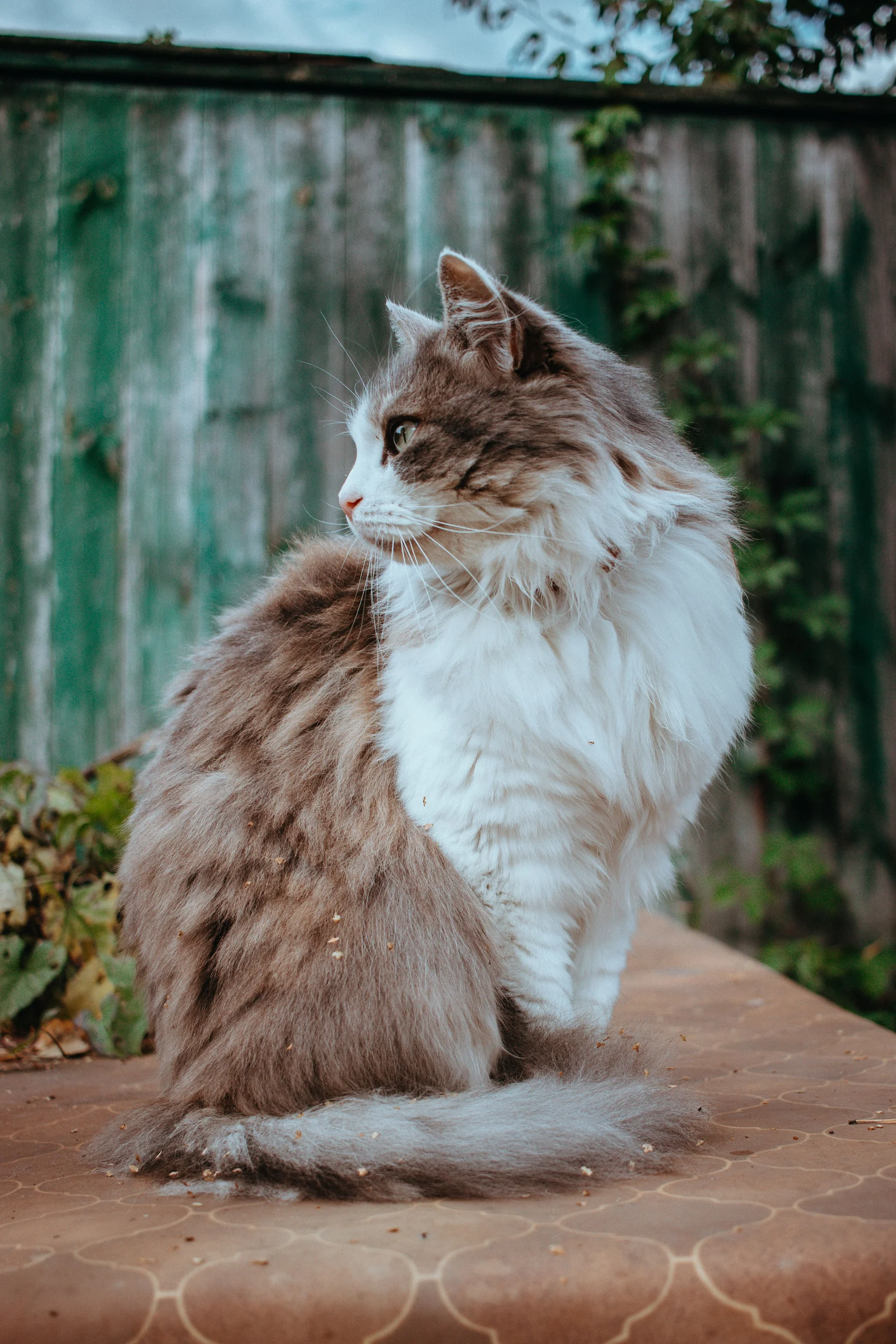
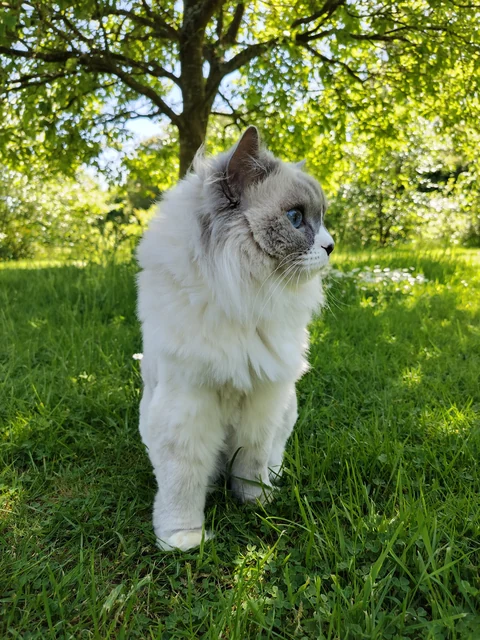
Semi-longhair cat · United States
Ragdoll
A long, substantial frame, a silky coat and blue eyes: Ragdolls are often relaxed, yet many still enjoy a good game as adults.
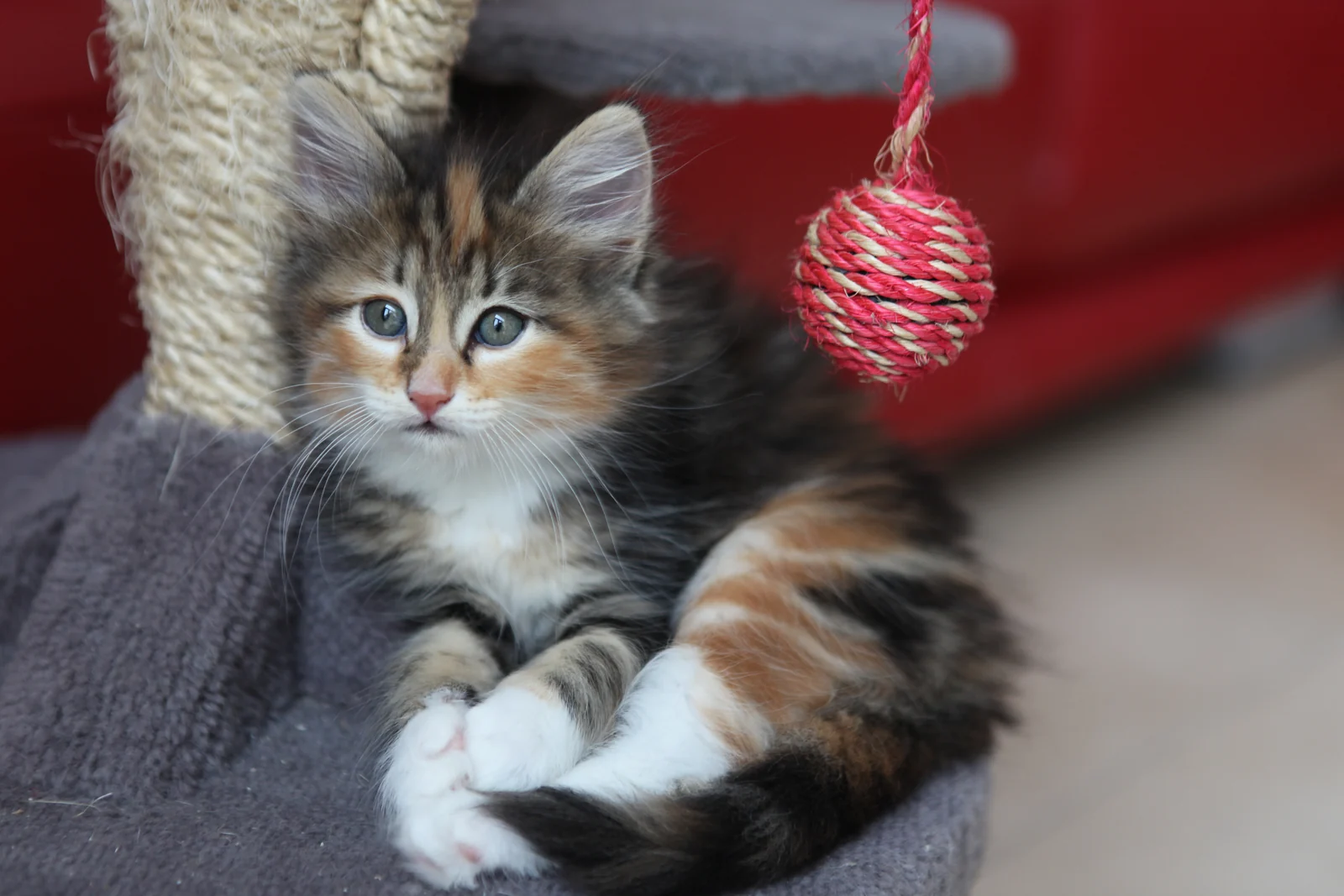
Semi-longhair cat · Norway
The Norwegian Forest Cat is long-legged, powerful and an enthusiastic climber. Comb its dense double coat weekly, more often during the spring shed.
Norwegian Forest Cats like to stay near their people without needing constant contact. Many watch the household from a high perch. They enjoy play and often make themselves heard with soft trills or short meows.
Long hind legs help the Norwegian Forest Cat spring up to high places. A sturdy cat tree with raised resting spots gives it a good route to climb; for a large cat, the furniture needs to stand securely and support its weight.
A wand toy that slips out of sight around a corner gives the cat a chance to stalk and pounce. Let it catch the toy now and then. A few short games are often easier to fit into the day than one long session.
The dense double coat pairs a woolly undercoat with longer, water-resistant guard hairs. For most Norwegian Forest Cats, a weekly comb is enough to untangle the coat. In spring, the thick winter undercoat comes loose; more hair then collects in the comb, and the coat needs attention more often. Some coat textures mat more easily than others.
The Norwegian Forest Cat has a long, rectangular frame, strong muscles and heavy bone. Its hind legs are longer than its front legs, giving the cat a high-legged silhouette. The head forms an equilateral triangle with a straight nose profile. Large almond-shaped eyes, well-furnished ears, tufts between the toes and a long, bushy tail complete the look.
According to TICA, mature males weigh about 5.4–8.2 kg (12–18 lb) and females about 3.6–5.4 kg (8–12 lb). The breed can take up to five years to reach full maturity. In winter, the coat often forms a full ruff and breeches around the hind legs; it is shorter in summer. Traditional coat colours and patterns are all represented.
Norwegian Forest Cats have been affected by glycogen storage disease type IV (GSD IV), pyruvate kinase deficiency (PK-Def) and hypertrophic cardiomyopathy (HCM). DNA tests are available for GSD IV and PK-Def. GSD IV is autosomal recessive: two healthy carriers can produce affected kittens. Ask to see the test results for both parents.
There is no HCM DNA test specific to this breed. TICA recommends regular heart scans for breeding cats, roughly every two years. Cornell lists Norwegian Forest Cats among breeds in which HCM is more common. Ask when each parent was last scanned and what the results showed.
Selected by shared size, activity, grooming and training characteristics.
Semi-longhair cat · United States
A long, substantial frame, a silky coat and blue eyes: Ragdolls are often relaxed, yet many still enjoy a good game as adults.
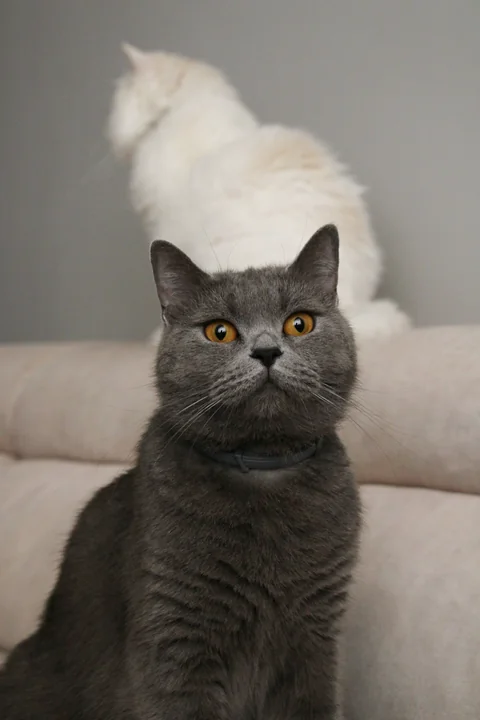
Shorthair cat · Great Britain
A round face, a dense coat and a generally quiet temperament. British Shorthairs enjoy company but often prefer sitting beside their owners to curling up on a lap.
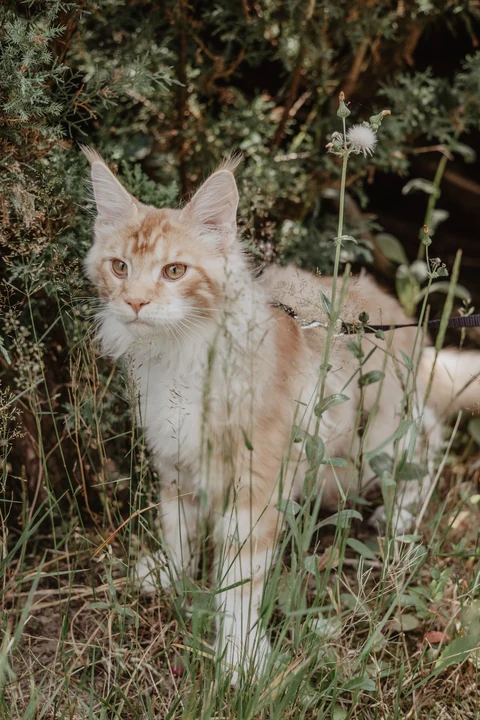
Semi-longhair cat · United States
The Maine Coon pairs a long, powerful frame with a full coat and bushy tail. Many stay playful and like to keep their people in sight around the home.