 fellfolio
Compare breeds
Maine Coon or Norwegian Forest Cat: Which Fits Your Home?
Both breeds are large cats with longer coats and often enjoy being near their people. Indoors, each needs stable climbing places and daily play. Their coats change with the seasons, and the relevant inherited health checks differ. Before bringing one home, look at the grooming routine you can manage and ask to see the appropriate health records for both parents.
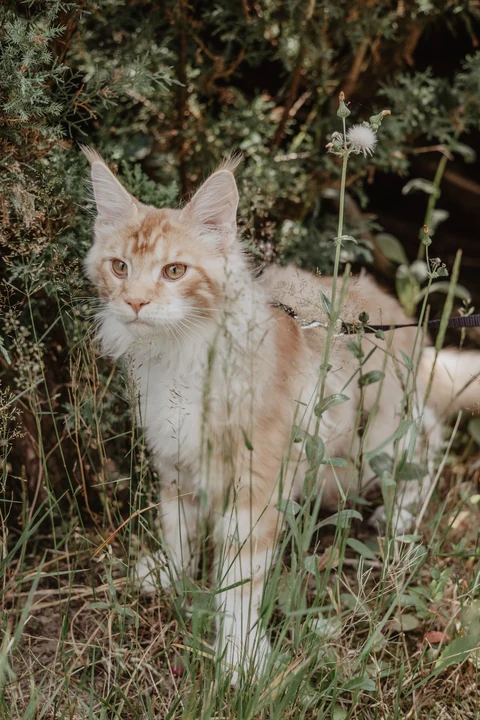
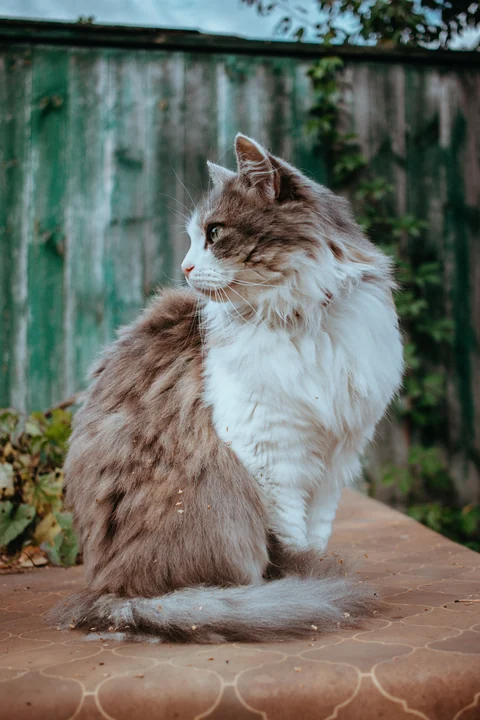
At a glance
| Maine Coon | Norwegian Forest Cat | |
|---|---|---|
| Size | Large | Large |
| Weight | Not sufficiently documented | 3.6 to 8.2 kg |
| Lifespan | 9 to 15 yearsUK GCCF cat breed profile | over 13 yearsTICA cat breed profile |
| Care needs | Moderate | Low |
These figures are broad guides and do not describe an individual animal. Each lifespan value links to its source.
Compare breeds
The day-to-day choice
A Maine Coon may suit you if you have time for shared games and regular combing, plus room for large, stable resting platforms. A Norwegian Forest Cat may suit you if you can provide safe climbing routes and care for its double coat, especially in spring. Both need daily attention. Before choosing, weigh the individual cat's behaviour and the parents' relevant health records more heavily than a breed label.
Play and space: Safe routes for large cats
Norwegian Forest Cats often seek high resting places. A securely anchored cat tree and well-fixed wall shelves give one a climbing route. Plan a route down too: staggered shelves offer stopping points so the cat does not have to jump from the top. A Maine Coon also uses raised places, although many prefer games on the floor. For either cat, platforms must be large enough for its body and the tree must not tip when it jumps off.
Make room for several short play sessions each day with either breed. Move a wand toy at different speeds and let your cat catch it now and then. You can also hide part of its usual food allowance. Watch which games the individual cat enjoys instead of relying on a breed label to predict its energy. Secure windows and balconies against falls before the cat can reach them.
Sources: Maine Coon · The International Cat Association, Norwegian Forest · The International Cat Association, Cats and play · Cats Protection, Indoor cats · Cats Protection
Company and handling: What to watch when you meet
Many Maine Coons follow people around the home and watch what they are doing. Norwegian Forest Cats also often stay nearby, while choosing their own place, perhaps on the back of a sofa. Neither description can tell you which individual cat will spend more time on a lap. A friendly cat may still dislike being carried.
Meet the individual cat if you can. Does it approach voluntarily, stay relaxed when touched and have somewhere to retreat when it has had enough? With a kitten, also ask how it was raised and meet its mother if possible. At home, every cat needs a resting place where nobody disturbs it. Children should know not to pick up a sleeping cat for a game.
Sources: Maine Coon · The International Cat Association, Norwegian Forest · The International Cat Association, Norwegian Forest Cat · Cat Fanciers’ Association, Indoor cats · Cats Protection
Coat care: Let the comb guide the routine
A Maine Coon's coat is longer on the belly and backs of the hind legs than at the shoulders. Start with two short combing sessions a week, paying particular attention behind the ears, under the front legs and on the belly. If knots form, comb more often. A cottony coat may even need daily combing. The Norwegian Forest Cat has a double coat: dense underfur beneath longer guard hairs. A thorough weekly comb is often enough. In spring, when more winter undercoat sheds, add sessions. Depending on its texture, the coat may also tangle more readily outside the spring shed.
For either cat, work through small sections with a suitable metal comb and check that it passes through the coat to the skin without pulling. Loosen small tangles gently with your fingers. Have tight mats removed by an experienced professional. Let your cat's actual coat determine the routine rather than assuming either breed will always be easy to groom.
Sources: Maine Coon · Governing Council of the Cat Fancy, Maine Coon Cat · Cat Fanciers’ Association, Maine Coon · The International Cat Association, Norwegian Forest · The International Cat Association, Norwegian Forest Cat · Cat Fanciers’ Association, How often should you groom your pet? · PDSA · UK veterinary charity
Health records: Check hearts, hips and DNA separately
Start with the latest heart scan reports for both parents, including dates and written findings. Hypertrophic cardiomyopathy (HCM) thickens the heart muscle and can occur in either breed. An echocardiogram is an ultrasound scan of the heart. A clear scan describes the heart at that visit; HCM may develop later. For Maine Coons, also ask for the DNA result for a known variant in MYBPC3, a gene carrying instructions for a heart muscle protein. The variant raises HCM risk, but a negative result does not rule out the disease. According to the cat association TICA, there is currently no breed-specific HCM DNA test for Norwegian Forest Cats. Repeat heart scans of breeding cats are therefore especially important.
Next, for a Maine Coon, ask to see hip X-ray findings and spinal muscular atrophy (SMA) DNA results. Hip dysplasia is abnormal development of the hip joint. In SMA, nerve cells in the spinal cord are lost; affected cats can walk unsteadily. For a Norwegian Forest Cat, ask for DNA results for glycogen storage disease type IV (GSD IV). Glycogen is one way the body stores sugar. In GSD IV it forms abnormally. Affected kittens may die at or soon after birth; a few show signs only months later.
Finally, ask for pyruvate kinase deficiency DNA results for either breed. Pyruvate kinase is an enzyme in red blood cells. Reduced activity makes these cells break down sooner, which can cause anaemia. SMA, GSD IV and pyruvate kinase deficiency are inherited recessively. If both parents carry the relevant variant, each kitten has a 25 percent chance of being affected. Have both parents' DNA results explained together for each condition. For Maine Coons, an SMA result does not replace the HCM checks or hip X-rays.
Sources: Hypertrophic Cardiomyopathy (HCM) in Maine Coons · UC Davis Veterinary Genetics Laboratory, Hypertrophic Cardiomyopathy · Cornell University College of Veterinary Medicine, Maine Coon · The International Cat Association, Norwegian Forest · The International Cat Association, Maine Coon · Governing Council of the Cat Fancy, Hip Dysplasia · Cornell Feline Health Center, Spinal Muscular Atrophy (SMA) in Maine Coon Cats · UC Davis Veterinary Genetics Laboratory, Glycogen Storage Disease type IV (GSD IV) in Norwegian Forest Cats · University of California, Davis · Veterinary Genetics Laboratory, Erythrocyte Pyruvate Kinase Deficiency (PK Deficiency) · University of California, Davis Veterinary Genetics Laboratory
Read the full breed profiles
Each profile explains exercise, care, health and fit with sources for each section.