 fellfolio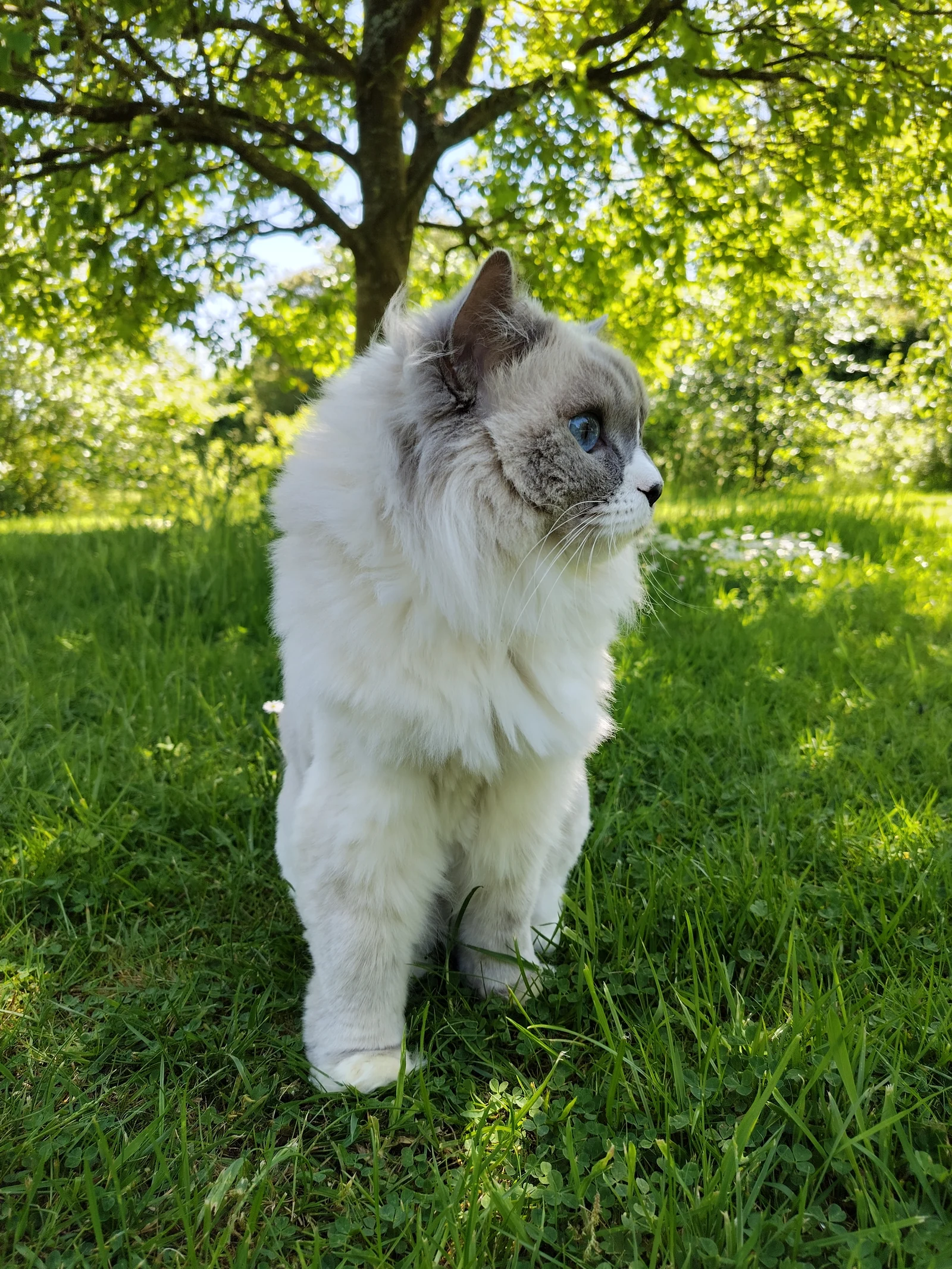
Semi-longhair cat · United States
Maine Coon
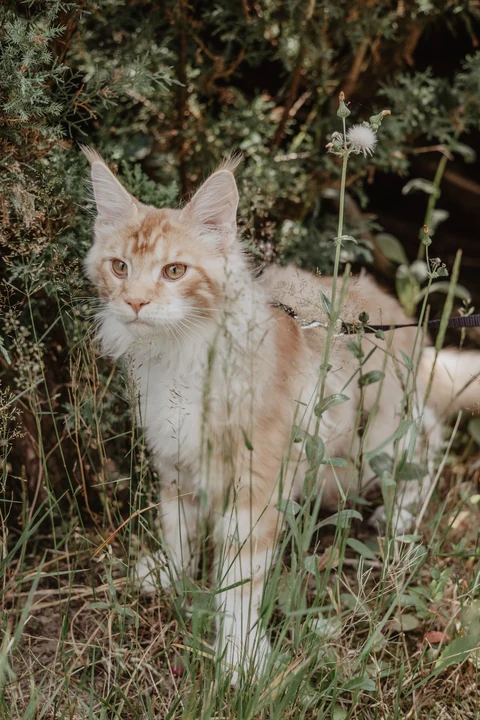
The Maine Coon pairs a long, powerful frame with a full coat and bushy tail. Many stay playful and like to keep their people in sight around the home.
Semi-longhair cat · United States
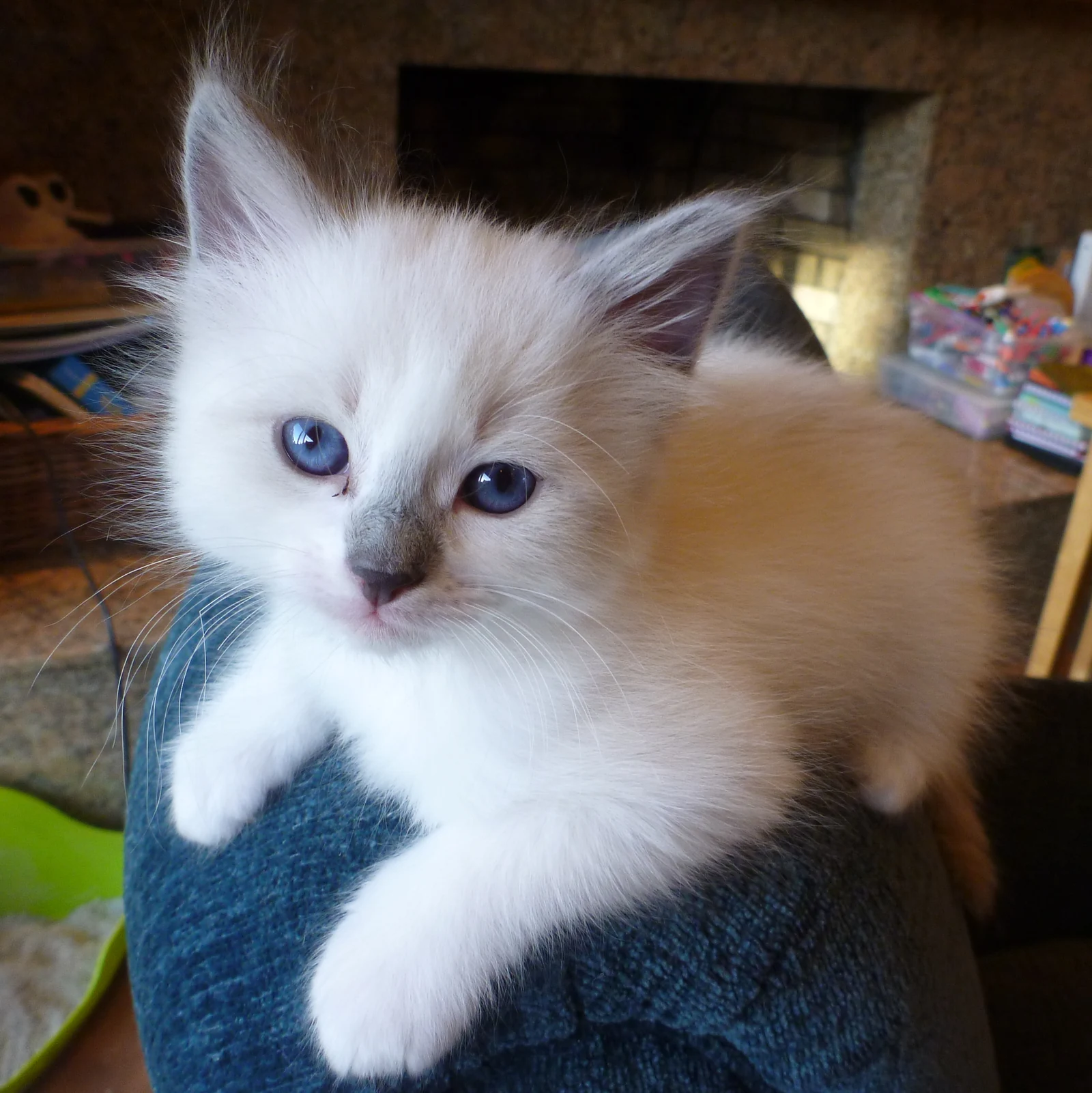
A long, substantial frame, a silky coat and blue eyes: Ragdolls are often relaxed, yet many still enjoy a good game as adults.
Many Ragdolls choose to spend time wherever their people are. They may follow someone around the home, watch familiar routines and speak softly rather than call for attention. That does not mean every cat wants to be picked up or sit on a lap. Some enjoy handling; others prefer the seat beside you. Let the cat set the terms and company feels natural instead of expected.
A calm Ragdoll is not a cat without things to do. Kittens and young adults in particular can become lively in play. A wand toy lets you offer a proper hunting sequence: move the lure along the floor, hide it briefly behind a chair, then let the cat catch it. Two or three short sessions often fit the day better than one game that goes on and on. Balls and food puzzles add variety when no one has time for the wand.
Choose a sturdy cat tree with resting platforms that support a large body. Add scratching surfaces, raised spots and hiding places the cat can choose for itself. Some Ragdolls enjoy fetch; keep any training playful and let the cat walk away whenever it has had enough.
The semi-long coat feels silky and has relatively little undercoat. A metal comb once a week is enough for many Ragdolls; work in small sections through the full coat instead of skimming the surface. Mats tend to start where fur rubs together: behind the ears, under the front legs and in the breeches. Add a session during the spring and autumn shedding seasons.
If the comb catches on a knot, do not pull. Gently loosen small tangles with your fingers and leave tight mats to an experienced groomer or veterinary professional. A large, fluffy cat’s body condition can also be hard to judge by eye; ask your vet to show you how your cat’s ribs and waist should feel.
The Ragdoll is a large, long-bodied cat with a broad chest, substantial bone and well-developed muscle. TICA gives typical adult weights of about 4.5–6.8 kg for females and 6.8–9.1 kg for males. The hind legs are slightly longer than the front legs; large, round paws may have tufts between the toes. The tail is about as long as the body.
The head is a broad, gently rounded wedge, with large oval blue eyes and medium-sized ears. Its coat is semi-long and silky. The pointed pattern gives the face, ears, legs and tail a darker colour than the body. Mitted cats have white “gloves” and white hind feet; bicolours have more white, often including an inverted white V on the face. Ragdolls can take around four years to reach full size, while their final coat colour may take about three.
A specific MYBPC3 gene variant has been linked to hypertrophic cardiomyopathy (HCM) in Ragdolls. HCM thickens the heart muscle. Ask for the parents’ actual test results: the DNA test detects this known variant, but a negative result cannot rule out HCM from another cause. A positive result is not a diagnosis either; NC State recommends annual echocardiograms for cats that test positive, with the findings discussed with a veterinarian.
UK veterinary records also give a practical picture of everyday health. In a random sample of 2,025 Ragdolls seen in 2019, dental disease, diarrhoea and obesity were among the most commonly recorded conditions: periodontal disease was diagnosed in 8.84%, diarrhoea in 7.11% and obesity in 6.91%. These are findings from that sample, not a prediction for your cat. Have teeth and weight assessed at routine visits, and ask your vet about recurring diarrhoea.
In a UK VetCompass study, the median age at death for 133 Ragdolls was 12.85 years; the middle half fell between 5.71 and 16.11 years.
VetCompass analysed UK primary-care records from 2019. Health conditions were reviewed in a random sample of 2,025 of the 21,358 recorded Ragdolls; the median age at death was calculated from the 133 cats that died during the study period.
Selected by shared size, activity, grooming and training characteristics.
Semi-longhair cat · United States
The Maine Coon pairs a long, powerful frame with a full coat and bushy tail. Many stay playful and like to keep their people in sight around the home.
Semi-longhair cat · Norway
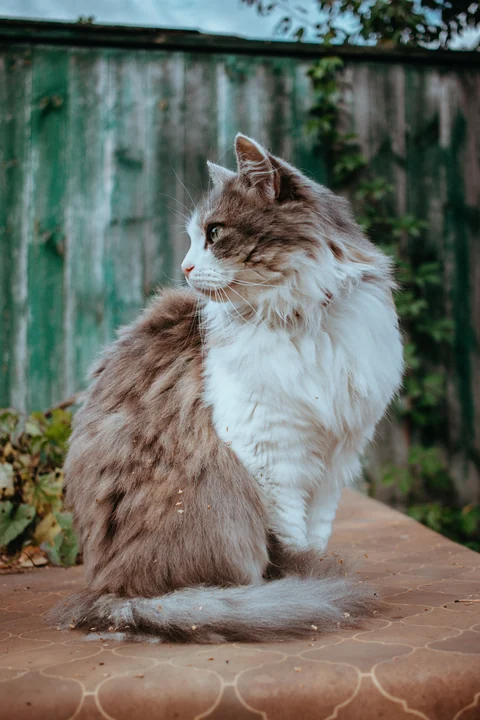
The Norwegian Forest Cat is long-legged, powerful and an enthusiastic climber. Comb its dense double coat weekly, more often during the spring shed.
Shorthair cat · Great Britain
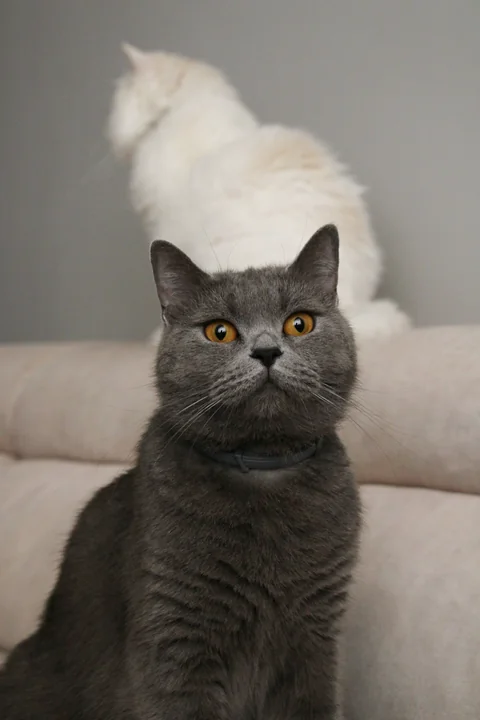
A round face, a dense coat and a generally quiet temperament. British Shorthairs enjoy company but often prefer sitting beside their owners to curling up on a lap.
Portrait · Quince&Medlar · CC BY 4.0 · Edited
Kitten · Leijurv · CC BY-SA 4.0 · Edited
.jpg)
.jpg)