 fellfolio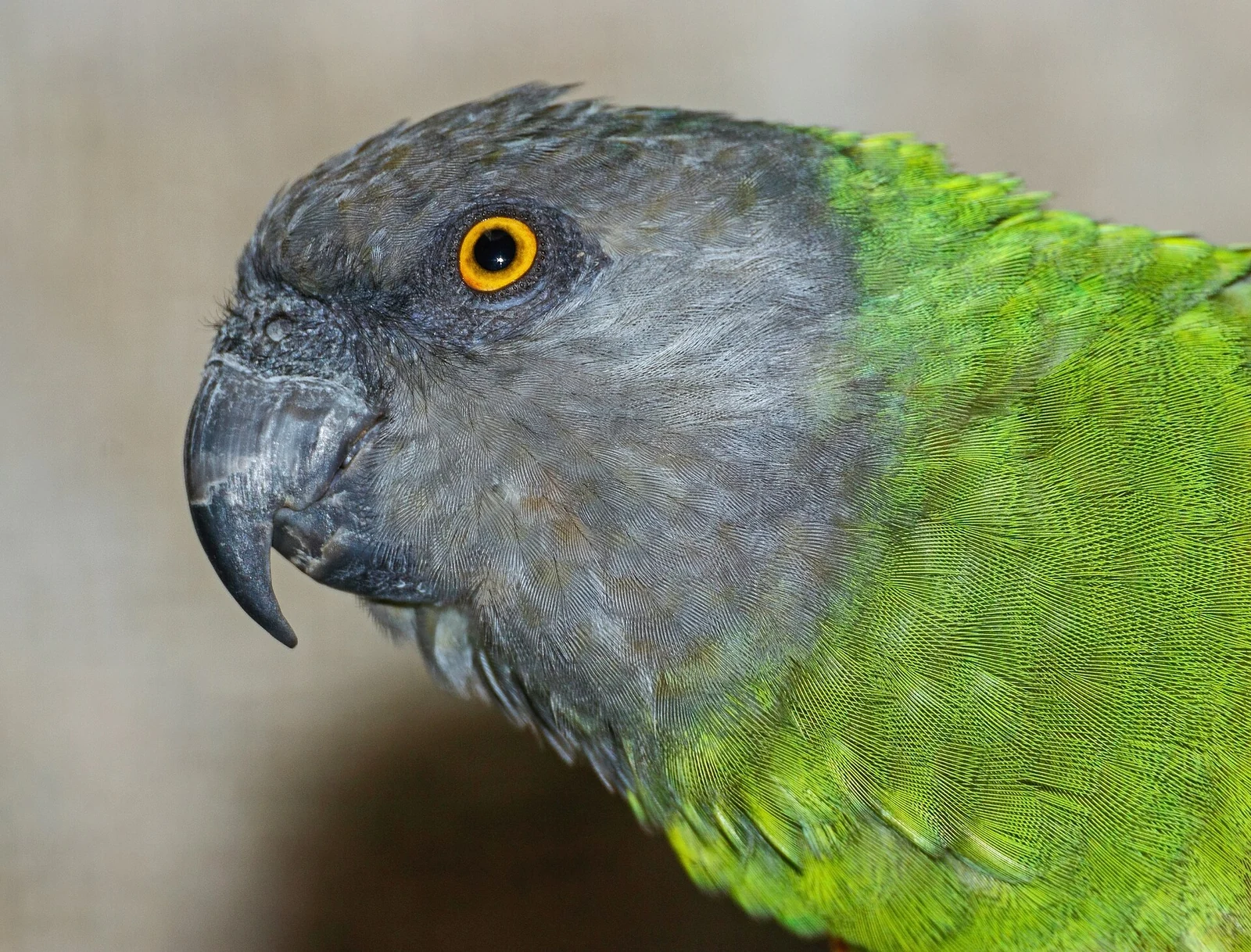
A compact parrot from West Africa
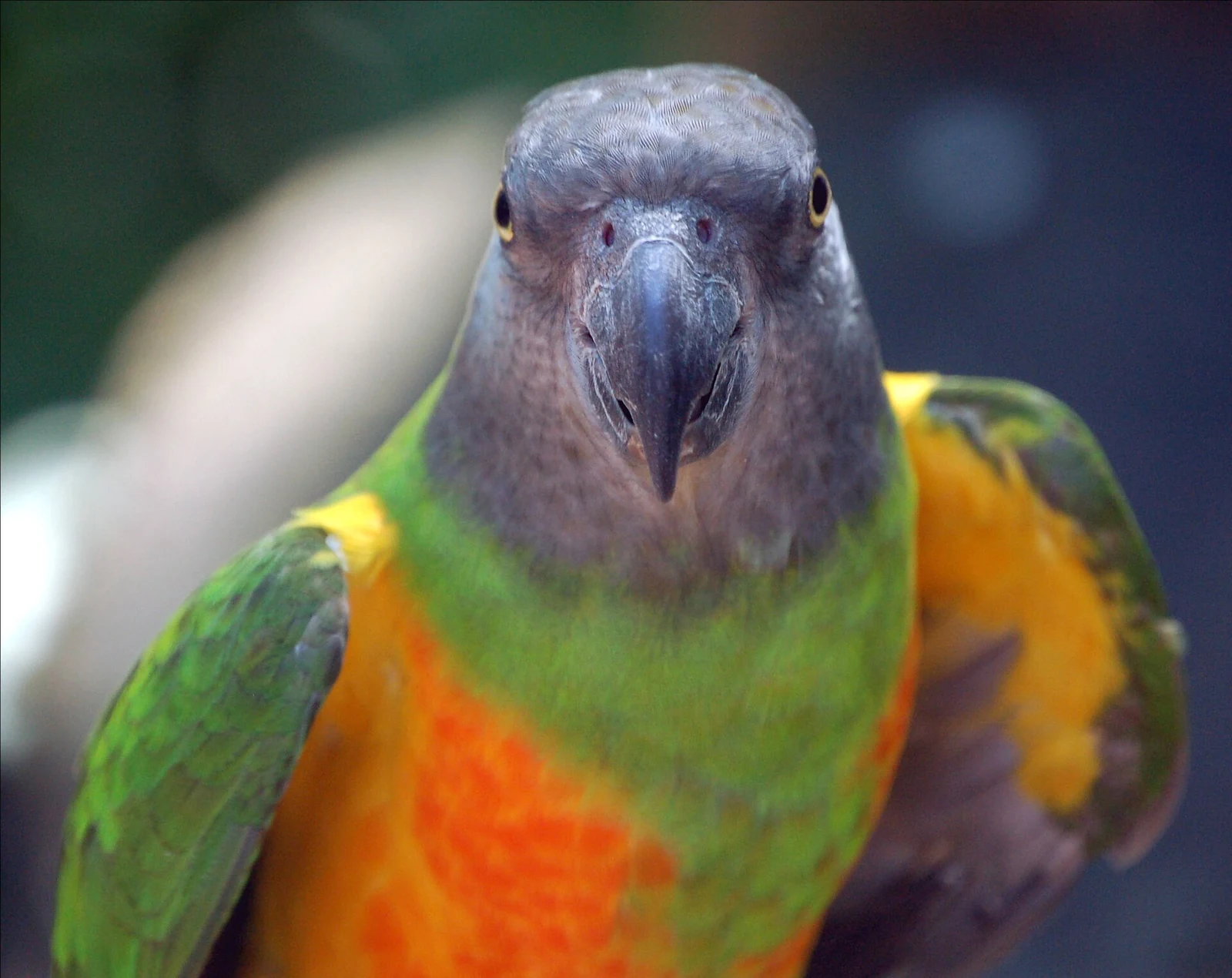
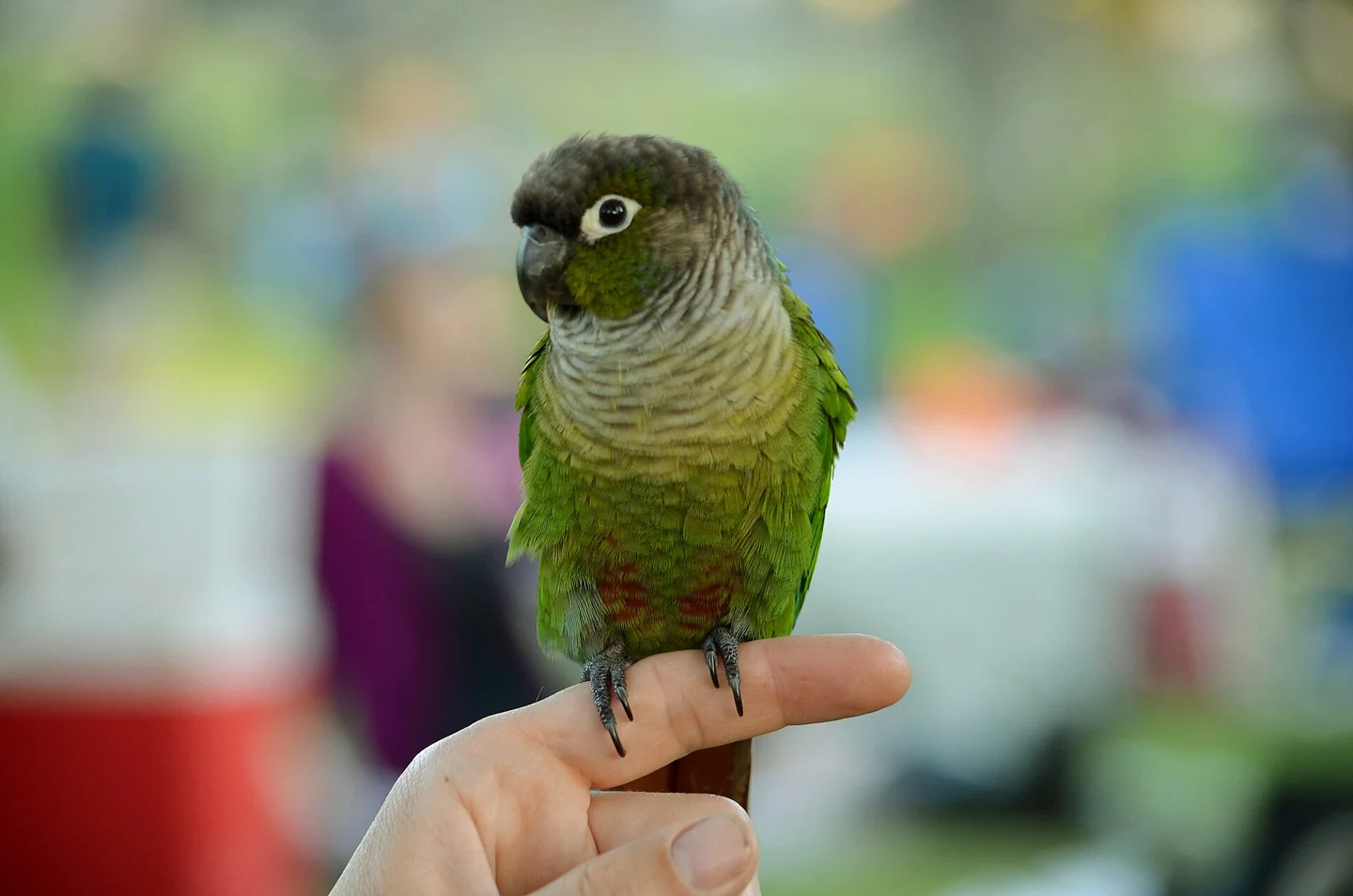
Senegal parrots are about 23 centimetres long, with a short tail and a sturdy appearance. Adults generally have yellow irises; younger birds have darker eyes. Belly colour varies within the species. The parrot conservation organisation World Parrot Trust gives a lifespan of about 20 to 25 years.
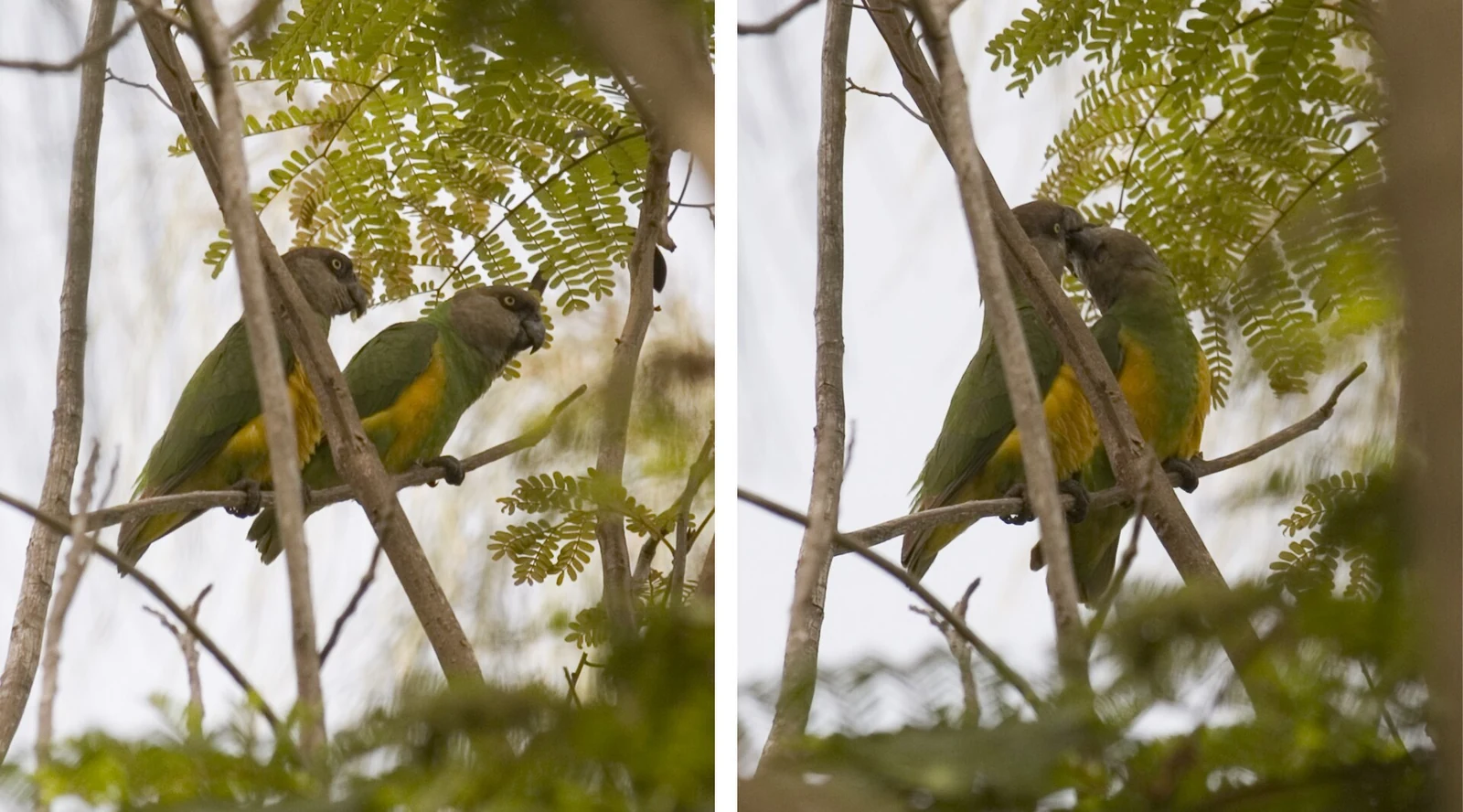
Across their natural range they use various wooded landscapes and may gather in feeding groups outside the breeding season. That social background matters in captivity: a bird should have opportunities for a suitable relationship with its own species. An established pair from an experienced rescue can offer a useful starting point.
Before adoption, health history, previous housing and familiar food should be clear. It is especially helpful to know whether a bird spent years alone and how it behaves around other birds. A specialist rescue can discuss those questions through observations of the actual animals. Meeting the pair more than once also helps prospective caregivers understand its everyday rhythm.
Sources for this section
- Senegal ParrotWorld Parrot Trust
- Living with other birdsRSPCA
- Introducing a New Pet BirdVCA Animal Hospitals
Flight routes, climbing space and secure fastenings
The World Parrot Trust specifies at least 2.1 metres of length for a walk-in aviary. Several metres of usable flying space and a secure room available for daily exercise offer much more movement. Length, width and height need planning together so two birds can pass, land and reach different resting places.
Branches of varying thickness provide different grips. Strong chewing branches and climbing structures can sit around the edges, keeping the main flight route open. New objects may be easier to explore beside a familiar perch than after a complete rearrangement of the sleeping area. A sheltered part of the enclosure offers privacy.
Senegal parrots can examine catches and fixings with considerable determination. Doors need reliable closures and materials must be nontoxic. Frayed ropes and damaged toys deserve daily attention. Generous accommodation also needs practical cleaning access, with reachable bowls and replaceable floor coverings beneath popular perches. This makes thorough care easier for the regular keeper and anyone standing in.
Read more: Setting up a bird room: safe flight and good landing places
Sources for this section
- Senegal ParrotWorld Parrot Trust
- Housing and environments for pet birdsRSPCA
- Toys for birdsVCA Animal Hospitals
Relationships need both closeness and space
A Senegal parrot may become particularly attached to one person. Other caregivers should have opportunities to build familiarity through small rewards and consistent routines. A station the bird chooses to visit can help during bowl changes, for example, keeping hands from having to pass directly beside it.
A new companion needs health assessment and a planned quarantine in a separate room before introductions begin. Later meetings should progress gradually. Multiple feeding places and a second suitable enclosure matter if the birds need more distance. Persistent pursuit or injury requires safe separation and experienced help.
This species can make shrill calls, particularly when excited. Descriptions such as “quiet apartment parrot” reveal little about a specific bird in a particular home. Spending meaningful time around the birds gives a more realistic impression of noise and handling. Their daily needs should still be manageable on days when neither bird wants close contact with people.
Sources for this section
- Living with other birdsRSPCA
- Introducing a New Pet BirdVCA Animal Hospitals
- How to train your pet birdRSPCA
- Senegal ParrotWorld Parrot Trust
Choose balanced food and achievable puzzles
Suitable parrot pellets combine ingredients throughout each piece and can form a balanced foundation with washed vegetables. Carrot, pepper and broccoli are possible fresh-food choices. Fatty seeds and nuts should make up only small amounts. The overall plan needs to reflect body condition, activity, health and previous feeding, with advice from an avian practice.
A tiny fragment of a favourite nut can reward a training step. For longer activity, familiar food can be made gradually more interesting to find: first visible in a shallow dish, then loosely wrapped in plain paper. The bird learns to use its bill and feet to retrieve it. These portions belong within normal daily intake.
Food changes should be gradual. Carrying or crumbling a new food does not yet show that enough is being swallowed. Observed intake, weight and droppings help track the change. Clean drinking vessels and removing moist leftovers are daily tasks. Both members of a pair need checking, because one enthusiastic eater can make a shared bowl look reassuring while its companion eats poorly.
Sources for this section
- What to feed your pet birdRSPCA
- Benefits of Foraging Activities for ParrotsWorld Parrot Trust
- How to train your pet birdRSPCA
Practise care and notice changing abilities
Stepping onto a perch voluntarily can be built in small stages. A reward first follows an approach, later one foot on the perch and eventually a full transfer. Stepping back should remain possible. A steady transport perch can then support trips to the scales or carrier. Defensive responses call for more comfortable distance.
A young bird should already feed independently and have appropriate social experience before moving home. Relationships may change as it matures. Dark cavities and repeated stroking of the body can encourage reproductive behaviour. Stroking the back and belly should therefore be avoided. A bird that seeks physical contact may enjoy gentle scratches around the head or neck.
An older Senegal may develop a weaker grip or less certain landings. Shorter routes and more accessible perches can make daily life easier straight away. These changes need an avian veterinary assessment. Sudden loss of appetite, withdrawal or feather damage warrants prompt avian veterinary attention. Laboured breathing requires immediate contact with the practice or emergency service. A dependable care plan therefore includes transport and access to experienced professionals as well as ordinary feeding and cleaning.
Read more: Bird training: confidence, carriers and cooperative care · Bird life stages: from youngster to older companion
Sources for this section
- The Power of Positive ReinforcementWorld Parrot Trust
- How to train your pet birdRSPCA
- Geriatric diseases of pet birdsMerck Veterinary Manual
- Introduction to disorders and diseases of pet birdsMerck Veterinary Manual
- Reproductive diseases of pet birdsMerck Veterinary Manual
- Where to pet your birdPetMD, reviewed by Sandra C. Mitchell, DVM, DABVP
Common questions
Can Senegal parrots live in a small flat?
The actual bird area matters more than the size of the property. A compact parrot still needs room to fly and move away, compatible company and a household able to accommodate its calls.
Does punishment stop biting?
Punishment can increase fear and defensive behaviour. Observing requests for space and teaching voluntary participation makes routine care more predictable. Newly defensive behaviour can also have a health-related cause.
A closer look
Sources and photo credit
- Senegal ParrotWorld Parrot Trust
- Living with other birdsRSPCA
- Introducing a New Pet BirdVCA Animal Hospitals
- Housing and environments for pet birdsRSPCA
- What to feed your pet birdRSPCA
- Benefits of Foraging Activities for ParrotsWorld Parrot Trust
- How to train your pet birdRSPCA
- The Power of Positive ReinforcementWorld Parrot Trust
- Toys for birdsVCA Animal Hospitals
- Introduction to disorders and diseases of pet birdsMerck Veterinary Manual
- Geriatric diseases of pet birdsMerck Veterinary Manual
- Reproductive diseases of pet birdsMerck Veterinary Manual
- Where to pet your birdPetMD, reviewed by Sandra C. Mitchell, DVM, DABVP
Photo: Poicephalus senegalus - Vogelburg Weilrod 01.jpg · H. Zell · CC BY-SA 3.0. Resized for the web and converted to WebP; image content unchanged.
Photo: Poicephalus senegalus -Hann Park -Senegal -pair-8.jpg · Thom Haslam · CC BY 2.0. Resized for the web and converted to WebP; image content unchanged.
Photo: Senegal Parrot (Poicephalus senegalus) -front upper body.jpg · Art G. · CC BY 2.0. Resized for the web and converted to WebP; image content unchanged.
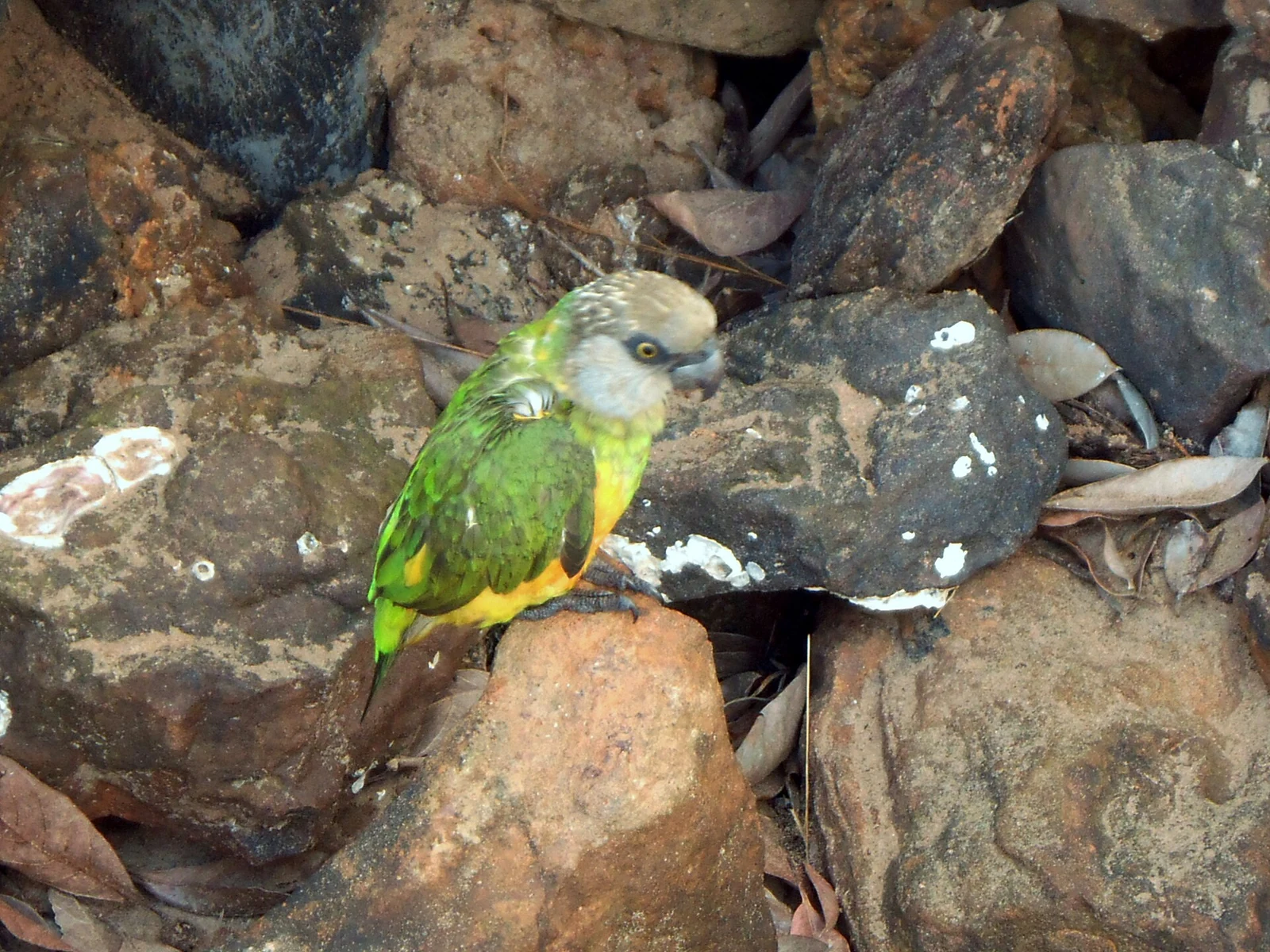
Photo: Poicephalus senegalus at Ecolodge Ponta Anchaca, Guinea-Bissau1.jpg · Joehawkins; image edit by MPF · CC BY-SA 4.0. Resized for the web and converted to WebP; image content unchanged.


_-front_upper_body.jpg)
