fellfolio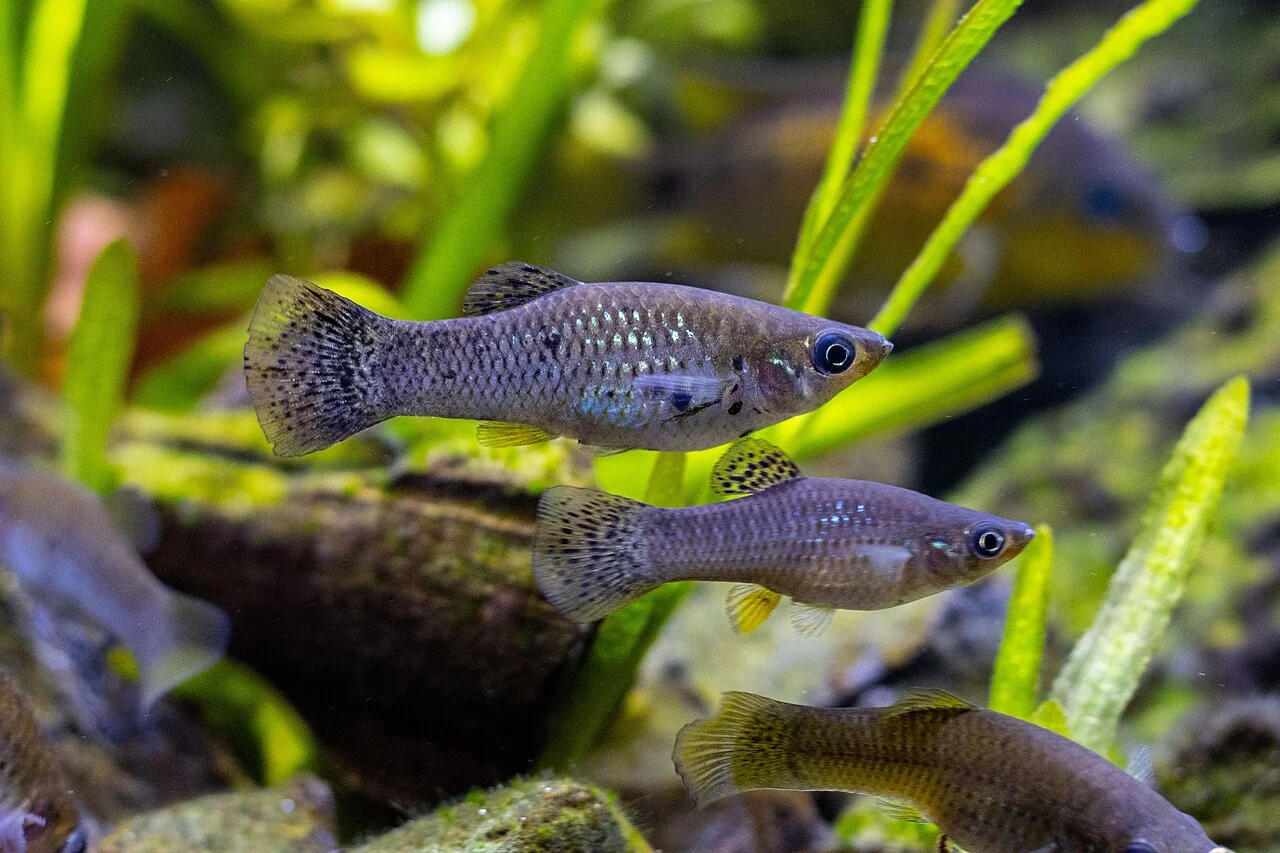
Several species share the name molly
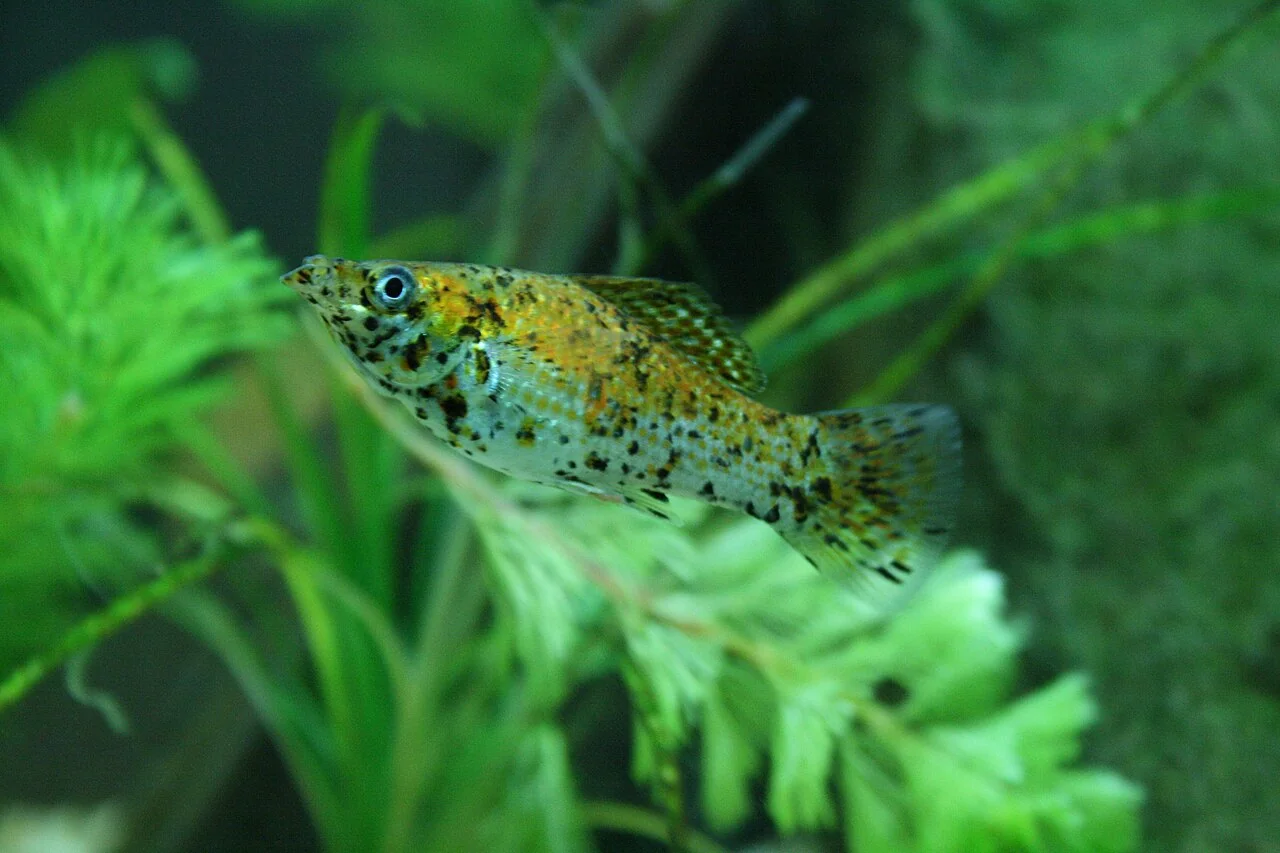
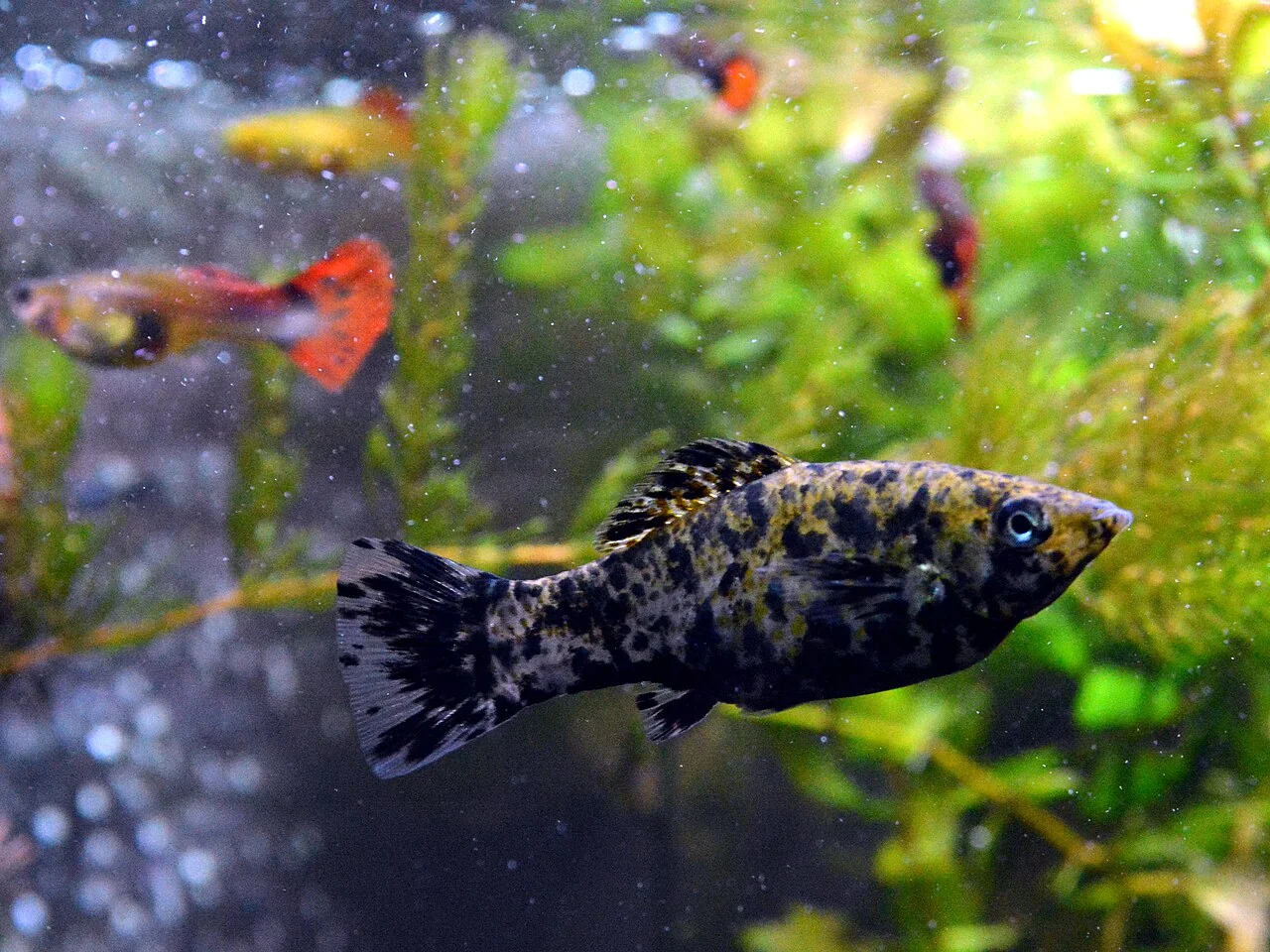
Alongside Poecilia sphenops, mollies include Poecilia latipinna, the sailfin molly, and Poecilia velifera, the Yucatan molly. Their larger dorsal fins can be particularly noticeable. The research database FishBase records a body length of up to 7.5 centimetres for Poecilia sphenops, excluding the tail fin. These species should be considered separately when planning accommodation. The small size of a fish in a shop tells you little about the space it will need as an adult.
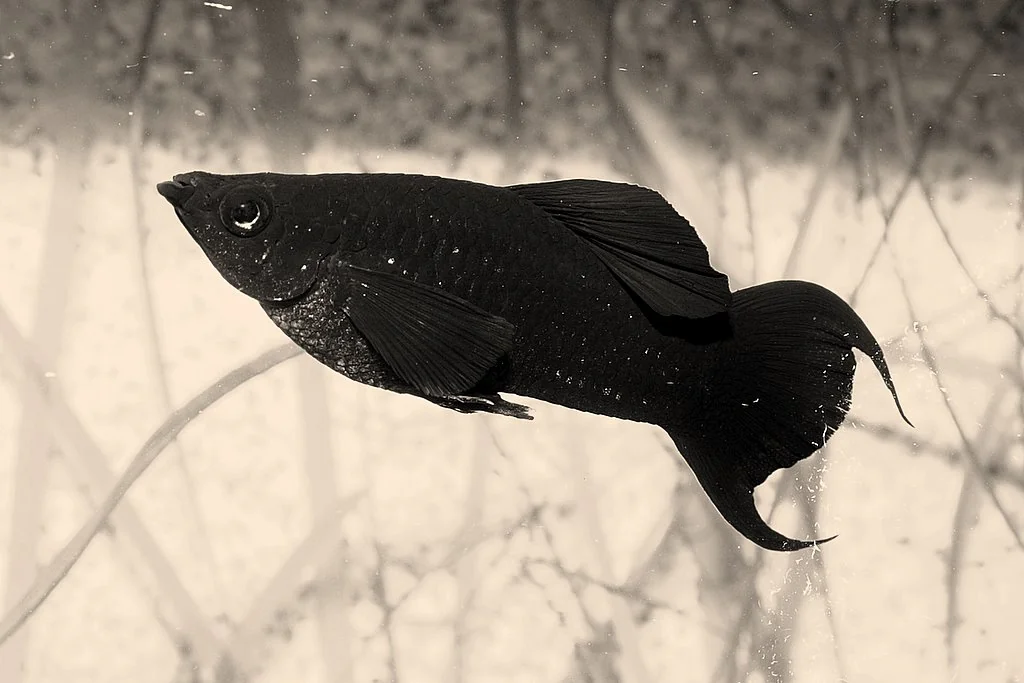
Breeding lines can also include crosses between species. One scientific publication describes a black ornamental line derived from Poecilia mexicana and Poecilia sphenops. This does not establish the ancestry of every black molly. For your aquarium plan, a well-supported species identification, expected adult size and previous water conditions are more useful than colour.
Make room for swimming and shelter
The aquarium should offer an open swimming route and several planted retreats. Plants should be arranged so that a harassed fish can move out of sight of the others. One clump in an otherwise empty corner may not achieve that. The group should also be able to move between areas without being funnelled through a narrow gap.
When choosing a tank, you should discuss its length and depth as well as water volume and intended inhabitants. General molly advice covers species and breeding forms of different sizes. A longer aquarium usually allows swimming areas and shelter to be arranged more usefully than a tall, narrow tank with the same volume. The filter and heater should suit the complete setup.
Read more: Setting up a freshwater aquarium: tank, filter and water
Understand hardness and establish the filter
General hardness, often labelled GH on tests, mainly reflects dissolved calcium and magnesium. It matters for mollies because very mineral-poor water does not suit their needs. OATA, the UK ornamental aquatics trade association, lists 20 to 28 °C and pH 7 to 8 in its shared molly care sheet. The pH value indicates whether water is acidic, neutral or alkaline. You should seek knowledgeable advice on suitable conditions for the particular fish being offered.
The filter should be established without fish before they arrive. This is called cycling. Bacteria grow and process toxic waste, converting ammonia into harmful nitrite and then less toxic nitrate. An ammonia product intended for cycling aquariums is used according to its instructions. Repeated tests after the further prescribed additions should show zero ammonia and nitrite before the first fish are added.
You should continue testing regularly and changing part of the water afterwards. Chlorine and chloramine are disinfectants that may occur in tap water and are harmful to fish. Where needed, replacement water should be treated with an appropriate conditioner and its temperature adjusted.
Read more: Caring for an aquarium: watch the water, filter and fish
Notice how each fish is doing
For a mixed-sex group, OATA recommends roughly two females per male to spread male attention. You should still watch for a female being chased constantly, hiding most of the time or failing to reach food. Shelter and the group's composition should then be reviewed, with separate accommodation arranged if necessary.
Other species should suit both the water conditions and the behaviour of the molly group. A fish adapted to very soft water may be unsuitable for a mineral-rich molly aquarium. Comparing the needs of the actual species is therefore helpful. Describing both as community fish does not settle whether they can share this tank.
Read more: Choosing aquarium fish that can live well together
Include plant ingredients in their diet
Shortfin mollies eat plant and animal material. Suitable complete fish food containing plant ingredients should form the basis of their diet. Complete food is formulated to supply the nutrients they need. Small portions of appropriate frozen food can add variety. Picking at algae does not replace daily feeding with suitable food.
Feeding time lets you watch whether every fish gets a share. Modest portions offered in more than one place help you keep quieter fish in view. If food remains uneaten, the amount should be adjusted. For holiday care, prepared portions and a clear note are useful so that several people do not independently feed the same fish.
Plan where growing fry will live
Mollies are livebearers. Eggs develop inside the female, which then gives birth to young fish able to swim. In males, the anal fin underneath the rear part of the body becomes a narrow reproductive organ called a gonopodium. Females retain a fan-shaped fin there. Reliable identification of the sexes helps you assemble the group deliberately.
If you intend to raise fry, they need suitable shelter, sufficiently fine food and more room as they grow. A further aquarium with an established filter may be needed. You should discuss eventual homes with suitable keepers or an aquatics retailer before numbers increase. Space should be planned before many young fish start appearing among the plants.
Trembling, breathing problems and other changes
A molly that trembles, eats poorly or holds its fins close to its body should be watched carefully and assessed by a knowledgeable professional. These signs can have different causes. You should check temperature and water readings and share the results with a vet who treats fish. Salt or medicines should not be added solely because a fish has been seen trembling.
Sudden marked breathing difficulty or severe weakness needs immediate help. Filter operation and the heater should also be checked while help is arranged. New fish should first be observed in a separate, appropriately prepared aquarium. This quarantine aims to prevent an unnoticed illness entering the established group.
Common questions
Are black mollies always Poecilia sphenops?
Black is a colour description. Black breeding lines may include crosses between species. You should ask how the fish were identified and where they came from, rather than treating colour as proof of species.
Do I need to add salt to a molly aquarium?
The name molly does not establish a universal need for added salt. The actual species and measured water conditions should be checked first. Minerals responsible for hardness and a salt treatment are different things. Treatment should be guided by an appropriate professional.
Can mollies live on algae alone?
Even when fish search surfaces for food, they should receive suitable complete food. You can use feeding time to see whether each fish eats and whether the portions are fully taken.
A closer look
Sources and photo credit
- How to look after guppies and molliesOrnamental Aquatic Trade AssociationSeveral species share the name molly · Make room for swimming and shelter · Understand hardness and establish the filter · Notice how each fish is doing · Plan where growing fry will live · Trembling, breathing problems and other changes
- Poecilia sphenops species summaryFishBaseSeveral species share the name molly · Include plant ingredients in their diet
- Freshwater Ornamental Fish Commonly Cultured in FloridaUniversity of Florida IFAS ExtensionPlan where growing fry will live
- Management of Aquarium FishMerck Veterinary ManualTrembling, breathing problems and other changes
- Routine Health Care of FishMerck Veterinary ManualTrembling, breathing problems and other changes
- Emergencies of FishMerck Veterinary ManualTrembling, breathing problems and other changes
- Keeping pet fish togetherRSPCANotice how each fish is doing
- Choosing an aquariumRSPCAMake room for swimming and shelter
- What to feed your fishRSPCAInclude plant ingredients in their diet
- A Summary of Water Quality Tests and Recommended UseMerck Veterinary ManualUnderstand hardness and establish the filter
- A haploid-diploid-triploid mosaic of the Amazon molly, Poecilia formosaLampert et al., Cytogenetic and Genome Research, via PubMedSeveral species share the name molly
- How to set up and look after a freshwater tank / aquariumOrnamental Aquatic Trade AssociationUnderstand hardness and establish the filter
- Providing a Home for FishMerck Veterinary ManualInclude plant ingredients in their diet
Photo credits
Photo: PoeciliaSphenops.jpg · Dnoerholm / FAURSKOV · CC BY-SA 4.0. Image format adapted.
Photo: Black molly1.JPG · Przemysław Malkowski (Pmalkowski) · CC BY 3.0. Image format adapted.
Photo: Orange molly.jpg · h080 · CC BY-SA 2.0. Image format adapted.
Photo: 2015-09-13 female spotted molly.jpg · BACbKA / Togabi · CC BY-SA 4.0. Image format adapted.