fellfolio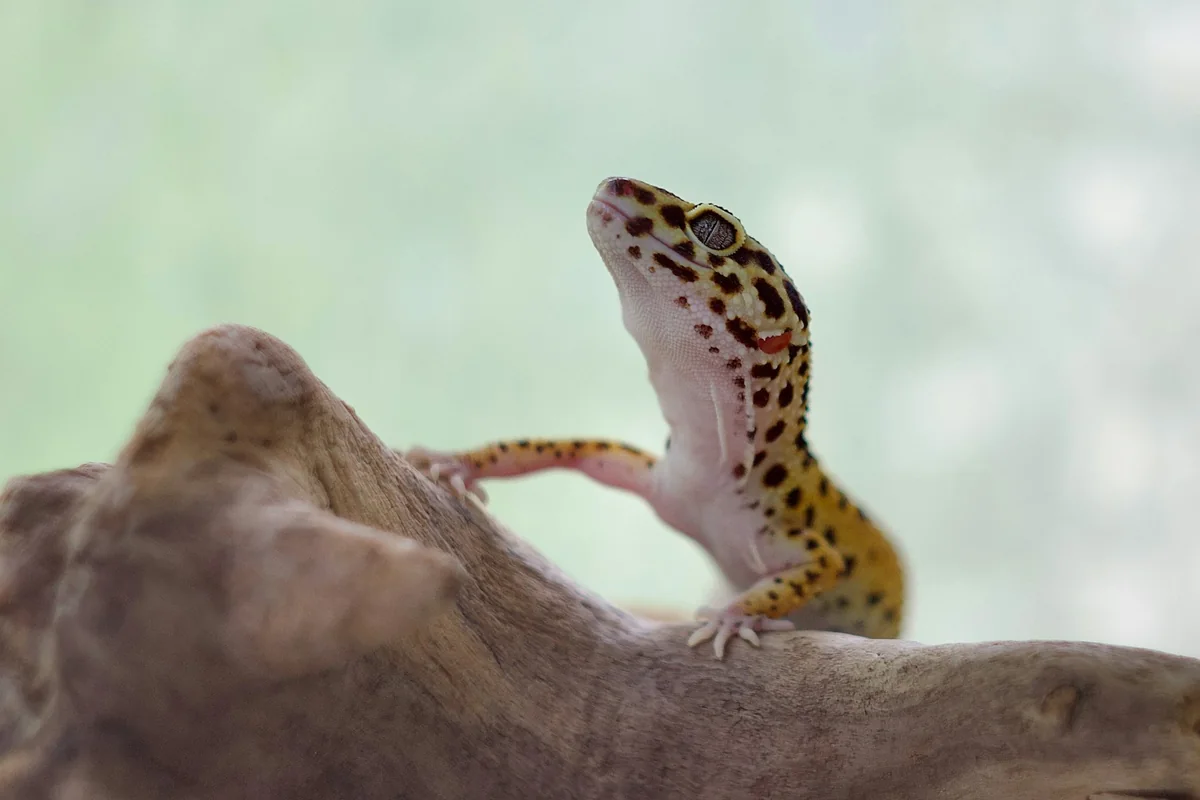
Set up the vivarium before bringing a gecko home
The RSPCA gives a minimum vivarium size of 60 centimetres long, 40 centimetres high and 30 centimetres deep for an adult leopard gecko. More floor space gives it longer routes between temperature zones. On the ground, it forages and moves between warm and cool areas. The enclosure must be escape-proof, well ventilated and easy to clean. Radiators, draughts and direct sunlight make its temperature harder to control.
A hide at the warm end and another at the cool end let the gecko choose a temperature without lying exposed. Both should be stable and have smooth entrances. A third hide with damp moss creates a small humid patch that helps with shedding. Low, stable rocks and branches give this mostly ground-dwelling gecko more routes through the enclosure.
Provide measured heat and appropriate UVB
Leopard geckos rely on their surroundings for warmth. The RSPCA describes a basking zone of 28 to 30°C and a cool end of 24 to 26°C. Every heater needs a suitable thermostat, while digital thermometers at both ends confirm the actual temperatures. Heat lamps require guards against burns. Lights go off at night; if the room becomes too cold, any extra heat should be controlled and should not emit light.
UVB allows the animal to make vitamin D3, which supports the use of calcium. For leopard geckos, the RSPCA describes a low-output UVB tube over part of the warm end, fading to full shade. Distance, mesh and lamp age change the amount reaching the animal. The maker's fitting and replacement guidance matters more than visible brightness. A reptile-experienced vet can advise on lighting for colour morphs that may be unusually sensitive.
RSPCA · Merck Veterinary Manual · University of Illinois College of Veterinary Medicine
Keep the main habitat dry and one hide damp
The RSPCA suggests roughly 30 to 40 percent humidity at the cool end. Wet substrate and condensation on the glass suggest moisture is lingering and air circulation is poor. The moss in the humid hide should stay lightly damp and clean while the wider enclosure remains relatively dry and well ventilated.
Substrate should give grip without adding avoidable feeding hazards. For healthy adults, the RSPCA describes a clean mix of organic soil and suitable play sand; a non-loose surface can make monitoring very young geckos easier. Calcium sand and large wood chips are poor choices. Flat slate or stone can hold daytime warmth, provided it is stable and has no sharp edges.
Offer varied insects of a suitable size
Leopard geckos mainly eat invertebrates. Appropriate crickets, locusts and other feeder insects should be no larger than the gecko's head. Variety is preferable to one insect every time. The insects themselves need food and water; they can be fed a suitable nutrient-rich diet before being offered to the gecko. Insects left in the vivarium should be removed, since some can bite the animal.
Calcium and vitamin supplements should be used sparingly and according to the product instructions. A correctly set UVB system affects how much extra vitamin D3 is appropriate; excess is possible. Young geckos feed more often than adults, but regular weighing helps you adjust amounts to the individual rather than following a calendar alone. Clean drinking water belongs in a shallow dish at the cool end.
Give the gecko its own space
Leopard geckos do not need companions, and keeping them together can lead to aggression. After arrival, give the animal time to explore its enclosure. When a check is needed later, scoop it gently from below with both hands so all four feet are supported. The gecko should never be held or pulled by its tail: it may drop it, and rebuilding those energy stores takes a toll.
Backing away or attempting to bite means the encounter is too much; a break is better than repeated capture attempts. You can learn a great deal by watching without touching: does the gecko use both temperature zones, eat and pass droppings? Time out of the vivarium also allows its body to cool. Children and other pets should not interact with it without close supervision.
Watch shedding and changes in health
Skin often looks dull before a shed. A gecko usually loosens it in the humid hide, removes it in large pieces and may eat it. Skin left around toes or eyes can cause trouble. Do not pull attached skin away, as the new skin beneath may tear. A reptile-experienced vet should advise if pieces remain stuck.
Weight loss, abnormal droppings, weakness, swelling or muscle twitching also warrant prompt professional advice. The RSPCA describes bone disease linked to inadequate UVB and calcium. A short daily observation and occasional recorded weights make changes easier to spot. Hands should be washed after handling the gecko or cleaning its enclosure, as reptiles can carry Salmonella.
RSPCA · University of Illinois College of Veterinary Medicine
Common questions
Is a leopard gecko a pet to handle often?
Many become used to brief, calm health checks. Being able to retreat and watching the animal in its vivarium matter more than frequent handling.
Does the entire vivarium need to be humid for shedding?
No. The main environment stays relatively dry; a separate humid hide offers moisture where the gecko can use it.
Sources and photo credit
- How to care for a leopard geckoRSPCA
- Places for reptiles to hideRSPCA
- Providing a Home for a ReptileMerck Veterinary Manual
- Simple Things Your Reptile Might Be MissingUniversity of Illinois College of Veterinary Medicine
Photo: A leopard gecko rests on a piece of driftwood · Andrey Tikhonovskiy · Unsplash License. Cropped and resized from an existing Fellfolio photo, then converted to WebP