fellfolio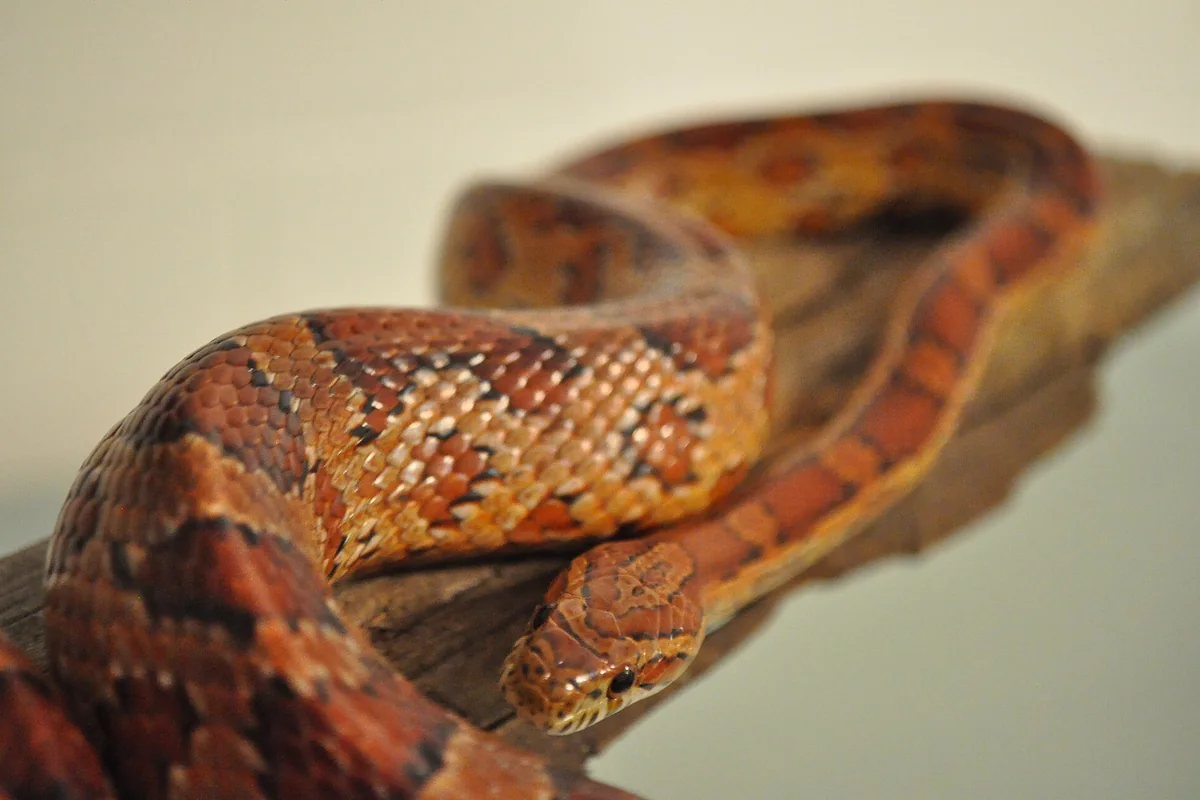
A long enclosure that stays securely closed
The RSPCA recommends a vivarium at least as long as the corn snake's full body length, with width and height each at least one third of that length. A snake measuring 150 centimetres therefore needs at least 150 × 50 × 50 centimetres. Both floor and height are used: corn snakes travel along the ground and will climb sturdy branches.
Snakes can find remarkably small gaps. Doors, cable openings and vents must close securely while maintaining ventilation. Young snakes need plenty of snug cover even if they already live in a larger future-proof enclosure. The finished vivarium should run for about a week before arrival so heat and light can be checked under normal household conditions.
Measure a thermal gradient, not room temperature
Corn snakes regulate their body temperature by moving. The RSPCA gives 28 to 30°C for the warm area and 20 to 24°C at the cool end. A guarded heater sits on one side and uses a suitable thermostat. A thermometer at each end confirms the actual conditions. Heating the whole vivarium too much removes the snake's cooler refuge.
Lighting creates a clear day-night cycle. The RSPCA recommends a low-output UVB tube over part of the warm end, with shade at the cool end. UVB helps the snake make vitamin D3 and use calcium. Distance, mesh and lamp age change how much reaches the animal, so fitting should follow the maker's instructions. Nights remain dark. If the room is too cold overnight, any additional heat should be controlled and should not emit light.
Combine shelter, climbing and suitable substrate
A corn snake should be able to hide completely at both warm and cool ends. A snake hide is best sized so its coiled body touches the inside walls; a large open shelter often feels less secure. A separate hide with damp moss can help with shedding without making the entire enclosure wet.
Fixed branches, raised hides and cover from plants or leaves make better use of the space. Substrate should support movement and burrowing while allowing soiled patches to be removed. The RSPCA describes suitable organic soil or reptile soil-and-sand mixes and advises against sand alone. Clean water belongs in a stable bowl at the cool end, large enough for the snake to soak if it chooses.
Plan whole-prey meals and leave time to digest
Corn snakes eat whole prey. In captivity the RSPCA recommends dead mice, with prey slightly wider than the snake at its widest point. Meal spacing and prey size change as the snake grows and with its body condition. Regular weighing helps reveal under- or overfeeding; a fixed schedule without watching the animal is less useful.
Frozen prey should thaw completely in a sealed bag placed in cold water. It can then be warmed in the bag in warm water before feeding. Use a dedicated container away from human food preparation; do not use a microwave. Offer the prey with feeding tongs. Live prey can injure the snake and is unnecessary. The snake should not be handled for at least 48 hours after a meal because disturbance may cause regurgitation. After preparing prey, hands, tongs and used surfaces need hygienic cleaning. Wash hands before handling the snake so food scent does not trigger a feeding response. Anyone providing holiday care needs those details in writing.
Handle only when there is a reason
Corn snakes do not need a second snake in their enclosure. Housing one animal also makes appetite, shedding and droppings easier to monitor. When a health check or transport is needed, support the body with both hands rather than grabbing the head or tail. Other pets should remain apart.
A corn snake drawing its head and neck back into an S shape is signalling discomfort, so handling can wait. Extra restraint around shedding is also sensible. Long periods outside the heated vivarium let the animal cool down. After arrival, quiet observation tells you more: is it using its hides, moving normally and finding water? Repeatedly lifting it out is no substitute for a suitable home.
Watch the shed and changes in health
A healthy corn snake normally sheds in one piece. It may hide more beforehand, and its eyes can temporarily look cloudy. Afterwards, the eyes and tail tip should be free of retained skin. If pieces remain, especially over the eyes, a reptile-experienced vet can advise. Do not pull skin off, because the new tissue beneath can be injured.
Poor shedding, blisters, breathing changes, abnormal droppings, weight loss or tiny black specks on the body and around the water bowl warrant professional assessment. A hygrometer helps check the RSPCA's usual ambient humidity range of roughly 40 to 50 percent, alongside a local damp hide. Hands should be washed after cleaning or handling because reptiles can carry Salmonella.
Common questions
Can a corn snake live with another corn snake?
For ordinary pet care, the RSPCA recommends individual housing. It reduces conflict and makes changes in each animal easier to spot.
Why wait after feeding before handling?
Movement and stress can make a snake regurgitate its prey. The RSPCA advises waiting at least 48 hours after a meal.
Sources and photo credit
- How to care for a corn snakeRSPCA
- Places for reptiles to hideRSPCA
- Corn Snake Care SheetPetMD, Maria Zayas, DVM
- Providing a Home for a ReptileMerck Veterinary Manual
Photo: Corn Snake · SloanePhoenix · CC BY 4.0. Cropped, resized and converted to WebP