fellfolio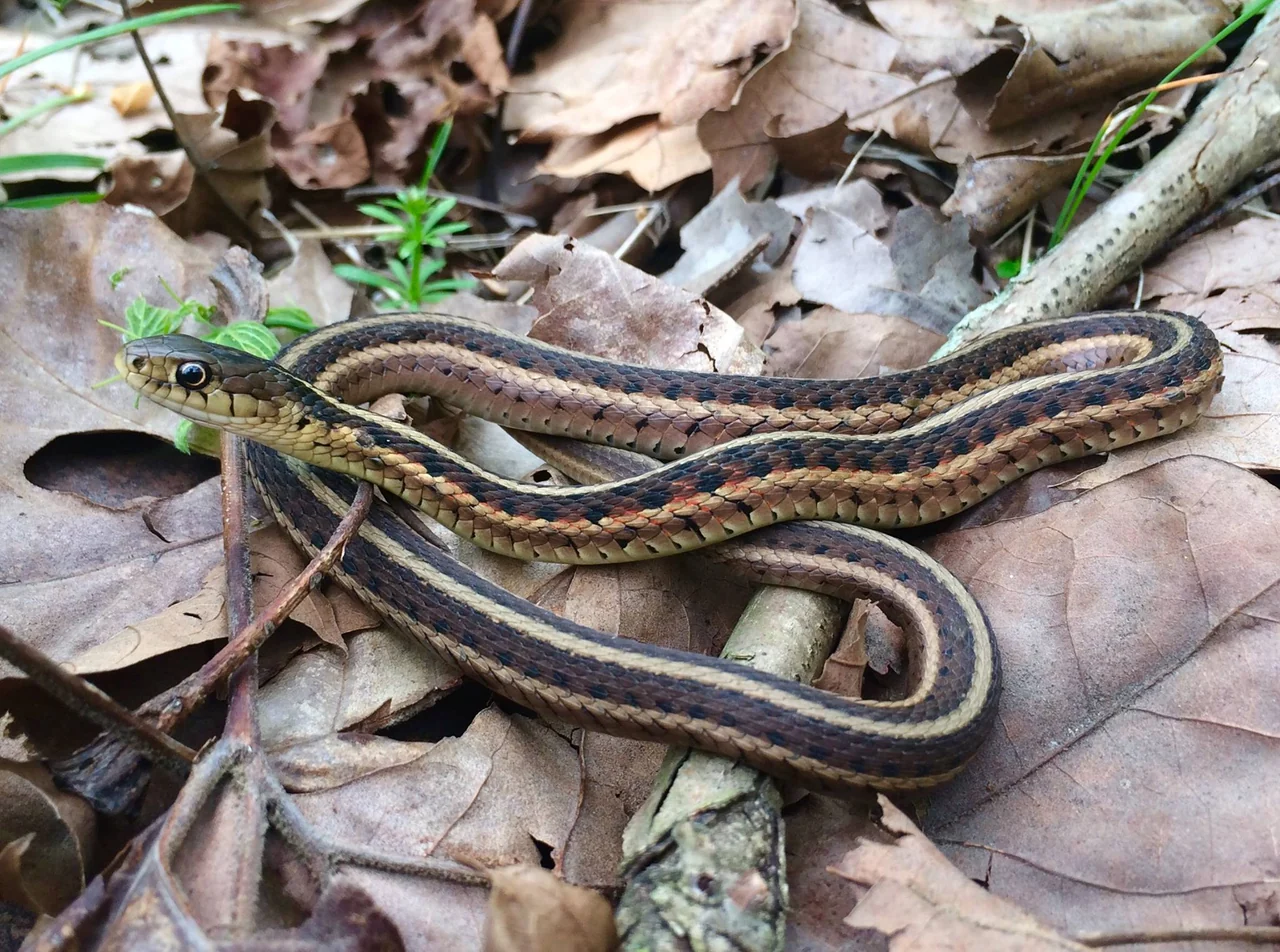
Which garter snake are you bringing home?
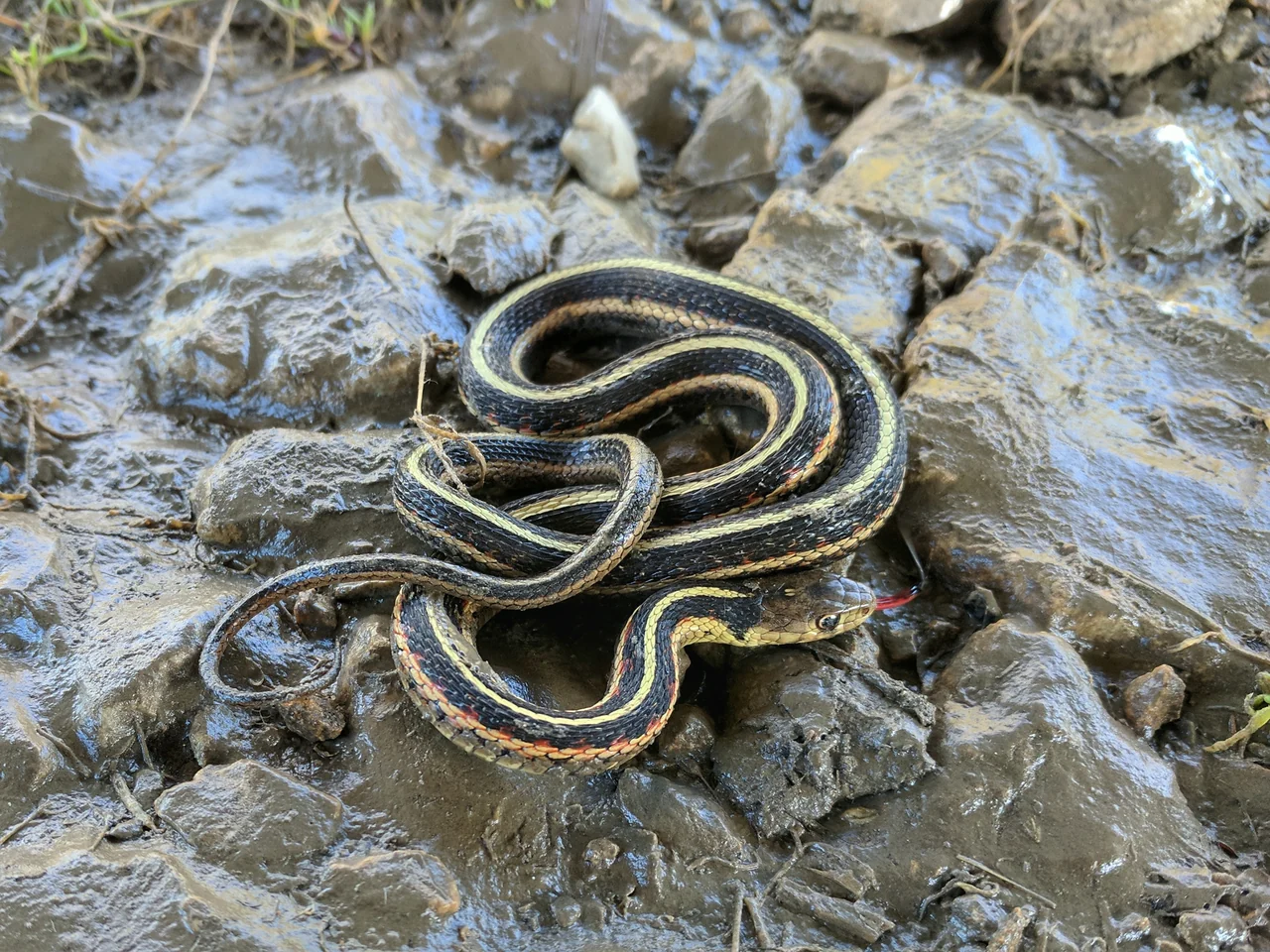
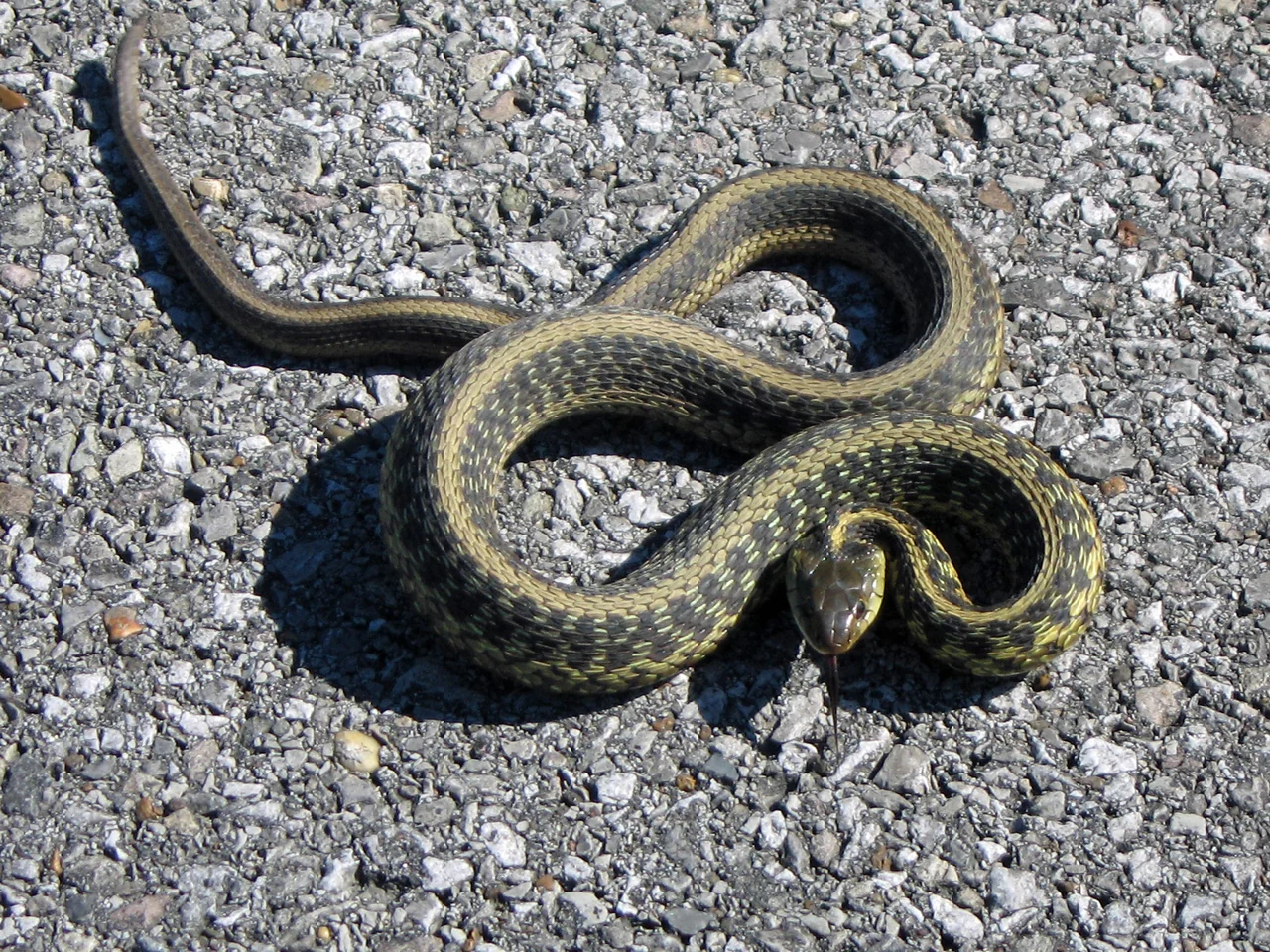
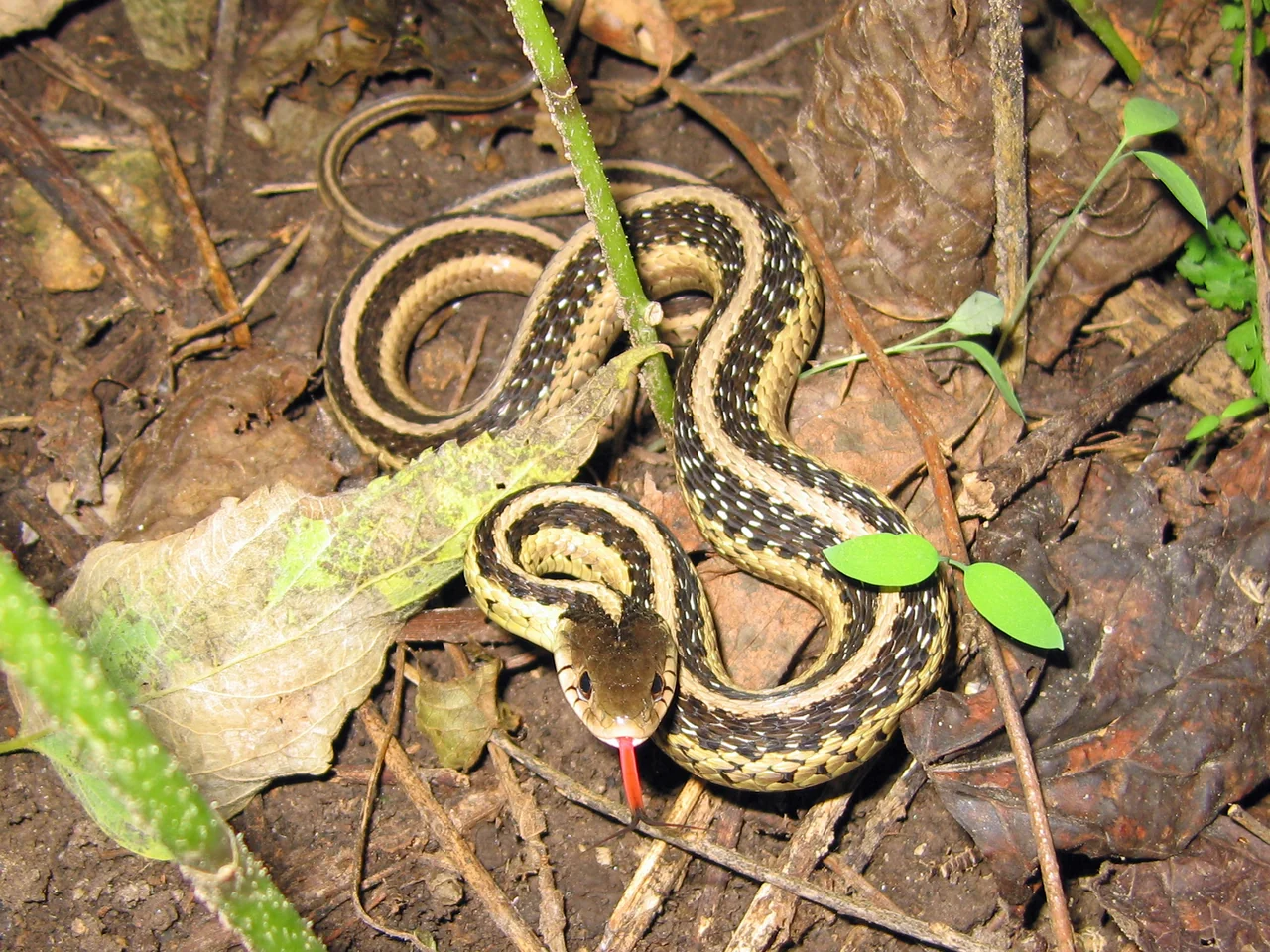
Light stripes along a darker body are typical, often accompanied by spots. Depending on its origins, a snake may have fairly muted brown colouring or striking red or blue markings. Colour alone does not reliably identify a species or subspecies. Its origin record should name Thamnophis sirtalis and, where known, include the subspecies and the line from which it was bred.
Adults can reach around a metre in length, with larger females growing considerably longer. Males usually remain smaller. Ask about the parents’ size when choosing a captive bred youngster so that you can plan its permanent enclosure. A small snake in a sales container gives little sense of the space an adult will occupy.
What you can learn by watching
Each tongue flick collects tiny scent particles. The tongue delivers them to a sensory organ in the roof of the mouth, helping the snake investigate food and its surroundings. Tongue flicking is therefore part of exploration. Many garter snakes can be seen during the day, although Thamnophis sirtalis may also be active at night.
Moving between a resting spot, a hide and water is part of its behaviour. Plants and pieces of cork should provide covered routes without filling every open space. If you need to pick up the snake for a check, support its body with both hands and move calmly. Frequent handling is unnecessary for observation. A snake that feels threatened may flee, bite or release a strong smelling defensive secretion.
Plan around the adult snake
An enclosure measuring 120 × 60 × 60 cm is a practical planning example for one adult up to about 120 cm long. The usable internal length should be at least the length of the snake. A longer snake needs more length so that it can stretch out straight. Extra depth makes it easier to include a water bowl, routes to explore and several retreats.
Low, firmly secured branches and broad pieces of cork give the snake places to climb. Provide a hide in the warm area and another in the cooler area. This allows it to change temperature while still feeling sheltered. Heavy stones should be stable enough to stay in place if the snake moves beneath them.
Pay particular attention to gaps around sliding doors, cable ports and ventilation mesh. Young garter snakes can squeeze through surprisingly small openings. The enclosure should close securely while remaining well ventilated. Avoid a position in direct window sunlight, which can cause the temperature inside to rise beyond your control.
Read more: Keeping reptiles: habitat and daily care before arrival
Make sense of heat and UVB
Snakes cannot generate enough body heat to keep their temperature independent of their surroundings. They warm up in suitable spots and move elsewhere to cool down. For the active part of the year, you can plan a resting surface at roughly 30 °C and a cooler area with an air temperature of about 22 to 24 °C. Around 22 °C at night is a cautious starting point. Settings should suit the known subspecies, origin and previous care of your snake. Planned winter dormancy requires separate preparation.
A thermostat controls the heat source. Separate thermometers let you check whether the intended temperatures are actually being reached. A probe measures temperature at its location, while an infrared thermometer measures the surface it is pointed at. Check both the warm resting place and the cool retreat after the equipment has reached its normal operating temperature. Night readings and checks during hot summer weather also matter. The snake must be protected from direct contact with hot lamps or exposed heating elements.
UVB is part of the ultraviolet radiation in sunlight. It supports vitamin D3 production, which helps the body use calcium. Calcium is needed for bones and muscles, among other functions. As a guide for lighting, aim for a UV Index around 1 at an accessible basking spot, with fully shaded retreats available. Albino forms need lower exposure, no higher than 0.7 at the basking spot and zero in the shade. The UV Index describes the strength of ultraviolet radiation at the measurement point. A percentage printed on a lamp does not tell you the exposure a snake receives beneath it. Distance, mesh and climbing branches affect that exposure. Choose and position the lamp for the actual enclosure, ideally checking the result with a suitable UV meter. A timer can provide twelve hours of light during the day. All lights should be off at night, giving the snake a regular cycle of daylight and darkness.
Read more: Getting heat and UVB right in a reptile enclosure
Water for soaking, dry places for resting
A stable bowl should be large enough for the snake to lie in comfortably, with an easy way in and out. The water is used for drinking and soaking, and sometimes as a toilet. Change it daily and clean the bowl promptly whenever it is soiled. Keep dry surfaces available around it.
Relative humidity around 50 to 60 percent is a common guide for active-season care. This is the amount of moisture in the air compared with what it could hold at that temperature. A hygrometer measures it. A hide with lightly damp moss provides an additional humid retreat in one small area. There is no need to keep the entire floor wet to achieve this.
Shedding replaces the snake’s outer skin layer, allowing growth and renewing a worn surface. Before a shed, its colours may look dull and its eyes temporarily cloudy. Afterwards, check the discarded skin, especially the parts covering the eyes and the tip of the tail. If pieces remain attached there, ask a reptile vet for help. Pulling off stuck skin or eye coverings yourself can injure the snake.
Read more: Humidity and shedding in reptiles
Build a diet around the individual snake
Before buying, ask a specific question: what has this snake actually eaten at its recent meals? Some garter snakes accept thawed mice, while others prefer fish or earthworms. Find out the prey species, size, quantity and feeding intervals. A snake that has been eating reliably should initially receive its familiar food after moving home.
Suitable whole prey supplies bones and organs as well as muscle. Fish fillets or pieces of meat do not have the same nutritional composition. Pre-killed prey that has thawed completely avoids the injuries live rodents can cause. Food should come from a suitable feeder supplier. For an adult already accustomed to mice, roughly one meal a week is a common guide. Adults mainly eating worms generally receive smaller meals more often, for example twice a week. Young snakes need a plan suited to their growth. Body condition and weight changes help you assess the amount offered.
With fish, the precise species matters. Some contain thiaminase, an enzyme that breaks down vitamin B1. An enzyme is a substance that enables or speeds up a particular chemical process. If this leaves the snake short of vitamin B1, serious nervous system problems can develop. Inexpensive feeder fish are therefore not automatically suitable. Discuss a fish-rich diet and any supplements with a reptile vet. Freezing does not reliably remove this nutritional risk.
One garter snake or a group?
Garter snakes have more complex social lives than their reputation might suggest. In one study, young Thamnophis sirtalis sirtalis actively sought out particular companions. That finding cannot tell us which adults will live together successfully in an enclosure. Care guides consequently differ in their advice on group housing.
For a first keeper, one snake is easier to monitor at meals and for changes in health. Discuss any planned group with someone experienced in keeping this species. It requires more space, several equally useful hides and the ability to separate the snakes whenever necessary. Feed them separately so that two snakes cannot grab the same prey. Other snake species should not be added as apparently suitable companions.
Documented captive breeding makes it easier to establish the animal’s origins and previous care. New arrivals should initially be housed separately from reptiles already in the home. A reptile vet can plan an initial examination and quarantine. Quarantine means caring for a new animal separately for a period so that possible illnesses or parasites can be identified before other animals are exposed.
Notice changes early
A quick daily check of the water, instruments and snake is part of routine care. Remove food remains and droppings promptly. Recording meals, sheds and occasional weights makes changes over several weeks easier to recognise. Separate observations then gain context, such as a reduction in appetite accompanied by weight loss.
Weight loss, repeated regurgitation, wounds or unusual breathing should be assessed by a vet. Uncoordinated movements or seizures are urgent reasons to contact a reptile practice immediately. They can occur with vitamin B1 deficiency, but other causes are possible. Giving vitamin products on a guess is no substitute for an examination. Wash your hands with soap after cleaning and after contact with the animal or its furnishings.
Plan beyond the first few weeks
Ongoing care includes food, electricity, cleaning supplies and money set aside for veterinary treatment. A holiday carer should know where to read the temperatures, how to clean the water bowl and exactly what food and portions to offer. The pet preparation planner helps you organise equipment, while the electricity cost calculator helps with running costs.
In parts of their natural range, garter snakes spend winter in a dormant period. Their activity and metabolism slow as temperatures fall. Whether and how to plan winter dormancy for your snake depends on its origin, age and health, among other factors. Simply turning off the heating for several weeks is not an appropriate way to arrange it. An experienced keeper and a reptile vet can help you prepare a suitable annual care plan.
Read more: Seasonal rest in reptiles: preparation and monitoring
Common questions
Is every garter snake a Thamnophis sirtalis?
No. Garter snakes belong to the genus Thamnophis, which includes several species. Thamnophis sirtalis is one of them, known as the common garter snake. The scientific name on its origin record helps you prepare care for the animal you are actually bringing home.
Do I need to feed live mice or fish?
Live vertebrate prey is unnecessary. Suitable pre-killed food that has thawed completely can be used if the snake accepts it. Knowing its established prey is important. Not every garter snake will readily switch to mice.
Does a garter snake definitely need company?
There is evidence of social preferences, particularly from studies of young snakes. This does not establish a universal requirement for group housing. Members of a group must be compatible, fed separately and able to move into separate accommodation immediately if problems arise. Caring for one snake is easier to monitor when starting out.
Why does the skin look pale before a shed?
The old outer skin layer separates from the new layer beneath it. During this process, the body colours and eyes can temporarily appear cloudy. The snake should have undisturbed access to water and a humid retreat. If pieces of skin remain firmly attached after shedding, seek veterinary advice.
A closer look
Sources and photo credit
- Common Garter SnakeUS National Park ServiceWhich garter snake are you bringing home?
- KousenbandslangLandelijk InformatieCentrum GezelschapsdierenWhich garter snake are you bringing home? · What you can learn by watching · Plan around the adult snake · Water for soaking, dry places for resting · Build a diet around the individual snake · One garter snake or a group? · Notice changes early · Plan beyond the first few weeks
- Garter snakes as petsRSPCAWhat you can learn by watching · Plan around the adult snake · Make sense of heat and UVB · Water for soaking, dry places for resting
- How much UVB does my reptile need? The UV-ToolBaines and colleagues, Journal of Zoo and Aquarium ResearchMake sense of heat and UVB · Plan beyond the first few weeks
- Garter Snake CareChicago Exotics Animal Hospital, Erica Mede CVTPlan around the adult snake · Make sense of heat and UVB · Build a diet around the individual snake · One garter snake or a group?
- Nutritional, Metabolic, and Endocrine Diseases of ReptilesMSD Veterinary ManualBuild a diet around the individual snake · Notice changes early
- Nutrition in SnakesMSD Veterinary ManualBuild a diet around the individual snake
Photo credits
Photo: Common Garter Snake · Jessica Bolser/USFWS · Public Domain Mark 1.0.
Photo: Garter Snake · Courtney Celley/USFWS · Public Domain Mark 1.0.
Photo: Common Garter Snake (Thamnophis sirtalis) · Greg Schechter · CC BY 2.0.
Photo: Common Garter Snake (Thamnophis sirtalis) · Greg Schechter · CC BY 2.0.