 fellfolio
Hairless cat breed · Russia
Donskoy
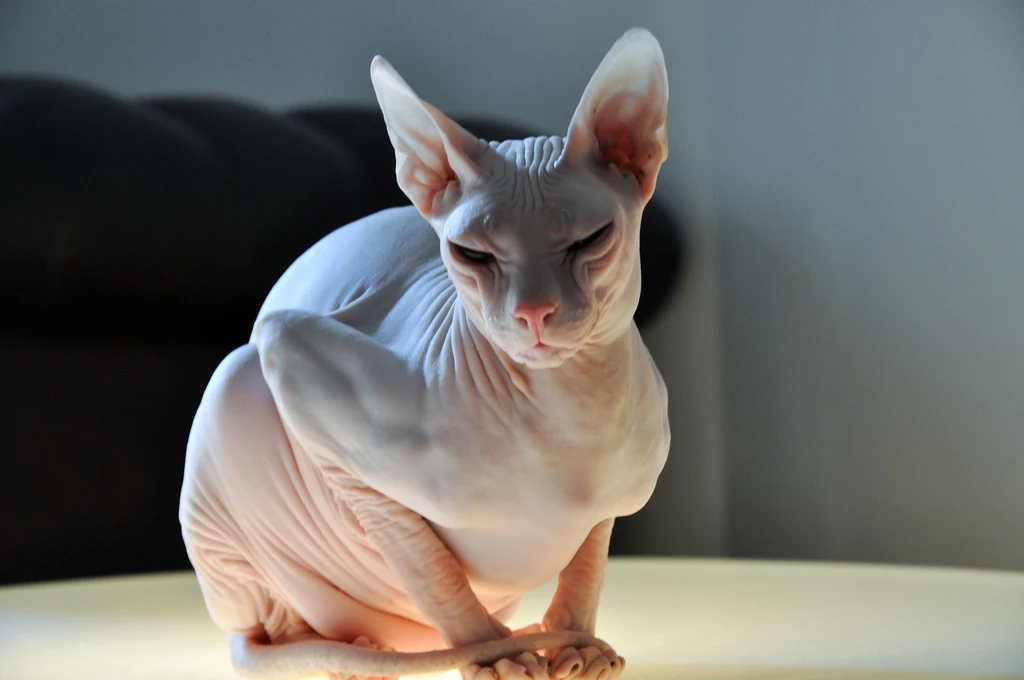
The Donskoy, also called the Don Sphynx, is a Russian cat breed with little or no coat. She can be lively and very sociable. Her exposed skin makes warmth, protection from sunshine and regular care important parts of everyday life. Anyone considering the breed should also understand the health burdens associated with hairlessness.
At a glance
- Size
- Medium
- Activity
- High
- Care needs
- High
- Enrichment
- Enjoys learning together
- Owner experience
- Experience recommended
A curious cat who likes to be involved
When a box is opened or a cupboard rearranged, a Donskoy may quickly come to investigate. FIFe, the international cat federation, describes her as curious, active and sociable. Many cats enjoy shared activities and resting close to familiar people. A warm place beside you may be as appealing as a new toy.
Closeness should develop willingly. You could offer a game or sit quietly nearby. If she wants to move away, you should let her go. An adult Donskoy brings her own experiences of grooming, visitors and other animals. When getting acquainted, you should ask which touches she enjoys and when she prefers some space.
Another cat should be introduced gradually, initially using separate areas and a gentle exchange of familiar scents. Both should have separate feeding places, litter trays and retreats. Children should learn to touch her skin gently and avoid pulling folds or whiskers. If she would spend many hours alone every day, you should carefully plan care and time together before taking her home.
An active day with warm and cool places
A Donskoy should have opportunities to move, climb and enjoy small hunting games indoors. Wide, securely fixed resting platforms and safe intermediate steps provide variety. Scratching surfaces should be easily reached. A warm bed with a washable blanket should be away from draughts. She should also be able to choose a cooler place when she feels too warm.
During play, a soft attachment can disappear behind a chair before scurrying along the floor again. This gives her time to stalk rather than watching a toy continuously waved in front of her nose. She should also be able to catch it. For a food search, a small part of the daily allowance can initially be offered where it is easy to find in a suitable puzzle feeder. Loose strings and wand toys should be stored away after shared games.
Sunny places require particular care when the skin has little covering. Unprotected time in direct sunshine should be avoided. A secured balcony should offer shade and an immediate route back indoors. In hot weather, a comfortably cool room is part of keeping her safe. The fine seasonal hair some Donskoys develop does not provide adequate protection against cold outdoor temperatures.
For practical play, food searches and quiet retreats, read Indoor Cat Enrichment: Play, Food Puzzles and Safe Retreats ↗
Skin care rather than a brushing routine
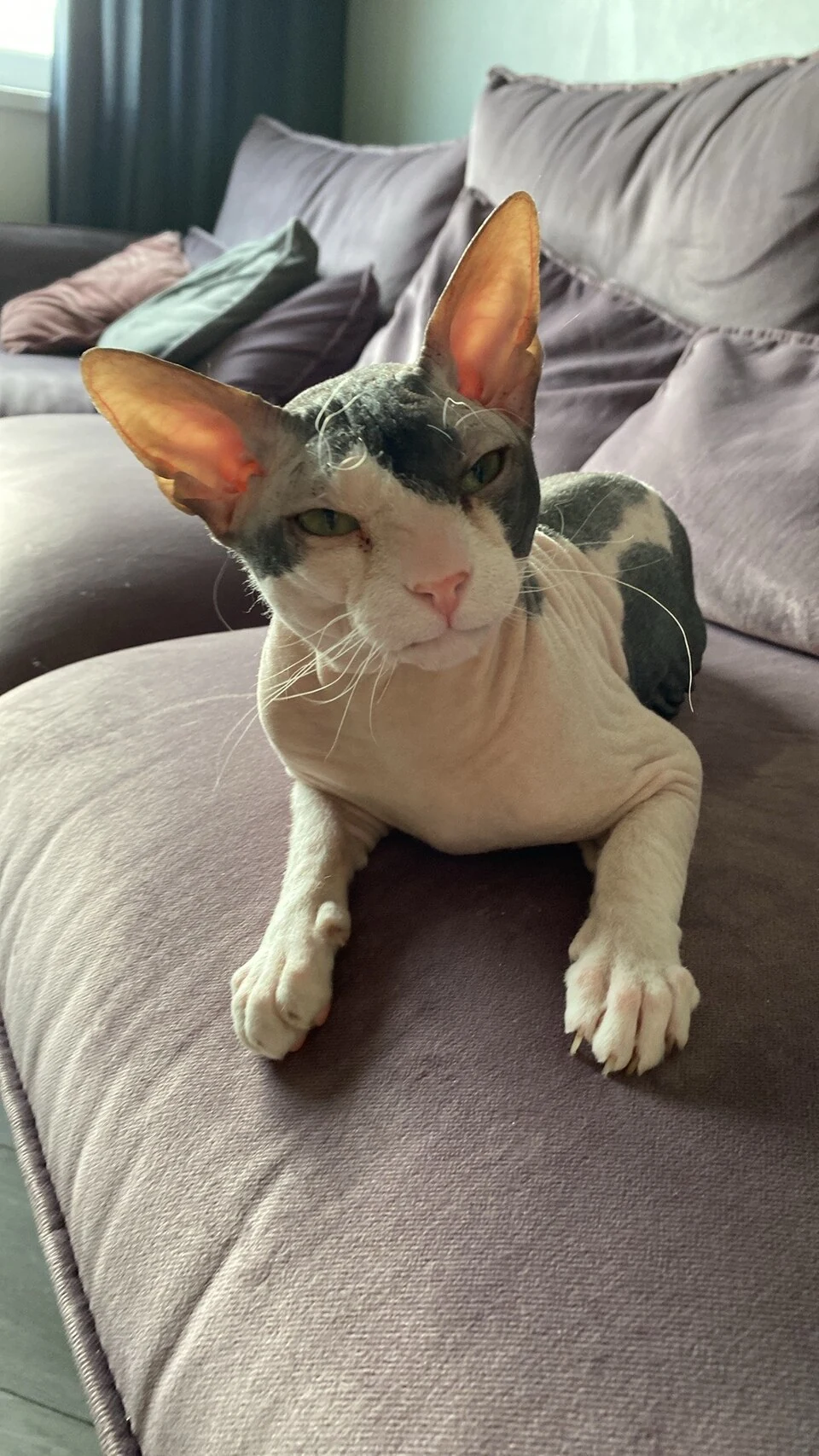
Donskoys may be completely hairless, have a fine downy covering or retain more obvious patches of coat. With little fur, skin oils do not spread through a dense coat. Oil and dirt may instead collect on the skin and in folds. Skin checks and appropriate cleaning should therefore be part of routine care.
You should briefly check the skin daily, especially folds and areas touching bedding. How often a damp cloth or bath is needed should be discussed with the veterinary team according to her skin condition. She should be introduced gently to handling and cleaning. You should obtain advice on products explicitly suitable for cats. Redness, an unpleasant smell, crusts or sores should be examined rather than met with increasingly vigorous scrubbing. Blankets and bed covers should be washed regularly.
The ears should also be checked. Unusual discharge, odour or frequent scratching should be investigated. Dental care can be introduced in small steps, with suitable cat toothpaste and guidance from the veterinary team. A painful mouth should be treated first.
From Varvara to the Donskoy
The breed traces back to Varvara, a cat rescued in Rostov-on-Don, Russia, in 1987. She lost her coat as she grew up. Her offspring included hairless cats and kittens who later lost their initial covering. These cats formed the beginnings of the Don Sphynx. FIFe recognised the breed in 2011. TICA, another international cat registry, calls her the Donskoy.
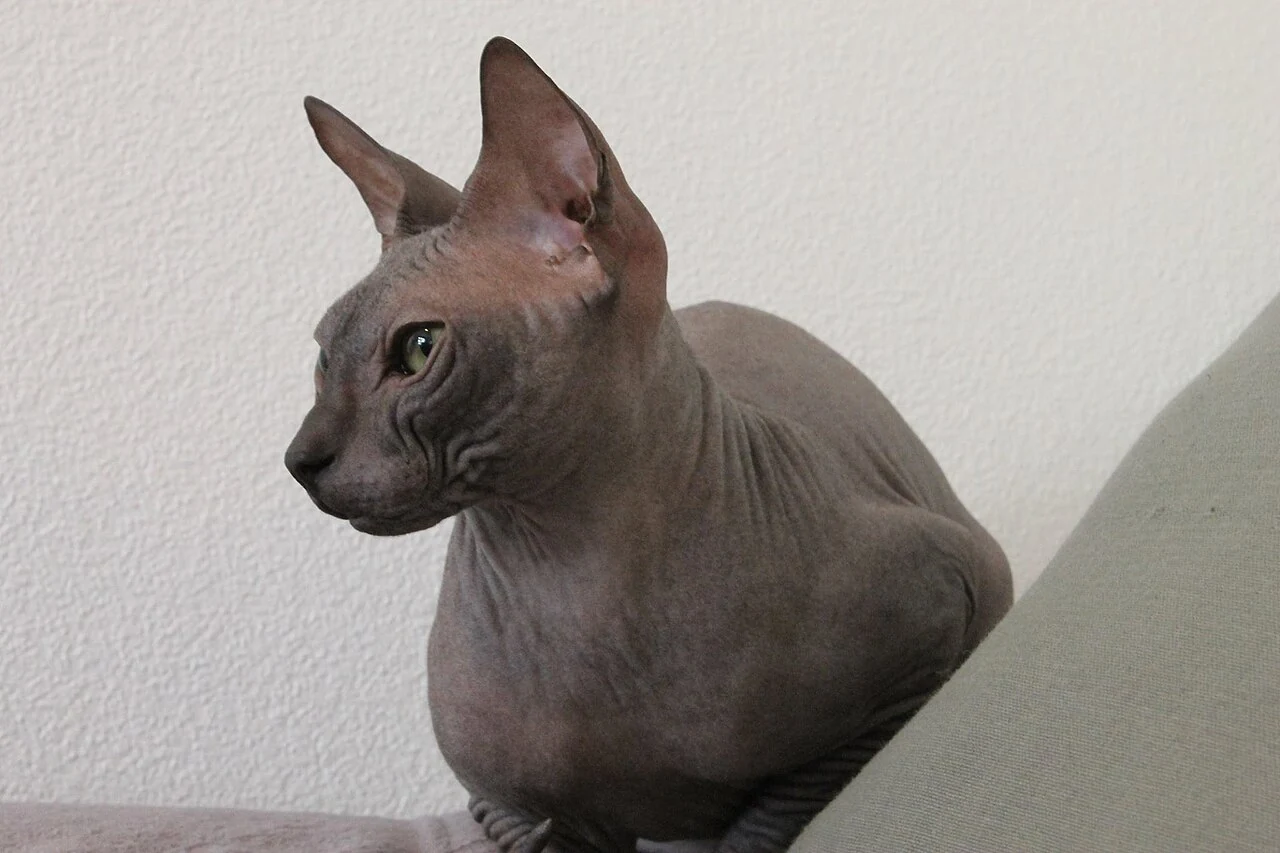
She is a separate breed and should not be confused with the Canadian Sphynx. The Peterbald is also registered separately. The Donskoy is medium sized and sturdy, with a muscular body, wedge shaped head, large ears and slightly slanting almond shaped eyes. FIFe’s standard describes males as significantly larger than females. Skin folds should not interfere with normal functions.
A kitten with fur may change in appearance. TICA distinguishes completely hairless cats, cats with very fine down, an initially velvety coat which may be partly lost, and the more coated Brush form. The last retains more hair. Before taking a kitten home, you should discuss likely development and actual care needs. An older cat may need help reaching beds as well as skin care. These adjustments should reflect her mobility.
What hairlessness means for health
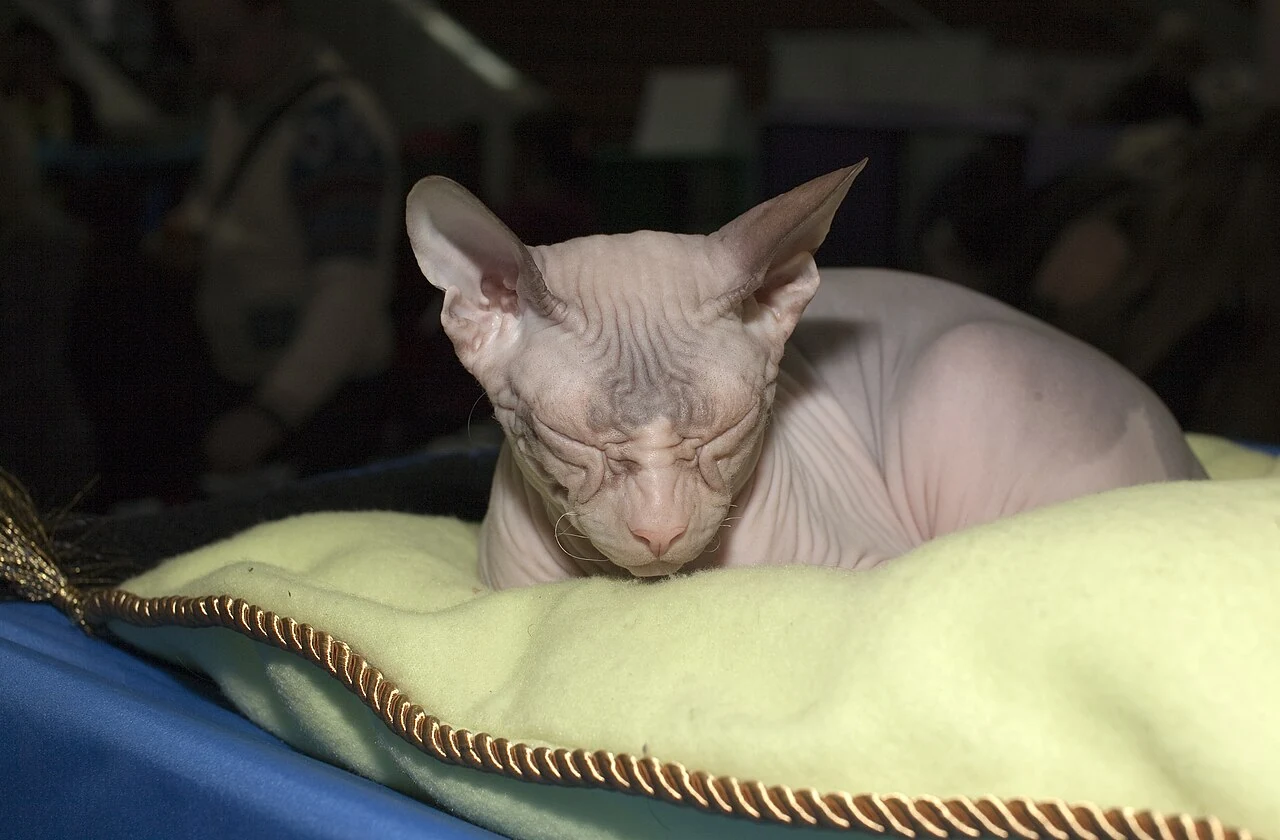
Fur protects the skin and helps a cat retain warmth. With little covering, a Donskoy can become cold more easily. Direct sunshine may burn exposed skin, and in hot weather she should be able to reach a cool retreat. The welfare organisation Cats Protection explicitly discusses skin problems and difficulties regulating temperature in hairless cats. When choosing a new cat, it recommends favouring breeds without these burdens.
Whiskers also deserve attention. These thicker hairs around the face help cats detect nearby objects and touch. The Don Sphynx standard permits curled or broken whiskers. You should not shorten or remove them. Missing or severely impaired whiskers limit an important sensory tool and should be discussed when assessing the cat.
Hairlessness also does not make a cat suitable for someone with a cat allergy. The proteins responsible are found in saliva and skin, among other places. If you suspect an allergy, you should obtain medical advice before bringing a cat home. For a Donskoy already living with you, the veterinary team should explain a preventive care plan, including vaccinations, parasite control and regular examinations. A hairless cat can still get fleas. Bad breath, drooling or painful chewing should prompt an examination of the mouth. Fellfolio can keep skin photographs, observations and treatment appointments together, helping you discuss changes over time with the veterinary team.
What a home for a Donskoy should provide
Could work well if …
- You can regularly make time for company, play and daily skin checks.
- You want to arrange a home with suitable temperature control and sun protection for a hairless cat already living with you or being adopted.
- You are willing to discuss health burdens and an individual care plan openly with a veterinary team.
Before you bring one home
- Hairlessness creates particular burdens for skin and temperature regulation. These should be discussed thoroughly before choosing a cat.
- Little coat means little loose hair, but neither little care nor suitability for people with cat allergies.
- A fine covering does not replace protection against cold or direct sunshine. Skin changes should be examined rather than treated with unsuitable products.
Meet other cat breeds.
Selected by size, activity, care and play needs.
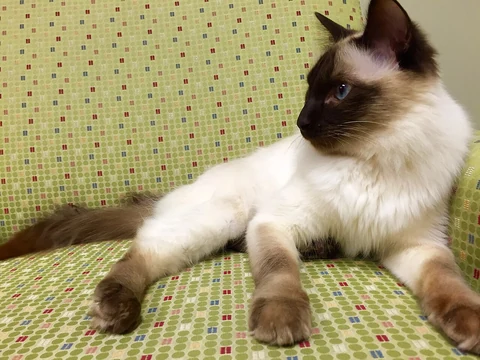
Semilonghaired cat · USA
Balinese
A Balinese often joins the conversation, follows people around the home and is quick to take an interest in a game. Beneath the silky coat is an energetic cat who needs plenty of shared time and satisfying places to climb.
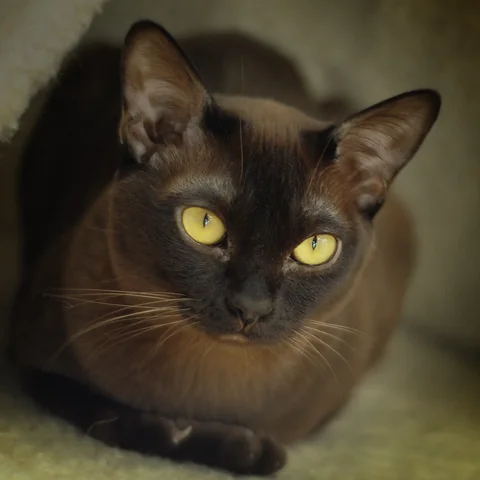
Shorthair cat · Southeast Asian roots
Burmese
Compact, silky-coated and strongly people-oriented, the Burmese often seeks close contact and joins in family life.
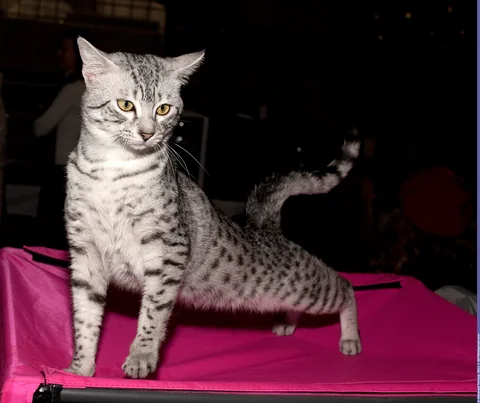
Spotted shorthair · Egypt
Egyptian Mau
The Egyptian Mau is a fast, spotted cat that enjoys playing with familiar people and often watches a new situation carefully before joining in.
Sources and photograph credit
- Pet allergies
Used in this profile for: Health
- Opinion on the welfare implications of feline breeding practices
Used in this profile for: Health, Could this breed fit your life?
- Grooming your cat
Used in this profile for: Day-to-day care
- Hairless cats and welfare
Used in this profile for: Everyday life, Day-to-day care, Health, Could this breed fit your life?
- Indoor cats
Used in this profile for: Everyday life
- Cats and play
Used in this profile for: Everyday life
- Why do cats have whiskers?
Used in this profile for: Health
- Feline Dental Disease
Used in this profile for: Day-to-day care, Health
- Loving Care for Older Cats
Used in this profile for: Size and build
- Don Sphynx breed profile
Used in this profile for: Temperament, Size and build
- Don Sphynx breed standard, 1 January 2026
Used in this profile for: Day-to-day care, Size and build, Health
- Donskoy breed profile
Used in this profile for: Temperament, Everyday life, Day-to-day care, Size and build, Could this breed fit your life?
- Introducing your new cat to other cats in your home
Used in this profile for: Temperament
- How to keep your cat healthy and happy
Used in this profile for: Health
Photo credits
Portrait · Don sphynx.jpg · ooznu · CC BY-SA 2.0 · Edited

Everyday life · Donskoy Sphynx 2024.jpg · Alinamolokina · CC BY-SA 4.0 · Edited

Coat and features · Profil d'un chat donskoy.jpg · Astonetloa · CC BY-SA 4.0 · Edited

Everyday life · DSX Akvarel' Stolichnaya Shtuchka (5284684823).jpg · Nickolas Titkov · CC BY-SA 2.0 · Edited
.jpg)