 fellfolio
Semilonghaired cat · USA
Balinese
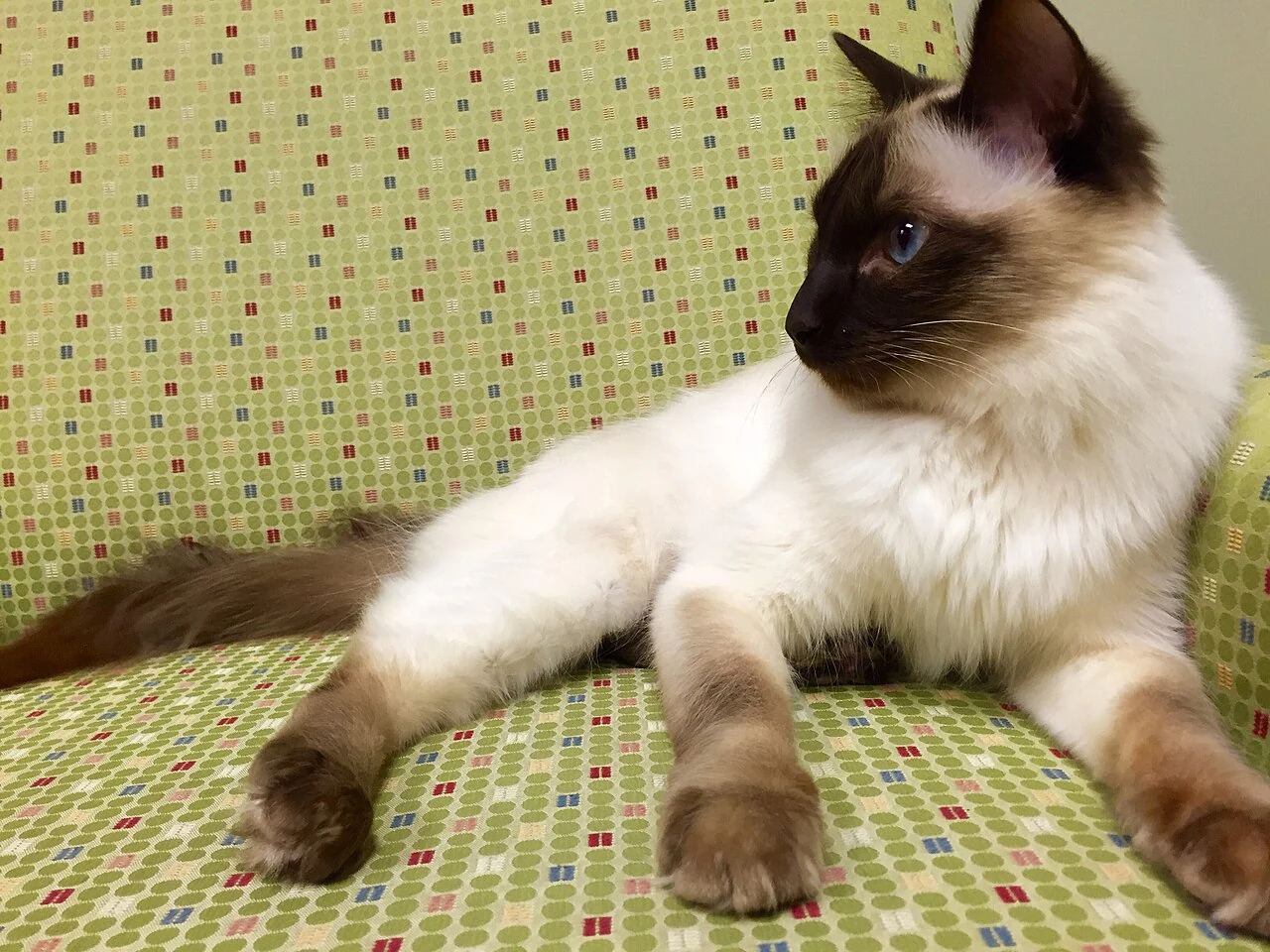
A Balinese often joins the conversation, follows people around the home and is quick to take an interest in a game. Beneath the silky coat is an energetic cat who needs plenty of shared time and satisfying places to climb.
At a glance
- Size
- Medium
- Activity
- High
- Care needs
- Moderate
- Enrichment
- Enjoys learning together
- Owner experience
- First cat with preparation
A talkative cat who likes to be involved
Living with a Balinese often means having an attentive companion nearby. She may investigate what is happening in the kitchen, explore a new cardboard box or answer when you speak to her. The American cat associations CFA and TICA describe an affectionate, inquisitive and lively breed. That closeness can be rewarding, and it should be part of your plans for everyday life. Someone looking for a cat who needs very little company during the day is less likely to enjoy this breed's usual temperament.
Many Balinese enjoy games with people and learning small tasks. A ball rolling across the floor or a wand toy with a moving attachment can encourage stalking and pouncing. Even an enthusiastic cat should be able to choose when to interact. If she turns away or retreats, you should give her a break. Children can learn the same lesson: playing together is more enjoyable when the cat willingly joins in.
Climbing, chasing and solving little puzzles
A Balinese living indoors should have different routes to explore above floor level. A sturdy scratching tree, securely fixed shelves and a raised observation spot give her somewhere to investigate. These places should be easy to reach rather than isolated high platforms. Quiet hiding places are equally useful when she wants to sleep undisturbed.
Shared play can combine movement with small thinking challenges. A wand attachment should imitate a small prey animal, moving across the floor, briefly disappearing and sometimes stopping. Your cat should also be able to catch and hold it. A food puzzle with shallow recesses offers another way to explore. Visible pieces of food give the cat an easy first task, reaching them with a paw. Food used in games should come from the daily allowance, so that enrichment does not turn into extra meals. Strings and wand toys should be put away afterwards.
If another cat already lives with you, introductions should be gradual. The newcomer first needs a separate room with food, water, a litter tray and somewhere to hide. Feeding the cats directly beside each other is not a good starting point. Later, separate feeding places, litter trays and resting spots help both cats move away from each other when they want some peace.
For practical play, food searches and quiet retreats, read Indoor Cat Enrichment: Play, Food Puzzles and Safe Retreats ↗
Caring gently for a silky coat
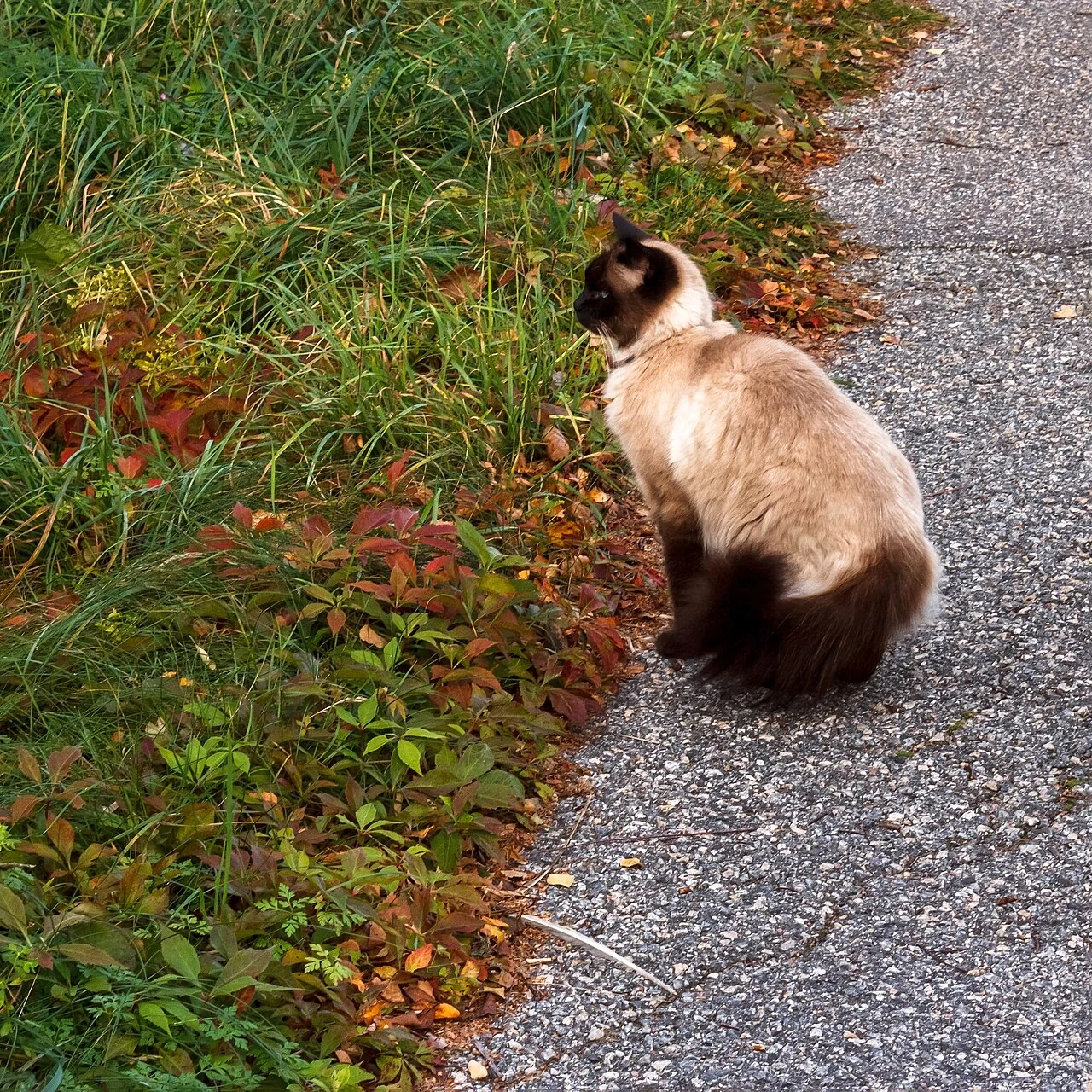
The coat is silky and moderately long, with a noticeable plume on the tail. It has no woolly undercoat and usually takes less work than a dense, long double coat. Gentle combing about once a week is a useful starting routine, with a check for small tangles. The right frequency also depends on the individual coat and how thoroughly the cat grooms herself.
Grooming should begin with short, comfortable sessions. A few gentle strokes followed by a reward or a game often work better than a long first attempt. A tight mat that pulls on the skin should be assessed by the veterinary practice. Scissors are unsuitable for removing it because the cat's thin skin can be caught in the fold. Routine appointments should also include attention to teeth and gums.
A longhaired relative of the Siamese
The Balinese developed from longhaired kittens born in Siamese breeding lines. These kittens had been known for some time before breeders in the United States developed the breed around the middle of the twentieth century. Its name recalls the graceful dancers of Bali, rather than the country where the breed originated.
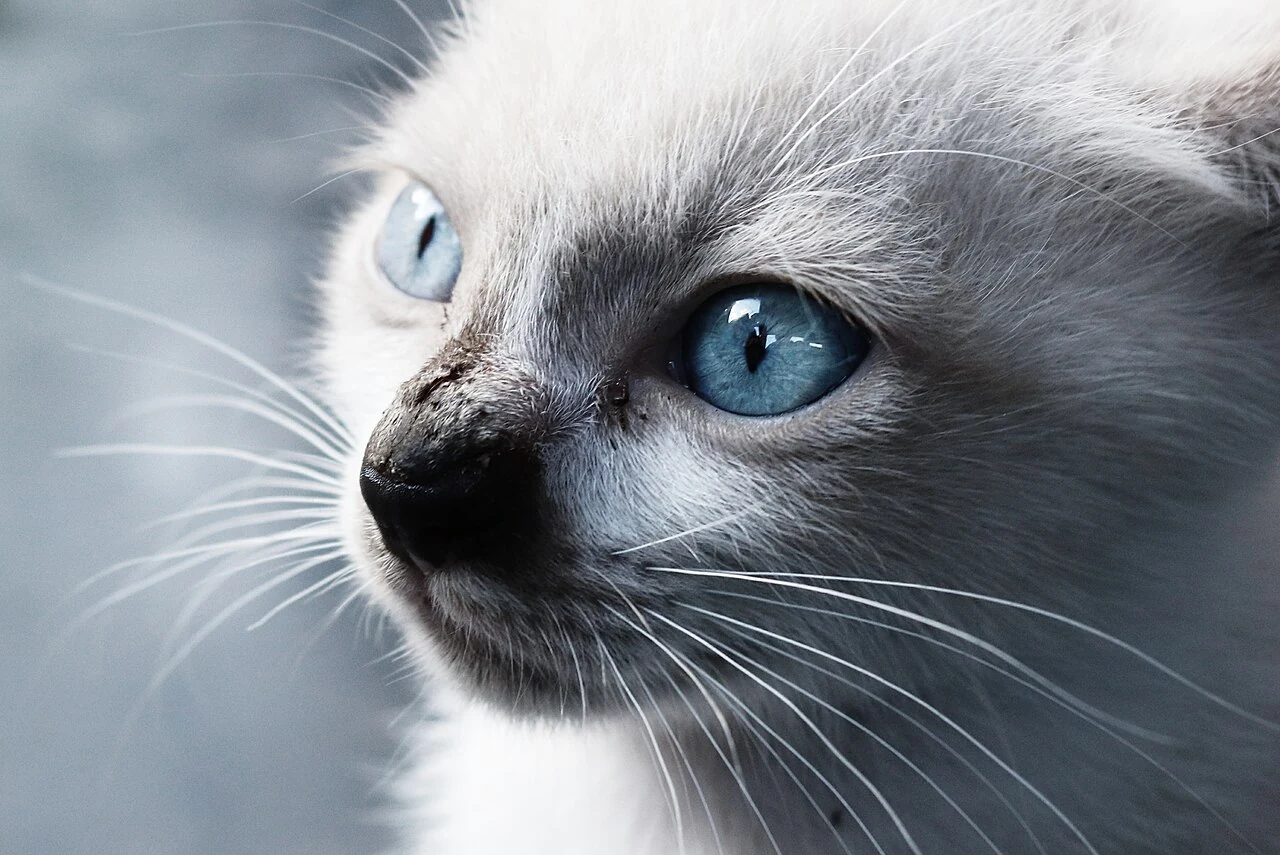
The international cat federation FIFe describes a medium sized, slender cat with good muscle. Large ears and a long, wedge shaped head give the face its distinctive outline. In the characteristic pointed pattern, the face, ears, legs and tail are darker than the rest of the body. These coloured areas are called points, and the eyes are blue. The longer coat is the most obvious difference from the closely related Siamese.
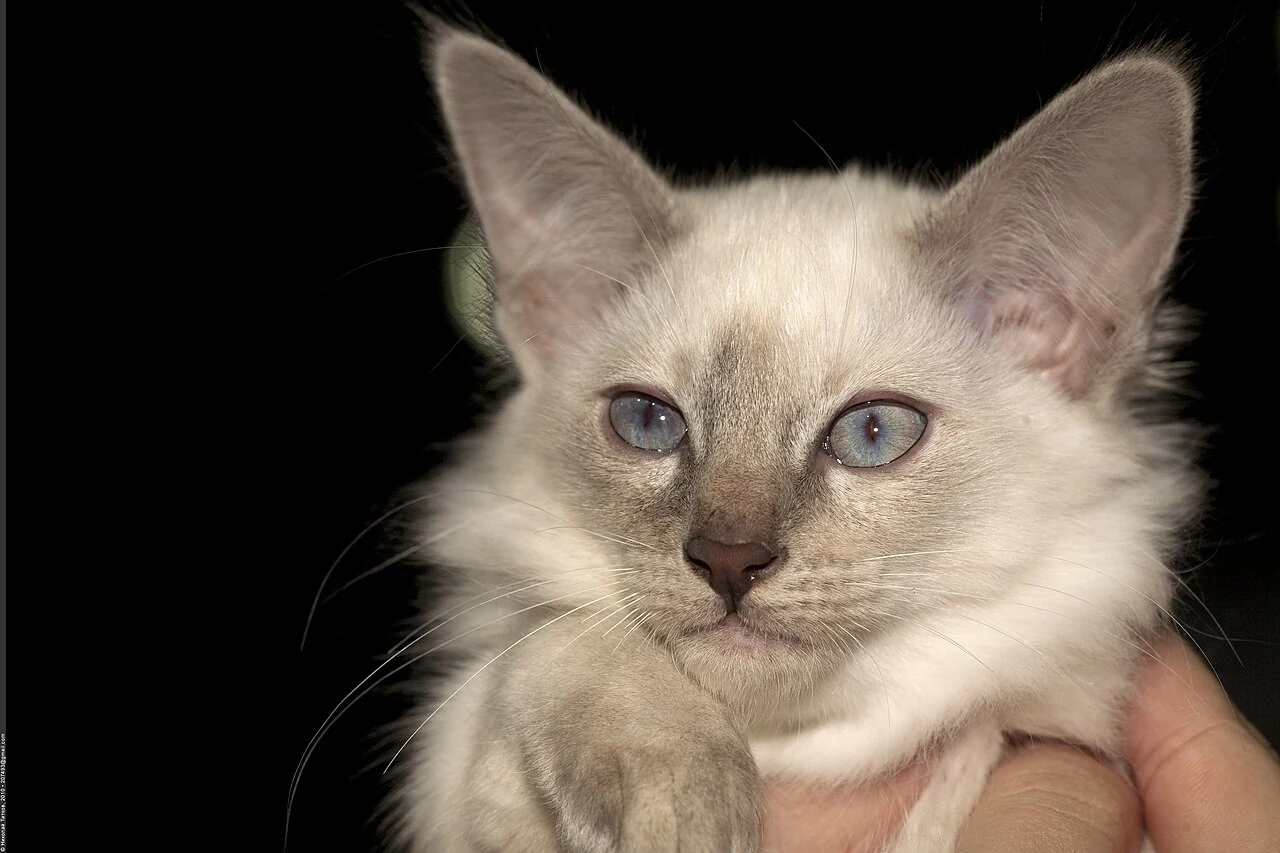
When meeting a young cat, you should ask about more than appearance. Find out how the kitten has become familiar with people, everyday sounds and grooming. An adult Balinese can also settle into a new home. Her existing routines and experience with other cats provide useful information for planning the introduction.
Paying attention to eyes and teeth
A particular inherited form of progressive retinal disease is known in Balinese cats. The retina is the light sensitive layer at the back of the eye. When its sensory cells are gradually damaged, a cat can lose her sight. This disease is called progressive retinal atrophy, or PRA. The Veterinary Genetics Laboratory at the University of California, Davis specifically lists the Balinese among breeds suitable for testing for the rdAc variant.
Before taking home a kitten, you should ask about the relevant tests in the parents and have the results explained. The DNA test looks for this particular genetic change. It does not check every possible cause of poor vision. If a cat begins moving uncertainly or changes how she judges jumps, the veterinary practice should investigate the reason.
Dental disease can affect cats of any breed. Bad breath, drooling or unusually careful chewing should not be dismissed as a habit. Your veterinary team can demonstrate how to introduce appropriate dental care gradually. Fellfolio can keep test results and routine appointments together with brief observations, such as changes in eating or finding the way around the home.
Would a Balinese suit your routine?
Could work well if …
- You want to play with your cat every day and enjoy an inquisitive companion who may be quite vocal.
- Your home has safe climbing routes and hiding places, with regular time for company in your daily routine.
- You are happy to introduce grooming and small learning tasks patiently, allowing your cat to participate willingly.
What to consider
- A Balinese is a less suitable choice if you want a very reserved cat who will spend long periods without company.
- Before a kitten arrives, you should discuss the documented tests in the parents for the known PRA variant.
- A second cat should be chosen carefully and introduced gradually. Providing shared places does not replace the introduction process.
Meet other cat breeds.
Selected by size, activity, care and play needs.
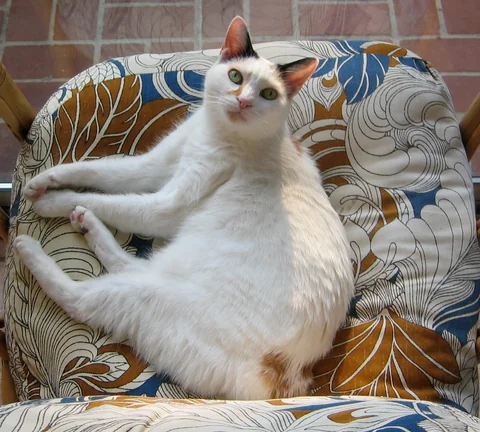
Short- and longhair · Japan
Japanese Bobtail
The Japanese Bobtail has a short tail with a shape all its own. It is agile, vocal and enjoys playing with its people.
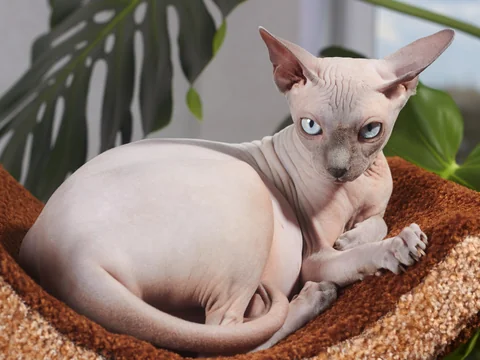
Nearly hairless cat · Canada
Sphynx
Sphynx cats often seek out their people and love to be active. Their nearly bare skin needs protection from strong sun and cold, with gentle care when needed.
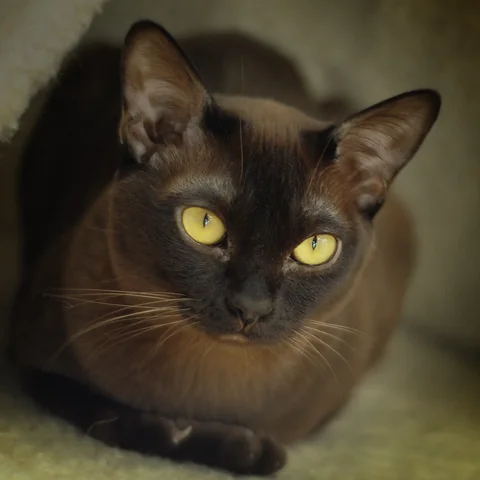
Shorthair cat · Southeast Asian roots
Burmese
Compact, silky-coated and strongly people-oriented, the Burmese often seeks close contact and joins in family life.
Sources and photograph credit
- Balinese breed profile
Used in this profile for: Temperament, Everyday life, Day-to-day care, Size and build, Could this breed fit your life?
- Balinese, Siamese and Oriental breed standard
Used in this profile for: Day-to-day care, Size and build
- Balinese breed profile
Used in this profile for: Temperament, Everyday life, Day-to-day care, Size and build, Could this breed fit your life?
- Indoor cats
Used in this profile for: Everyday life, Could this breed fit your life?
- Tips for grooming longhaired cats
Used in this profile for: Day-to-day care
- Cats and play
Used in this profile for: Everyday life
- Feline Dental Disease
Used in this profile for: Day-to-day care, Health
- Introducing your new cat to other cats in your home
Used in this profile for: Everyday life, Could this breed fit your life?
- How to keep your cat healthy and happy
Used in this profile for: Health
- Progressive Retinal Atrophy, PRA rdAc
Used in this profile for: Health
Photo credits
Portrait · Talophex · CC BY-SA 4.0

Everyday life · W.carter · CC BY-SA 4.0
_at_Rotemyr,_Lysekil.jpg)
Coat and features · Pomewgranate · CC BY-SA 4.0

Kitten · Nickolas Titkov · CC BY-SA 2.0
.jpg)