 fellfolio
Spotted shorthair · Egypt
Egyptian Mau
The Egyptian Mau is a fast, spotted cat that enjoys playing with familiar people and often watches a new situation carefully before joining in.
At a glance
- Size
- Medium
- Lifespan
- 12 to 15 yearsUK GCCF cat breed profile
- Activity
- High
- Care needs
- Low
- Enrichment
- Enjoys learning together
- Owner experience
- First cat with preparation
Watchful and closely bonded
A Mau may study visitors from a distance at first. With familiar people, it often shows much more playfulness and affection. Sudden noise or an unfamiliar hand can startle it; let the cat approach on its own and do not pull it out of hiding.
Hunting games, climbing and play
The Mau jumps and accelerates in quick bursts. A sturdy cat tree, clear running routes and toys that move across the floor give it space to do so. A wand toy has a small toy attached to a rod by a cord. Move the toy across the floor and around a corner. Let the cat catch it during the game, then put the wand away afterwards. Some Maus are also interested in running water. A regularly cleaned drinking fountain can offer an additional place to drink.
For practical play, food searches and quiet retreats, read Indoor Cat Enrichment: Play, Food Puzzles and Safe Retreats ↗
Care for the spotted coat
Brush the coat about once a week. Its texture can vary by colour: silver and bronze coats often feel firmer, while smoke coats can feel finer. Handling the cat makes it easier to notice any new lumps or skin changes. Check claws and ears regularly, but clean ears only when they are actually dirty.
Spots on a muscular body
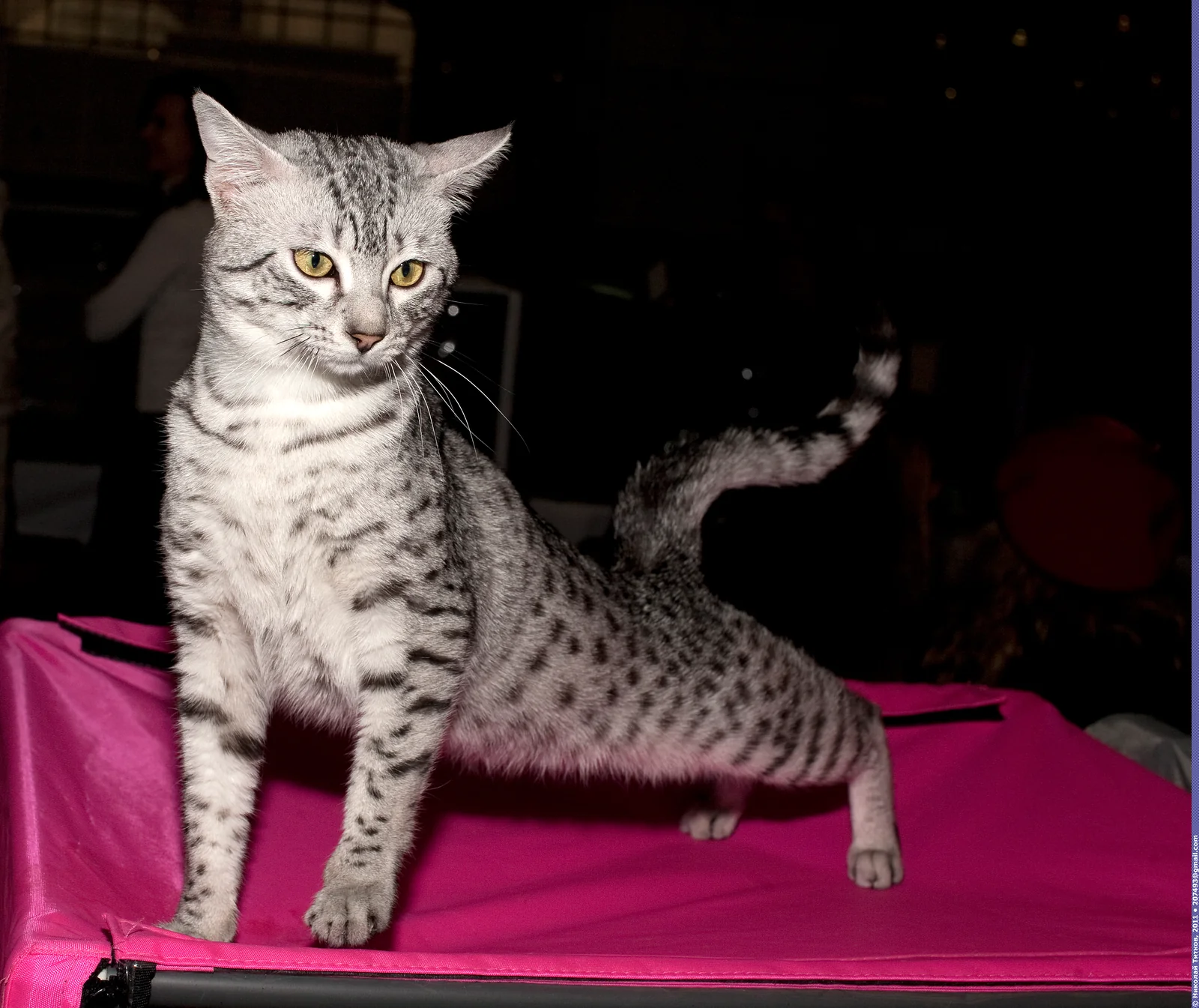
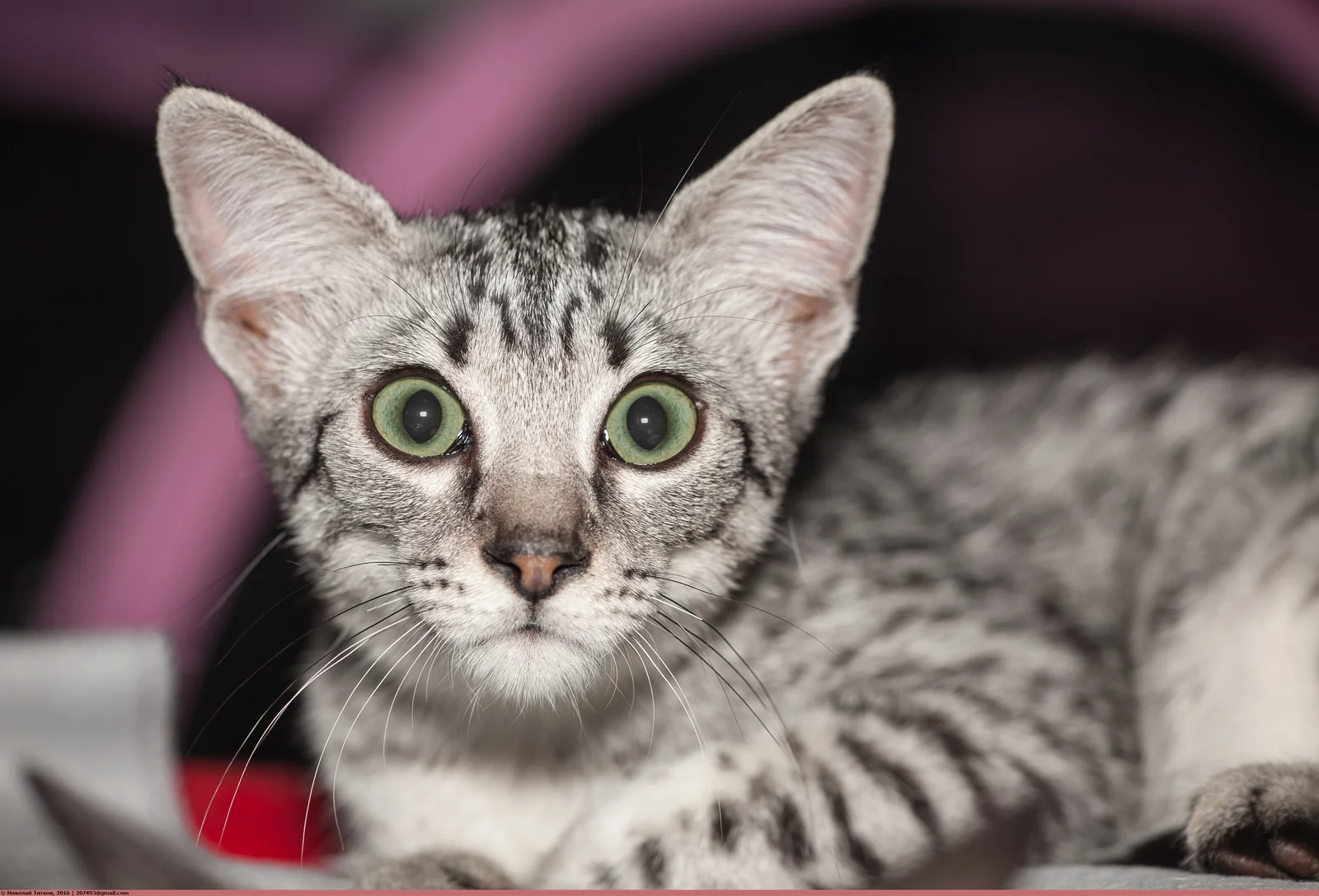
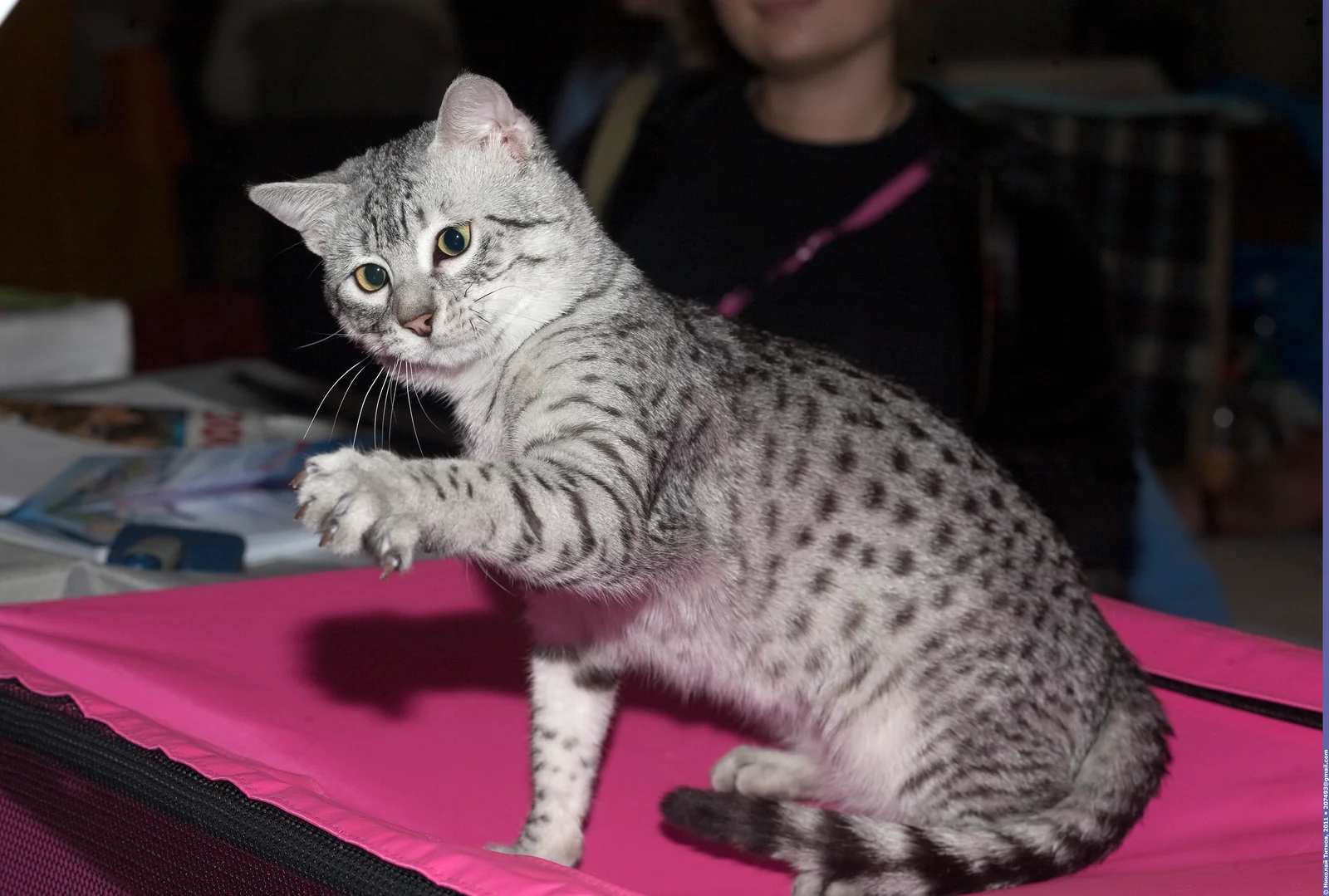
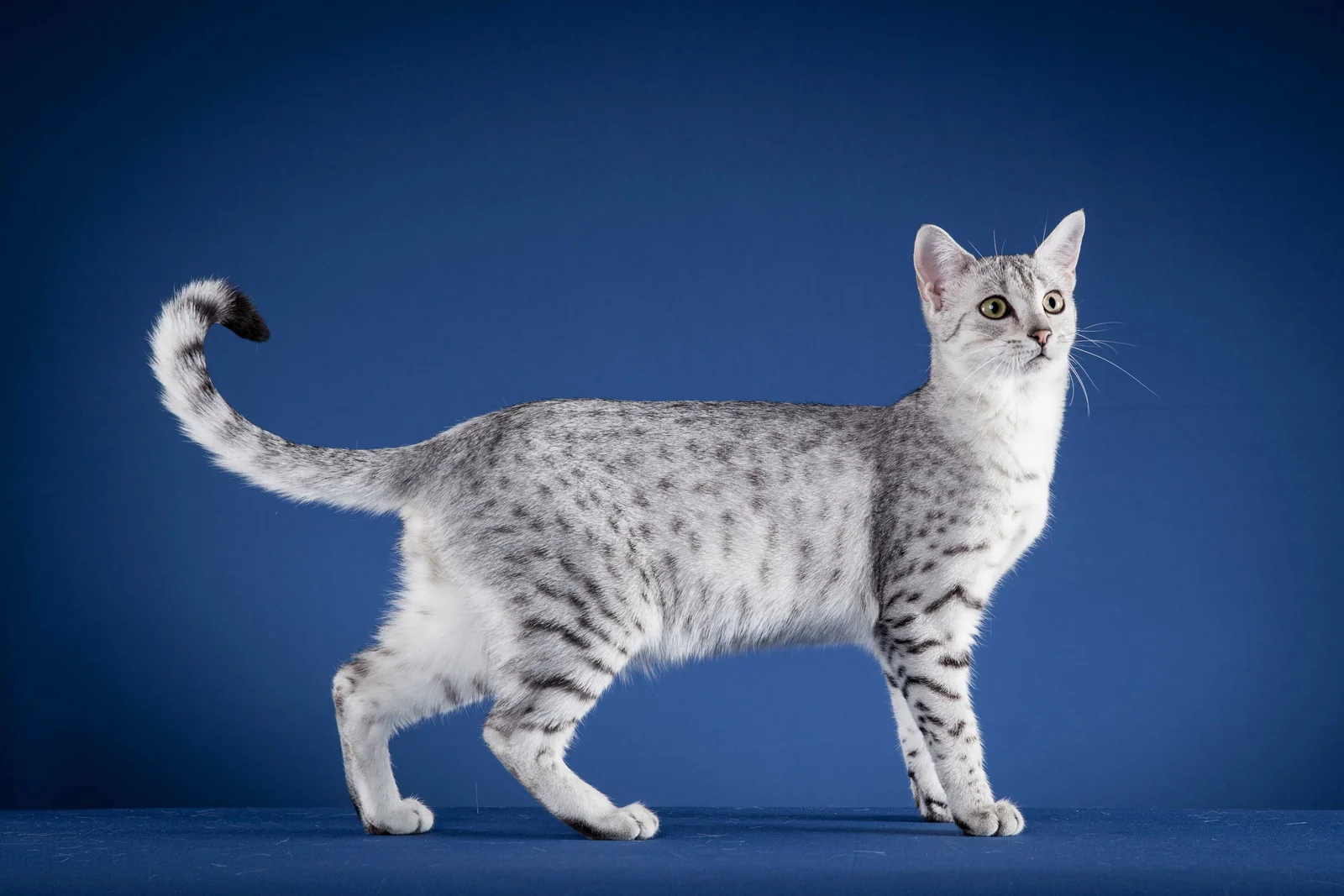
The naturally occurring spotted coat is the best-known feature. Clear spots sit on silver, bronze or smoke colouring, often with an M-shaped mark on the forehead. The eyes are green and the medium-sized body is supple and muscular. Because the back legs are a little longer than the front, the back line rises slightly towards the hips. The medium-length tail tapers towards its dark tip.
Urinary tract and PK deficiency
A genetic test for pyruvate kinase (PK) deficiency is available for Egyptian Maus. This condition affects an enzyme in red blood cells and can cause anaemia. The test examines a particular change in DNA, the inherited genetic information. A carrier has one copy of this change and does not develop the tested form, but can pass it on. Ask for both parents’ written results and have your vet explain them. For genetically affected cats, the result alone cannot predict when symptoms might appear or how severe they will be.
Veterinary literature also describes severe degeneration of nervous tissue in Mau kittens. Signs can include poor coordination and head tremors. How the condition develops is not understood. Ask about unusual development in related cats. Unsteady walking, tremors or loss of movement skills need prompt veterinary assessment.
Urinary symptoms also deserve attention. Stones are one possible cause. Repeated straining in the litter tray, blood in the urine or passing only small amounts calls for a prompt veterinary examination. If no urine passes at all, seek emergency veterinary care immediately.
Could this breed fit your life?
Could work well if …
- You enjoy an active cat and can provide safe running and climbing space.
- You give it time with new people and play together regularly.
May be more difficult if …
- You want a cat that lets every new person pick it up immediately.
- An active hunter would have very little space for games in your home.
Meet other cat breeds.
Selected by size, activity, care and play needs.
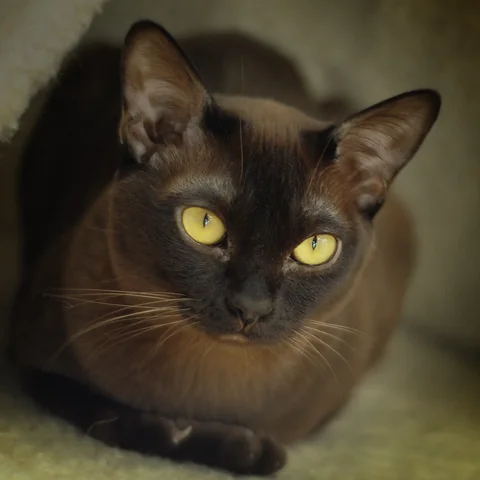
Shorthair cat · Southeast Asian roots
Burmese
Compact, silky-coated and strongly people-oriented, the Burmese often seeks close contact and joins in family life.
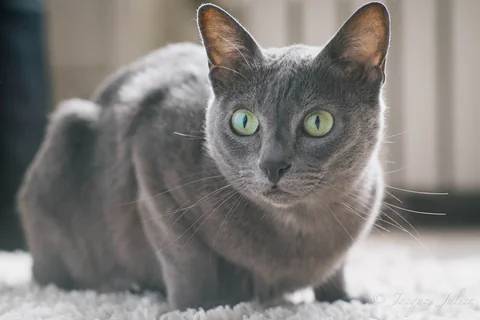
Shorthair · Thailand
Korat
The Korat, with its silver-sheened blue-grey coat, comes from Thailand. Compact and muscular, it seeks familiar company and often plays with impressive persistence.
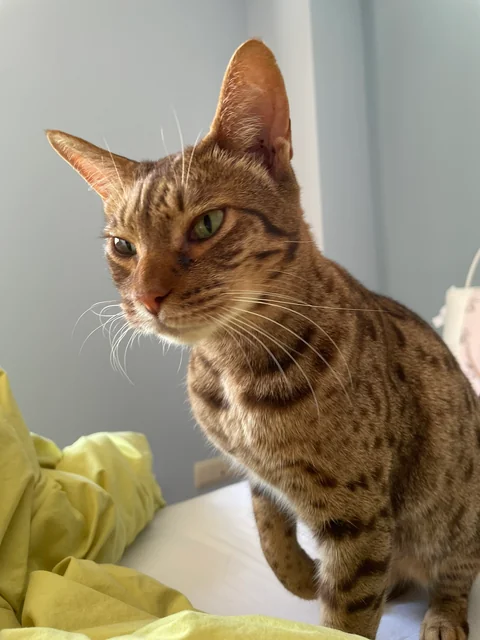
Spotted shorthair · United States
Ocicat
The Ocicat looks wild with its clear spots, but is a purpose-bred domestic cat. Strong and sociable, it is usually ready for a game.
Sources and photograph credit
- Feline Lower Urinary Tract Disease
Used in this profile for: Health
- Egyptian Mau
Used in this profile for: Day-to-day care, Lifespan
- Congenital and Inherited Disorders of the Nervous System in Cats
Used in this profile for: Health
- Egyptian Mau
Used in this profile for: Temperament, Everyday life, Day-to-day care, Size and build, Health, Could this breed fit your life?
- Erythrocyte Pyruvate Kinase Deficiency
Used in this profile for: Health
Portrait · MAU ICH Arietta Setesh of Egyptsila 3 · Nickolas Titkov from Moscow, Russian Federation · CC BY-SA 2.0 · Edited

Side view · RoyalNefertt Serket of AchetAton · Achet Aton · CC BY-SA 4.0 · Edited

Coat and features · MAU ICH Arietta Setesh of Egyptsila · Nickolas Titkov · CC BY-SA 2.0 · Edited
.jpg)
Kitten · Египетский мау EgyptSila Setx (Egyptian mau EgyptSila Setx) · Nickolas Titkov · CC BY-SA 2.0 · Edited
_(30341294416).jpg)