 fellfolio
Shorthair cat · Great Britain
British Shorthair
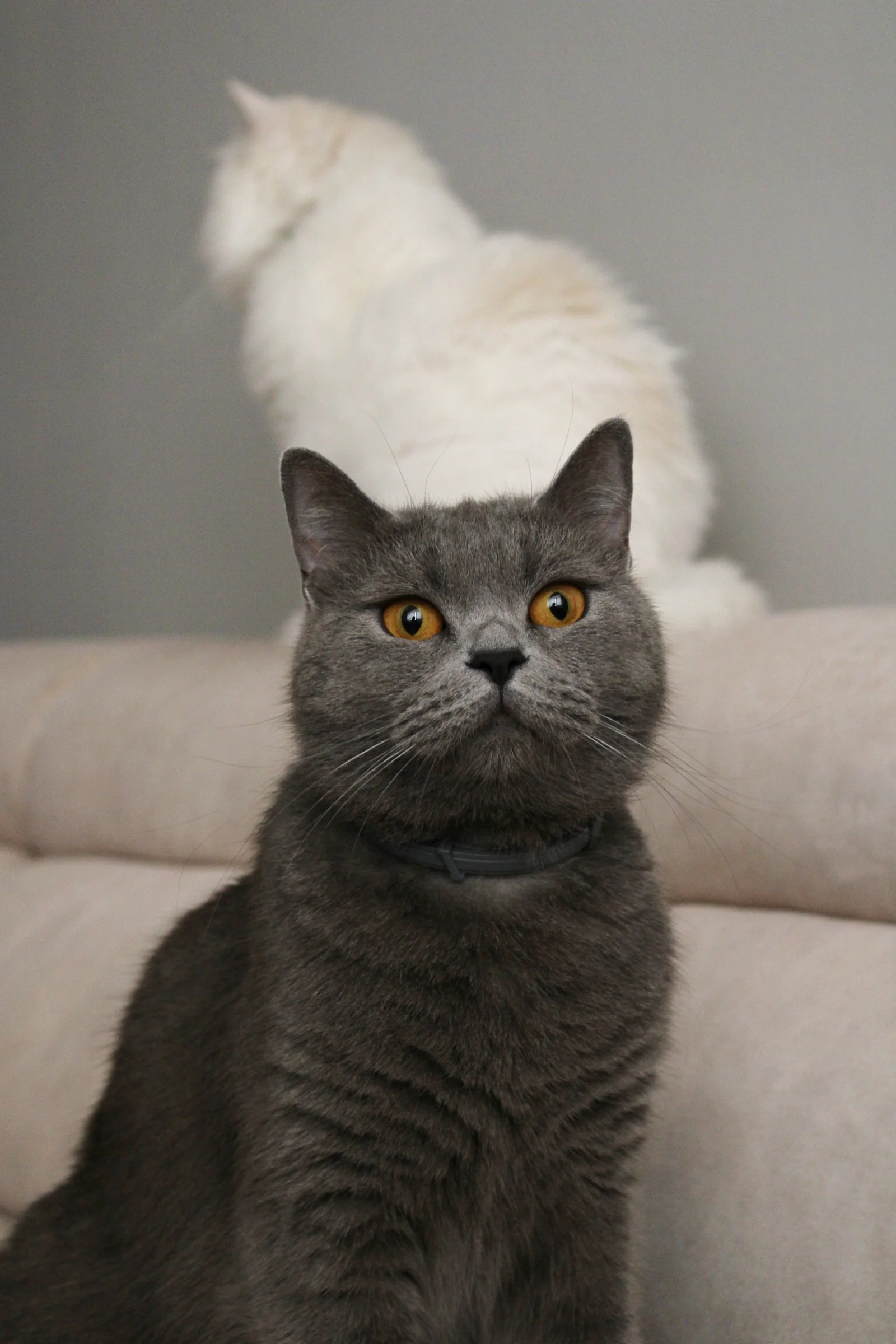
A round face, a dense coat and a generally quiet temperament. British Shorthairs enjoy company but often prefer sitting beside their owners to curling up on a lap.
At a glance
- Size
- Medium
- Weight
- 3.2–7.7 kg
- Lifespan
- 12–20 years
- Activity
- Moderate
- Grooming
- Several times weekly
- Enrichment
- Play at their own pace
- Owner experience
- First cat with preparation
Quiet company, close by
British Shorthairs tend to enjoy being near their owners without demanding constant attention. Many are quiet and even-tempered. On the sofa, they often settle beside you rather than on your lap, and most are not keen on being carried around.
Play and enrichment
Play gives even a quiet British Shorthair an outlet for hunting: watching, stalking and pouncing. A wand toy lets you recreate that sequence. Drag it along the floor, hide it briefly around a corner and give your cat chances to catch it. Several short games a day provide these opportunities indoors.
Between games, scratching surfaces, raised resting spots and hiding places give your cat more to explore. Put string toys away afterwards so the cat cannot become tangled in them.
Grooming and weight
The coat is short but dense. Brushing removes plenty of loose hair, especially during shedding seasons. Older cats may need more help if they can no longer groom themselves thoroughly and their coat begins to mat.
Weight also deserves attention, as British Shorthairs can gain excess weight. Regular weighing reveals gradual changes, while measuring food portions helps you keep track of how much your cat eats.
A sturdy build that develops slowly
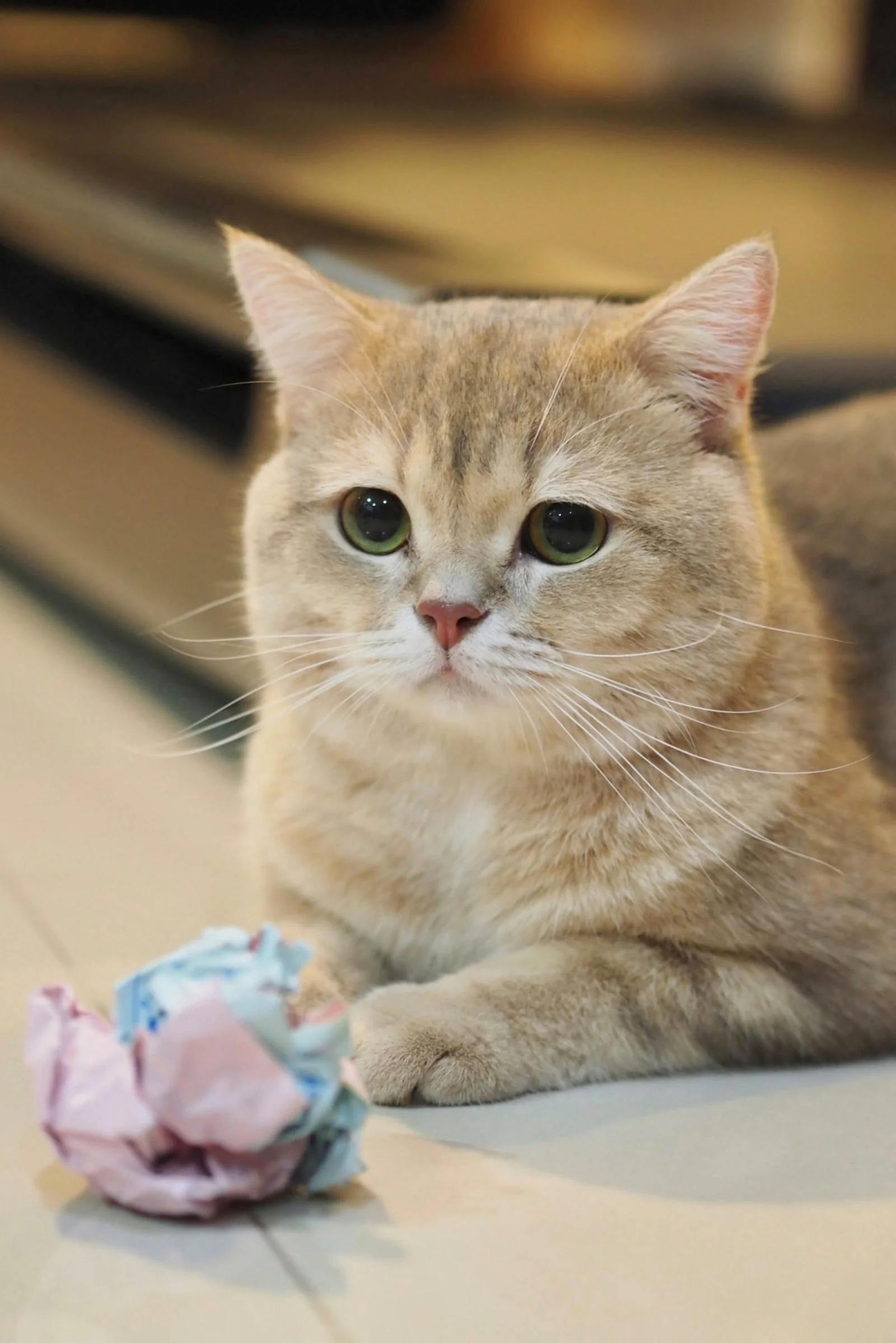
The British Shorthair’s sturdy build develops slowly: reaching full physical maturity can take up to five years. Males grow considerably heavier than females. The GCCF gives weights of 4.1–7.7 kg for males and 3.2–5.4 kg for females.
The blue-grey variety, known as the British Blue, is particularly familiar. The breed also comes in many other colours and patterns, including cream, black, tabby and bicolour.
PKD testing and heart screening
Two conditions are particularly relevant to screening: polycystic kidney disease (PKD) and hypertrophic cardiomyopathy (HCM). A DNA test is available for inherited PKD; ask a breeder to show you the parents’ results.
HCM causes the heart muscle walls to thicken. Affected cats may initially appear healthy, and ultrasound is used to assess the heart. A negative PKD test provides no information about HCM. Discuss the timing and scope of heart screening with your vet.
Is a British Shorthair right for you?
Could work well if …
- You enjoy a generally quiet cat that likes being nearby.
- You provide daily play and climbing opportunities for an indoor cat.
May be more difficult if …
- You expect a cat that enjoys being picked up and carried.
- You want a pet that needs no daily play or stimulation.
Breed traits describe tendencies. Personality, experience and care shape each cat. Provide quiet retreats and let your cat choose when to interact.