 fellfolio
Compare breeds
Bengal or British Shorthair: Which Fits Your Home?
Bengals usually have short coats. British Shorthairs have short but much denser fur. Their daily pace often differs more than their coat length: many Bengals seek movement and new challenges. A British Shorthair often takes more time to warm up to a game. These are breed tendencies, not rules for every cat. Both need safe spaces, daily play and health care. Here is what to plan for at home and which records to check before bringing one home.
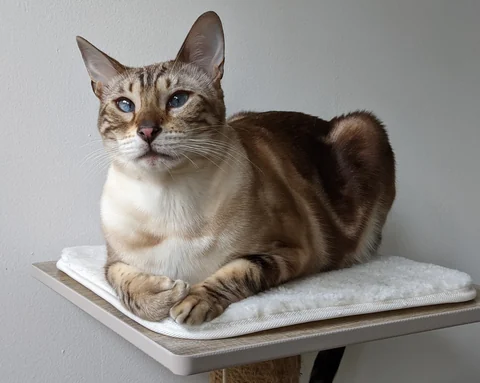
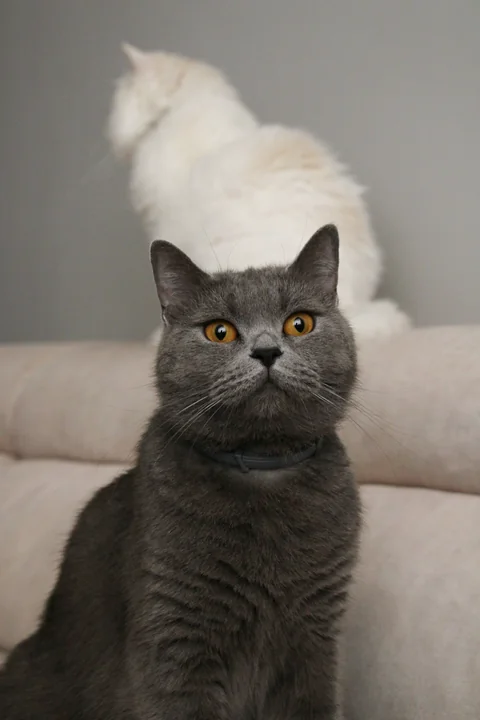
At a glance
| Bengal | British Shorthair | |
|---|---|---|
| Size | Medium | Medium |
| Weight | 2.7 to 6.8 kg | 3.2 to 7.7 kg |
| Lifespan | No reliable rangeWhy is there no reliable range? | 12 to 20 yearsTICA cat breed profile |
| Care needs | Low | Moderate |
These figures are broad guides and do not describe an individual animal. Each lifespan value links to its source. Why no range is shown: The available figures are based on different kinds of evidence and cannot be combined into a dependable range. The breed profile explains the sources.
Compare breeds
The day-to-day choice
A Bengal may suit you if you have time each day for active play, changing challenges and secure climbing routes. A British Shorthair may suit you if you welcome company on the cat’s terms and make room for play and weight checks. Both are individuals. Watch the cat, review the available health records and decide whether their actual needs fit your home.
Play and space: where the difference shows
A Bengal often seeks out things to do. The Cat Fanciers’ Association describes the breed as curious and athletic. Plan several short wand-toy games, hide part of the usual food allowance and offer secure climbing routes. Change a task once it becomes easy. A cat tree alone will not occupy a cat all day.
A British Shorthair often watches a toy before giving chase. They still need daily play sessions. Move a wand along the floor, let your cat catch it regularly and pause when they turn away. Watch the individual cat: a kitten can be much livelier than an older animal. Both breeds need scratching places, retreats and windows secured against falls.
Sources: Bengal · The Cat Fanciers’ Association, British Shorthair · The International Cat Association, Cats and play · Cats Protection, Indoor cats · Cats Protection
Contact with people: what to look for
Many Bengals initiate contact and enjoy learning brief exercises through play. How long they welcome petting varies from cat to cat. British Shorthairs often like being nearby without settling on a lap. TICA says many dislike being carried. Respect that preference and let the cat choose when to accept petting.
Before bringing a cat home, ask about the individual animal rather than relying on a breed description. Watch how they respond to play, handling and a safe retreat. Give children a simple rule: the cat can end contact at any time. If another cat already lives with you, plan separate feeding spots, litter trays and escape routes. Breed names cannot tell you whether two cats will get along.
Sources: Bengal · The Cat Fanciers’ Association, British Shorthair · The International Cat Association, Indoor cats · Cats Protection
Coat care and food portions
A shorthaired Bengal’s coat lies close to the body and is unlikely to mat easily. A soft brush about once a week removes loose hair. A British Shorthair’s coat feels denser. Comb it regularly and more often during shedding when needed; older cats may need help if they no longer groom themselves thoroughly. A short coat does not remove the need for care in either breed.
The GCCF advises owners of British Shorthairs to watch for excess weight. Weigh your cat regularly and ask a vet to show you how to assess body condition under the dense coat. Food rewards count towards the daily allowance for an active Bengal too. If you use food in search games, take it from the normal portion instead of adding it.
Sources: Bengal · The Cat Fanciers’ Association, British Shorthair: breed, care and health · Governing Council of the Cat Fancy
Which health records to request
Hypertrophic cardiomyopathy (HCM) can occur in both breeds. It thickens the heart muscle. An echocardiogram, an ultrasound scan of the heart, can reveal changes even when a cat looks well. Ask a breeder for the date and result of each parent’s most recent heart scan. A clear result is not a lifetime guarantee.
For Bengals, ask about DNA tests for two further inherited conditions: Bengal progressive retinal atrophy (PRA-b) and pyruvate kinase deficiency. In affected cats, PRA-b damages the retina and can lead to blindness. Pyruvate kinase deficiency is an enzyme problem that can cause anaemia. Request written results for both tests in both parents. For these two conditions, a cat with one copy of either variant remains healthy but can pass it on. If both parents carry the same disease-causing variant, affected kittens can be born. Ask what the actual results mean for this litter. These DNA tests do not replace the heart scan.
For a British Shorthair, also ask for the parents’ DNA results for the known variant of polycystic kidney disease (PKD). This condition causes fluid-filled cysts to form in the kidneys. A clear PKD result says nothing about the heart. If you adopt from a shelter, parental records may be unavailable. Discuss your cat’s own history and any useful checks with a vet.
Sources: Bengal · The Cat Fanciers’ Association, British Shorthair: breed, care and health · Governing Council of the Cat Fancy, Hypertrophic Cardiomyopathy · Cornell University College of Veterinary Medicine, Polycystic Kidney Disease · Cornell Feline Health Center, Progressive Retinal Atrophy (PRA-b) (Bengal) · University of California, Davis Veterinary Genetics Laboratory, Erythrocyte Pyruvate Kinase Deficiency (PK Deficiency) · University of California, Davis Veterinary Genetics Laboratory
Read the full breed profiles
Each profile explains exercise, care, health and fit with sources for each section.