fellfolio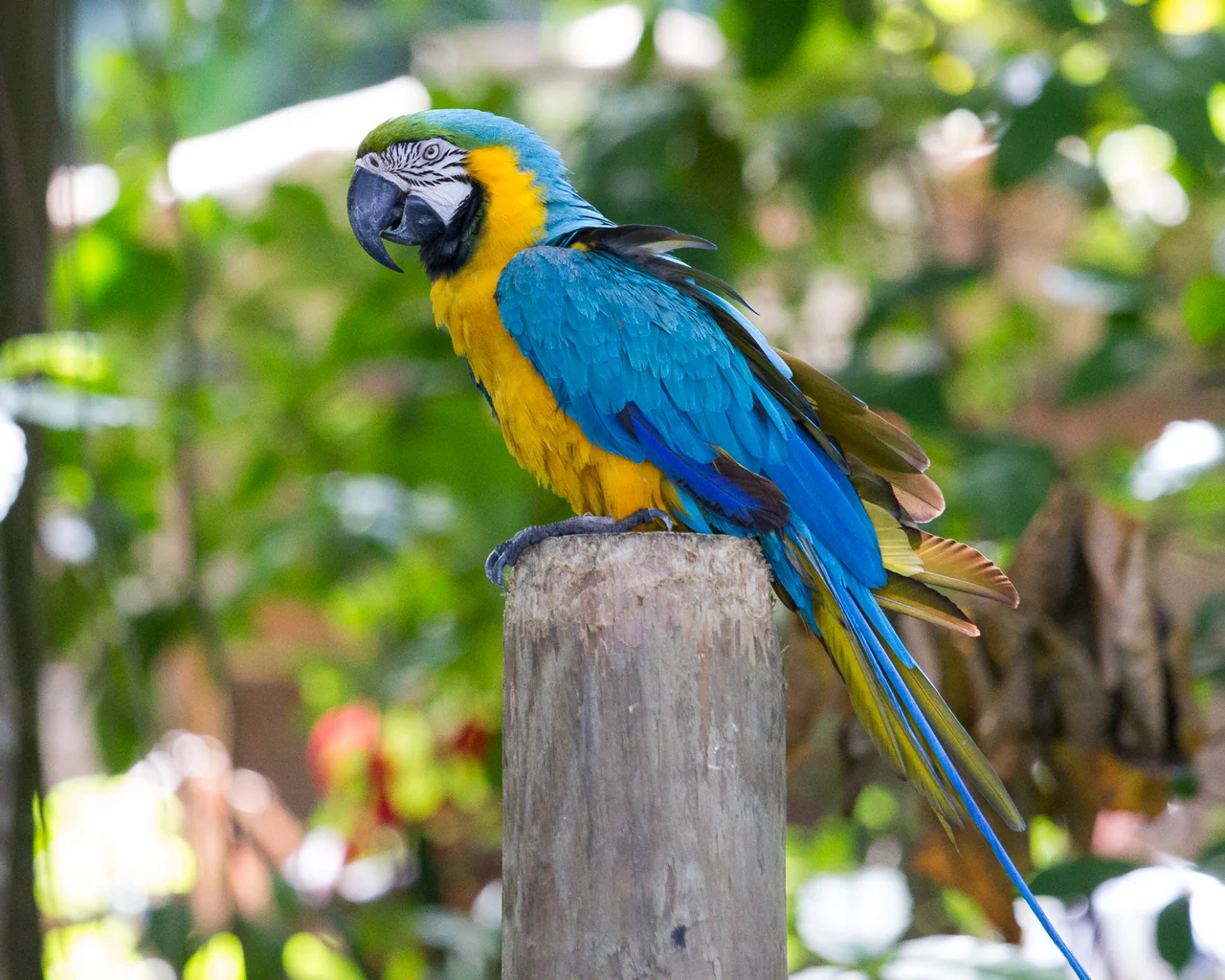
Blue wings, a golden chest and a powerful beak
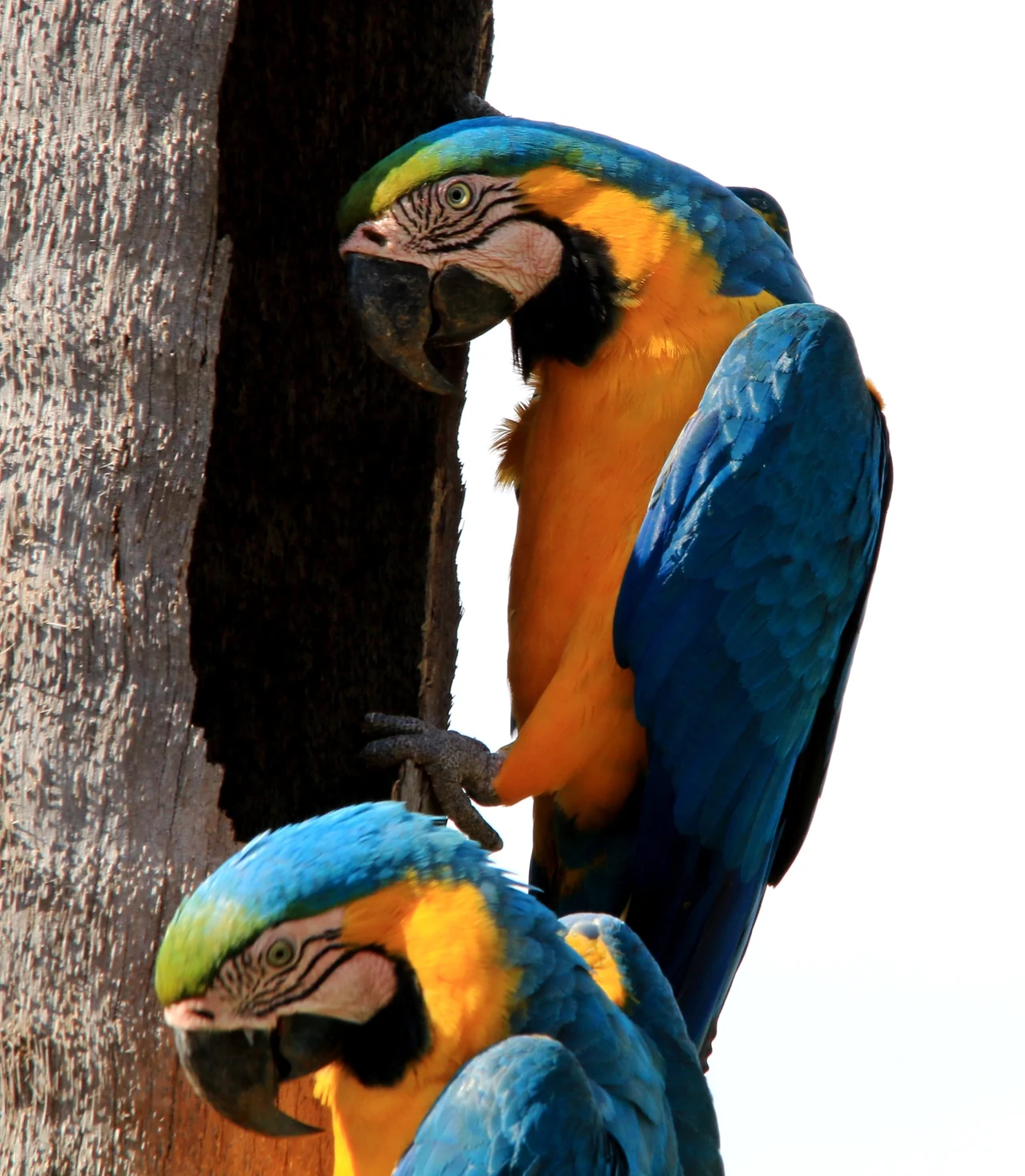
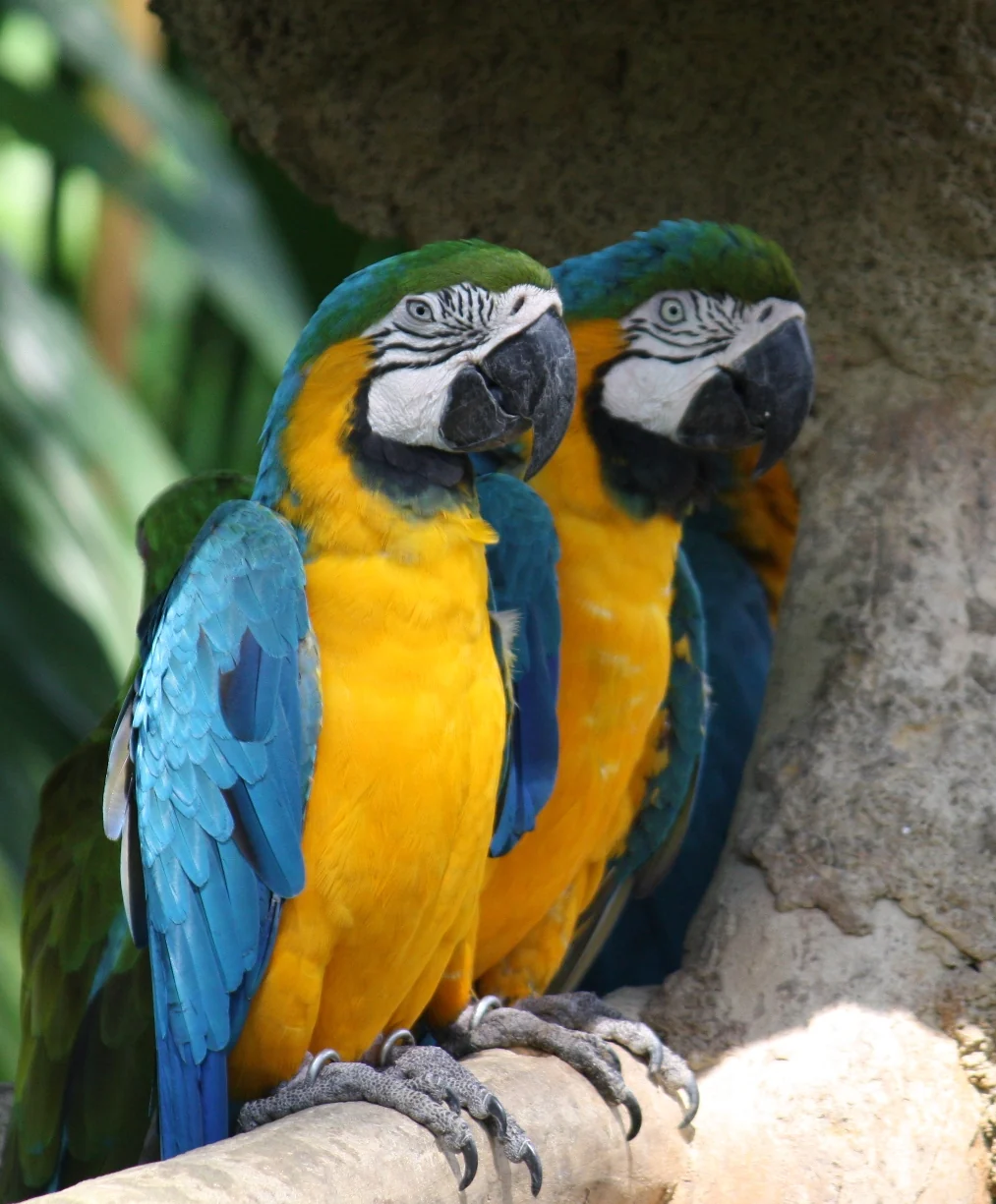
Ara ararauna is known as both the blue-and-gold and blue-and-yellow macaw. The World Parrot Trust lists a total length of about 86 centimetres, including the long tail, and a weight of roughly 1 to 1.3 kilograms. Blue upperparts, a yellow underside, green forehead and pale facial skin crossed by dark feather lines give it its distinctive appearance.
The species comes from tropical America, where it uses forests, riverside habitats and wooded savannas. Wild birds forage together, with partners often keeping close within a group. Males and females cannot reliably be distinguished by their plumage.
Finding birds that get along
Mutual preening, calls and shared resting places are part of macaw social life. Adopting an established pair from a reputable rescue can make the choice easier. When a new companion is needed, experienced parrot carers and an avian vet, a vet experienced in treating birds, can help plan the introduction.
A new bird should have a veterinary examination and initially live separately from existing birds. This quarantine reduces the risk of passing on unnoticed infections. Its duration and any tests should be agreed with the vet. Introductions can then progress gradually, with separate accommodation available for early meetings and any conflicts.
A compatible pair can share a large aviary that allows each bird to move away. Putting two large macaws into an ordinary cage offers little scope for that. Repeated chasing, biting or keeping one bird away from food calls for safe separation. How the individual birds actually get along should guide their housing.
Make flying space part of the home
An aviary is a large bird enclosure. For macaws, its layout should allow genuine flights between perches. A tall, narrow structure offers little flying distance if the birds mostly climb from branch to branch. A bird room also needs a long clear route, without furniture, lights or toys blocking it.
The specialists contributing to the German Exopet research project recommended in 2018 an aviary of at least 4 × 2 × 2 metres for a pair, together with several hours of daily flight outside it. They proposed at least 30 square metres of floor space for the flight room or dedicated bird room. The recommendation gives a sense of how much room a pair requires.
Strong natural branches of different thicknesses and secure landing places are useful furnishings. Food bowls should be positioned away from droppings falling from perches above. Outdoor housing also requires a suitable heated shelter and safe access between areas. Specialist advice before construction can bring together climate, lighting, materials and practical cleaning.
Read more: Setting up a bird room: safe flight and good landing places
A room that can withstand a macaw’s curiosity
Locks, mesh and fittings should be designed for large parrots. A macaw investigates reachable objects with its beak, so electrical cables, flaking coatings and loose small parts should be kept out of reach. Toys and other materials need regular checks and replacement when damage makes them unsafe.
Before flight time, exterior doors and windows should be closed, including tilt-opening windows. Large glass surfaces need visible screening, fans should be switched off and open water containers secured. Other pets should stay in a different room.
A kitchen is unsuitable as a bird room. Hot surfaces and open pans pose hazards, and fumes are another concern. PTFE is a plastic used in some nonstick coatings. Heating coated products, particularly overheating them, can release substances that are deadly to birds. Smoke, fragrance sprays and cleaning fumes should also be kept away from their living space.
More to a balanced diet than nuts
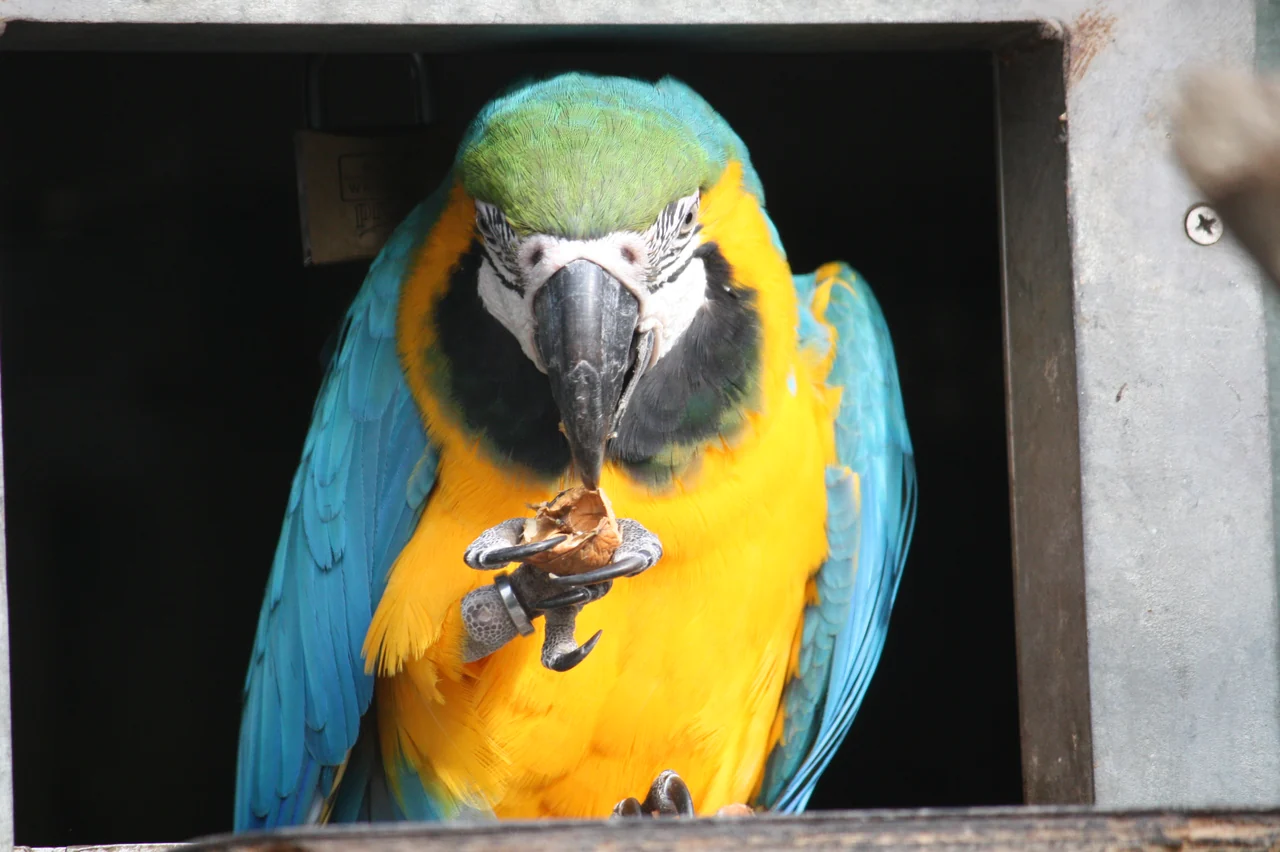
Opening nuts keeps a beak busy, but nuts and sunflower seeds alone do not meet a macaw’s nutritional needs. An appropriate complete macaw food can provide a base. This is often supplied as pellets, small pieces made from several combined ingredients. Suitable portions of vegetables and other foods agreed with the avian vet add variety.
The amounts depend partly on activity, weight, physical condition and the bird’s existing diet. Small nut portions can also be used in food searches or as rewards. They count towards the daily food allowance and should be included when measuring portions.
A bird unfamiliar with pellets first needs to recognise and accept them as food. Changes should therefore be gradual. Familiar food should only be reduced once the macaw is demonstrably eating the new food. Regular weighing helps detect unwanted weight loss. Clean water, daily bowl washing and removing perishable leftovers promptly are part of the routine.
Foraging, dismantling and learning together
A macaw may spend a long time stripping bark or working on suitable wood. Untreated materials known to be safe for parrots can be provided for this purpose and are expected to wear out. Small food portions in easily accessible food toys offer another task. The reward should be easy to reach at first, before the search becomes more challenging.
Short voluntary training sessions can make everyday care easier. A voluntary step onto an offered perch can be rewarded straight away. Later, the bird can practise stepping from the perch into a carrier. Standing calmly on scales is another useful skill. If the bird moves away, the next approach should begin at a greater distance. Shouting or restraining it during training makes trust harder to build.
Read more: Bird training: confidence, carriers and cooperative care
Living with calls and quiet periods
A blue-and-gold macaw’s strong calls carry a long way. They are part of its communication and cannot simply be trained away. A longer visit to an experienced keeper or rescue is worthwhile before making a decision. It gives a better sense of whether the noise and daily routine fit your home.
A predictable routine can include flying, food, short shared activities and undisturbed rest. Each bird should also have things it can do independently. At night, the pair needs somewhere quiet, away from ongoing television, conversations and changing lights. If work often keeps you out late, another familiar person should be involved in daily care.
Read more: Living with parrots: choosing a species and shaping the day
Know the birds’ history before bringing them home
The existing diet, relationships with other birds, health history and familiar routines matter more than a promise that a macaw is especially tame. Young birds should already feed independently. Finishing the hand-feeding of an unweaned youngster is not a suitable task for a new keeper.
Chicks raised by their parents also learn through contact with other parrots. Assisted hand-rearing can be necessary, but should not be marketed as a shortcut to a particularly close bond with people. A bird that has already been hand-reared still deserves suitable company and a patient introduction to its new home.
An avian vet should be contacted promptly if a macaw eats less, becomes unusually quiet or produces altered droppings. Laboured breathing or severe weakness calls for immediate help. A prepared carrier and saved emergency contacts make getting to the practice easier.
Read more: Bird life stages: from youngster to older companion
Plan for the decades ahead
The World Parrot Trust lists a possible lifespan of 60 years for blue-and-gold macaws. Care may therefore extend far beyond your present circumstances. Who could look after the birds during illness, accommodate them during a move or eventually take over their care? A backup carer should already know the pair and their safe routines.
The cost planner can help separate an aviary, room alterations and transport equipment from ongoing expenses. Food, replacement enrichment materials and veterinary care belong in the regular budget. The care handover tool is also useful for recording feeding, door checks and important contacts for another carer.
Common questions
Can a blue-and-gold macaw live alone?
A macaw needs suitable company of its own species. Finding a companion for a bird that has lived alone for years may require specialist help. Its previous experiences should shape that process.
Can two macaws still become tame?
Two macaws living together can develop trust in people. The amount of contact they choose varies between birds. Short voluntary activities offer a way to build that relationship without separating them.
Is a large cage with daily time out enough?
Birds of this size need a spacious enclosure combined with extensive flying room. The layout should leave clear routes. One climbing stand and a few short circuits around living-room furniture do not provide the movement they need.
Does a macaw need to learn to talk?
No. Human words are not a measure of good care. It is more useful to notice which activities the individual enjoys and how it communicates with its companion and familiar people.
A closer look
Sources and photo credit
- Blue-and-yellow MacawWorld Parrot TrustBlue wings, a golden chest and a powerful beak · Living with calls and quiet periods · Plan for the decades ahead
- Blue-and-Yellow MacawOakland ZooBlue wings, a golden chest and a powerful beak · Finding birds that get along
- Exopet: Ergebnisse zur Haltung, Januar 2018, Seiten 52 und 53Universität Leipzig, vom BMEL gefördertes ForschungsprojektMake flying space part of the home · A room that can withstand a macaw’s curiosity
- Living with other birdsRSPCAFinding birds that get along
- Introducing a New Pet BirdVCA Animal HospitalsFinding birds that get along
- How should I house my bird?RSPCA AustraliaMake flying space part of the home · More to a balanced diet than nuts · Living with calls and quiet periods
- Household Hazards and Dangers to BirdsVCA Animal HospitalsA room that can withstand a macaw’s curiosity
- Feeding Pet MacawsVCA Animal HospitalsMore to a balanced diet than nuts
- Management of Pet BirdsMSD Veterinary ManualMore to a balanced diet than nuts
- Enrichment for pet birdsRSPCAForaging, dismantling and learning together
- The Power of Positive ReinforcementWorld Parrot TrustForaging, dismantling and learning together
- Recognizing the Signs of Illness in Pet BirdsVCA Animal HospitalsKnow the birds’ history before bringing them home
- Position Statement: Hand-feedingWorld Parrot TrustKnow the birds’ history before bringing them home
- Where should I get my bird from?RSPCA AustraliaKnow the birds’ history before bringing them home · Plan for the decades ahead
- Housing and environments for pet birdsRSPCAA room that can withstand a macaw’s curiosity
Photo credits
Photo: Blue-and-yellow macaw (Ara ararauna) · Arthur T. LaBar · CC BY 2.0.
Photo: Arara canindé - Ara ararauna · Luiz Carlos Rocha · CC BY-SA 2.0.
Photo: Hello, hello! · Jan Smith · CC BY 2.0.
Photo: Papagei · Kathrin Mezger · CC BY-SA 2.0.