fellfolio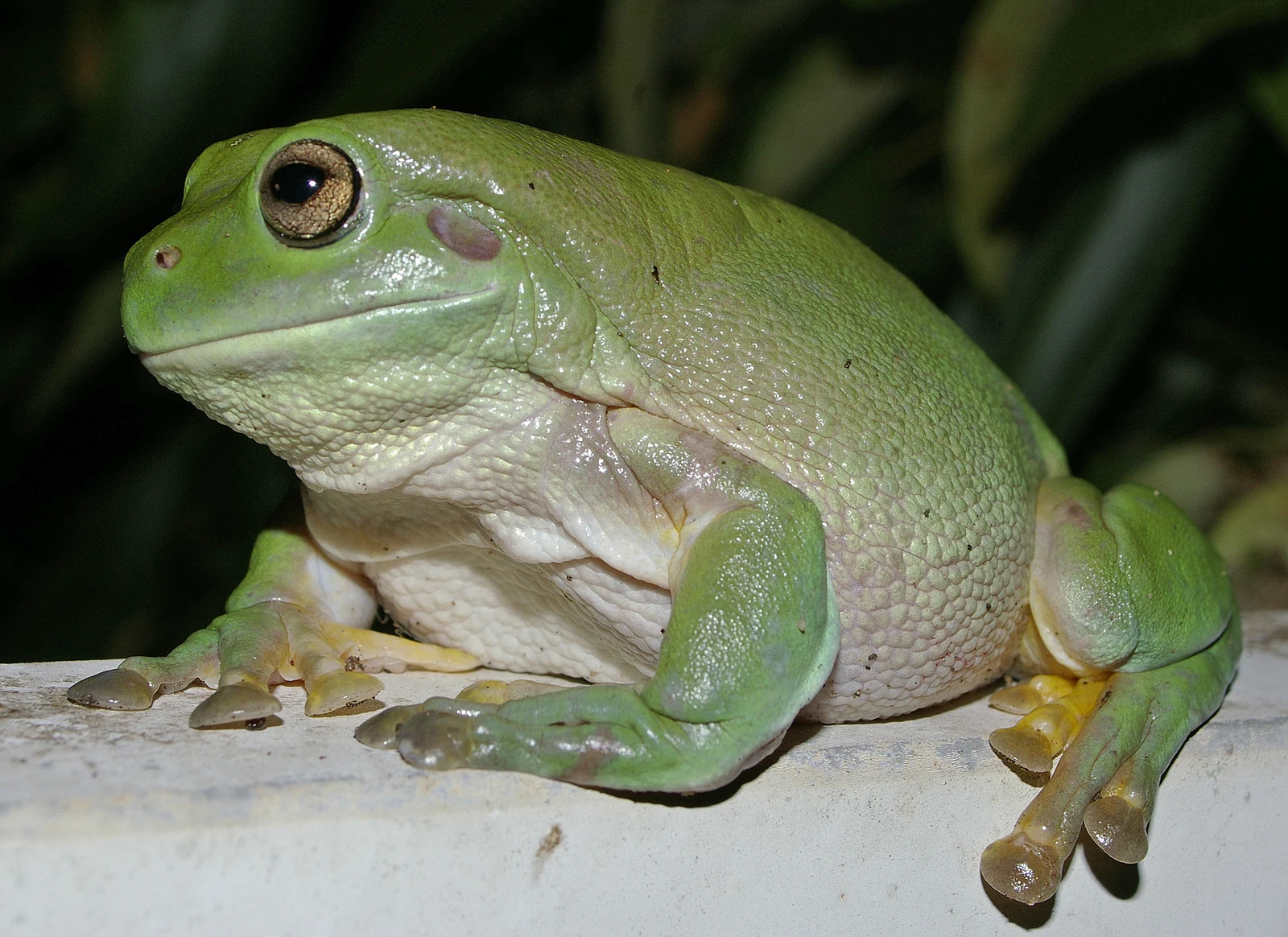
A climbing frog and a long commitment
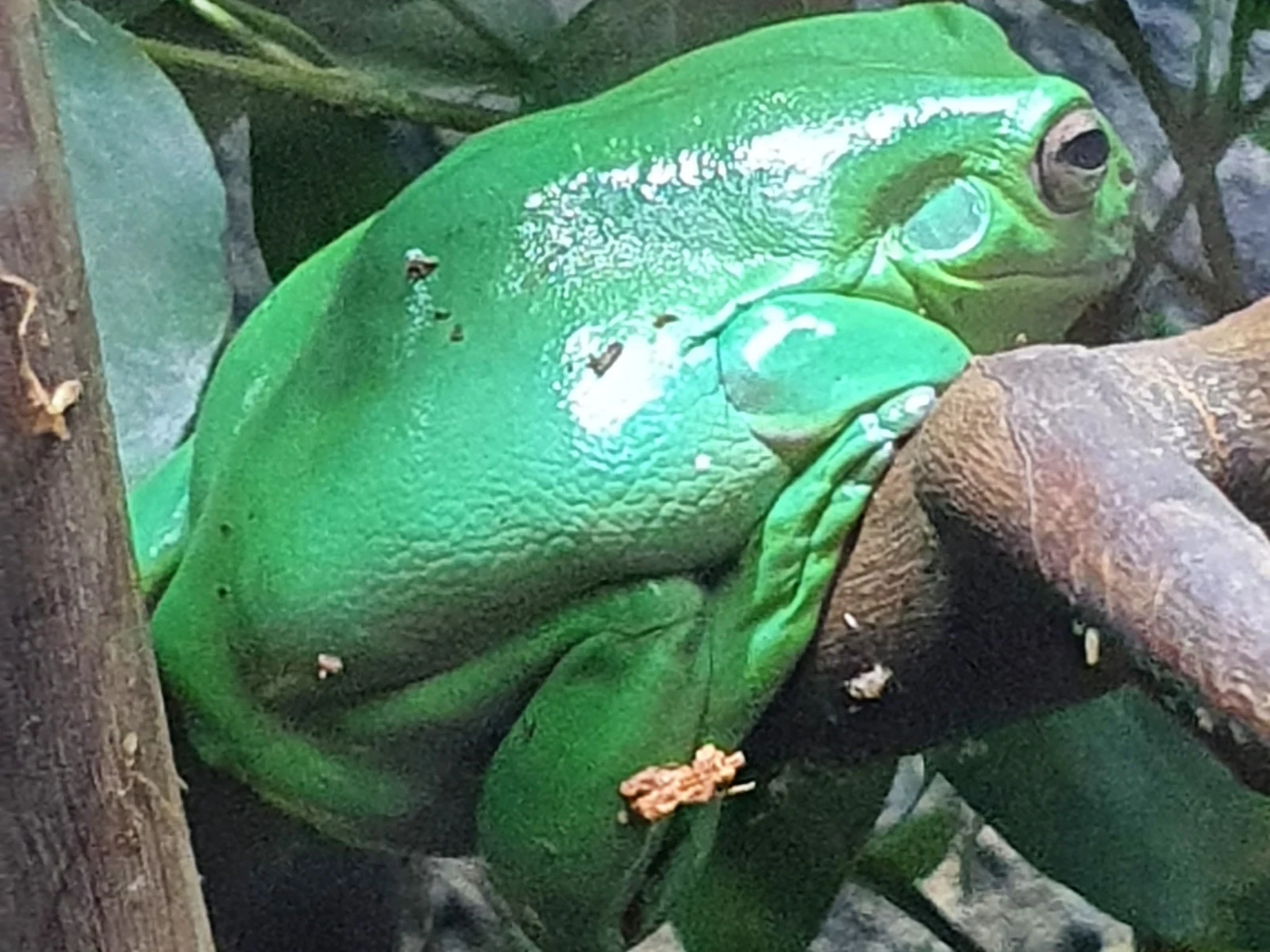
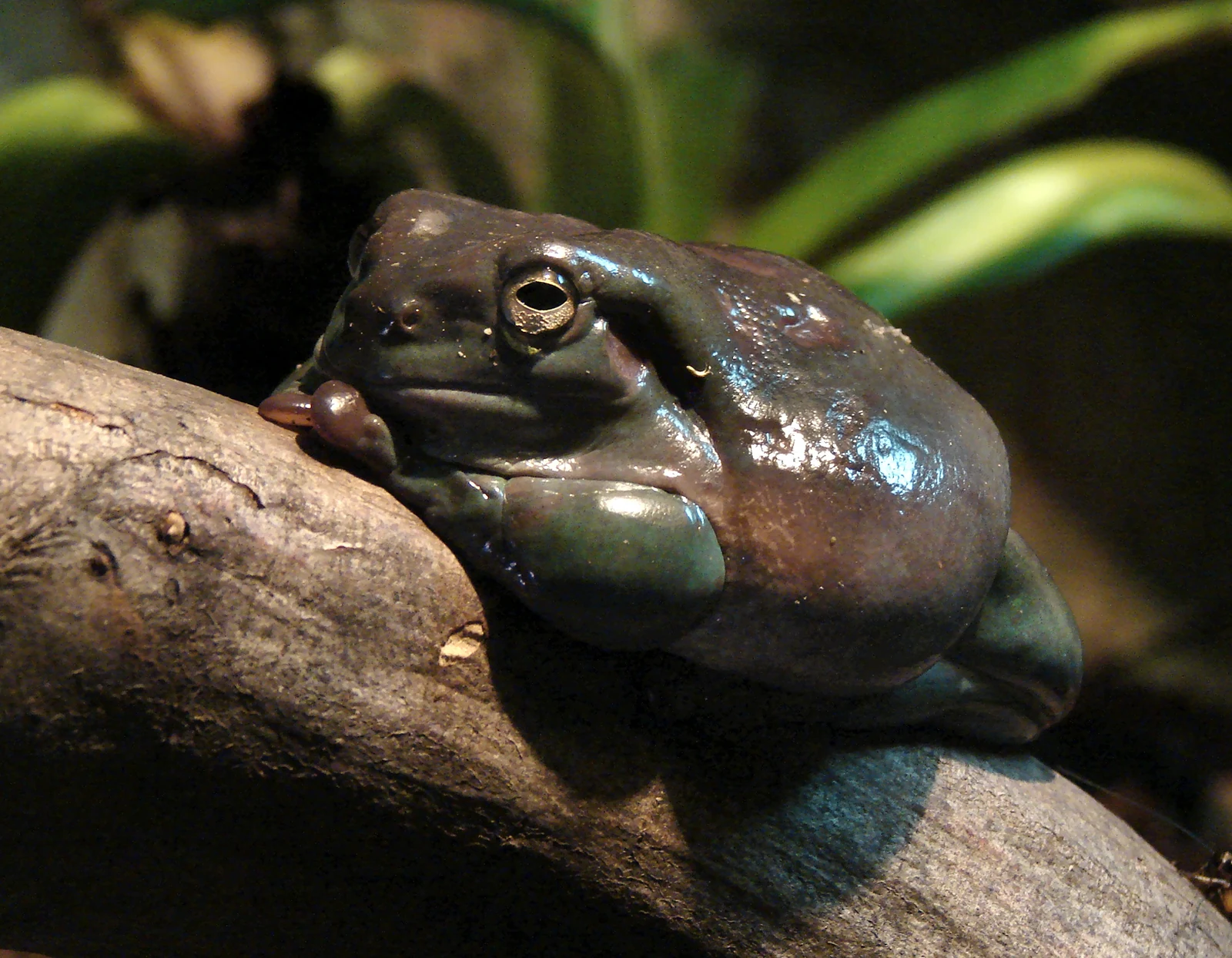
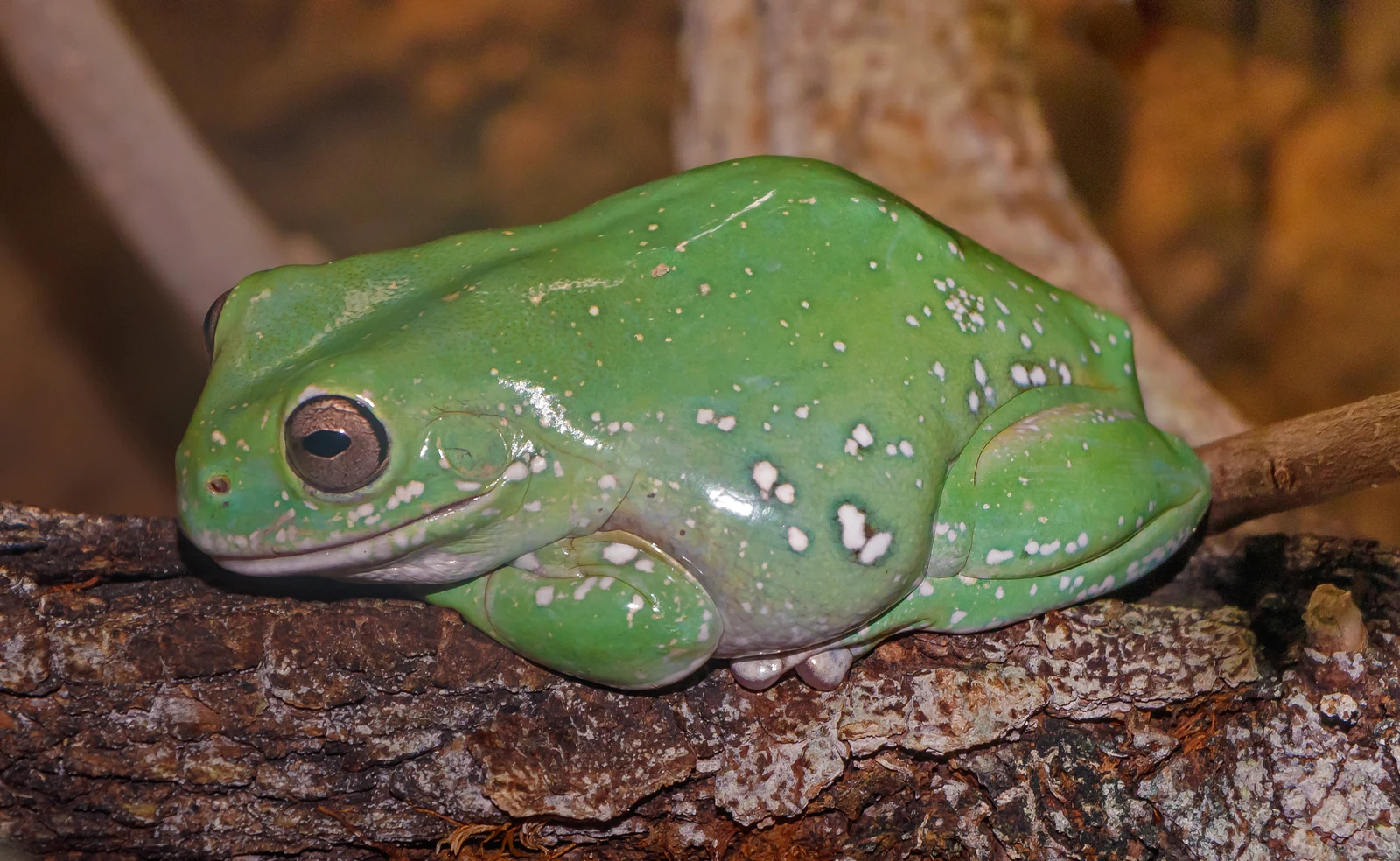
White's tree frogs occur in Australia and New Guinea. The American Museum of Natural History currently lists the species as Pelodryas caerulea. Older care sheets and image archives may call it Litoria caerulea or Ranoidea caerulea. These names refer to the same species. Colour can range from green to brown, so a brown phase by itself does not establish illness.
Adults measure roughly 5 to 11 centimetres in body length according to a veterinary care account. A robust body and toe pads help with climbing. This frog uses a branch differently from a smaller, slender tree frog: broad horizontal surfaces support resting, whereas steep smooth poles provide little purchase.
A specialist veterinary practice gives a captive lifespan of ten to fifteen years or longer. Care over that time includes electricity, feeder insects, water care and access to an amphibian-experienced vet. Froglets eat smaller prey and need closer observation; furnishings need to suit the growing body rather than only the animal seen at purchase.
Sources for this section
- Pelodryas caerulea (White, 1790)American Museum of Natural History, Amphibian Species of the World
- White's Tree Frog CareExotic Pet Vets
- A Vet's Care Guide for White's Tree FrogsExotics Keeper, Dr Michaela Betts
Make a tall enclosure usable
One veterinary care account describes 45 × 45 × 60 centimetres as a planning size for a tall enclosure. It is a starting point, not an upper limit. For an adult frog, free routes between several firm perches matter, along with enough distance from lamps and heated equipment. Several frogs need substantially more usable space. Branches and leaves should create climbing routes while leaving room to move.
Broad horizontal branches should be securely fixed. Sturdy plants and larger leaves provide cover without blocking air exchange. A darker retreat lets the frog rest by day. Lid and ventilation panels must close securely because a heavy-looking frog can still climb and escape. Ventilation from just one opening may be inadequate if condensation persists on the glass.
A mix of fertiliser- and pesticide-free soil, coconut coir and suitable leaf litter can serve as substrate. It should retain some moisture without staying wet. Small stones, loose wood pieces and coarse material can be swallowed during a strike at prey. With loose substrate, food can be offered on an easy-to-clean dish or above the ground.
Read more: Amphibian care: water, land and sensitive skin
Sources for this section
- A Vet's Care Guide for White's Tree FrogsExotics Keeper, Dr Michaela Betts
- White's Tree Frog CareExotic Pet Vets
- Housing for AmphibiansMerck Veterinary Manual
Measure heat, humidity and UVB together
A specialist veterinary practice suggests about 24 to 29°C by day and no lower than roughly 18°C at night for this species. Its sheet keeps a warmer area below 32°C. Put thermometers at the perches the frog uses and in a cooler part of the enclosure. This gives it a choice rather than leaving it under constant heat. Any heater needs suitable control and shielding from direct skin contact.
The same practice gives a humidity range of about 50 to 70 percent. A hygrometer shows the pattern over time; a visual check shows whether leaves and substrate can dry. Air may become briefly more humid after misting. Persistently wet ground, a stale smell or continuing condensation call for a review of misting and ventilation.
A clear day-night cycle of about twelve hours of light is described in veterinary care sheets. Low-level UVB can support vitamin D3 production, which helps the frog use calcium. UVB reaching a perch depends on the lamp, distance, screen and lamp age. The frog also needs shaded retreats. Lighting and supplements should be considered together with informed veterinary or specialist advice.
Sources for this section
- White's Tree Frog CareExotic Pet Vets
- A Vet's Care Guide for White's Tree FrogsExotics Keeper, Dr Michaela Betts
- Housing for AmphibiansMerck Veterinary Manual
Care for the water dish and sensitive skin
A shallow dish offers access to water. The frog needs to get in and out unaided; slippery deep sides are unsuitable. Provide fresh, appropriately conditioned water and clean the dish every day, and sooner if it becomes soiled. Tap water is suitable only after treatment matched to the local supply. Standing it in a bucket does not reliably remove chloramine. Cleaning residues must not reach the bowl, plants or the frog’s skin.
Amphibians absorb substances through their skin, so observation is usually the best way to enjoy them. When a frog must be moved for care or examination, clean powder-free gloves moistened with suitable water help protect its skin. Hands should be washed afterwards. Carrying the frog around for photographs adds unnecessary handling; it can jump, and even a short fall or pressure on the body can cause injury.
New animals need a separate space and a health plan agreed with an amphibian-experienced vet before sharing water or equipment with resident animals. Separate tools reduce the chance of carrying pathogens between enclosures. A daily look can stay simple: clean water, the usual resting place, intact skin, and familiar temperature and humidity readings.
Sources for this section
- White's Tree Frog CareExotic Pet Vets
- Housing for AmphibiansMerck Veterinary Manual
- Infectious Diseases of AmphibiansMerck Veterinary Manual
Match insects and supplements to growth
White’s tree frogs eat mainly live invertebrates. Suitable crickets, roaches and locusts provide variety, with an occasional appropriately sized earthworm. Prey should fit the frog’s mouth. A veterinary care account suggests daily feeding for froglets and two to three meals a week for adults as starting points. Body condition, prey size and actual intake guide further adjustment because this species can gain excess weight readily.
Gut loading means feeding the insects a suitable nutrient-rich diet before offering them to the frog. They may also need a light dusting of calcium and, in some plans, a vitamin supplement. The schedule depends on age, prey, UVB exposure and the overall diet. An amphibian-experienced vet can help set it. Insects caught in a garden that may have been sprayed should stay out of the enclosure.
Offer food in the evening when the frog becomes active. Remove insects that remain, so they do not bother the frog or hide and breed in the enclosure. A sudden refusal of familiar prey deserves a look at climate, water, skin and behaviour together. A quiet period and an emerging health problem may initially look similar.
Sources for this section
- A Vet's Care Guide for White's Tree FrogsExotics Keeper, Dr Michaela Betts
- White's Tree Frog CareExotic Pet Vets
- Diet for AmphibiansMerck Veterinary Manual
Notice changes early
The frog should move normally between resting and active periods and take prey purposefully. Weight loss, persistent food refusal, swelling, unusual skin changes or difficulty climbing call for veterinary assessment. A reddish belly or a single colour change is not a diagnosis. Breathing difficulty, marked weakness or rapid deterioration needs immediate help.
Recorded temperature and humidity, meals, water care and photographs of a change help the vet assess the situation. Medication, salt baths and products intended for aquarium fish should not be tried on guesswork. A prepared enclosure makes changes easier to notice because its normal readings and the frog's usual behaviour are known.
Before acquiring a frog, establish a traceable source. A captive-bred animal with a record of its previous food and climate is easier to settle than one with no history. The first days are best spent observing quietly while the equipment continues to be checked.
Sources for this section
- White's Tree Frog CareExotic Pet Vets
- Infectious Diseases of AmphibiansMerck Veterinary Manual
- Housing for AmphibiansMerck Veterinary Manual
Common questions
Is a terrarium large enough just because it is tall?
Height helps only when firm branches and leaves provide reachable routes and resting places. A tall enclosure around 45 × 45 × 60 centimetres is described as a starting planning size for an adult; more usable room is beneficial.
Can tap water simply be left standing?
That depends on the local supply. Standing does not reliably remove chloramine. Water should be treated to match the supply.
How often should a froglet eat?
A veterinary care account suggests daily feeding for froglets and two to three meals a week for adults as a starting point. Offer small suitable prey and watch body condition. Supplements need to fit the UVB setup and total diet.
A closer look
Sources and photo credit
- Pelodryas caerulea (White, 1790)American Museum of Natural History, Amphibian Species of the World
- White's Tree Frog CareExotic Pet Vets
- A Vet's Care Guide for White's Tree FrogsExotics Keeper, Dr Michaela Betts
- Housing for AmphibiansMerck Veterinary Manual
- Diet for AmphibiansMerck Veterinary Manual
- Infectious Diseases of AmphibiansMerck Veterinary Manual
Photo: Litoria caerulea - Darwin NT · Bidgee · CC BY 3.0. Resized and converted to WebP; scene unchanged.
Photo: Ranoidea caerulea · TarnishedPath · CC BY-SA 4.0. Resized and converted to WebP; scene unchanged.
Photo: Pelodryas caerulea · Chrumps · CC BY-SA 3.0. Resized and converted to WebP; scene unchanged.
Photo: Ranoidea caerulea - Wilhelma 02 · H. Zell · CC BY-SA 3.0. Resized and converted to WebP; scene unchanged.