fellfolio
Keep an established partnership together
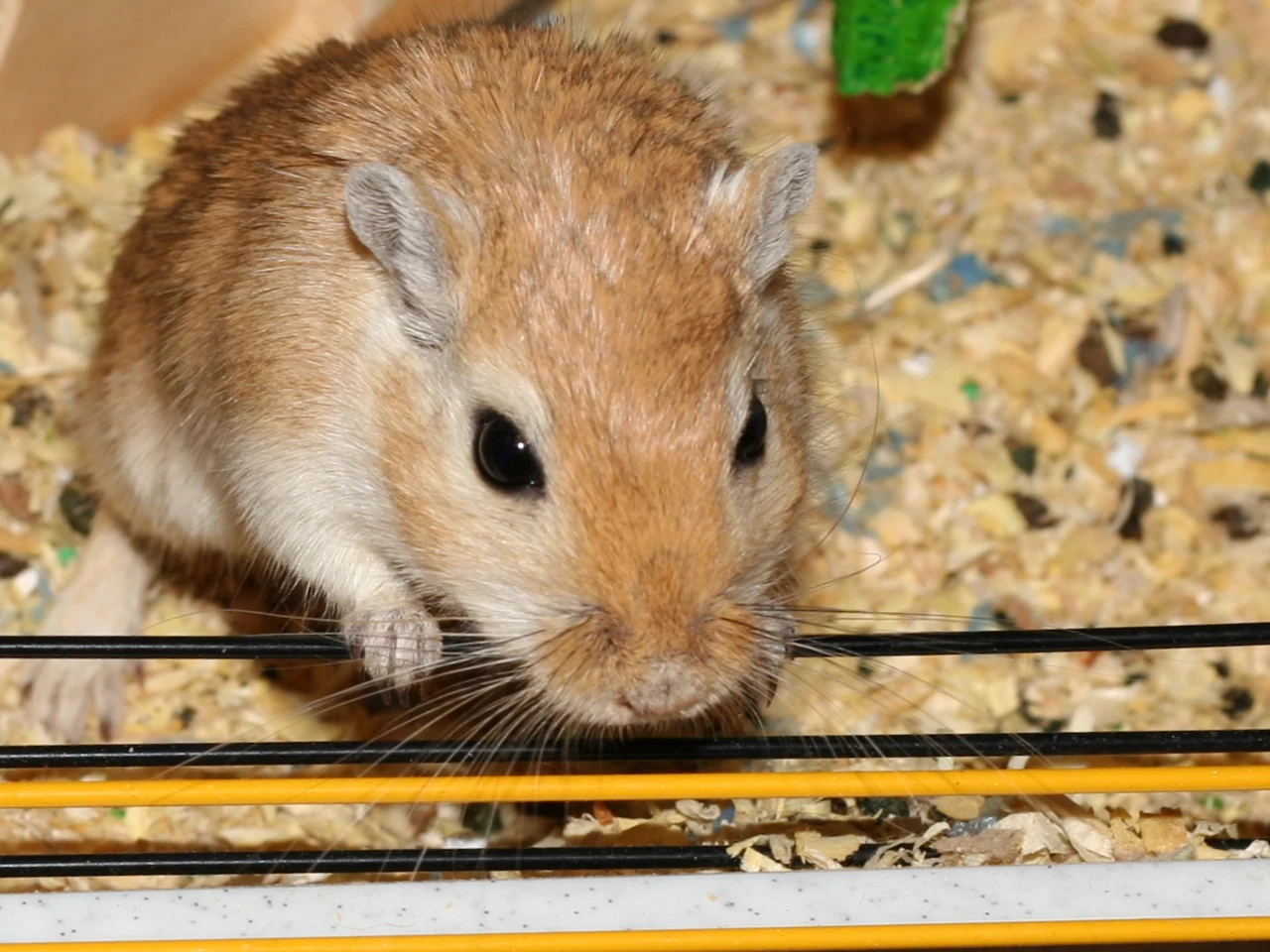
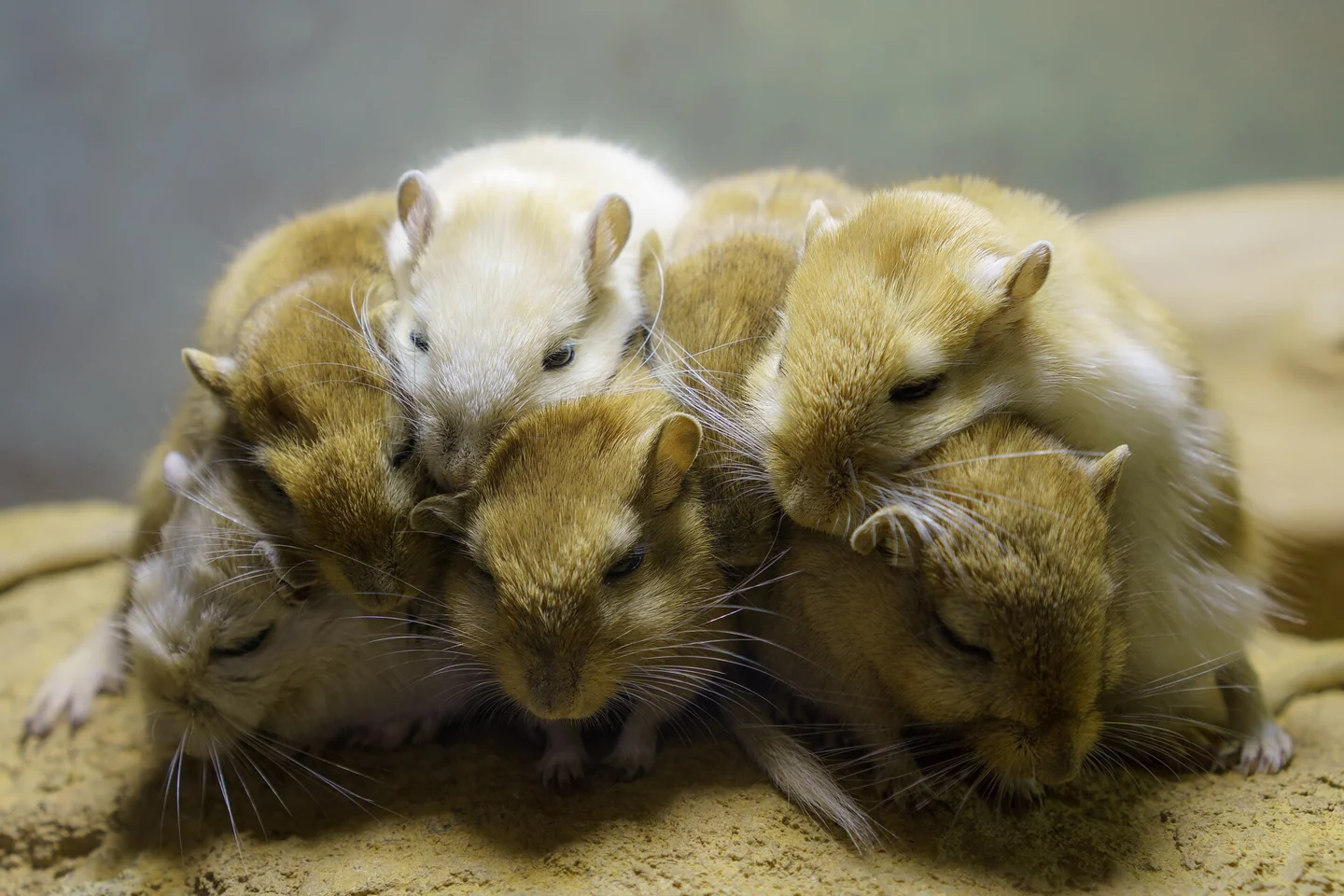
Mongolian gerbils need gerbil companionship. An already compatible same-sex pair, perhaps from an experienced rescue, is a useful starting point. Sleeping together and grooming each other are parts of a relationship that human attention cannot replace. A rescue can also confirm their sexes and explain how the pair behaves together.
Adding a new gerbil straight into an occupied enclosure risks serious fighting. Scent helps gerbils recognise their group, and an unfamiliar animal may be treated as an intruder. Finding a new partner after a death therefore calls for a planned introduction with knowledgeable support. Persistent attacks or bite wounds require safe separation and advice about what to do next, rather than waiting for the animals to settle it themselves.
Build the enclosure from the bedding upwards
Zürcher Tierschutz, an animal welfare organisation based in Zurich, recommends at least 0.6 square metres of floor space and a height of 70 centimetres for two gerbils. These are lower limits for planning. More space allows longer tunnels and makes room for a sand bath and exercise equipment without reducing the digging area. Several small shelves cannot replace a generous continuous floor.
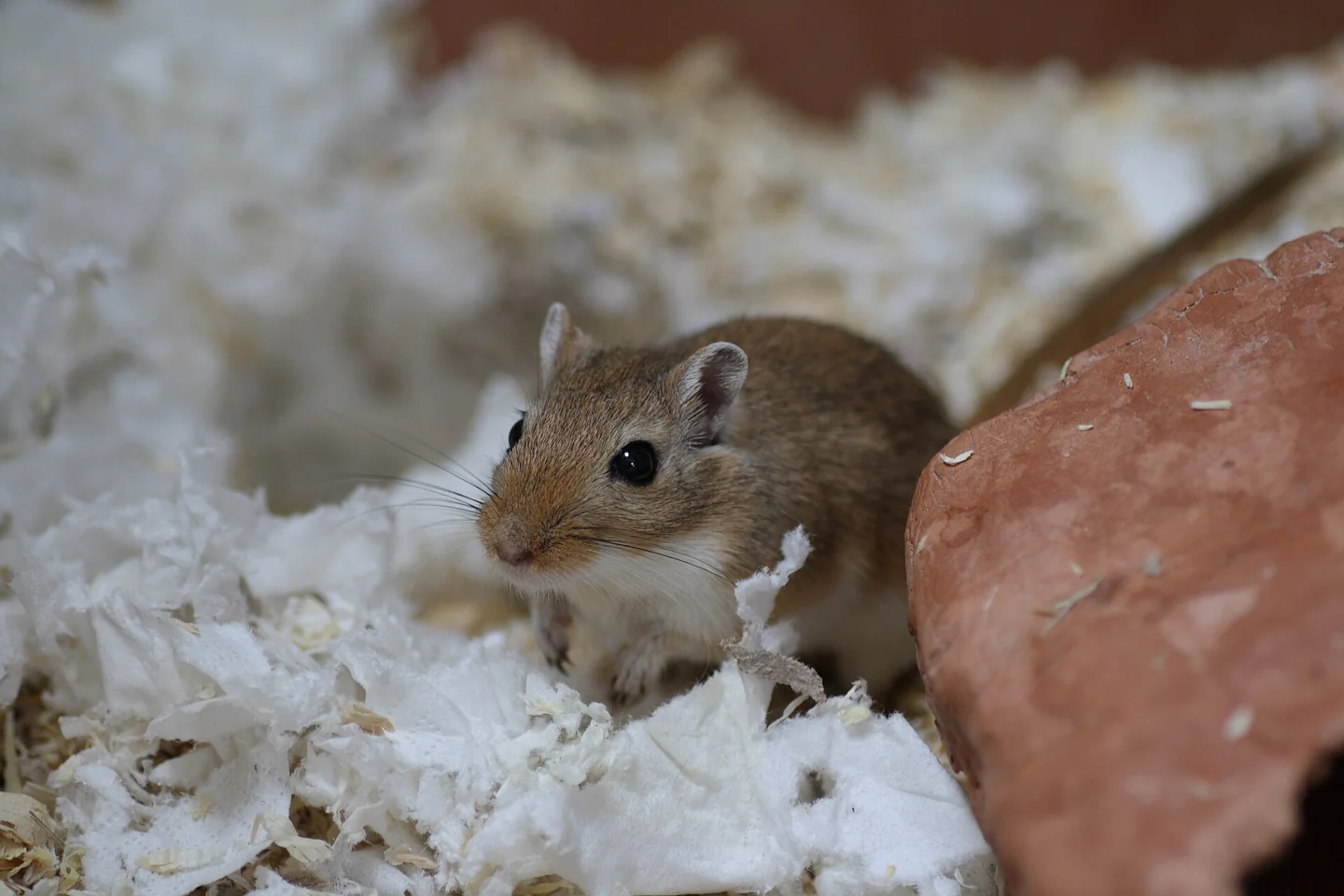
A deep tank-style base with a well-ventilated, escape-proof mesh upper section keeps the bedding inside. At least 30 centimetres of low-dust bedding, combined with hay and suitable shredding material, helps tunnels hold their shape. Heavy houses, the sand bath and other fixed objects need solid supports. If placed directly on loose bedding, they can sink when a gerbil digs underneath.
A quiet, dry location away from direct sunlight is preferable. Glass beside a sunny window can become dangerously warm. Cats and dogs should not have access to the enclosure, including its lid, where their presence can frighten the gerbils.
Chewing, digging and searching for food
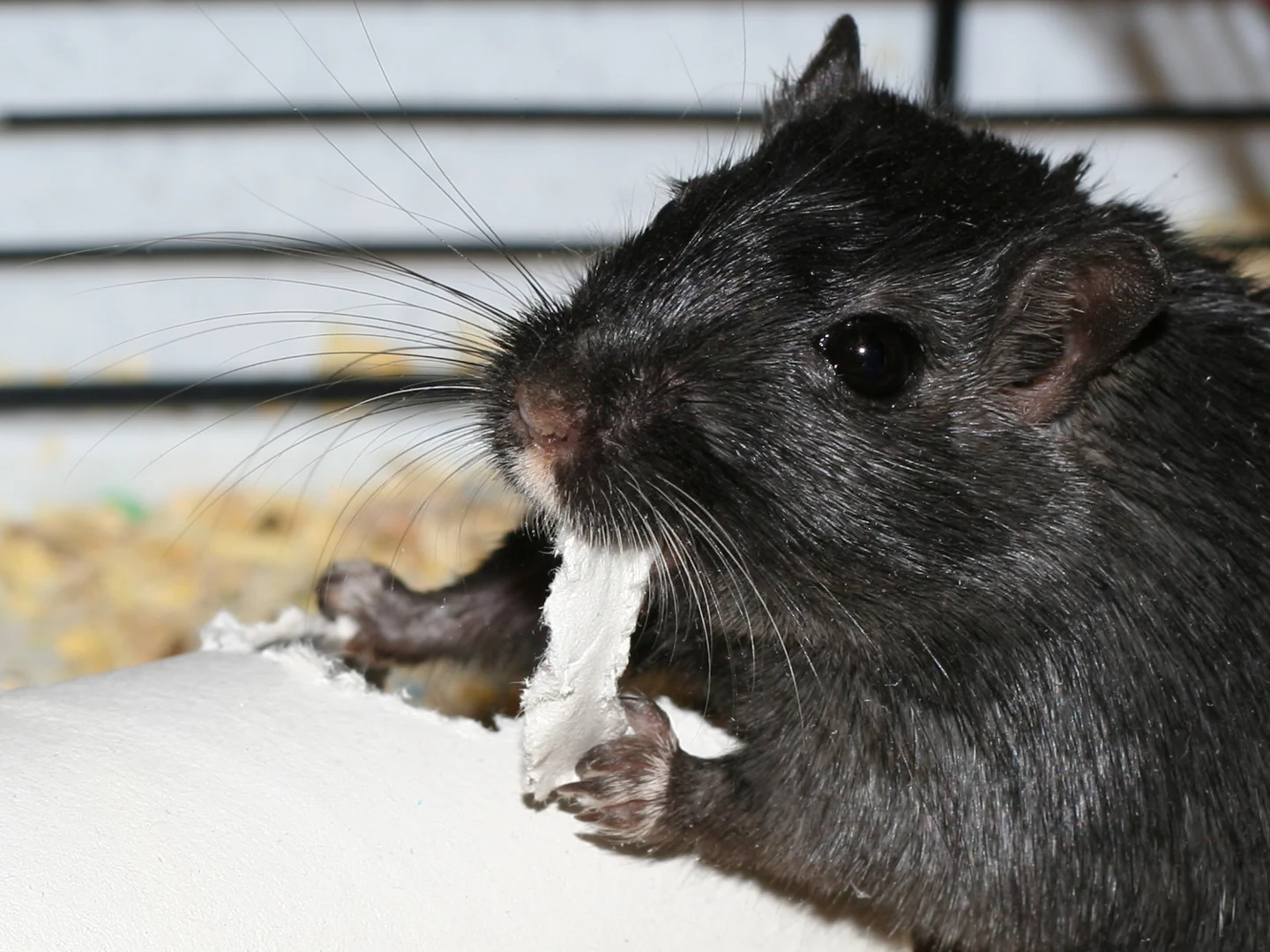
Plain cardboard tubes without adhesive residue, hay and suitable untreated branches can be investigated, shredded and incorporated into a nest. Tunnels should be wide enough for easy movement. A bath of appropriate low-dust bathing sand helps with coat care, provided its container has a stable base and is checked for soiling.
An exercise wheel can offer additional movement if it has a solid running surface and enough diameter for the animal’s back to remain straight. The axle and support must not create trapping points. A wheel cannot replace floor space or bedding depth. A cardboard box filled with hay and a few hidden food pieces offers searching, digging and material to shred afterwards.
Let them forage while keeping track of meals
A balanced food intended for gerbils provides the basis of the diet. Small amounts of appropriate fresh foods can complement it, with new ingredients introduced gradually. Energy-rich seeds are better reserved for occasional small rewards than supplied as a permanently full bowl of extras. Clean drinking water should always be available, even though gerbils may appear to drink very little.
A few pieces from the normal daily food allowance can be scattered through loose bedding. The gerbils use their noses and paws to find them. You should also check that both animals are eating. An empty bowl can mean that one gerbil has carried the food away to store it, rather than that both have had a meal. Moist leftovers should be removed before they spoil in a food store beneath the bedding.
Make contact predictable
Early encounters can begin with a still hand inside the enclosure while the gerbils choose whether to approach. A small food reward can make that hand interesting. Reaching from above or chasing a gerbil around its home is more likely to frighten it. For an essential move, a familiar tube or suitable container can sometimes provide an easier transfer.
When lifting is necessary, both hands should support the whole body close to a safe surface. Tail skin can tear away if the tail is pulled, so it must never serve as a handle. Children need adult help with these fast-moving animals. A gerbil that moves away should retain a route back to cover.
Keep the home clean with familiar scents
Water, food and visible soiling need daily attention. During a larger clean, some dry, clean bedding carrying the group’s familiar scent can be retained. Wet, spoiled or heavily soiled material should be removed. This approach combines hygiene with a home that still smells recognisable.
Each gerbil should be checked every day: is it eating, moving normally and keeping a clean coat and clear eyes? Weight loss, diarrhoea, injuries or unusual breathing call for veterinary advice. A holiday carer needs these individual observations and the details of a practice that treats gerbils. Joining you for a care session before the holiday helps a temporary carer get to know both animals.
If an older gerbil uses familiar routes less or struggles when gnawing, the cause should be investigated. Food and water can then be made easier to reach while familiar scent and hiding places remain. An older gerbil still benefits from its compatible partner. Any medically necessary separation should be planned with the veterinary practice.
Common questions
Can unfamiliar gerbils be put together straight away?
Direct introductions can lead to serious fighting. An experienced rescue can help with partner selection and a gradual introduction. An existing harmonious pair should stay together.
Why do my gerbils disappear for a while?
Gerbils rest and sleep in their tunnels as well as using them for travel. Daily checks should still establish that both are eating and active as usual. An animal that remains absent unusually long or seems lethargic needs closer attention.
A closer look
Sources and photo credit
- Rennmäuse: HaltungZürcher TierschutzKeep an established partnership together · Build the enclosure from the bedding upwards · Chewing, digging and searching for food
- Creating a good home for gerbilsRSPCABuild the enclosure from the bedding upwards · Keep the home clean with familiar scents
- Keeping gerbils togetherRSPCAKeep an established partnership together · Make contact predictable
- A healthy diet for gerbilsRSPCALet them forage while keeping track of meals
- Understanding gerbil behaviourRSPCAChewing, digging and searching for food
- Caring for your pet gerbilsRSPCAKeep the home clean with familiar scents
Photo credits
Photo: 2008-02-16 Mongolian gerbil.jpg · Gophi · CC BY-SA 4.0. Resized proportionally and converted to WebP. The layout may crop the image.
Photo: 2008-02-16 Mongolian gerbil eating toilet paper roll.jpg · Gophi · CC BY-SA 4.0. Resized proportionally and converted to WebP. The layout may crop the image.
Photo: Mongolian Gerbil Mongolische Wüstenrennmaus (137583113).jpeg · Matthias · CC BY 3.0. Resized proportionally and converted to WebP. The layout may crop the image.
Photo: Mongolische Rennmaus.JPG · Graph dracula · CC BY-SA 3.0. Resized proportionally and converted to WebP. The layout may crop the image.