 fellfolio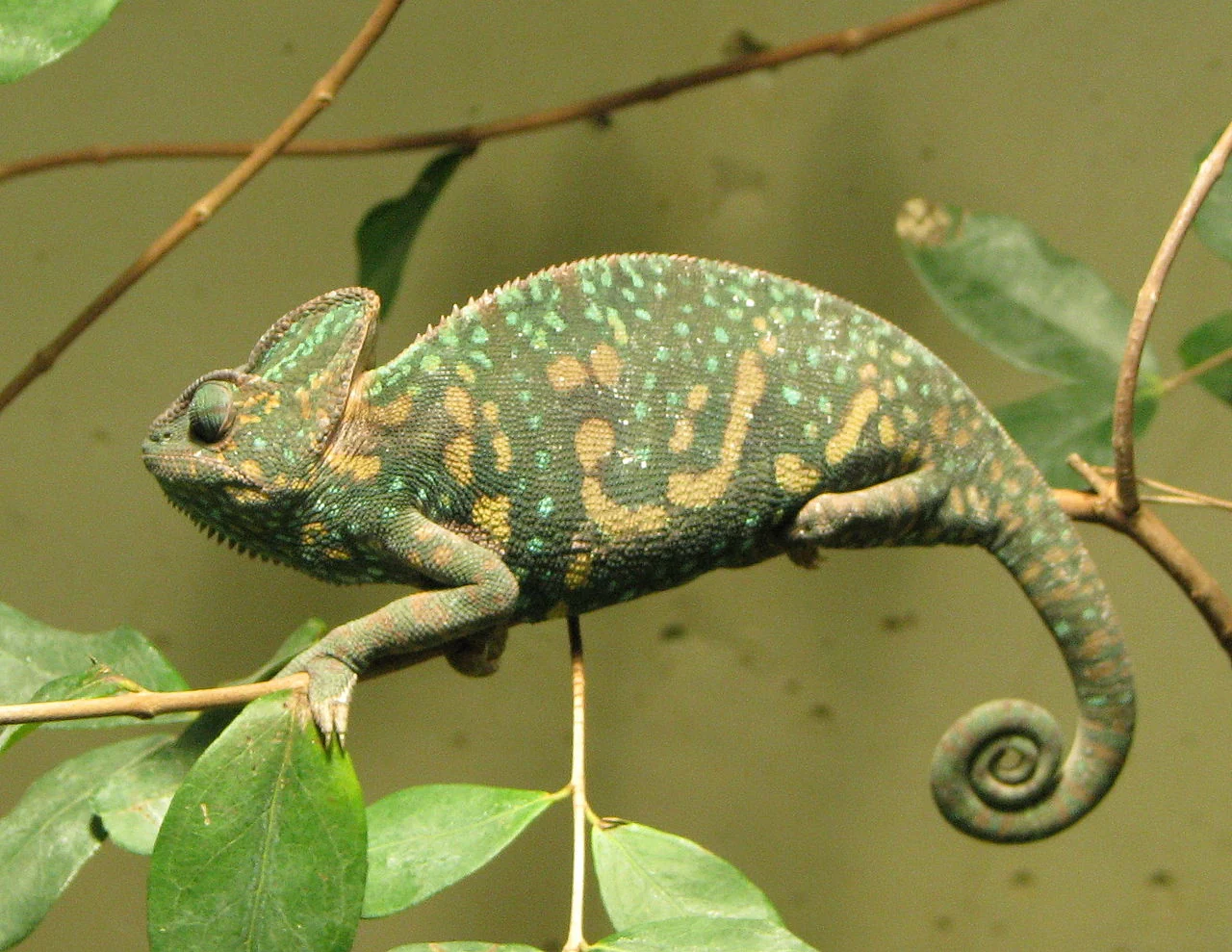
The species in daily life
A veiled chameleon uses branches as paths and resting places. Its gripping feet and tail help it move through them. In an enclosure, a connected network of sturdy branches matters more to its daily movement than open floor space. Horizontal and diagonal routes should link light, cover and cooler areas. Animal Diversity Web describes adult females around 25 to 36 cm long and males around 43 to 61 cm. It reports about five years for females and up to eight for males, although individual lifespans vary.
Veiled chameleons are generally housed alone. Frequent handling can be stressful, while watching from a little distance gives the animal room to behave normally. Colour and behaviour may change with the situation, but neither offers a reliable diagnosis by itself. Persistent changes in appearance, appetite or activity call for advice from a veterinarian experienced with reptiles.
Sources for this section
- Veiled Chameleon Care SheetPetMD, authored by Maria Zayas DVM
- Care and Housing for ChameleonsVCA Animal Hospitals
- Veiled Chameleon CareChicago Exotics Animal Hospital
- Chamaeleo calyptratus species accountUniversity of Michigan Animal Diversity Web
Build a usable climbing space
A tall enclosure with good airflow gives a veiled chameleon room to move between heights. Branches should be firmly fixed and able to support the animal. Foliage provides cover, while more open perches make light and warmth accessible. The arrangement is useful when the chameleon can travel safely between these places.
PetMD lists at least 36 inches, about 91 cm, in each dimension for an adult veiled chameleon and advises providing as much space as possible. Treat that minimum as a starting point for planning. Because the species can reach adult size in about nine to twelve months, its later needs arrive quickly. An enclosure should also allow water to drain and soiled areas to be cleaned without dismantling every climbing route.
Sources for this section
- Veiled Chameleon Care SheetPetMD, authored by Maria Zayas DVM
- Care and Housing for ChameleonsVCA Animal Hospitals
- Providing a Home for a ReptileMerck Veterinary Manual
Light and temperature
As a daytime animal, the veiled chameleon needs a clear cycle of light and darkness. Suitable UVB light allows its body to make vitamin D3, which helps it use calcium from food. The lamp, its distance from the animal and the positions of reachable perches need to be considered together. Leaves and other furnishings can change how much light reaches a perch.
A temperature gradient lets the animal choose warmer or cooler spots. PetMD gives approximately 32 to 35 °C for the warm area and about 21 °C for the cool area of this species’ enclosure. These are planning references; equipment and room conditions affect the result. Measure temperatures at perches the animal uses. A thermostat on the heat source and accessible shade help prevent excessive heating.
Sources for this section
- Veiled Chameleon Care SheetPetMD, authored by Maria Zayas DVM
- Chameleon DiseasesVCA Animal Hospitals
- Providing a Home for a ReptileMerck Veterinary Manual
Drinking and moisture
Veiled chameleons drink droplets from surfaces such as leaves. Misted plants or a suitable dripping arrangement can provide those drinking sites. The droplets need to be reachable from the climbing routes. Quietly watching whether the animal drinks tells you more than checking the level of a water bowl alone.
Chicago Exotics Animal Hospital describes humidity around 30 to 50 percent by day and 75 to 90 percent at night. A hygrometer near a used perch helps track that cycle. After misting, airflow and drainage should let surfaces dry again during the day. Humid air does not replace reachable drinking droplets.
Sources for this section
- Veiled Chameleon Care SheetPetMD, authored by Maria Zayas DVM
- Veiled Chameleon CareChicago Exotics Animal Hospital
Food and routine care
Suitable insects form the food base, including crickets, locusts and appropriately sized roaches. Feed the insects nutritious plant foods before offering them, such as suitable calcium-rich greens and vegetables. This preparation improves their value as prey. Insects need to fit the chameleon’s mouth, and uneaten insects should be removed. An occasional plant food does not replace the insect diet.
Calcium supplementation and UVB lighting are connected parts of nutrition. The appropriate supplement plan depends on the animal and its actual lighting setup, so a reptile veterinarian should help tailor it. Removing leftover insects and droppings, keeping drinking surfaces clean and allowing the enclosure to dry after misting all support a manageable daily routine.
Sources for this section
- Veiled Chameleon Care SheetPetMD, authored by Maria Zayas DVM
- Care and Housing for ChameleonsVCA Animal Hospitals
- Chameleon DiseasesVCA Animal Hospitals
- Providing a Home for a ReptileMerck Veterinary Manual
- Veiled Chameleon CareChicago Exotics Animal Hospital
Health and egg laying
A female veiled chameleon can produce eggs without having lived with a male. Before she reaches maturity, discuss how to provide a suitable laying area with a reptile veterinarian. Lack of appropriate nesting conditions can contribute to egg retention, which means eggs remain in the reproductive tract instead of being laid.
Marked weakness or straining without laying needs immediate veterinary attention. Refusal of food or a noticeably enlarged abdomen also calls for prompt advice from a reptile veterinarian. Swollen eyes, difficulty gripping and other lasting changes also deserve professional assessment. These signs can have several causes. Photos and notes on behaviour, food, lighting and measured temperatures can help the veterinarian assess the animal and its enclosure.
Sources for this section
- Veiled Chameleon Care SheetPetMD, authored by Maria Zayas DVM
- Chameleon DiseasesVCA Animal Hospitals
Common questions
Will a veiled chameleon drink from a bowl?
This species typically drinks droplets from misted surfaces. Reachable droplets and observation of drinking behaviour are important.
Can a female lay eggs without a male?
Yes. Discuss a suitable laying area with a reptile veterinarian before she reaches maturity.
When should I contact a veterinarian?
Marked weakness or straining without laying needs immediate veterinary help. Refusal of food, an enlarged abdomen or other persistent changes call for prompt reptile veterinary advice.
A closer look
Sources and photo credit
- Veiled Chameleon Care SheetPetMD, authored by Maria Zayas DVM
- Care and Housing for ChameleonsVCA Animal Hospitals
- Chameleon DiseasesVCA Animal Hospitals
- Providing a Home for a ReptileMerck Veterinary Manual
- Veiled Chameleon CareChicago Exotics Animal Hospital
- Chamaeleo calyptratus species accountUniversity of Michigan Animal Diversity Web
Photo: Chamaeleo calyptratus female.jpg · Drägüs · Public domain. Resized and converted to WebP; scene unchanged.
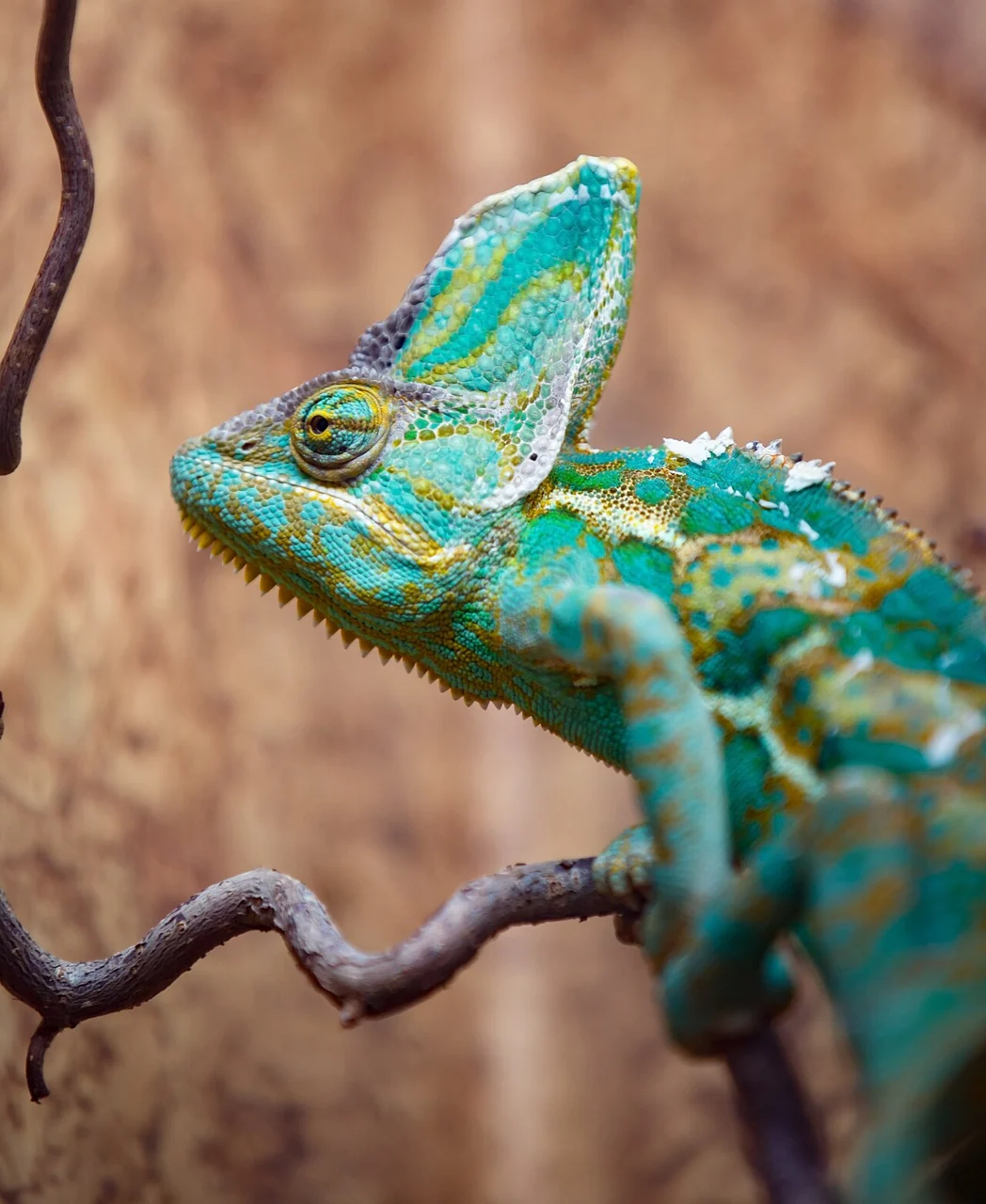
Photo: Blumengärten Hirschstetten 2016-02-21 Jemenchamäleon (Chamaeleo calyptratus) c.jpg · Manfred Werner - Tsui · CC BY-SA 3.0. Resized and converted to WebP; scene unchanged.
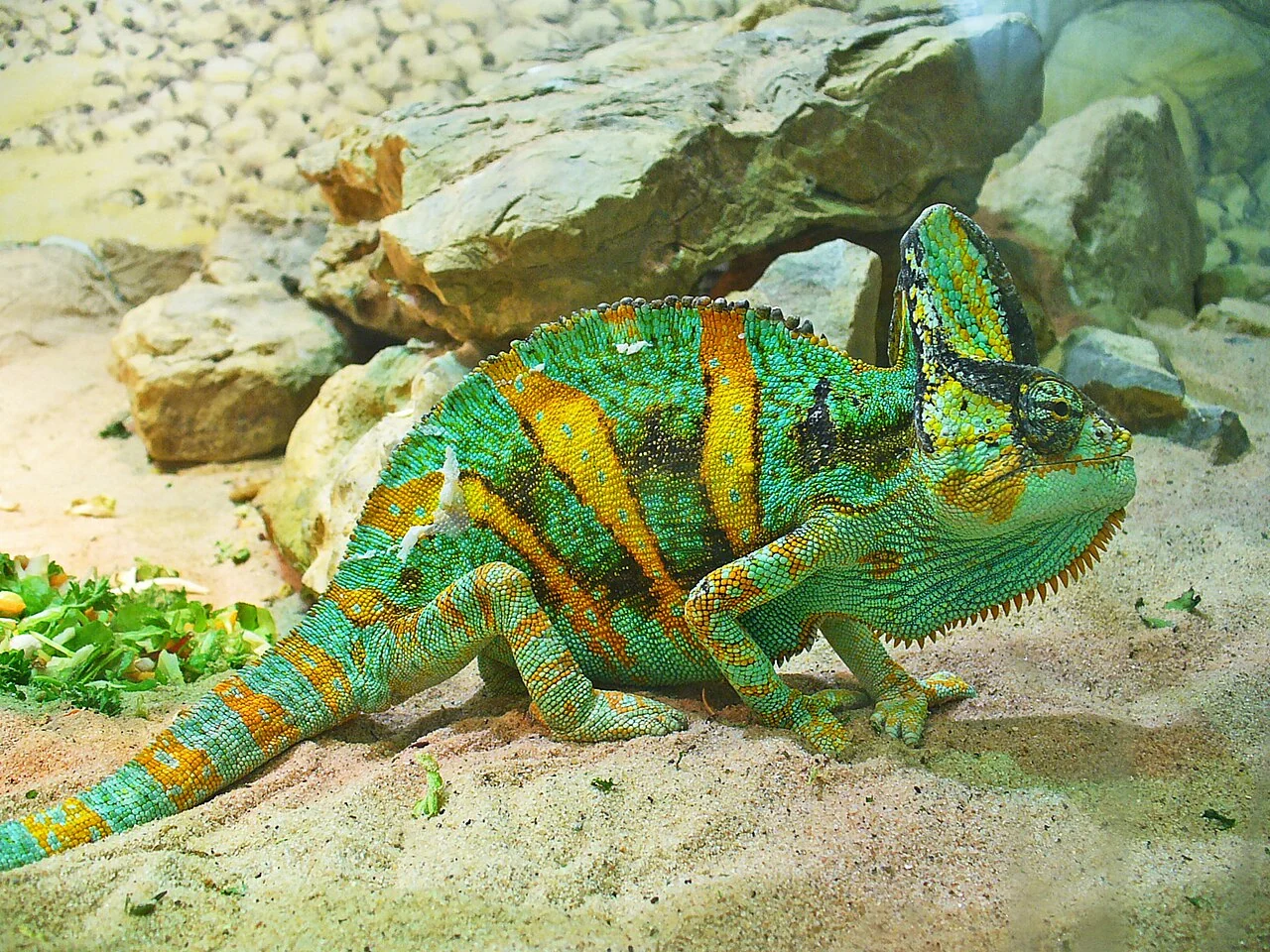
Photo: Chamaeleo calyptratus 01.jpg · H. Zell · CC BY-SA 3.0. Resized and converted to WebP; scene unchanged.
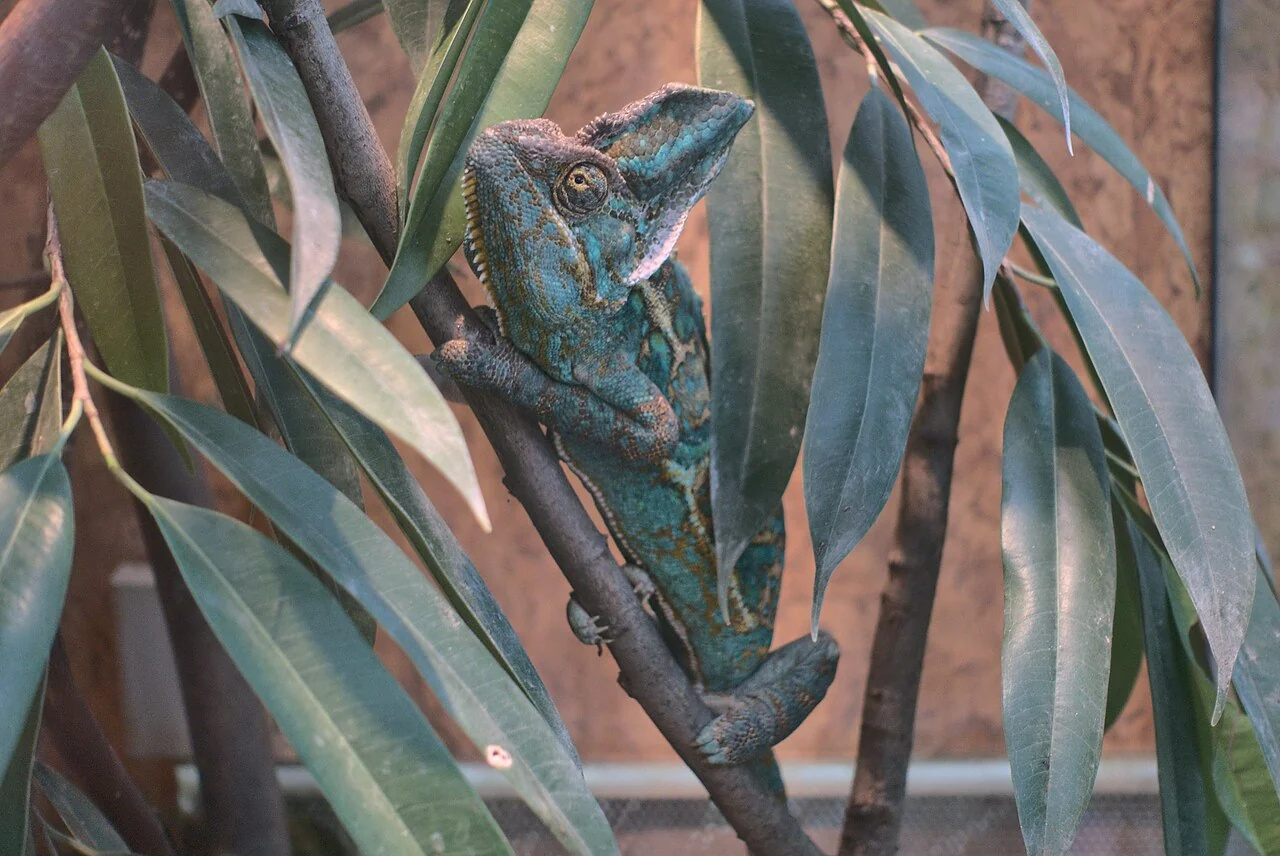
Photo: 2017-03-30 AT Wien 22 Donaustadt, Palmenhaus Hirschstetten, Chamaeleo calyptratus (51705392235).jpg · Paul Korecky · CC BY-SA 2.0. Resized and converted to WebP; scene unchanged.


_c.jpg)

.jpg)