fellfolio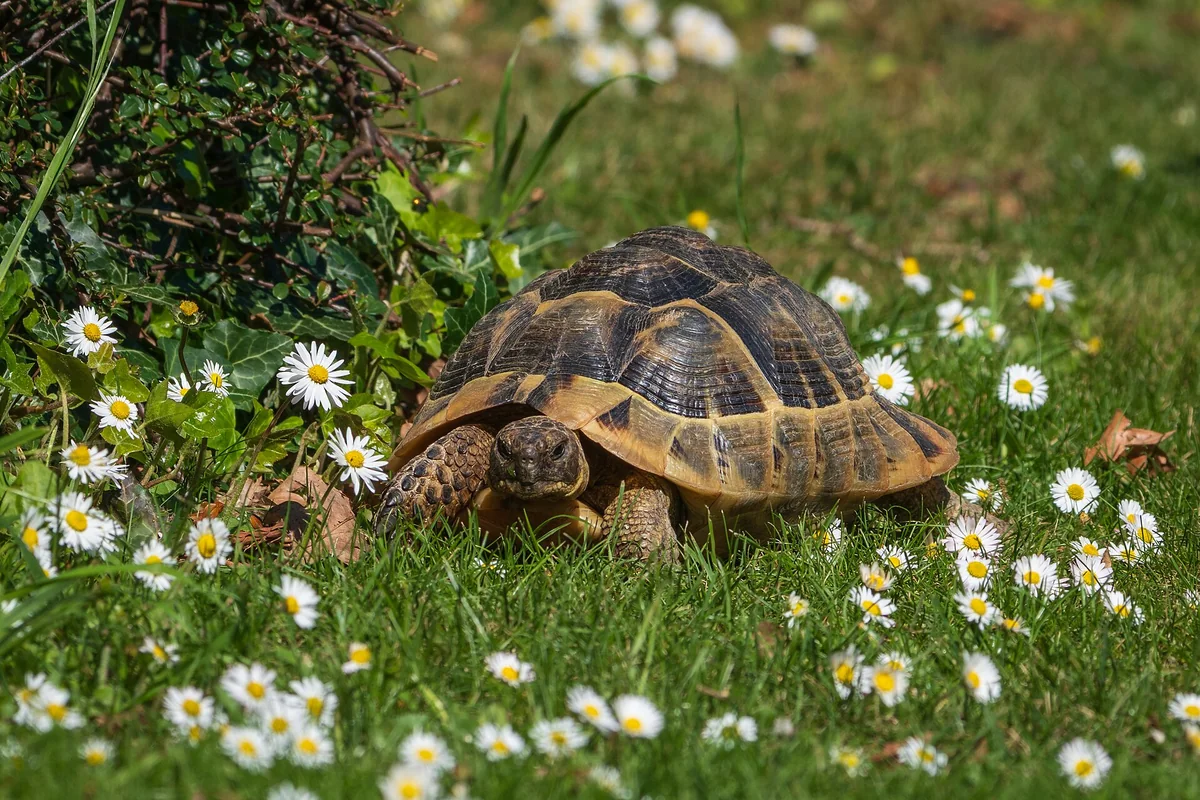
Confirm the species and plan for the long term
Testudo hermanni occurs in parts of the Mediterranean region. The British Chelonia Group describes western and eastern forms of Hermann's tortoise. In German it is called Griechische Landschildkröte; the similar-looking name Testudo graeca belongs to another species. If the animal's origin or identification is uncertain, resolve that before using a detailed husbandry plan.
Hermann's tortoises can live for many decades. They need ample outdoor space, heated shelter when conditions are unsuitable and dependable daily care. Before taking one on, arrange care during holidays or illness and find a vet experienced with tortoises.
British Chelonia Group · RSPCA · University of Illinois College of Veterinary Medicine
Make the outdoor enclosure a habitat
A generous, varied outdoor area is central to caring for Testudo hermanni. The RSPCA gives roughly ten square metres for one tortoise as a guide. Boundaries must resist climbing and digging. A solid edge, sheltered corners, varied ground and dry routes are more useful than an empty lawn. Protection from dogs and other foreseeable hazards also needs to be planned.
Sun matters, but the tortoise must be able to reach shade and a dry weatherproof refuge. Small changes in level, suitable plants and areas for digging make the space usable. Permanently wet, cold ground and deep water dishes are poor choices. A shallow, stable bowl of water should remain accessible. Garden chemicals and unidentified plants should not reach the feeding area.
RSPCA · University of Illinois College of Veterinary Medicine
Provide heat and UVB when outdoor conditions fail
Indoor accommodation is needed when outdoor conditions are unsuitable or an animal remains active through winter for health reasons. The RSPCA describes a roomy habitat with a warm basking area, a cooler area and UVB light. UVB supports vitamin D3 production, allowing the tortoise to use calcium from its food. Sunlight through window glass is not an equivalent source.
The heat source should be fitted so neither shell nor skin can touch it. A thermostat and readings at the animal's level show whether the basking area is appropriate; wattage alone does not. Alongside warmth, the animal needs room to walk, hide and move into a cooler area. A cramped glass tank without suitable ventilation is not a lasting home for an adult.
RSPCA · University of Illinois College of Veterinary Medicine
Choose varied weeds over sweet staples
Hermann's tortoises chiefly eat fibre-rich plants. The RSPCA lists dandelion, plantain, chickweed and clover among possible components. Accurate plant identification, variety and a clean pesticide-free source all matter. Fruit, animal protein and protein-rich pulses are no substitute for this diet; excessive protein may harm health.
Calcium provision and UVB work together. Whether a supplement is needed and how much should be considered for the individual animal and its diet, rather than layering several products by guesswork. Fresh water in a shallow dish remains available. Appetite, weight, droppings and shell condition are worth recording; a change deserves attention even if the tortoise still moves slowly around the enclosure.
RSPCA · University of Illinois College of Veterinary Medicine
Do not improvise winter dormancy by the calendar
Testudo hermanni is among the species for which winter dormancy may be part of the natural year. Whether and how one animal should enter it depends on health, weight, age and housing. The RSPCA advises a veterinary assessment before a planned dormancy; a sick or weak animal must not simply be put into cold conditions. A tortoise kept awake through winter still needs appropriate heat, light, food and water.
Winter care must follow the condition of the individual tortoise. Cooling, monitoring and waking require reliable temperature control and veterinary guidance; errors at any stage can be dangerous. If the animal unexpectedly eats less or becomes unusually quiet, a reptile-experienced vet should assess its health before that change is treated as seasonal.
RSPCA · University of Illinois College of Veterinary Medicine
Notice changes in an animal that may hide illness
Tortoises can show illness subtly. A stable weight trend, clear eyes, easy breathing, normal movement and a hard undamaged shell are useful observations. Nasal discharge, noisy breathing, injury, shell softness or a marked drop in activity call for a reptile-experienced vet. Dog bites and falls may also cause serious shell damage.
The University of Illinois recommends regular veterinary checks because environment and diet are closely tied to health. A simple yearly record of weights, food plants, lamp changes, outdoor enclosure changes and the winter decision makes patterns easier to see. Anyone caring for the tortoise during an absence should already know the daily routine and veterinary contact.
RSPCA · University of Illinois College of Veterinary Medicine
Common questions
Is Hermann's tortoise the same as Testudo graeca?
No. Hermann's tortoise is Testudo hermanni. Testudo graeca is the Greek or spur-thighed tortoise, a different species whose similar common name can cause confusion.
Can a Hermann's tortoise simply stay outside all year?
Outdoor housing needs protection and suitable conditions. Cold spells or active overwintering require appropriate indoor housing, while dormancy should follow an individual plan made with an experienced vet.
Sources and photo credit
- Spur-thighed, Hermann's, marginated and Horsfield's tortoisesRSPCA
- The tortoise and its careUniversity of Illinois College of Veterinary Medicine
- Care of the Hermann's Tortoise (Testudo hermanni)British Chelonia Group
Photo: Testudo hermanni Boettgeri - 01 · NorbertNagel · CC BY-SA 4.0. Cropped, resized and converted to WebP