fellfolio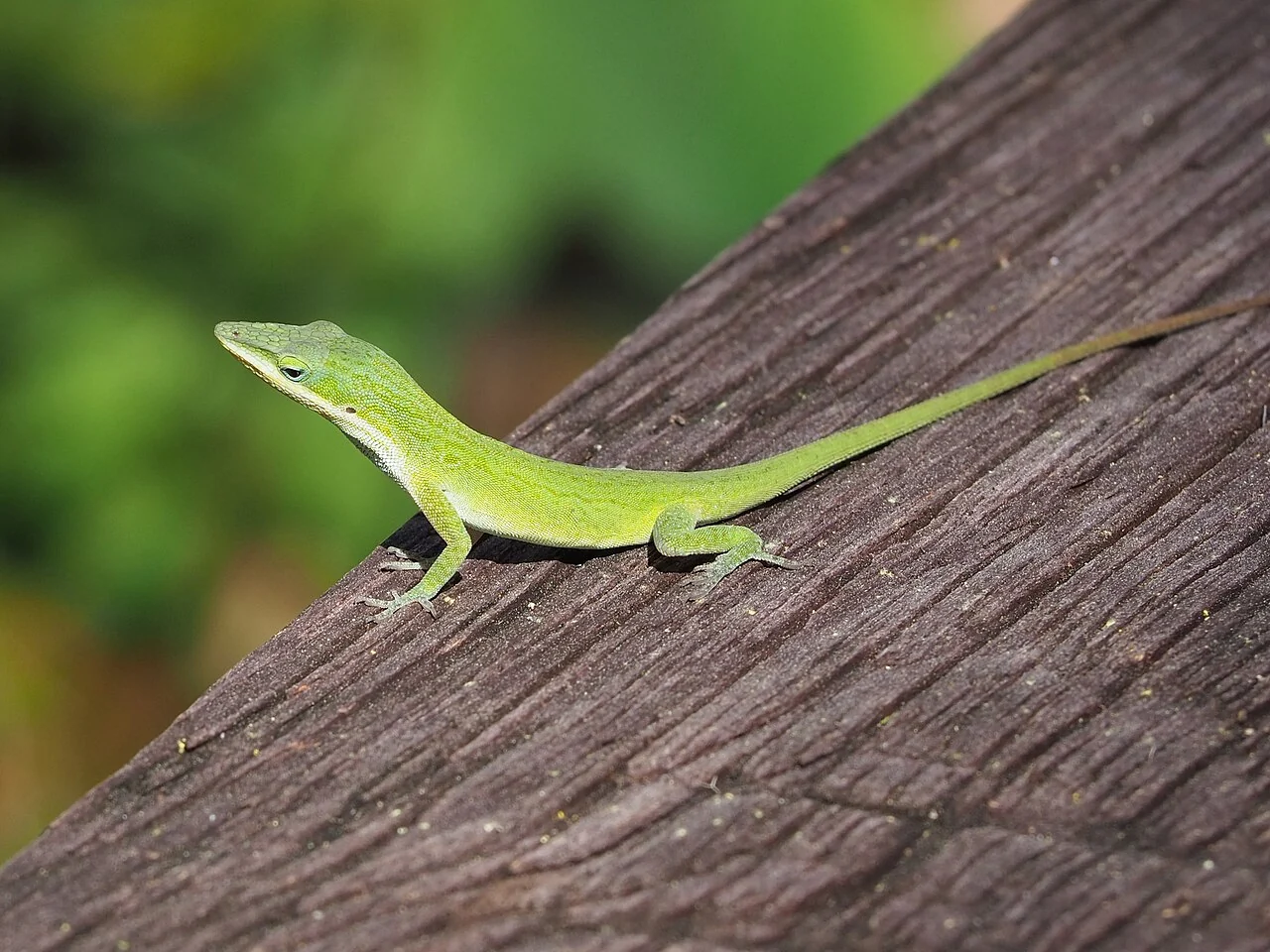
A small climber with clear signals
Native to the southeastern United States, green anoles hunt insects among branches and foliage during daylight hours. Males can extend a reddish throat fan, called a dewlap, while bobbing their heads. These displays are used in courtship and territorial encounters, giving an attentive observer plenty to notice.
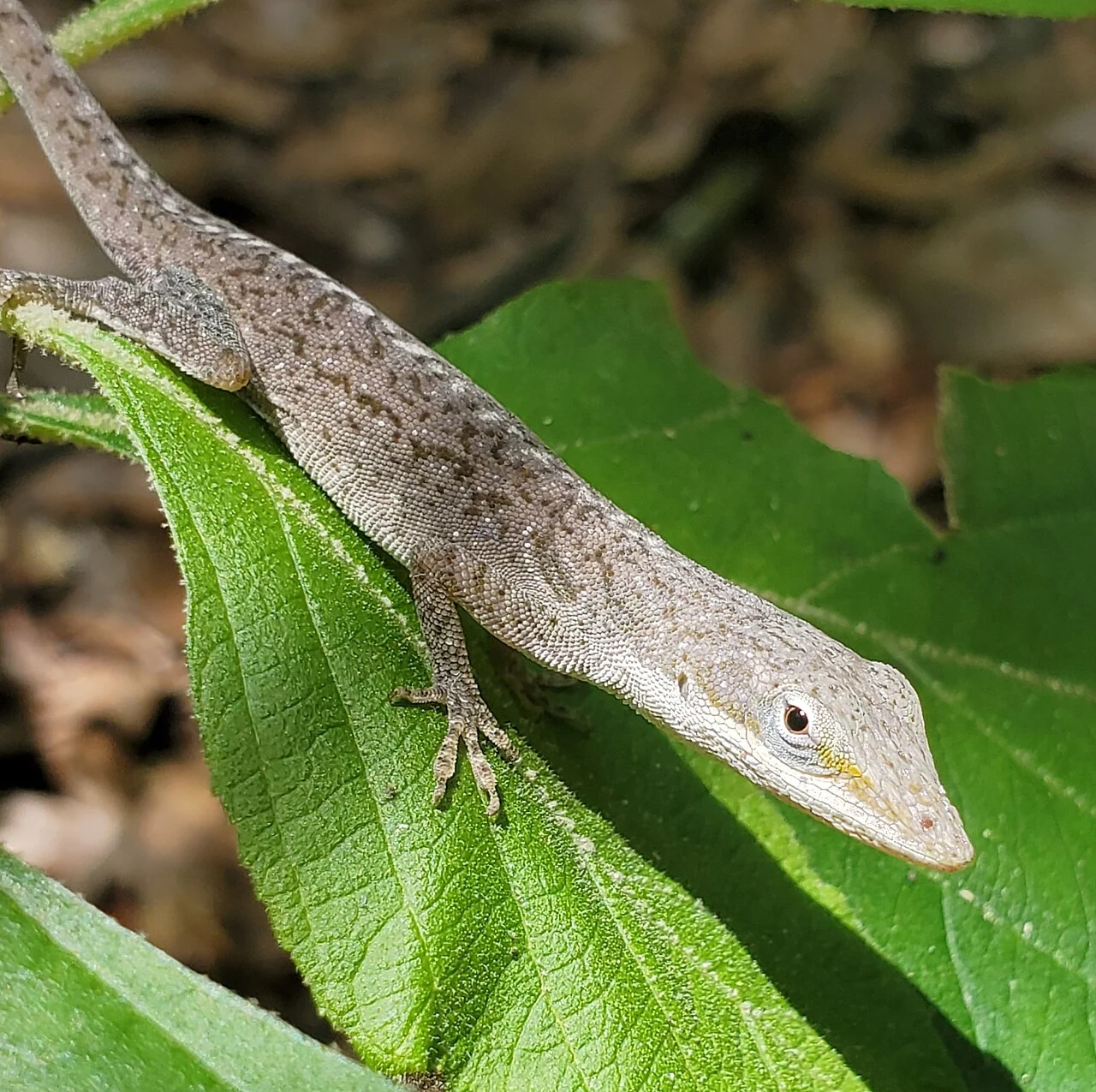
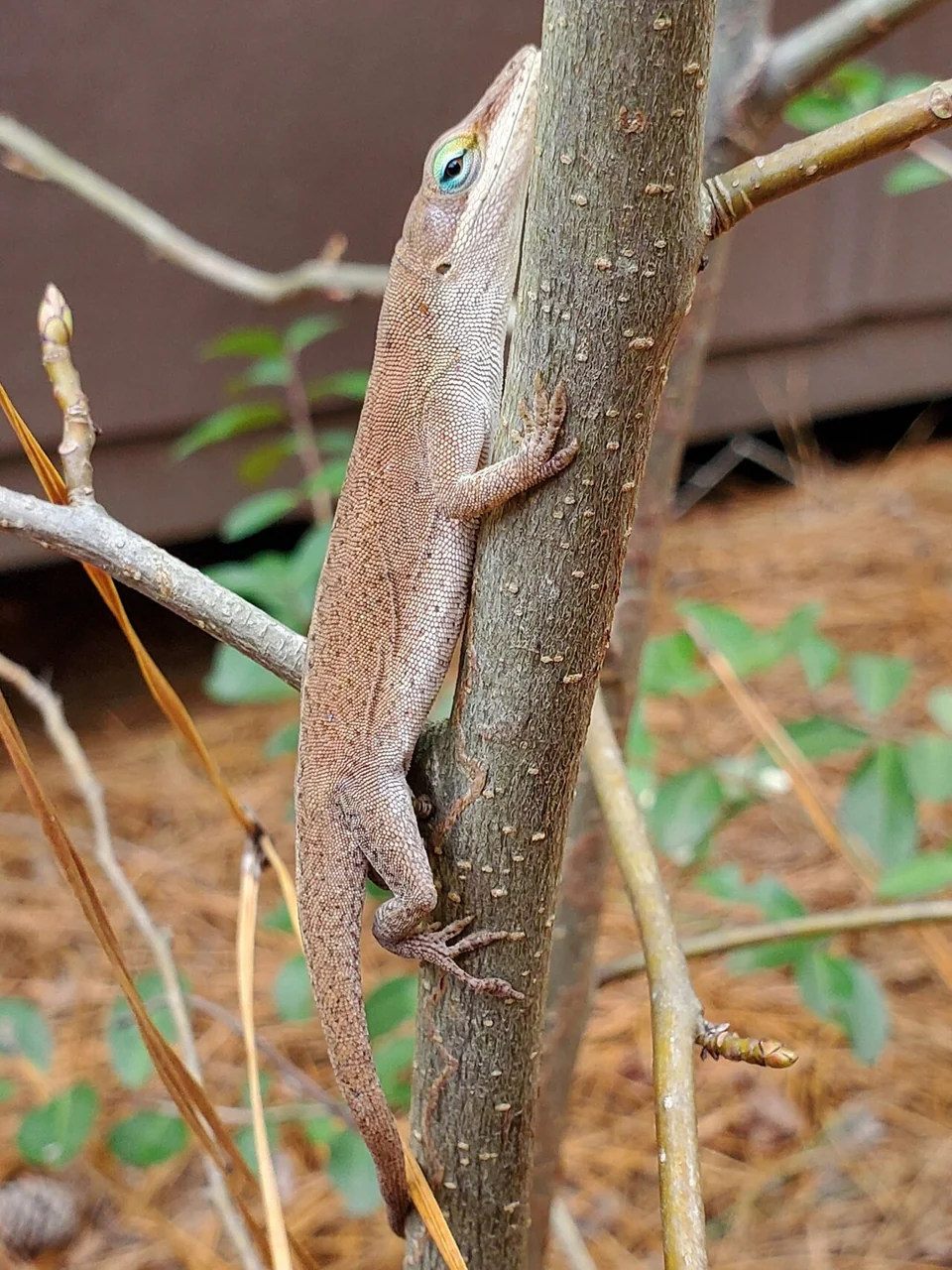
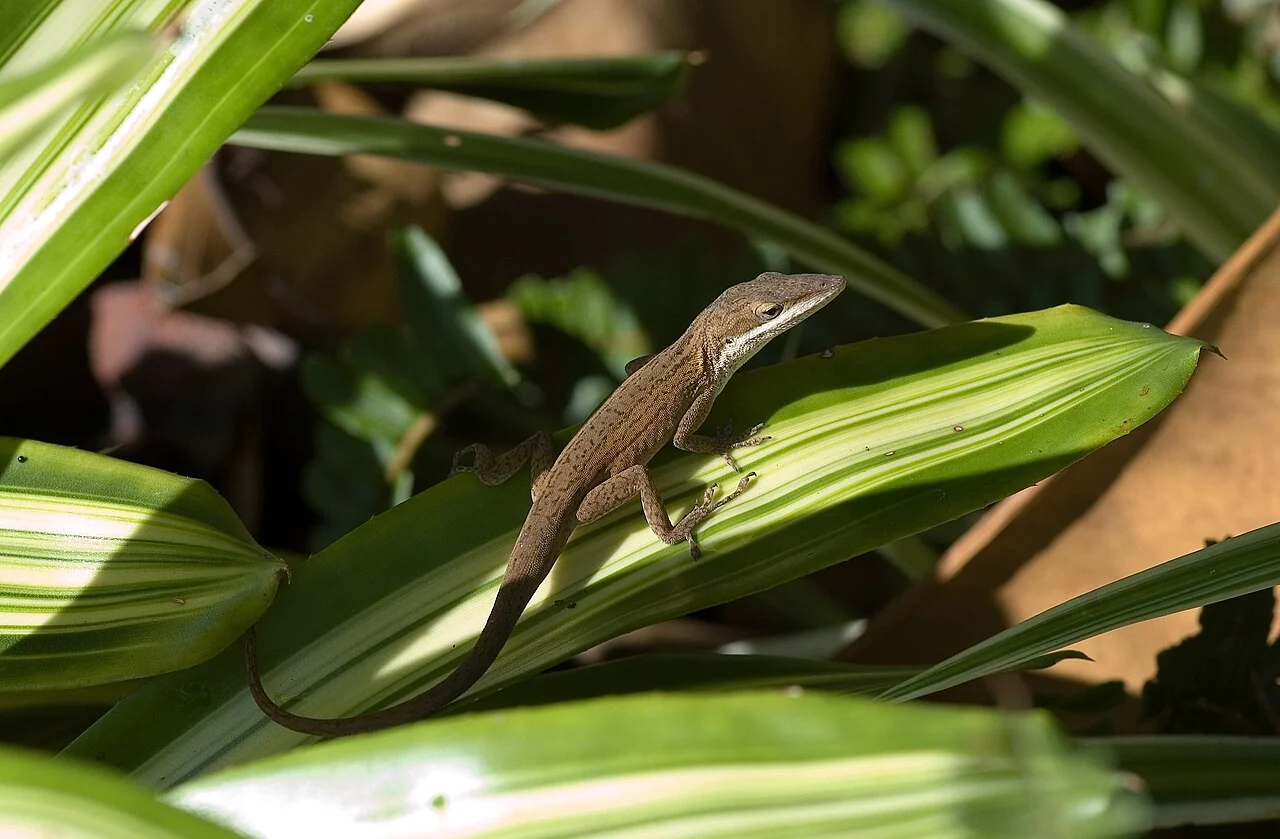
Their colour can change between green and brown. Temperature, activity and social excitement all play a part, so colour alone cannot establish whether an animal is healthy. Appetite, body condition and use of the enclosure add essential context. Adults reach roughly 15 to 20 centimetres including the tail. The Merck Veterinary Manual lists a captive lifespan of four to eight years, making reliable care during holidays part of the initial plan.
Sources for this section
- Anolis carolinensisAnimal Diversity Web, University of Michigan
- Average Life Span of Reptiles in CaptivityMerck Veterinary Manual
Make the height usable
Branches and plants should let the anole move through its enclosure at several heights. Horizontal perches, sloping connections and dense leaves create alternative routes. A sheltered resting place may sit beneath foliage halfway up the enclosure; hiding opportunities should extend beyond the floor. An opaque back and partly screened sides reduce exposure to movement outside.
ReptiFiles recommends at least 60 centimetres in length, depth and height for one adult, with larger accommodation encouraged. Extra height is especially useful when climbing routes occupy it. Ventilation, secure doors and escape-proof cable openings need equal attention. Keeping one anole avoids competition for food and perches. Males should not share an enclosure because territorial encounters can lead to persistent stress and injury.
Sources for this section
- Green Anole Care SheetReptiFiles, original specialist husbandry guidance
- Providing a Home for a ReptileMerck Veterinary Manual, Stephen J. Divers
- Pet Anole Care SheetPetMD, veterinary reviewed
Set warmth and UVB at perch level
Chicago Exotics recommends daytime temperatures of about 25 to 30°C across the living area and 32 to 35°C at the basking site, with nights around 21 to 24°C. Cooler retreats must remain available while the basking lamp is on. Thermometers at the warm perch and cooler end help confirm that the animal has a real choice. A compatible thermostat should regulate the heat source, with hot lamps and guards kept out of reach.
Suitable UVB lighting is needed alongside visible daylight. UVB helps the body produce vitamin D3, which supports calcium absorption from food. Lamp distance and exposure should be assessed at the animal’s back on its highest accessible perch. Ordinary glass blocks UVB and mesh reduces it. Dense foliage provides shade, while darkness at night allows an undisturbed day and night cycle.
Read more: Getting heat and UVB right in a reptile enclosure
Sources for this section
- Anole CareChicago Exotics Animal Hospital, Erica Mede CVT
- UVB Lighting for ReptilesLafeberVet, Frances M. Baines, 2024
Provide drinking droplets and monitor humidity
Anoles often drink by licking droplets from leaves. Misting or a clean drip system should provide these opportunities, with a shallow dish of fresh water available as an additional option. Runoff from a dripper needs a safe destination so it cannot fill a deep container that the lizard could enter.
Veterinary care sheets suggest relative humidity around 60 to 70 percent, measured with a hygrometer. It may rise briefly after misting. Airflow and surfaces drying between wet periods help avoid constantly saturated conditions. When arranging holiday care, noting the reading and time is useful: a value recorded immediately after spraying means something different from a measurement several hours later. The carer also needs to know how the dripper is cleaned and checked.
Read more: Humidity and shedding in reptiles
Sources for this section
- Anole CareChicago Exotics Animal Hospital, Erica Mede CVT
- Pet Anole Care SheetPetMD, veterinary reviewed
- Providing a Home for a ReptileMerck Veterinary Manual, Stephen J. Divers
Feed suitable insects well
Small crickets, roaches and other suitable feeder insects provide variety. They should come from a reliable feeder supplier and receive appropriate food themselves before being offered to the anole. This practice, known as gut loading, improves their nutritional value. PetMD’s veterinary feeding guide gives the distance between the anole’s eyes as a practical size limit for feeder insects. Uneaten insects should be removed.
Growing juveniles need food more frequently than adults. Quantity and timing should follow size, development and body condition. Calcium and vitamin supplements need to fit the complete feeding routine and UVB provision; several products with overlapping ingredients can create unnecessary excess. A written list of the actual feeders and supplements is particularly helpful when another person takes over. It should describe the agreed routine rather than leave them to choose between unfamiliar products.
Read more: Feeding reptiles: choose food for the species
Sources for this section
- Anole CareChicago Exotics Animal Hospital, Erica Mede CVT
- Nutrition in ReptilesMerck Veterinary Manual
- Pet Anole Care SheetPetMD, veterinary reviewed
Keep checks calm and act on changes
This lightly built lizard is best observed within its enclosure. For necessary transport, a small ventilated container with a secure lid should be ready beforehand. An anole should never be restrained by the tail, which it can shed. Repeatedly catching it makes routine care more difficult and can cause injury.
After shedding, the toes and tail tip should be free of constricting skin. Weight loss, declining appetite or abnormal droppings need veterinary assessment. Breathing difficulty, serious injury or marked weakness warrant immediate contact with a reptile-experienced practice. Thorough handwashing after touching the animal, feeder insects or enclosure helps protect people too. Cleaning tools should be stored separately from kitchen equipment and used away from food preparation areas.
Read more: Caring for reptiles as they grow and age
Sources for this section
- Pet Anole Care SheetPetMD, veterinary reviewed
- Reptiles and AmphibiansCenters for Disease Control and Prevention
Common questions
Does a brown anole mean it is sick?
Colour changes can reflect temperature and excitement. Changes in appetite, weight or behaviour provide additional reasons to review the enclosure and seek veterinary advice.
A closer look
Sources and photo credit
- Anolis carolinensisAnimal Diversity Web, University of Michigan
- Anole CareChicago Exotics Animal Hospital, Erica Mede CVT
- Pet Anole Care SheetPetMD, veterinary reviewed
- Green Anole Care SheetReptiFiles, original specialist husbandry guidance
- Providing a Home for a ReptileMerck Veterinary Manual, Stephen J. Divers
- Average Life Span of Reptiles in CaptivityMerck Veterinary Manual
- UVB Lighting for ReptilesLafeberVet, Frances M. Baines, 2024
- Nutrition in ReptilesMerck Veterinary Manual
- Reptiles and AmphibiansCenters for Disease Control and Prevention
Photo: Anolis carolinensis 112841746.jpg · Zygy · CC0 1.0. Resized and converted to WebP; scene unchanged.
Photo: Anolis carolinensis 208643368.jpg · lightbed · CC0 1.0. Resized and converted to WebP; scene unchanged.
Photo: Anolis carolinensis 249534907.jpg · Will Kuhn · CC BY 4.0. Resized and converted to WebP; scene unchanged.
Photo: Anolis carolinensis brown.jpg · Ianaré Sévi · CC BY-SA 3.0. Resized and converted to WebP; scene unchanged.