 fellfolio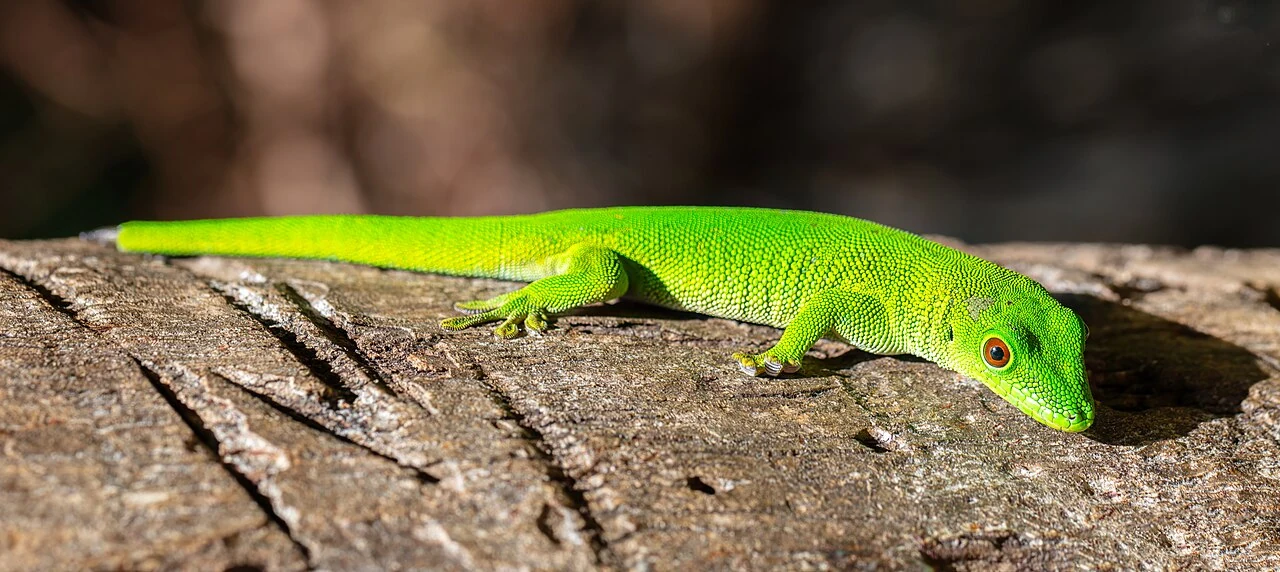
Life among branches and leaves
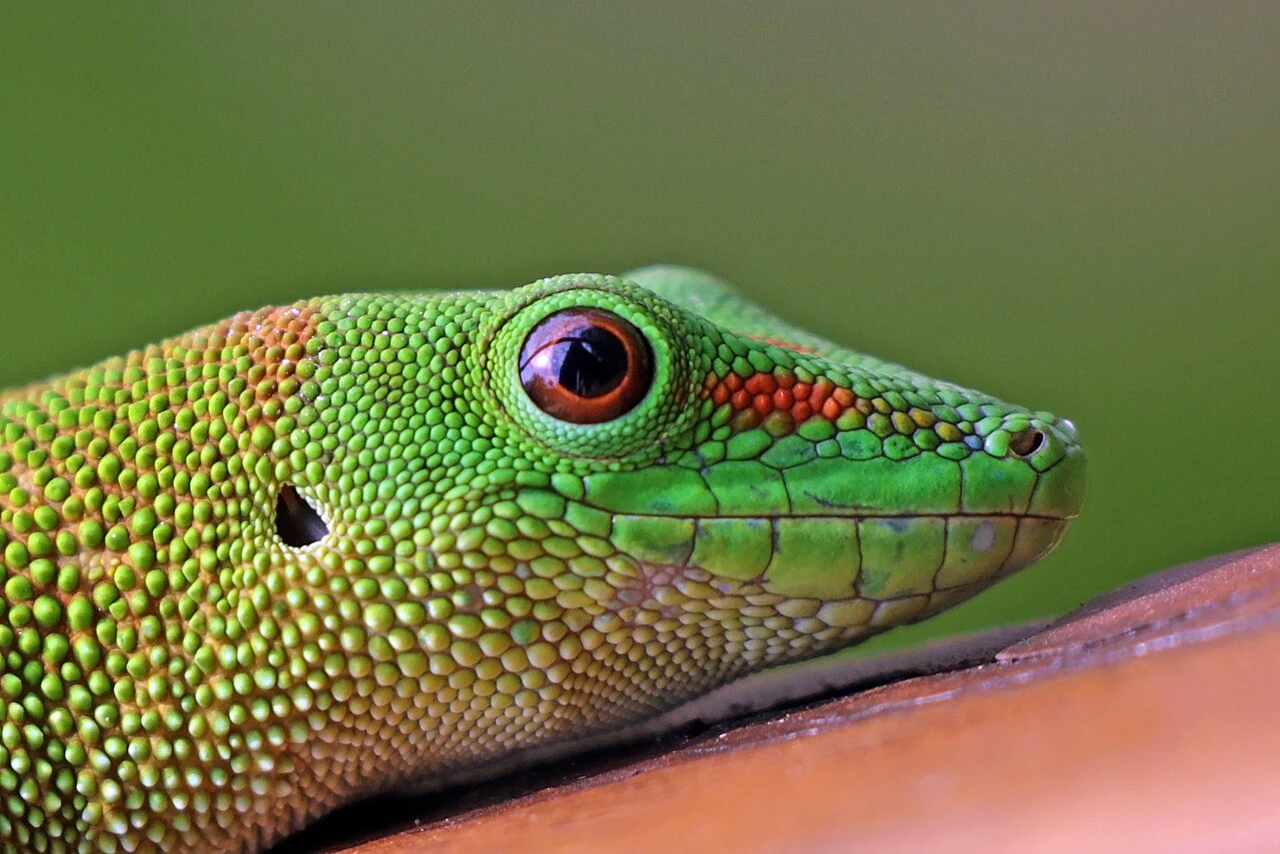
In its native range, Phelsuma grandis finds food and cover on trees and other vegetation. It also occurs in gardens and on buildings. The red line between the nostril and eye is a distinctive feature. Older books may call it Phelsuma madagascariensis grandis; it is now recognised as a separate species.
An enclosure can provide good opportunities to observe basking, climbing and insect hunting. A single colour change reveals little about health by itself. Watching its chosen resting places, food intake and body condition over several days provides a more useful picture.
Sources for this section
- Phelsuma grandisThe Reptile Database
- Contribution à l’étude des geckos diurnes du genre Phelsuma, entretien et pathologieGeoffrey Mellerin, École Nationale Vétérinaire de Toulouse, veterinary thesis 2011
- Giant Day Gecko Care SheetReptiFiles, Mariah Healey
Leave room to move after adding the furnishings
ReptiFiles recommends at least 60 × 60 × 120 cm for one adult, expressed as length, depth and height. Larger enclosures allow longer connected climbing routes. There should still be open stretches between branches where the gecko can hunt and move from one position to another.
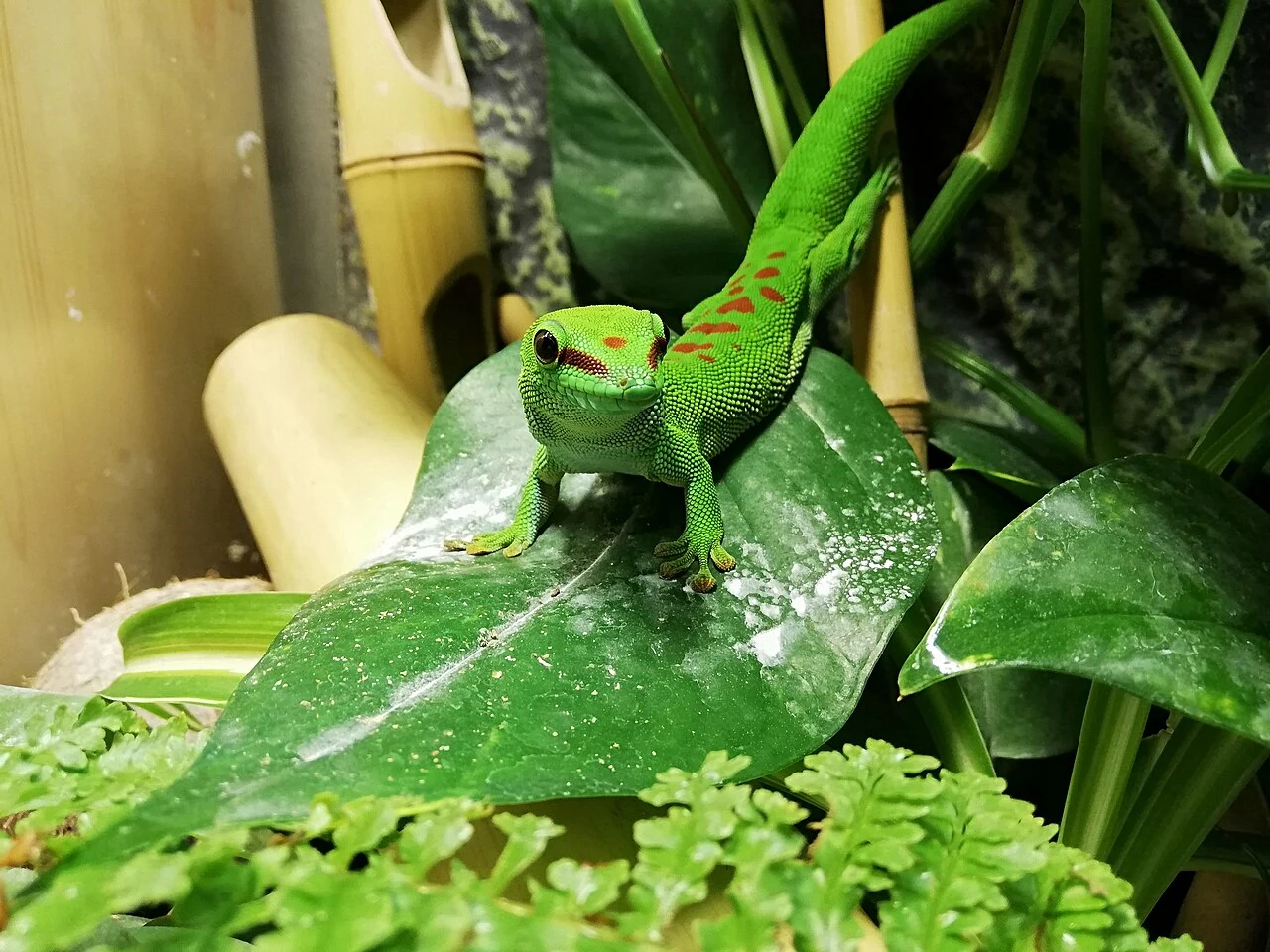
Secure upright and sloping branches connect different levels. Broad leaves, bamboo and cork add perches and cover. Heavy objects need stable fixing so they cannot fall when the gecko jumps. An animal resting behind a plant should also remain safely separated from any hot lamp.
Young geckos can escape through surprisingly narrow gaps. Door seals, mesh and cable openings should suit the animal’s size, and door tracks need checking before closing. A separate enclosure is a sensible plan for another gecko: animals of the same sex may fight, and even a male and female are not necessarily compatible.
Sources for this section
- Giant Day Gecko Care SheetReptiFiles, Mariah Healey
- General carePhelsuma Farm
Bright basking and cooler leafy shelter
ReptiFiles gives daytime guidance of 29 to 32 °C at the basking site and 25 to 28 °C in a cooler area, with 23 to 25 °C overnight. Heat should reach part of the enclosure while leaving cooler places available. Probes at accessible perches and a suitable control system help you adjust the equipment to the actual room conditions.
Giant day geckos need bright visible light and suitable UVB. UVB supports vitamin D3 production and calcium use. Lamp distance and mesh affect the exposure, while dense planting creates shaded retreats. Combined metal-halide lamps cannot simply be dimmed or switched by an ordinary thermostat; controls must suit the lamp technology.
ReptiFiles suggests about 40 to 75 percent relative humidity, with variation through the enclosure and over the day. Geckos drink droplets from leaves. After spraying, ventilation should allow surfaces to dry. A small dish of fresh water on an accessible raised ledge provides another drinking opportunity.
Read more: Getting heat and UVB right in a reptile enclosure · Humidity and shedding in reptiles
Sources for this section
- Giant Day Gecko Care SheetReptiFiles, Mariah Healey
- UVB Lighting for ReptilesFrances M. Baines, veterinary surgeon; LafeberVet
- General carePhelsuma Farm
Insects and suitable complete food
The wild diet includes insects and nectar. Suitable feeder insects and a nutritionally complete mix labelled for these geckos can provide the captive diet. Powders are mixed with water; plain fruit purée or baby food has a different nutrient balance. An elevated feeding dish can sit beside a familiar climbing route.
As a starting guide for animals up to about six months old, ReptiFiles suggests suitable insects daily and a complete gecko mix every other day. From about six months, its guide is two or three insect meals a week and the complete mix once a week. Portions should be checked against growth and body condition. Appropriately sized crickets, roaches and locusts offer variety.
Feeder insects themselves need nutritious food and water beforehand. Calcium and any vitamin supplements must fit both the complete food and UVB provision. A reptile veterinarian can review that combination. Prepared food spoils quickly in a warm enclosure and should be removed by the following day.
Read more: Feeding reptiles: choose food for the species
Sources for this section
- Giant Day Gecko Care SheetReptiFiles, Mariah Healey
- Contribution à l’étude des geckos diurnes du genre Phelsuma, entretien et pathologieGeoffrey Mellerin, École Nationale Vétérinaire de Toulouse, veterinary thesis 2011
- Providing a Home for a ReptileMerck Veterinary Manual
- Simple Things Your Reptile Might Be MissingUniversity of Illinois College of Veterinary Medicine
Routine care without hurried catching
Day gecko skin can tear away if pulled or gripped roughly, and the animal may also drop its tail. For cleaning or a veterinary trip, it helps to prepare a transport container that the gecko can enter from a branch or approach for food. Letting it roam freely around a room makes a safe transfer much harder.
Locate the gecko before opening the enclosure. Small care tasks can often be completed while it remains on its resting perch. Droppings and soiled patches need regular removal. Dedicated enclosure-cleaning equipment and handwashing afterwards help keep germs away from food preparation and other animals.
Sources for this section
- Contribution à l’étude des geckos diurnes du genre Phelsuma, entretien et pathologieGeoffrey Mellerin, École Nationale Vétérinaire de Toulouse, veterinary thesis 2011
- General carePhelsuma Farm
- Reptiles and AmphibiansCenters for Disease Control and Prevention
Recognising changes early
After shedding, toes and the tail tip should be free of tight bands of old skin. A reptile veterinarian should assess persistent retained skin and explain the next step. Pulling it away at home is particularly risky with this delicate species.
Weight loss, visible wounds, swollen limbs or a lasting change in appetite also warrant assessment. Breathing difficulty, severe weakness or a serious injury needs immediate veterinary contact. Recent photographs, details of food and supplements, and readings from the places the gecko uses will help at the appointment.
Sources for this section
- Contribution à l’étude des geckos diurnes du genre Phelsuma, entretien et pathologieGeoffrey Mellerin, École Nationale Vétérinaire de Toulouse, veterinary thesis 2011
- Disorders and Diseases of ReptilesMerck Veterinary Manual
- Simple Things Your Reptile Might Be MissingUniversity of Illinois College of Veterinary Medicine
Common questions
Can a giant day gecko become tame?
Some become familiar with their carers and approach for food. That does not make gripping them safe. Their delicate skin makes observation within the enclosure especially suitable.
Does it need a companion?
A giant day gecko can be kept singly. Shared housing can lead to fighting and injuries, so another animal should have a separate prepared enclosure.
A closer look
Sources and photo credit
- Phelsuma grandisThe Reptile Database
- Giant Day Gecko Care SheetReptiFiles, Mariah Healey
- Contribution à l’étude des geckos diurnes du genre Phelsuma, entretien et pathologieGeoffrey Mellerin, École Nationale Vétérinaire de Toulouse, veterinary thesis 2011
- General carePhelsuma Farm
- UVB Lighting for ReptilesFrances M. Baines, veterinary surgeon; LafeberVet
- Simple Things Your Reptile Might Be MissingUniversity of Illinois College of Veterinary Medicine
- Disorders and Diseases of ReptilesMerck Veterinary Manual
- Providing a Home for a ReptileMerck Veterinary Manual
- Reptiles and AmphibiansCenters for Disease Control and Prevention
Photo: Gecko diurno grande de Madagascar (Phelsuma grandis), Nosy Komba, Madagascar, 2025-09-12, DD 30.jpg · Diego Delso · CC BY-SA 4.0. Resized for the web and converted to WebP; image content unchanged.
Photo: Madagascar giant day gecko (Phelsuma grandis) head Nosy Komba.jpg · Charles J. Sharp · CC BY-SA 4.0. Resized for the web and converted to WebP; image content unchanged.
Photo: Phelsuma grandis in her enclosure.jpg · Marek Hlavinka · CC BY-SA 4.0. Resized for the web and converted to WebP; image content unchanged.
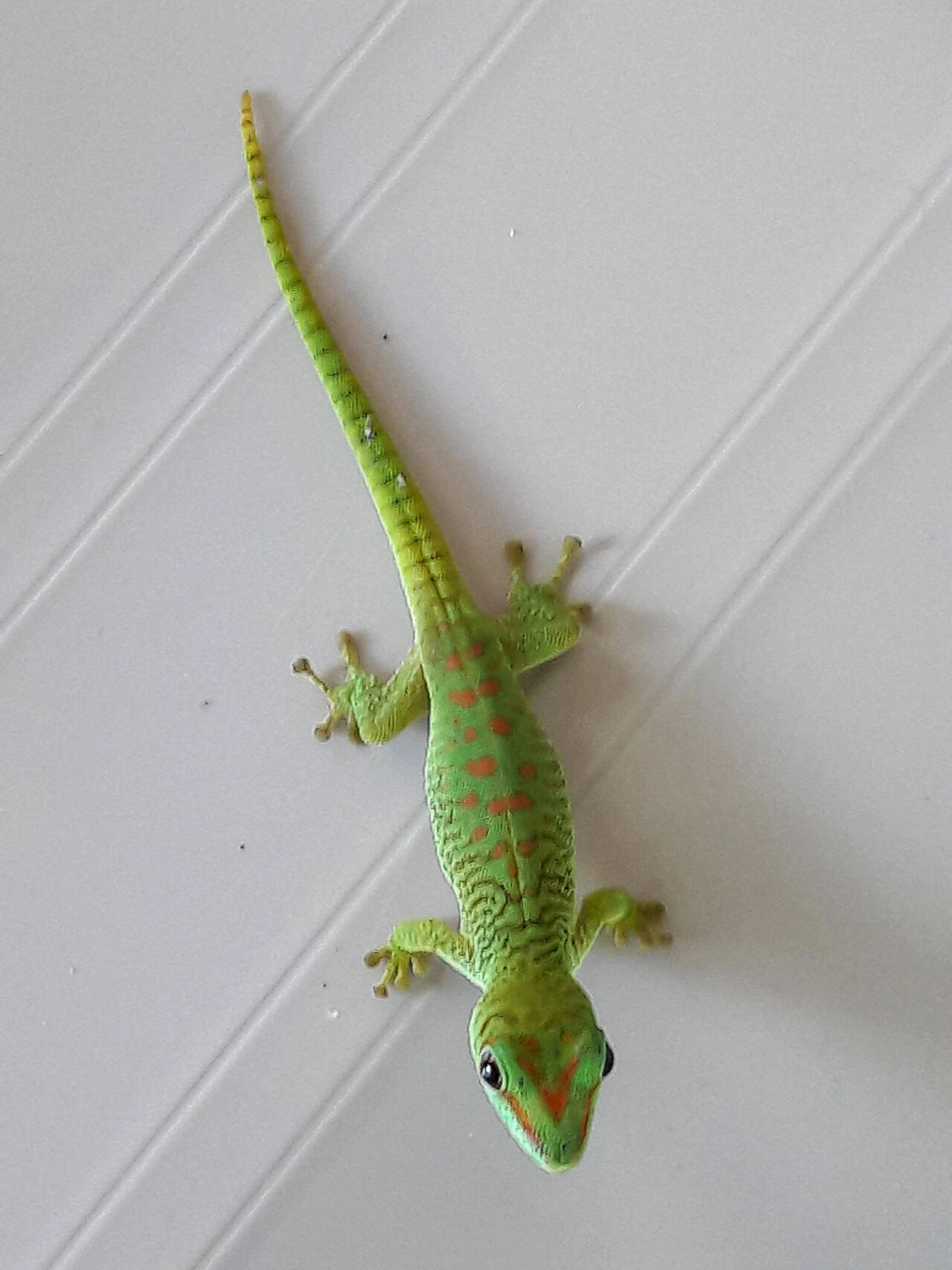
Photo: Phelsuma grandis juvenile.jpg · Phelsumagrandis · CC BY-SA 4.0. Resized for the web and converted to WebP; image content unchanged.
,_Nosy_Komba,_Madagascar,_2025-09-12,_DD_30.jpg)
_head_Nosy_Komba.jpg)

