 fellfolio
Height with usable climbing routes
ReptiFiles recommends an adult enclosure of at least approximately 46 × 46 × 91 cm, expressed as length, depth and height. This is a husbandry recommendation. A larger enclosure gives you more room for branches, shelters and distinct temperature zones. Useful height comes from a network of stable resting and climbing surfaces that the gecko can reach throughout the enclosure.
Gargoyle geckos grip smooth surfaces less effectively than some other geckos. Horizontal and sloping branches, textured cork and dense foliage give them reliable support. An elevated cork tube can provide daytime shelter. Fittings need to hold when the animal jumps; exposed wire ends and adhesive surfaces should be inaccessible.
Keeping one gecko is a sensible household arrangement. Females can also injure one another, and a size difference creates additional danger. A second animal therefore needs its own fully equipped enclosure.
Sources for this section
- Gargoyle Gecko Terrarium SizeReptiFiles, Mariah Healey
- Decorating Your Gargoyle Gecko TerrariumReptiFiles, Mariah Healey
A warm perch, a cool retreat and changing humidity
ReptiFiles suggests a small warm perch at about 29 °C and a cooler retreat around 22 to 23 °C. A suitable thermostat and a guard or external mounting should control heat and prevent contact burns. Temperatures need checking where the animal sits and in its cooler retreat. A thermometer next to a lamp cannot tell you whether a particular branch is safe.
Lighting should be off at night. Air temperatures should not fall below roughly 18 °C or remain above 30 °C. An upstairs room may overheat during summer even with every heater switched off, so the warmest room temperatures are worth checking before deciding where the enclosure will stand.
ReptiFiles gives 50 to 70 percent relative humidity as a general guide. Evening misting creates a temporary rise and drinking droplets. Before another substantial misting, humidity should be able to fall towards 50 percent. Effective ventilation allows leaves and substrate surfaces to dry. A shallow dish of fresh water should remain available alongside the droplets.
Read more: Humidity and shedding in reptiles
Sources for this section
- Gargoyle Gecko Humidity and TemperaturesReptiFiles, Mariah Healey
Daylight with sheltered resting places
A nocturnal gecko still experiences daylight while resting among leaves. Suitable low-level UVB over part of the enclosure gives it this opportunity, with dense foliage and enclosed hides providing full shade. UVB supports vitamin D3 production, which helps the body use calcium.
Lamp choice depends on distance, the reflector and the mesh between lamp and animal. Ordinary glass blocks most UVB. A tested arrangement over suitable mesh, checked at an accessible perch, is more useful than choosing a bulb by its packaging alone. The ultraviolet index, or UVI, describes the exposure at that location. Our lighting guide explains how UVB, visible light and heating work together.
Read more: Getting heat and UVB right in a reptile enclosure
Sources for this section
- UVB Lighting for ReptilesFrances M. Baines, veterinary surgeon; LafeberVet
- Gargoyle Gecko Humidity and TemperaturesReptiFiles, Mariah Healey
Food for an elevated feeding ledge
Complete powdered diets for fruit-eating geckos are mixed with water. The product needs to be labelled as a nutritionally complete food suitable for this species. Plain fruit purée and baby food have a different composition and cannot meet the same nutritional requirements. An accessible raised ledge makes a useful feeding position. Prepared leftovers should be removed by the next day and the dish cleaned.
As a starting routine, ReptiFiles recommends complete food every other day for adults, with suitable insects about twice a week. For hatchlings and growing juveniles, the same source suggests complete food daily and insects every other day. Weight and body condition help you adjust the amount actually offered. Small crickets or roaches are examples of suitable prey; insect width should not exceed the space between the gecko’s eyes.
Feeder insects need appropriate food and water before being offered. A planned calcium supplement helps correct their low calcium content. Vitamin supplements need to fit the complete diet and UVB provision. Product instructions and a reptile veterinarian can help prevent overlapping or excessive additions.
Read more: Feeding reptiles: choose food for the species
Sources for this section
- Feeding Your Gargoyle GeckoReptiFiles, Mariah Healey
Observation and necessary transfers
A newly arrived gecko should have time to eat regularly and use its shelters. Calm movements during feeding and cleaning allow it to become familiar with your presence. For a necessary transfer, a small secure transport container reached from a branch may work well.
If it steps onto a hand, its body should remain supported. Keep contact low over a soft surface because even a quiet animal may suddenly jump. A gecko should never be restrained by its tail: stress can trigger tail loss. This species can grow a replacement tail, but avoiding the injury is still important.
Sources for this section
- Gargoyle Gecko Handling TipsReptiFiles, Mariah Healey
- Gargoyle Gecko Care GuideReptiFiles, Mariah Healey
Watching weight, feet and appetite
Regular weights and short feeding notes show whether a juvenile is growing or an adult is gradually losing weight. After shedding, check the toes. Skin left around them can tighten and should be assessed by a reptile veterinarian. Pulling at attached skin can injure delicate toes.
Persistent weight loss, swollen limbs or altered droppings also warrant examination. Breathing difficulty, a serious injury or marked weakness calls for immediate veterinary contact. Enclosure photographs, measured temperatures and a record of the foods offered give the clinician useful detail.
Sources for this section
- Gargoyle Gecko HealthReptiFiles, Mariah Healey
- Routine Health Care of ReptilesMerck Veterinary Manual
- Disorders and Diseases of ReptilesMerck Veterinary Manual
Common questions
Is a gargoyle gecko the same as a crested gecko?
No. Both originate in New Caledonia, but they belong to different genera. Gargoyle geckos have noticeable bumps at the back of the head and, unlike crested geckos, can regrow a lost tail.
Should I take it out to look at during the day?
Daytime is usually spent resting under cover. Evening observation lets you watch climbing and feeding without disturbing sleep. Taking it out is mainly useful for necessary checks or a transfer.
A closer look
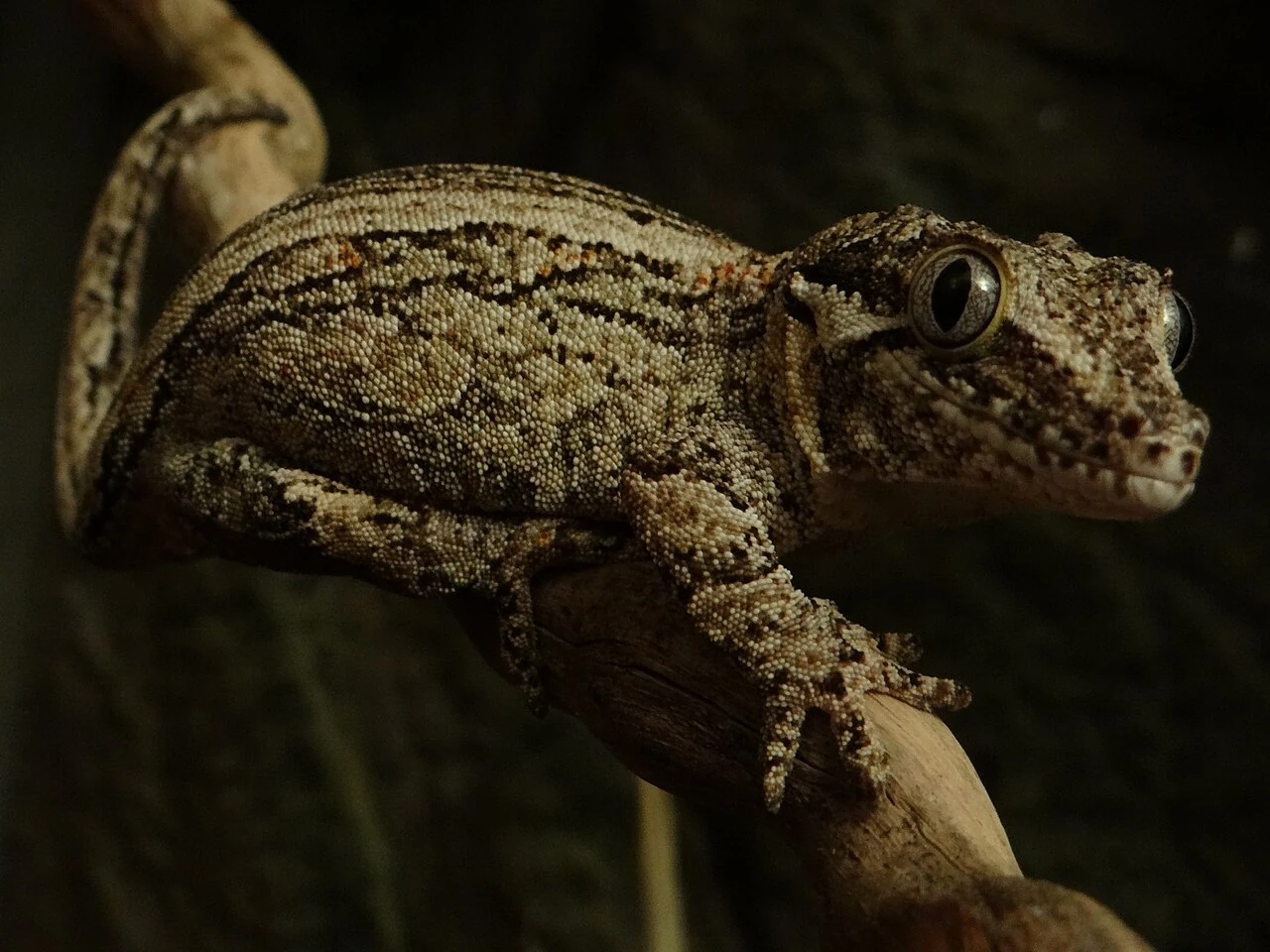
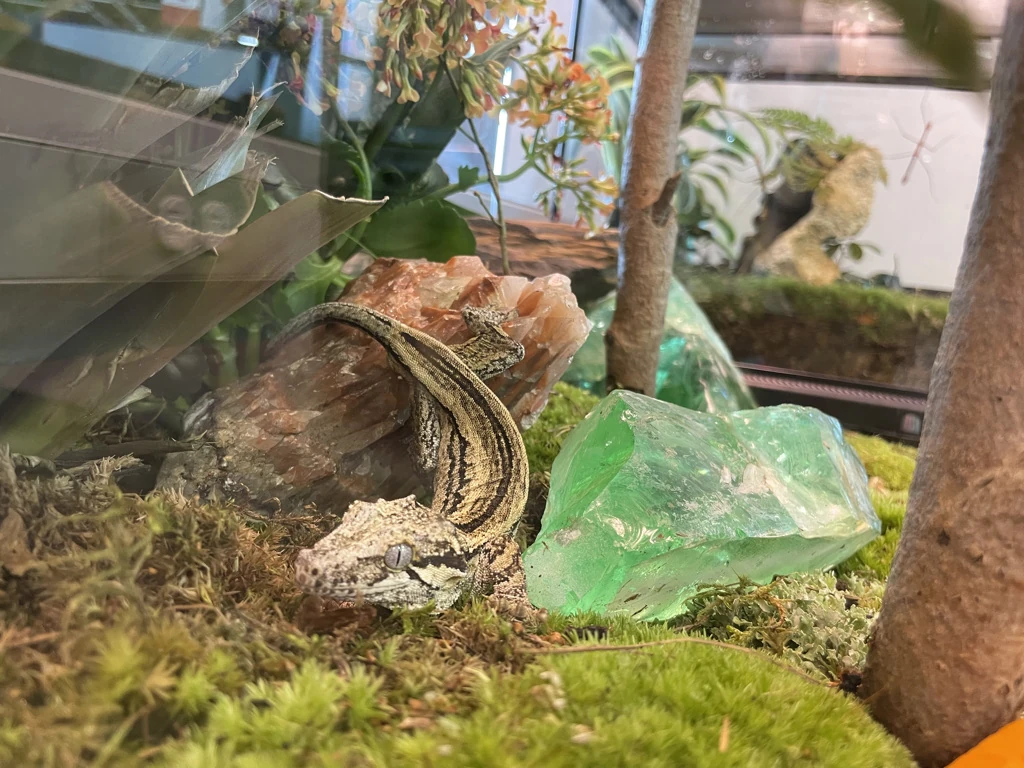
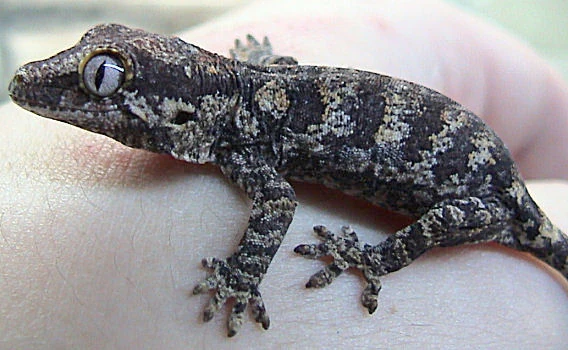
Sources and photo credit
- Gargoyle Gecko Care GuideReptiFiles, Mariah Healey
- Gargoyle Gecko Terrarium SizeReptiFiles, Mariah Healey
- Decorating Your Gargoyle Gecko TerrariumReptiFiles, Mariah Healey
- Gargoyle Gecko Humidity and TemperaturesReptiFiles, Mariah Healey
- Feeding Your Gargoyle GeckoReptiFiles, Mariah Healey
- Gargoyle Gecko Handling TipsReptiFiles, Mariah Healey
- Gargoyle Gecko HealthReptiFiles, Mariah Healey
- Routine Health Care of ReptilesMerck Veterinary Manual
- UVB Lighting for ReptilesFrances M. Baines, veterinary surgeon; LafeberVet
- Rhacodactylus auriculatusThe Reptile Database
- Disorders and Diseases of ReptilesMerck Veterinary Manual
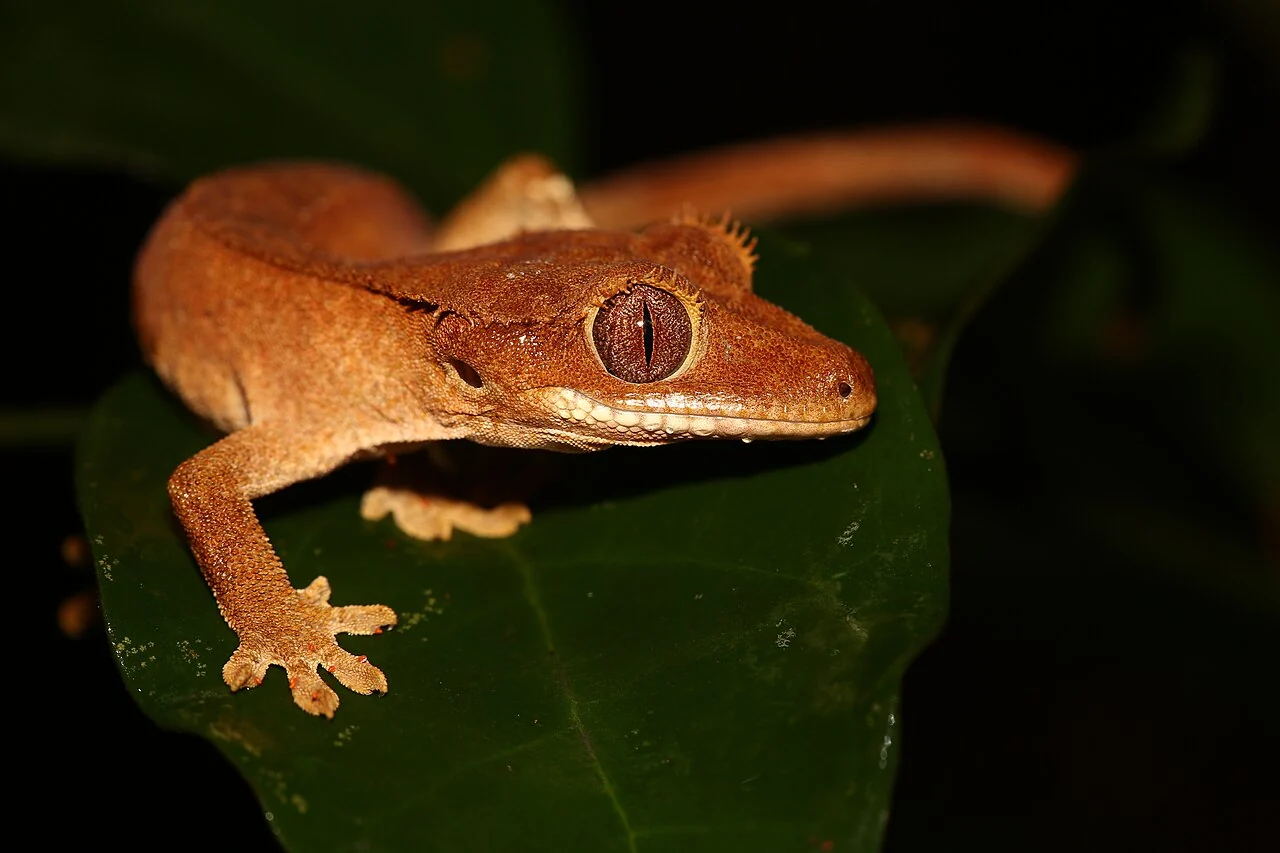
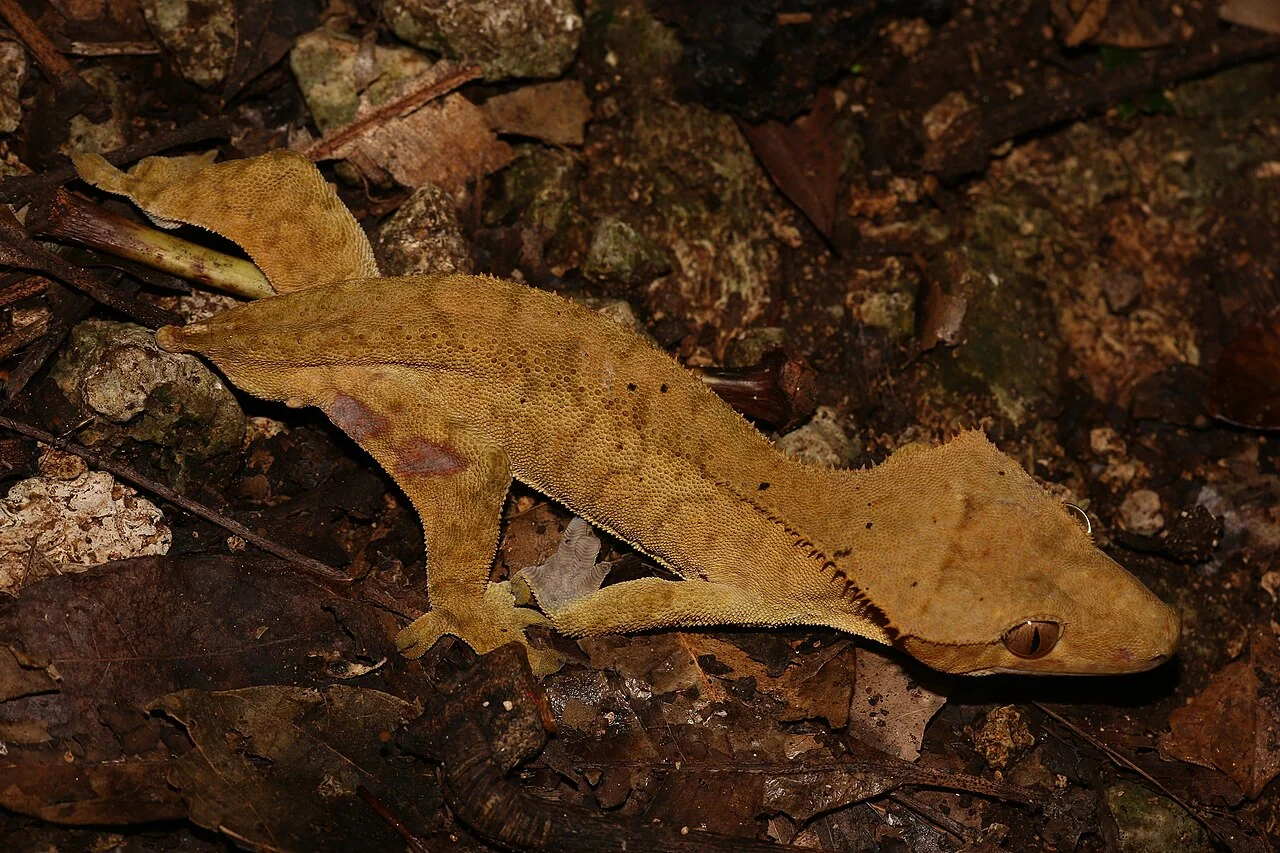
Photo: Gargoylegecko 2017.png · Generish · CC BY-SA 4.0. Resized for the web and converted to WebP; image content unchanged.
Photo: Rhacodactylus auriculatus 14.11.2013.JPG · Eveha · CC BY-SA 3.0. Resized for the web and converted to WebP; image content unchanged.
Photo: Gargoyle gecko (Rhacodactylus auriculatus), Entomica 1.jpg · Fungus Guy · CC BY-SA 4.0. Resized for the web and converted to WebP; image content unchanged.
Photo: Rhacodactylus auriculatus2.jpg · LA Dawson · CC BY-SA 2.5. Resized for the web and converted to WebP; image content unchanged.


,_Entomica_1.jpg)
