fellfolio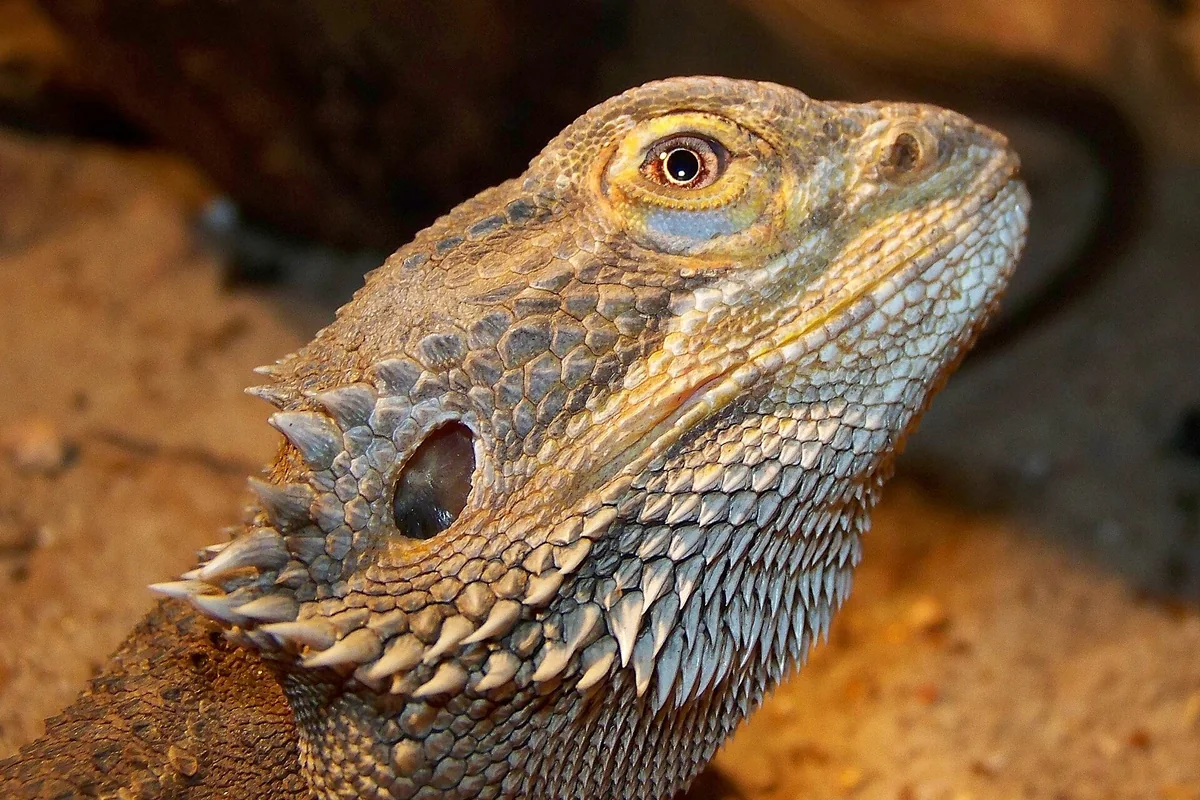
Room to move and secure places to hide
An adult central bearded dragon can be about 45 centimetres long including the tail. The RSPCA recommends at least 120 centimetres in length and 60 centimetres in width and height for one animal. More floor space allows longer routes, varied resting places and a better separation of hot and cool zones. The vivarium needs good ventilation, secure doors and surfaces that can be cleaned.
Stable rocks and fixed branches offer raised positions and ways to explore. Hides at the warm and cool ends let the lizard choose its location without remaining exposed. A diggable area is useful even if most of the floor uses textured tiles. Furniture must not tip over or create a route to touch a lamp.
Measure both the basking spot and cool end
Bearded dragons use external warmth to regulate body temperature and digestion. The RSPCA describes a bright basking area of 38 to 42°C and a shaded cool end of 22 to 26°C. These are different measurement points, not an average for the enclosure. A thermostat controls the heater; digital probes and an infrared thermometer show the temperatures where the animal actually sits.
The thermostat sensor needs the position specified for the heater, and the lamp needs a guard against contact. A radiator or sunny window beside the vivarium can make temperatures drift unexpectedly. Nights should be dark. If the room cools too far, the RSPCA describes controlled heat that emits no light rather than a lamp that burns through the night.
Link UVB, calcium and accessible shade
UVB enables the dragon to produce vitamin D3, which helps its body use calcium for bones and other functions. A bright room or sunlight through a window cannot do this job: glass blocks much of the UVB. A suitable UVB tube belongs near the warm basking area, with a genuinely shaded area at the other end.
For a typical bearded dragon, the RSPCA describes a UV Index of 3 to 5 at the basking position, falling to zero in shade. The level at the animal changes with lamp distance, reflector, mesh and age. The percentage printed on a box alone does not establish the correct exposure. A suitable UV meter and the maker's instructions help with fitting and replacement. Particularly light-sensitive colour morphs need an adapted plan.
RSPCA · University of Illinois College of Veterinary Medicine
Balance greens and feeder insects as the dragon grows
Bearded dragons are omnivores. Young animals eat relatively more suitable insects; varied greens become more important as they mature. The RSPCA lists watercress, chicory, rocket and dandelion leaves among possible greens. Wild plants need accurate identification and must be free from chemical treatments. Food should be fresh, with leftovers removed.
Crickets, locusts and other suitable invertebrates should not be wider than the dragon's mouth. Feeder insects need proper care themselves; nourishing them before they are offered improves their value as food. Insects left loose in the enclosure can bite. Calcium and vitamin powders should follow product directions and account for the UVB setup, because too much vitamin D3 is possible. A shallow bowl of clean water should remain available.
Give grip, a place to dig and space alone
Suitable substrate provides footing and can allow digging. For healthy adults, the RSPCA describes appropriate sand-and-soil mixes or textured stone tiles. If most of the floor is solid, a separate digging box can meet that need. Calcium sand, wood chips and large swallowable pieces are unsuitable. Poor heat can also worsen digestive problems associated with ingested substrate.
Bearded dragons are territorial. Animals housed together may compete for food and basking spots, bite or seriously injure one another. A solo enclosure does not deprive a dragon of companionship. Varied routes, secure elevated spots and the option to hide are more valuable. When handling is necessary, support the body and all four legs from below; stop if the animal backs away.
Check daily before small problems grow
A brief daily check of heat, lighting, water, appetite, droppings and movement can reveal a change sooner than an occasional long inspection. Waste should be removed promptly, and the enclosure and equipment cleaned regularly with reptile-safe products. Hands should be washed after contact with the animal or habitat because reptiles can carry Salmonella.
Weakness, breathing changes, swelling, difficulty moving or a marked drop in appetite need veterinary assessment. Inadequate UVB or calcium can contribute to bone disease. Identify a reptile-experienced vet before bringing a dragon home. A written note of lamp type, measurement points, feeding and vet contacts is especially useful when another person provides care.
RSPCA · University of Illinois College of Veterinary Medicine
Common questions
Is daylight at a window enough?
No. Window glass blocks much of the UVB, while direct sun may overheat the vivarium. A suitable UVB lamp and controlled heat are needed.
Does a bearded dragon need another dragon?
No. They are territorial, and another dragon may cause competition or injury. A well-furnished solo enclosure is a better fit.
Sources and photo credit
- How to care for your bearded dragonRSPCA
- Places for reptiles to hideRSPCA
- Providing a Home for a ReptileMerck Veterinary Manual
- Simple Things Your Reptile Might Be MissingUniversity of Illinois College of Veterinary Medicine
Photo: Pogona vitticeps · William Kreijkes · CC BY-SA 3.0. Cropped, resized and converted to WebP