fellfolio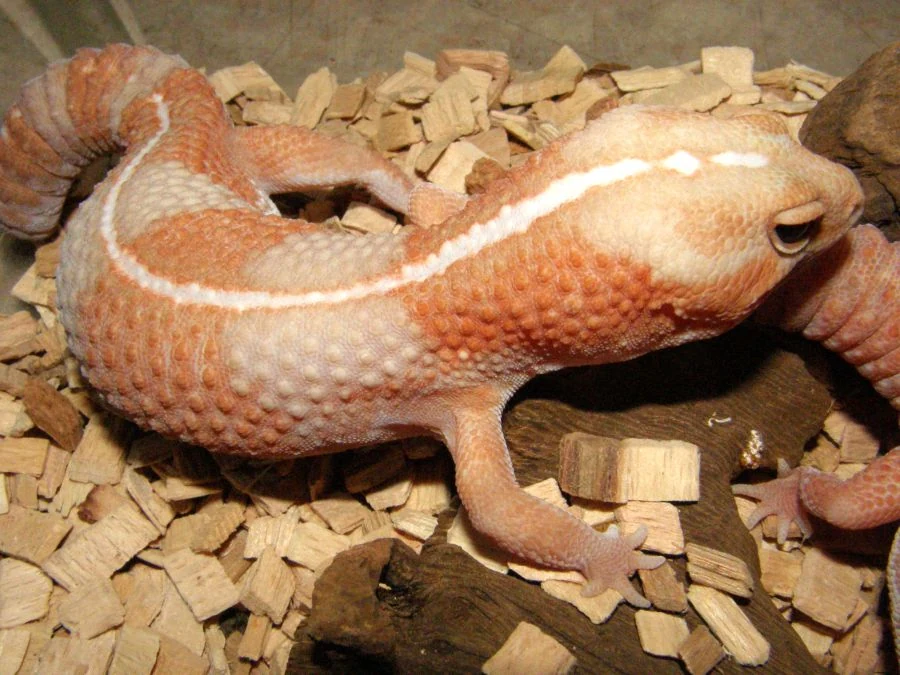
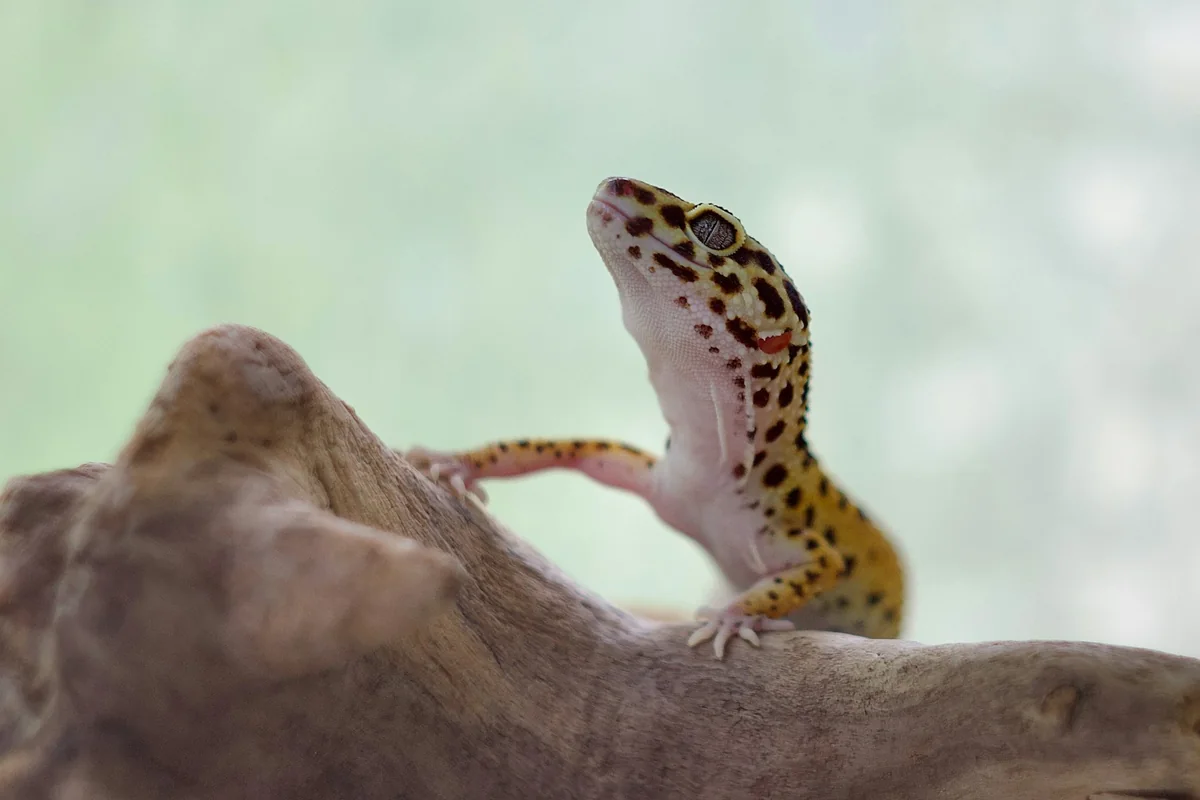
A separate species from the leopard gecko
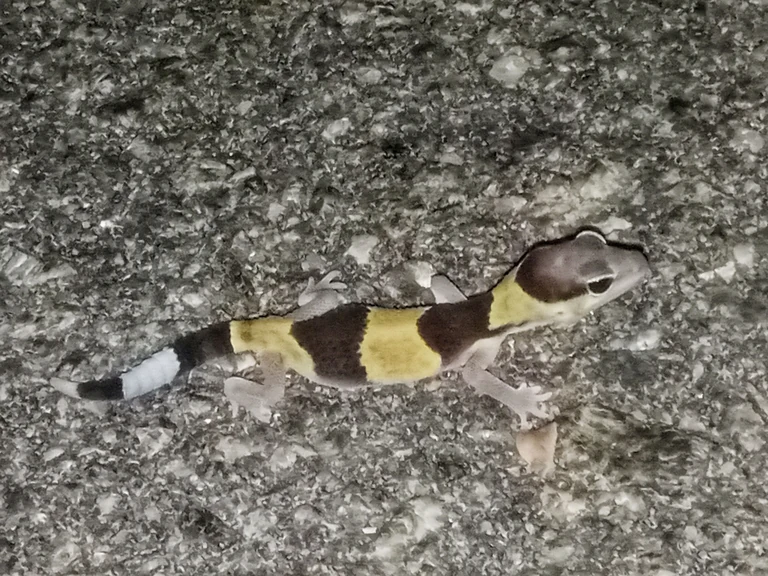
The provenance record should identify Hemitheconyx caudicinctus. The leopard gecko is Eublepharis macularius. Although the two species look alike, they come from different habitats and need different care. Fat-tailed geckos have movable eyelids and clawed toes. These help them travel over the ground and low structures. They do not have the adhesive toe pads that allow some other geckos to climb smooth walls.
The tail stores fat. Following changes in its appearance can be useful, but is not a substitute for a health examination. The species can shed its tail when threatened. A regrown tail may look different. Never hold a gecko by its tail. For necessary checks, a low hand supporting it from underneath is safer than gripping its body.
Build an enclosure with usable routes
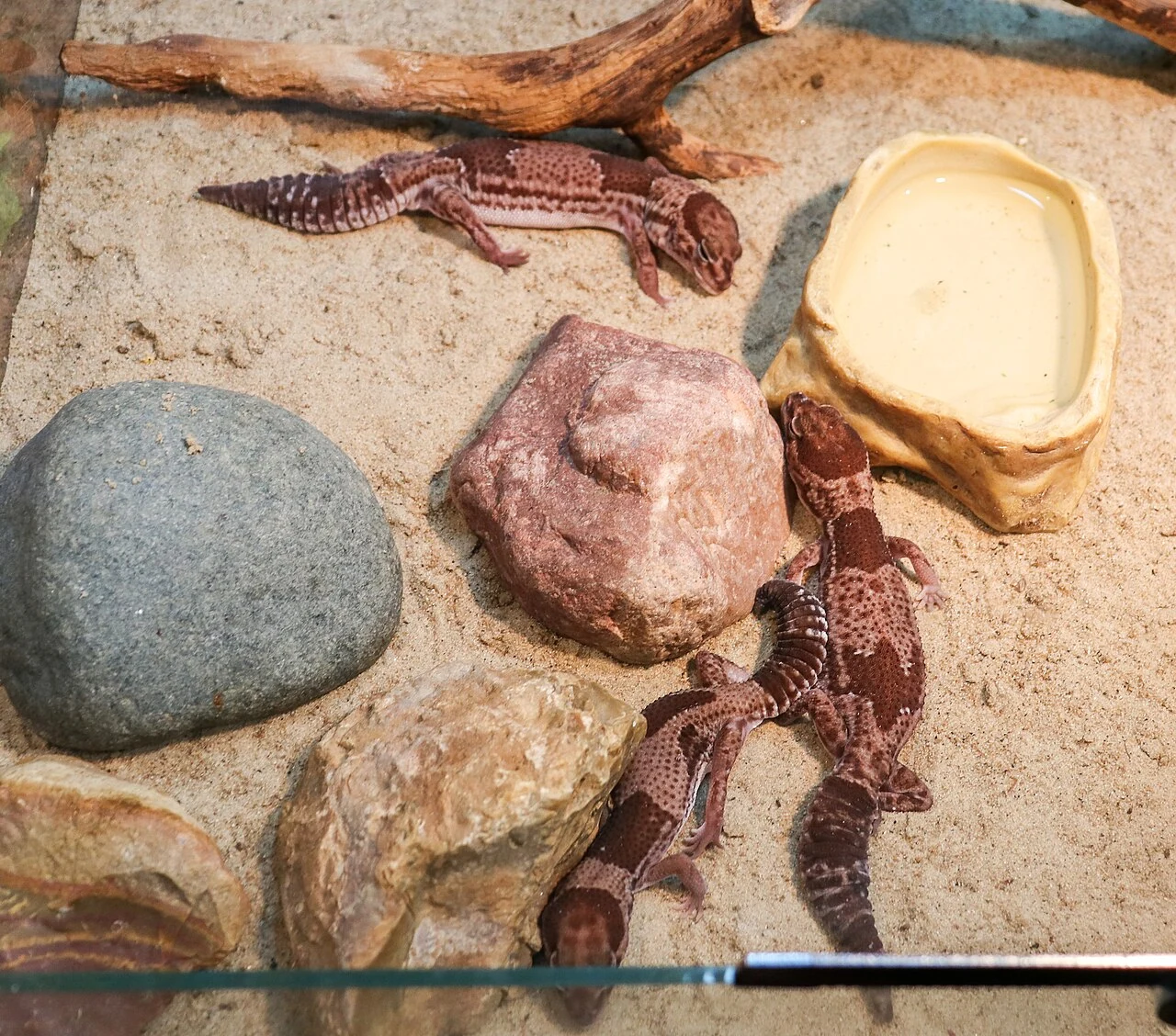
The Royal Veterinary Center gives 90 × 45 × 45 cm as a starting size for a single adult. This is a veterinary husbandry recommendation, rather than a worldwide legal minimum. Furnishings should leave useful floor space between them. Low branches, securely placed rocks and cork pieces provide different routes without creating high drops.
With one gecko, it is easier to observe whether it is eating and which places it uses. Another gecko is not necessary company. Shared housing can lead to competition and injuries, particularly between males. Retreats should let the gecko move between warm and cooler places while remaining sheltered. Heavy items need stable foundations. The water bowl and feeding area should be easy to reach, rather than blocked by furnishings.
Read more: Keeping reptiles: habitat and daily care before arrival
Measure warmth where the gecko lives
The Université de Montréal veterinary hospital describes daytime temperatures of approximately 25 °C in the cooler area and 28 to 30 °C in the warmer area. These are environmental temperatures, rather than the temperature of a hot rock. A temperature probe secured in the air measures the air temperature at that position. An infrared thermometer measures a surface. Air and surface temperatures should be assessed separately when setting up the enclosure.
The heat source needs suitable regulation and must not burn the gecko. UVB, short for ultraviolet B radiation, supports vitamin D3 production. This vitamin helps the body use calcium. A nocturnal gecko can also benefit from carefully arranged UVB lighting. The lighting should be set up for the places the gecko can actually reach, including low climbing structures. Fully shaded retreats should remain accessible. A stronger lamp does not automatically create better conditions.
Read more: Getting heat and UVB right in a reptile enclosure
Keeping the humid hide clean
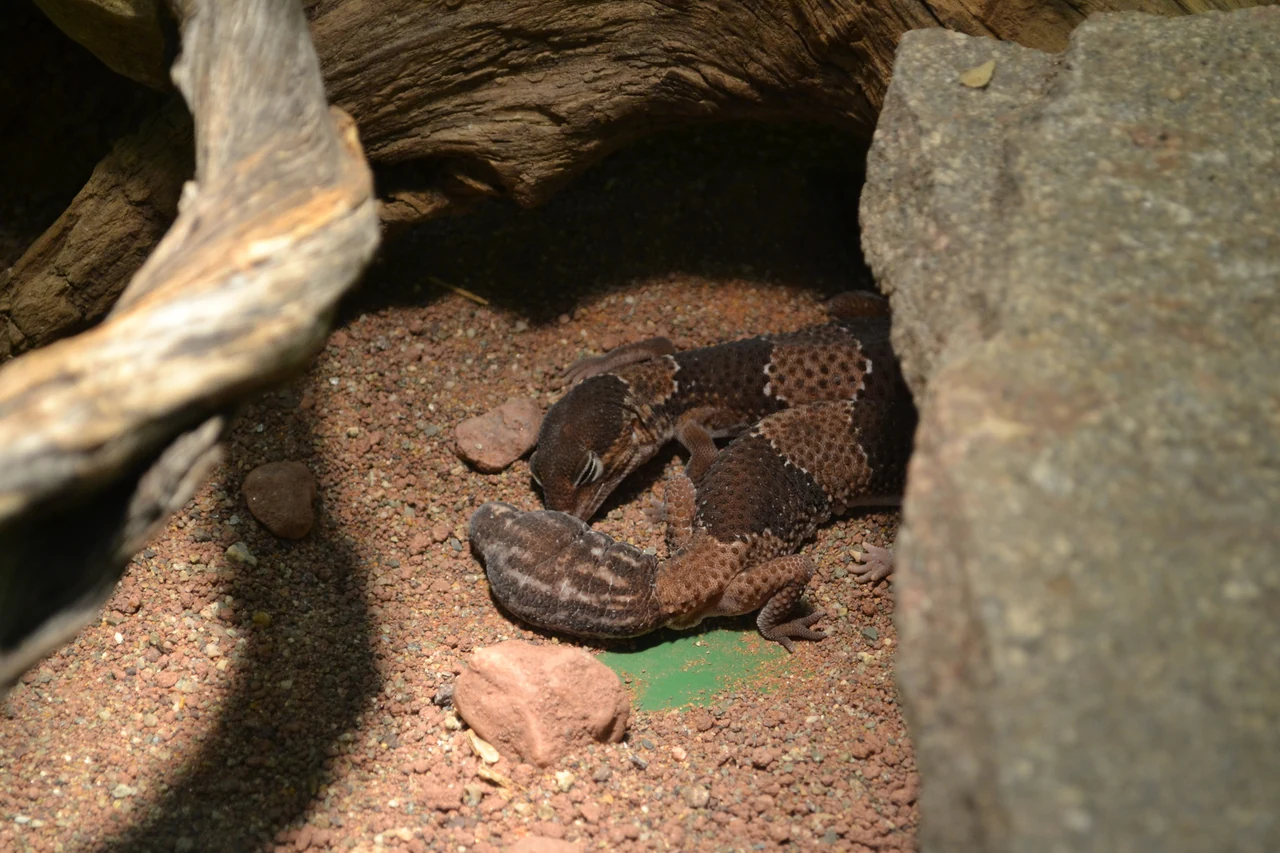
A humid hide is a covered retreat containing suitable, lightly damp material. Its entrance must be accessible and free from sharp edges. The material should be checked regularly for moisture and cleanliness, and replaced when soiled. Other retreats should remain available alongside it, allowing the gecko to choose different conditions.
A hygrometer measures relative humidity. Its percentage compares the water vapour present with the greatest amount possible at the same temperature. A reading beside a ventilation opening may differ from one near the ground. Measurements where the gecko rests, together with checks of the hide material, give a more useful picture. Extra spraying cannot make up for poor enclosure design. Ventilation openings should stay clear, and the substrate should not be wet throughout the enclosure all the time.
Shedding replaces the outer skin layer. Skin left around the toes can constrict them. Visible retained skin, swelling or trouble walking should be discussed with a reptile veterinarian. Skin should not be forcibly pulled off.
Read more: Humidity and shedding in reptiles
Care for the feeder insects too
Fat-tailed geckos eat insects. Suitable crickets and other feeder insects provide variety. Their size should suit the gecko. The feeder insects should also receive suitable food before being offered to it. Well-fed insects contribute to a more balanced diet for the gecko.
Calcium and vitamin supplementation need to be planned alongside lighting and the rest of the diet. Different products should not be combined by guesswork. A reptile veterinarian can assess the plan for the individual animal. Food intake, weight and tail shape help show development over time. The aim is not to make the tail as large as possible. Uneaten insects should be removed so they cannot disturb or injure the resting gecko.
Plan the transfer and everyday care
When taking over care, a written record should include the exact species, known age, previous food and enclosure conditions. Provenance and the lawfulness of the transfer should be established before buying. The scientific name allows the relevant authority to check local requirements. In Germany, animal welfare law requires appropriate housing, care and the knowledge to provide them. A sales description such as “beginner gecko” does not replace this preparation.
Another carer needs a practical routine for feeder insects, water, heating checks and the humid hide. Noticeable weight loss, a new swelling, breathing trouble or marked weakness needs timely veterinary assessment. For an evening-active animal, occasionally watching at its usual active time is especially useful. A full water bowl alone cannot establish that care is going well.
Common questions
Can I simply reuse a leopard gecko setup?
Some principles apply to both, including safe heating and sheltered retreats. Moisture and care still need to be checked for Hemitheconyx caudicinctus. The two species should not be housed together.
Is losing the tail harmless?
Tail shedding is a defence response and should be avoided when handling. A lost or injured tail needs professional assessment. It is a fat store and may not regrow in its original shape.
A closer look
Sources and photo credit
- Hemitheconyx caudicinctusThe Reptile DatabaseA separate species from the leopard gecko
- Le gecko à queue grasse, Hemitheconyx caudicinctusUniversité de Montréal, CHUV, Dre Isabelle LangloisA separate species from the leopard gecko · Build an enclosure with usable routes · Measure warmth where the gecko lives · Keeping the humid hide clean · Care for the feeder insects too
- African Fat-Tailed Gecko Care SheetRoyal Veterinary CenterBuild an enclosure with usable routes · Keeping the humid hide clean · Care for the feeder insects too
- Notes on the natural history of Hemitheconyx caudicinctus in northwestern GhanaStephen Spawls, Herpetological Bulletin 106, 2008Plan the transfer and everyday care
- Disorders and Diseases of ReptilesMerck Veterinary Manual, Stephen J. Divers, updated June 2026Keeping the humid hide clean · Plan the transfer and everyday care
- UVB Lighting for ReptilesLafeberVet, Frances M. Baines, 2024Measure warmth where the gecko lives
- Tierschutzgesetz, § 2Bundesministerium der Justiz, Gesetze im InternetPlan the transfer and everyday care
Photo credits
Photo: image022 · TheReptilarium · CC BY 2.0. Resized and converted to WebP.
Photo: iNaturalist photo 209944714 · Lucky Okpanachi Atabo · CC BY 4.0. Resized and converted to WebP.
Photo: File:Hemitheconyx caudicinctus in Yaroslavl Zoo.jpg · Stolbovsky · CC BY-SA 3.0. Resized and converted to WebP.
Photo: iNaturalist photo 85717621 · Luca Napelo · CC BY 4.0. Resized and converted to WebP.