 fellfolio
Rescue and working dog
Saint Bernard
A Saint Bernard often seems easygoing but needs space and safe handling. Make sure it fits in the car, and plan summer walks for cool mornings or evenings.
At a glance
- Size
- Large
- Height at shoulder
- 70 to 75 cm
- Weight
- 54 to 81 kg
- Lifespan
- under 10 years
- Activity
- Moderate
- Grooming
- Several times weekly
- Training
- Patience & clear guidance
- Owner experience
- First dog with support
From the Alpine pass to family life
The Saint Bernard’s ancestors lived at the hospice on the Great St Bernard Pass in the Swiss Alps. They first guarded the property, then helped find travellers lost in the mountains. The little brandy barrel around the neck is a storybook invention; the rescue work is real breed history.
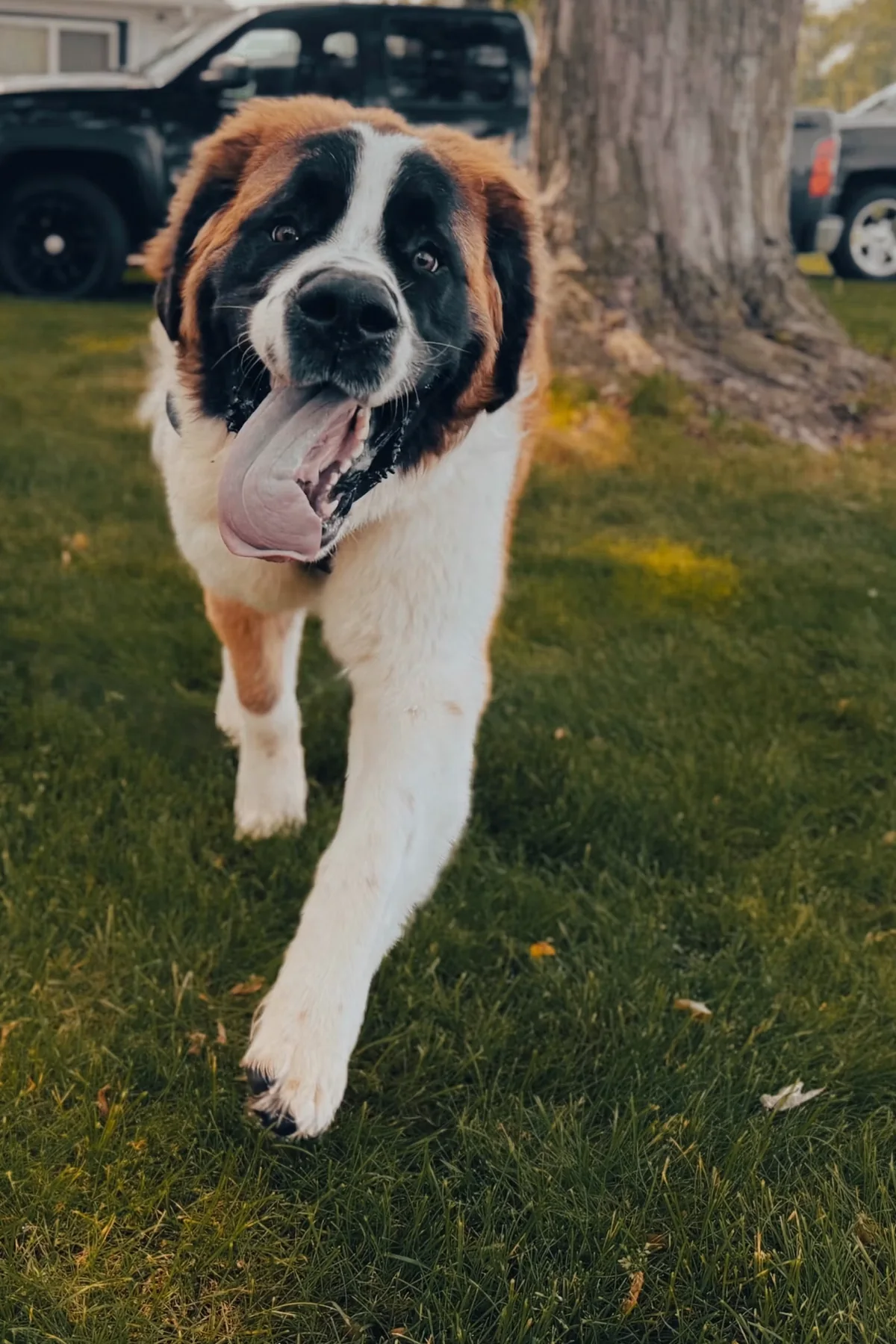
Many Saint Bernards today are friendly and steady. A walk still reveals how much strength sits behind that calm manner. Once an adult Saint Bernard pulls on the lead or jumps up to greet someone, stopping it is no small task. Teach a young dog to greet people calmly, wait and walk on a loose lead. Some are gentle with children, but an accidental step or turn from a dog this size can knock a small child over. An adult should supervise their play.
Everyday life
The UK veterinary charity PDSA recommends at least an hour of activity each day for a fully grown Saint Bernard. One longer walk and a few shorter outings, with gentle play or simple scent games, make a practical routine. There should be time to rest between walks and play. If joint pain develops, suitable activity should be discussed with your vet.
Summer changes the timetable. The thick coat and large body make heat harder to handle, so take longer walks during the cooler parts of the day and keep shade and fresh water available at home. Before getting one, think through the practical details too: bed, car and routes through the house all need to work for a dog weighing roughly 50 to 80 kg. Tight staircases or cramped rooms become daily obstacles at this scale.
Staying home alone
Dogs learn to stay home alone in small steps. The RSPCA advises no more than four hours at a time. Puppies and dogs that become unsettled when left alone need shorter absences and gradual practice. Arrange someone to care for your dog when you will be away longer.
Everyday dog training: recall, a loose lead and clear communication ↗
Day-to-day care
Saint Bernards have short-coated and long-coated varieties, and both shed heavily. Brush at least three times a week to remove loose undercoat and keep an eye on the skin beneath. On a long-coated dog, the fuller hair on the legs and tail needs particular attention and can take longer to dry after a wet walk.
The face needs care as well. Moisture can collect in the folds around the lips and irritate the skin. Gently wipe visible folds and the area around the eyes with a soft damp cloth, then dry them. The loose lips also mean plenty of drool, especially after drinking or a good shake. Keeping a towel by the water bowl will save you a few wet floors.
Size and build
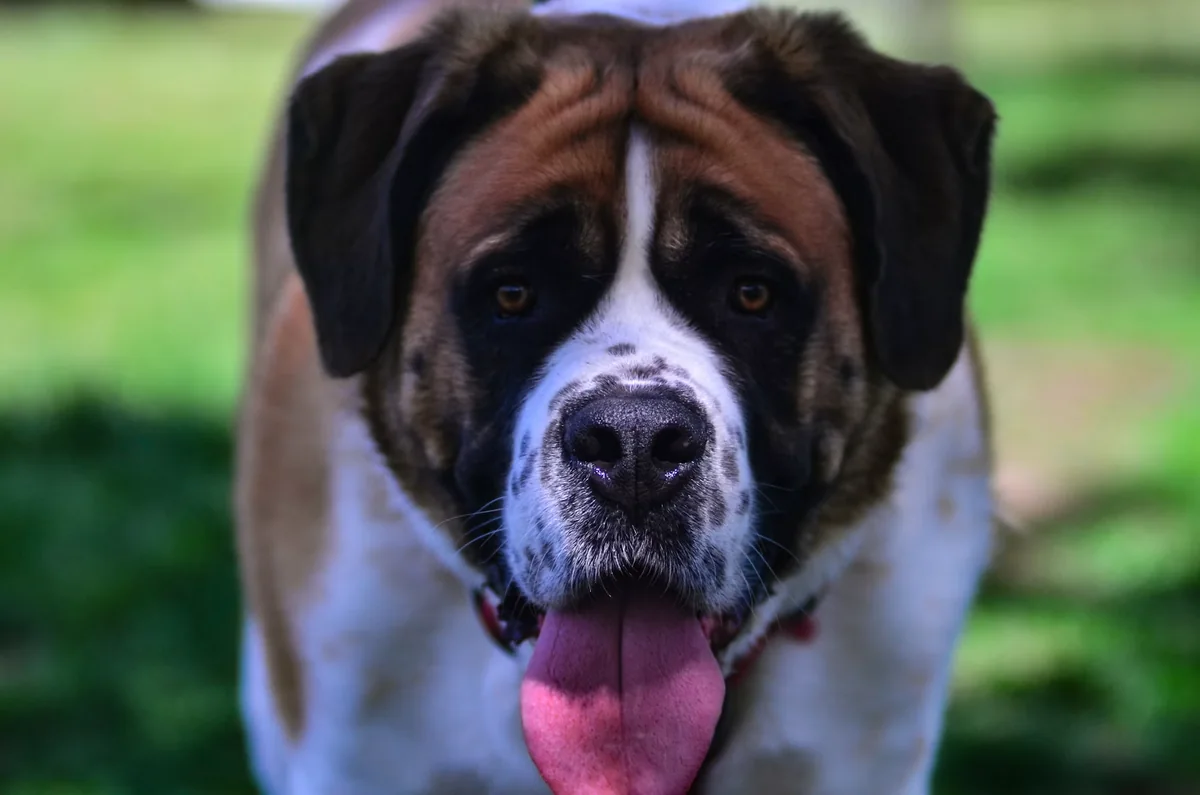
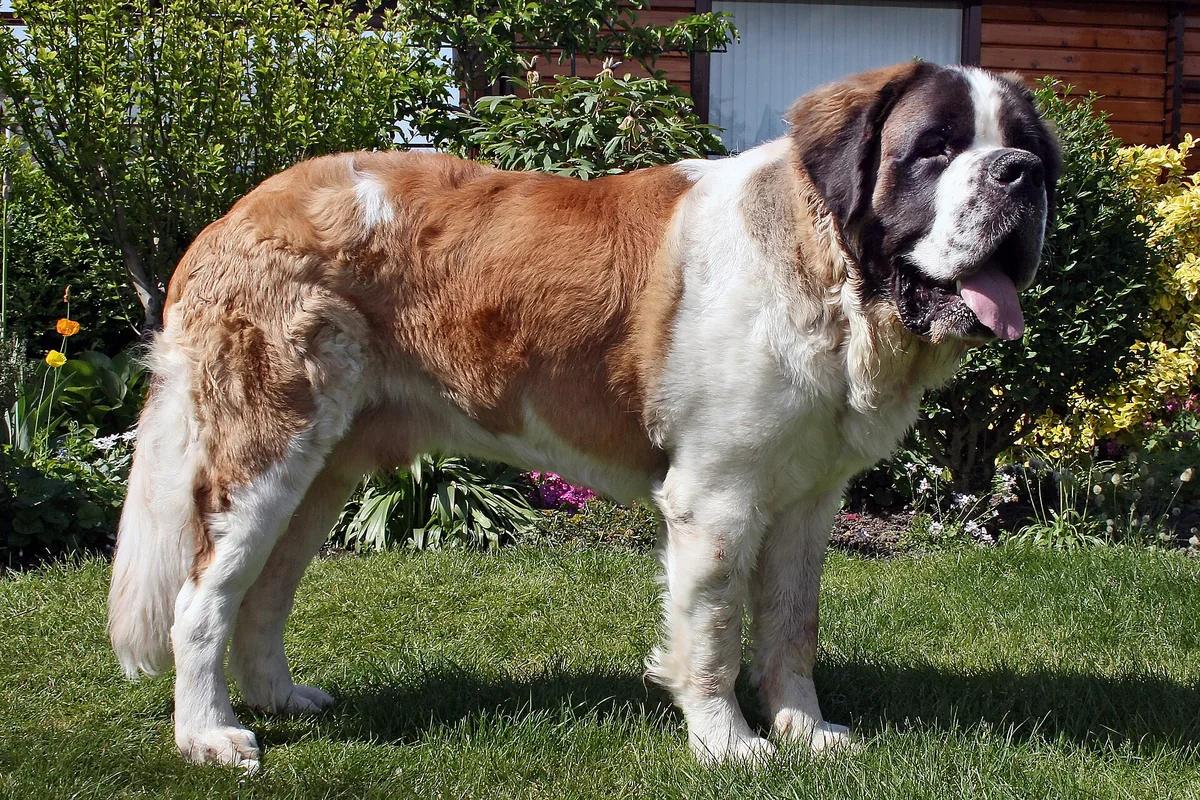
At around 70 to 75 cm at the shoulder and often 54 to 81 kg, the Saint Bernard is among the heaviest dogs in this guide. A broad head sits on a strong neck; the chest is deep, the back broad and the legs well muscled. Despite that weight, it should move smoothly and without obvious effort. Stiffness or a markedly slow gait should not simply be put down to its size.
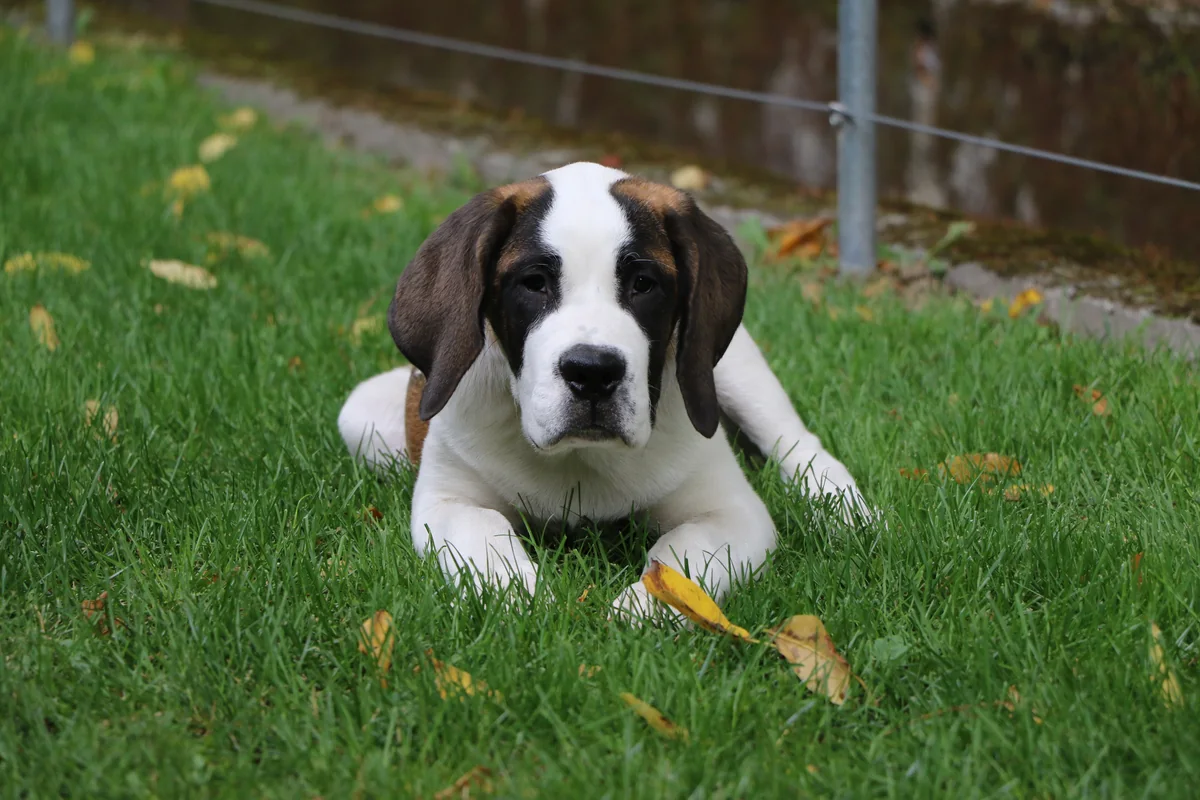
There are smooth and rough coats. The short coat lies close to the body; the longer one is fuller around the neck, legs and tail. White on the muzzle, chest and legs sits alongside orange or reddish-brown areas. The medium-sized ears lie close to the cheeks, and the long tail hangs low when the dog is relaxed. From the side, the body looks long and strong without appearing squat.
From puppy to senior: caring for your dog through every life stage ↗
Health
That much weight puts pressure on joints. Hip and elbow dysplasia can lead to pain and arthritis, while knees and eyes are also among the breed’s known concerns. If you are choosing a puppy, ask to see both parents’ hip and elbow screening results and ask about eye problems in the family. Watch whether the adult dogs get up easily and move evenly. PDSA also lists heart muscle disease, so ask about heart conditions in close relatives and have new, unusual tiredness checked by a vet. If your Saint Bernard struggles to breathe, call your vet or an emergency vet immediately.
Gastric dilatation-volvulus, or a twisted stomach, is an emergency to know about in a large, deep-chested dog. If your dog repeatedly tries to vomit without bringing anything up, suddenly becomes restless or develops a swollen belly, call an emergency vet immediately. Do not wait for it to settle. Overheating is another serious summer risk. If your Saint Bernard is panting heavily, unsteady or unusually weak, move it into shade or a cool room, start cooling it and call your vet or an emergency vet immediately.
Could this breed fit your life?
Could work well if …
- You have room for a very large dog in everyday life, including in the car.
- You have time for grooming, calm training and walks during cooler hours.
May be less suitable if …
- Your car is too small or you need to use narrow stairs every day.
- You cannot safely hold a very heavy dog on the lead.
Similar needs, different dogs.
Selected by shared size, activity, grooming and training characteristics.
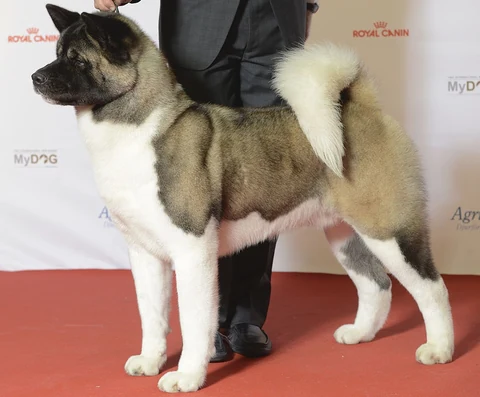
Large companion with Japanese roots
American Akita
The American Akita is a large, powerful dog with a broad head, upright ears and a dense coat. It can be deeply attached to its family while being less comfortable around unfamiliar dogs. Experienced handling and thoughtful arrangements for walks, visitors and temporary care are important.
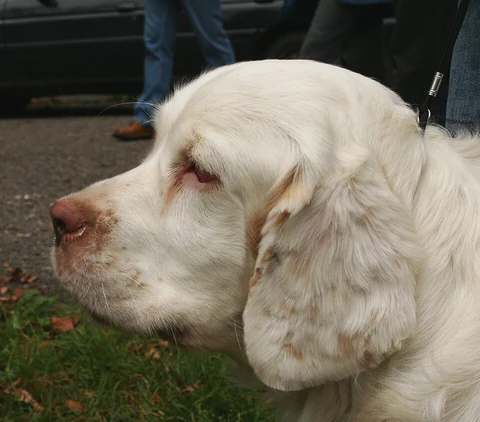
Flushing spaniel
Clumber Spaniel
The Clumber is the heaviest spaniel: low, long and strong, with a white coat and an excellent nose. It often seems relaxed at home yet follows outdoor scents with persistence.
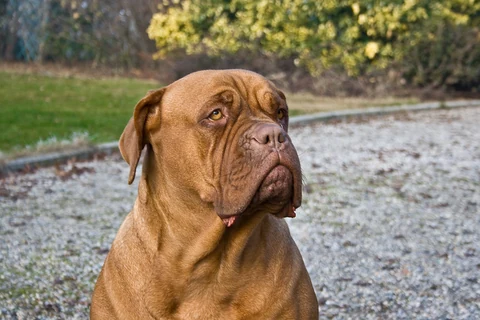
Powerful French companion with a watchful nature
Dogue de Bordeaux
The Dogue de Bordeaux is a powerful French dog with a short coat and broad head. It often seeks close contact with its people and can be a watchful guardian. Its considerable strength and the health burdens associated with its build and short face deserve careful attention before acquiring one.
Sources and photograph credit
- Teaching your dog to be left alone
Used in this profile for: Staying home alone
- St. Bernard · Breeds A to Z
Used in this profile for: Temperament, Size and build, Health
- St. Bernard · Breed Standard
Used in this profile for: Day-to-day care, Size and build
- First aid for pets struggling to breathe
Used in this profile for: Health
- GDV (Gastric Dilatation Volvulus) in dogs
Used in this profile for: Health
- Heatstroke in dogs
Used in this profile for: Everyday life, Health
- Saint Bernard · breed guide
Used in this profile for: Size / Weight, Temperament, Everyday life, Day-to-day care, Size and build, Health, Lifespan, Could this breed fit your life?
Photo credits
Portrait · Larry Nalzaro · Unsplash License
Side view · Hummel Vedor vd Robandahoeve · Blanky · CC BY-SA 3.0 · Edited

In action · sydney Rae · Unsplash License
Puppy · Nevada du Grand-Saint-Bernard · Fondation Barry · CC BY-SA 4.0 · Edited
