 fellfolio
Flushing spaniel
Clumber Spaniel
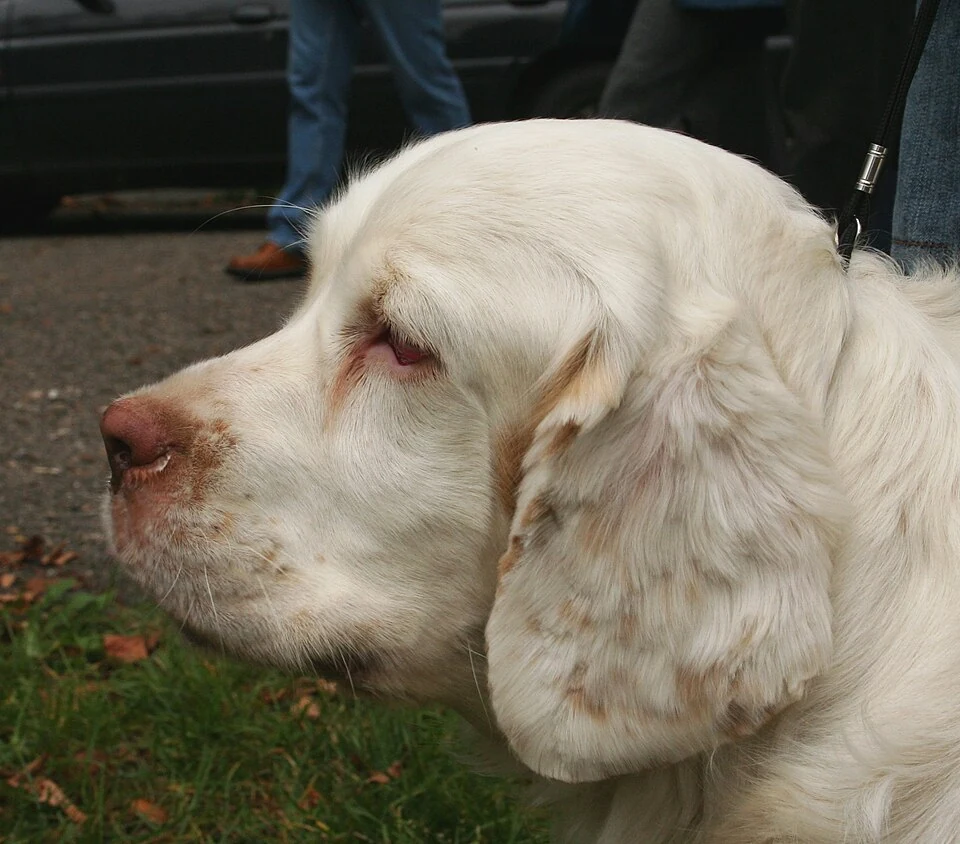
The Clumber is the heaviest spaniel: low, long and strong, with a white coat and an excellent nose. It often seems relaxed at home yet follows outdoor scents with persistence.
At a glance
- Size
- Large
- Weight
- 25 to 34 kg
- Lifespan
- over 10 yearsUK Royal Kennel Club breed profile
- Activity
- Moderate
- Grooming
- Several times weekly
- Training
- Patience & clear guidance
- Owner experience
- First dog with support
Unhurried indoors, thorough on a scent
The Clumber Spaniel was used in England to find game birds in dense cover. It worked steadily, relying more on its nose than on outright speed. That history is still easy to recognise. At home a Clumber may seem deliberate, while an interesting scent outdoors can claim all its attention. The British standard describes a kind, dependable dog that may be more reserved with strangers than other spaniels.
Give it time to approach new people instead of pushing it into greetings. Clear, short tasks work well in training: wait before crossing a road, find a toy or turn to you for a moment. Keep a lead on in areas rich in wildlife until recall is genuinely reliable. A Clumber with its nose deep in the grass is not ignoring you out of spite; it is doing a job the breed was developed for.
Everyday life
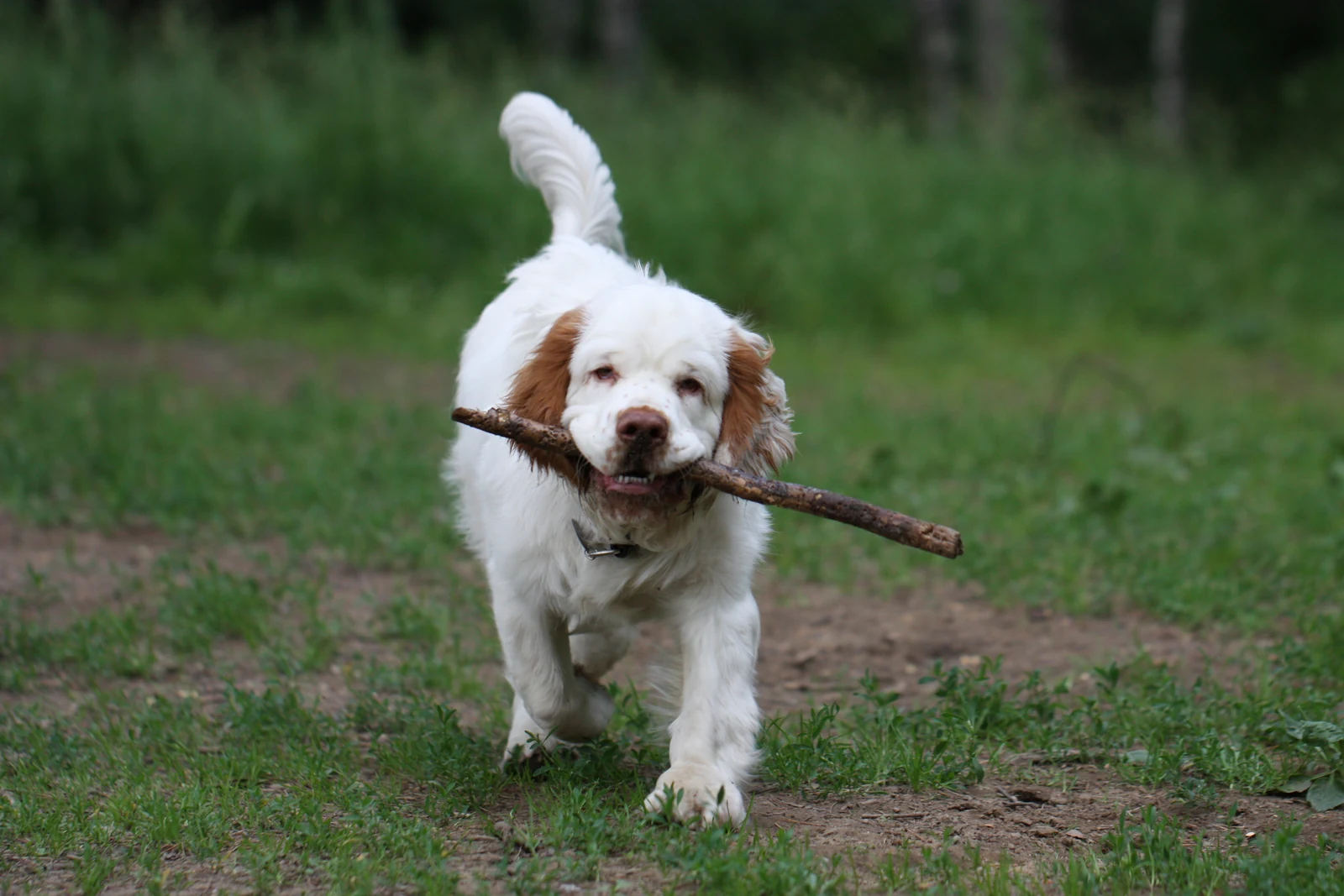
The Royal Kennel Club gives up to an hour of daily exercise as a guide. Adults enjoy unhurried walks with time to sniff. According to the American Kennel Club, many also like retrieving and water. Spread activity through the day rather than asking a heavy body for constant sprints. Short, varied explorations suit young dogs better than long forced marches.
Weight matters in daily life. Teach the dog to get into and out of a car safely, and consider whether home requires it to climb many stairs. Food rewards are useful, but count them as part of the daily ration. Extra weight places more strain on the joints and back of an already long, low dog.
Staying home alone
Dogs learn to stay home alone in small steps. The RSPCA advises no more than four hours at a time. Puppies and dogs that become unsettled when left alone need shorter absences and gradual practice. Arrange someone to care for your dog when you will be away longer.
Day-to-day care
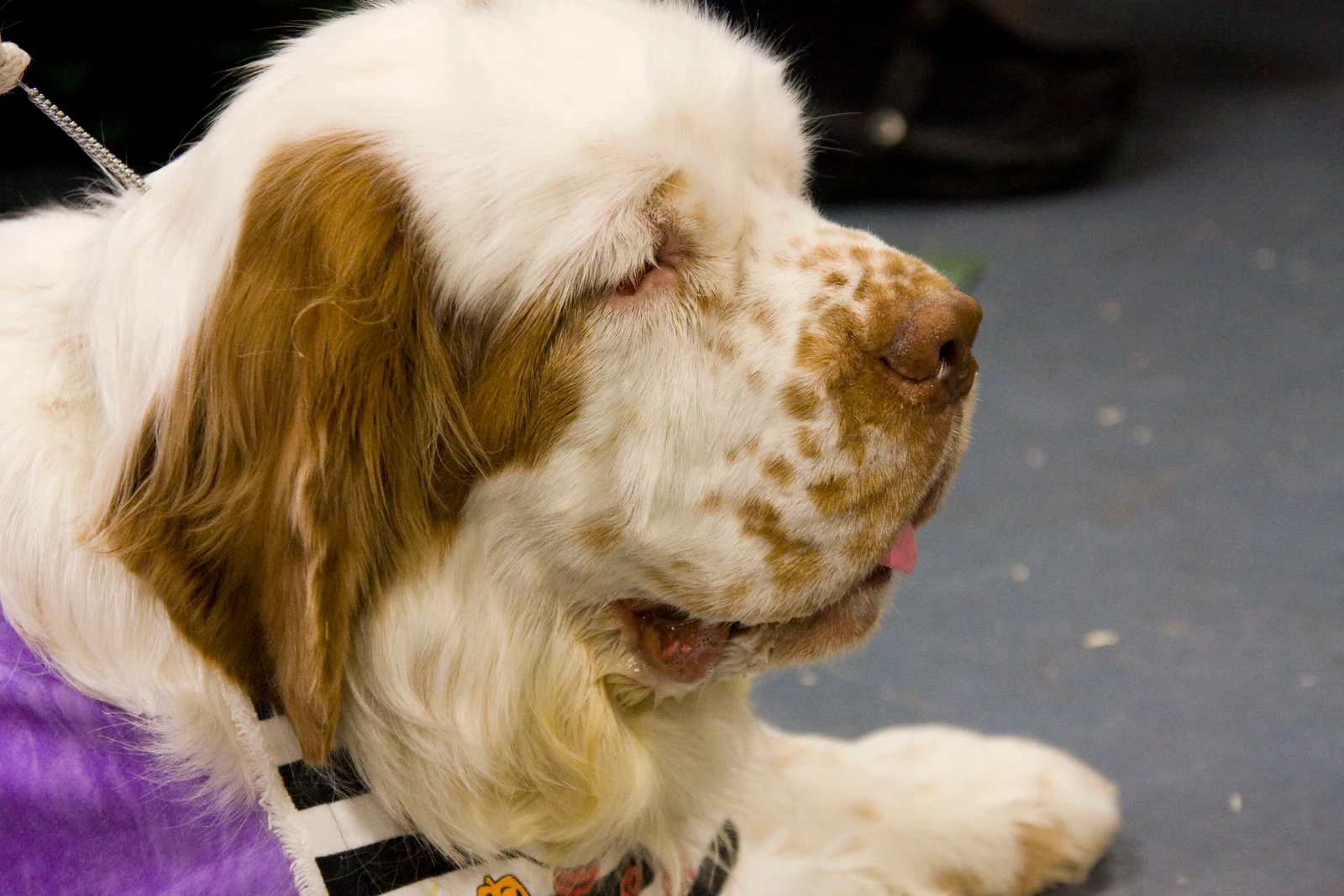
The dense white coat has longer hair around the ears, chest and legs. Brush several times a week and remove leaves or burrs after walks before they lodge in those fringes. The American Kennel Club advises regular checks of the low-set ears. Moisture and dirt can linger there; a smell, redness or frequent head-shaking calls for a veterinary look.
Pay attention to facial folds and eyelids as well. Wipe away dirt gently and keep skin folds dry without rubbing the eyes. The coat does not demand elaborate cutting, but grooming is a chance to inspect feet, nails and skin. Clumbers shed, and the light-coloured hair shows clearly on carpets and clothes.
Size and build
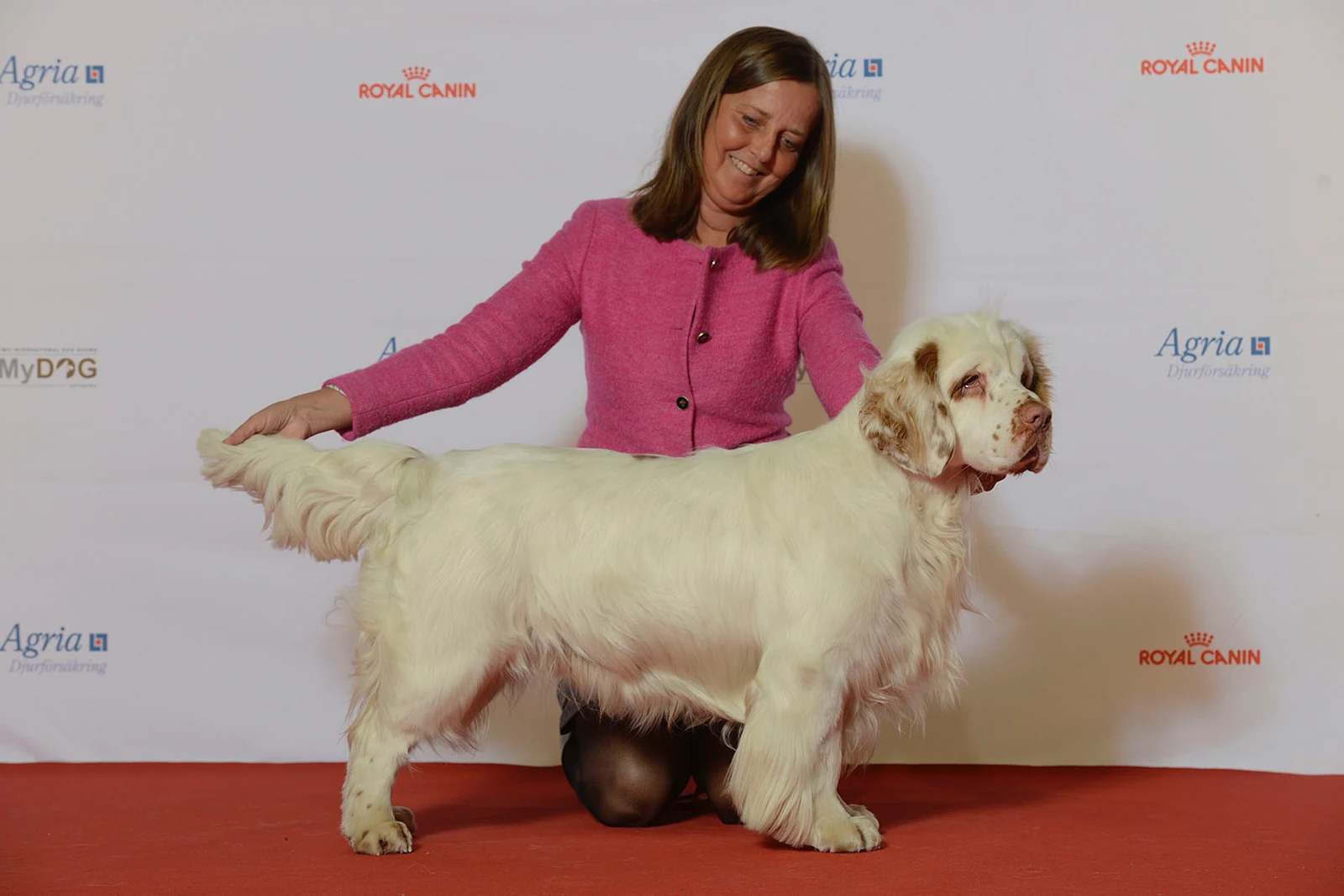
The Clumber is long, low and strongly muscled. Short straight legs support a deep chest and solid back. Its head is broad, the ears large and folded forward, the eyes dark amber. A smooth, silky coat is mostly white with lemon or orange markings. Despite its heavy appearance, it should move freely and with little apparent effort.
The British standard lists about 25 to 29.5 kg for females and 29.5 to 34 kg for males. It gives no general shoulder-height figure. When visiting a breeder, ask to watch adult dogs walk and turn. Excessive body weight, irritated eyes or lids that interfere with vision are not endearing breed traits.
Health
The Royal Kennel Club recommends hip and elbow scores, eye examinations and a DNA test for exercise-induced collapse, or EIC, in breeding dogs. EIC is an inherited susceptibility to collapse during strenuous activity. The test detects a particular inherited cause of these episodes, not every possible reason for collapse. Ask for both parents’ results and have their implications for the litter explained. A DNA test also exists for PDP-1, an inherited disorder that impairs cells’ ability to turn food into usable energy. Affected dogs tolerate exercise poorly and may collapse afterwards.
If your dog suddenly becomes wobbly or weak while running, stop the activity and seek veterinary advice. Collapse needs immediate attention. These signs can have other causes, so an EIC test alone cannot explain an acute episode.
The American Kennel Club also mentions inward- or outward-rolling eyelids, an underactive thyroid and spinal disc problems. Pain when rising, a hunched back and persistently red or watering eyes also need examination.
Could this breed fit your life?
Could work well if …
- You enjoy a calm companion and longer walks with plenty of sniffing.
- You can maintain the coat and ears and watch the dog’s body condition.
May be more difficult if …
- You want a particularly light, agile dog for constant fast running.
- You expect off-lead walks around wildlife without investing in recall practice.
Similar needs, different dogs.
Selected by shared size, activity, grooming and training characteristics.
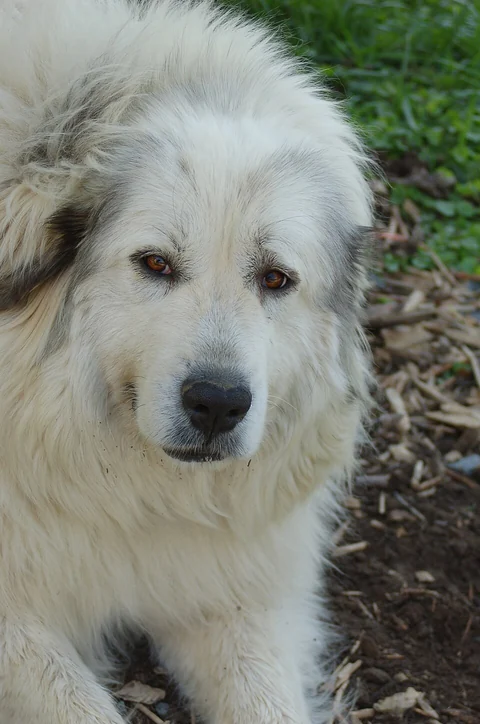
Livestock guardian
Pyrenean Mountain Dog
The Pyrenean Mountain Dog guarded livestock independently rather than herding it. Its calm manner, size and vigilance need a home with space and realistic expectations.
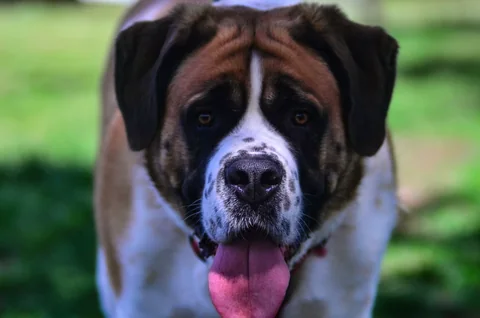
Rescue and working dog
Saint Bernard
A Saint Bernard may be easygoing, but its size shapes everyday life, from the space it needs in the car to the timing of summer walks.
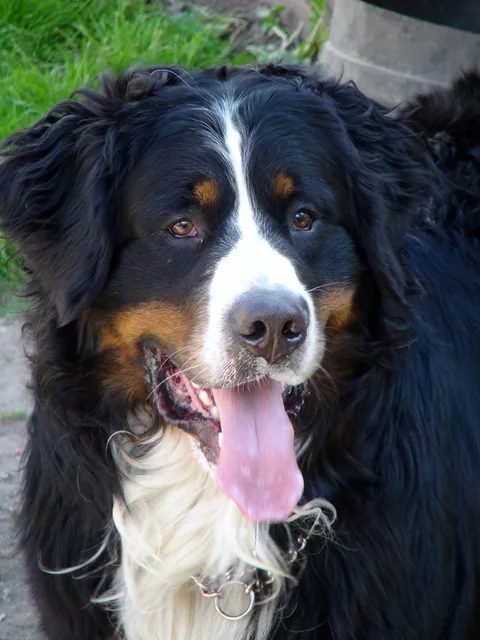
Swiss mountain dog
Bernese Mountain Dog
A large Swiss farm dog that likes to stay close to its people. Its strength, dense coat and sensitivity to heat shape daily life more than its relaxed manner may suggest.
Sources and photograph credit
- Teaching your dog to be left alone
Used in this profile for: Staying home alone
- Clumber Spaniel Dog Breed Information
Used in this profile for: Temperament, Everyday life, Day-to-day care, Health, Could this breed fit your life?
- Clumber Spaniel, Breeds A to Z
Used in this profile for: Temperament, Everyday life, Health, Lifespan, Could this breed fit your life?
- Clumber Spaniel breed standard
Used in this profile for: Size / Weight, Temperament, Day-to-day care, Size and build
- DNA test: PDP-1
Used in this profile for: Health
- Dynamin-1 Associated Exercise-Induced Collapse
Used in this profile for: Health
Portrait · Clumber spaniel glowa rybnik-kamien pl · Pleple2000 · CC BY-SA 4.0 · Edited

Side view · BIR Grupp 8: CLUMBER SPANIEL, Sugar Loaf The Kop · Johan Frick-Meijer / Svenska Mässan · CC BY 2.0 · Edited
.jpg)
In action · IMG_1952 · 53Hujanen · CC BY-SA 2.0 · Edited
Coat and features · Clumber Spaniel · audrey_sel · CC BY-SA 2.0 · Edited