 fellfolio
Shorthair cats
Toyger
Bold stripes, a long muscular body and a dense short coat make the Toyger distinctive. Behind that appearance is a curious domestic breed that enjoys play and human company. Alongside daily activities, the health records behind her breeding deserve careful attention.
At a glance
- Size
- Medium
- Activity
- High
- Care needs
- Low
- Owner experience
- First cat with preparation
A domestic cat with a striking striped pattern
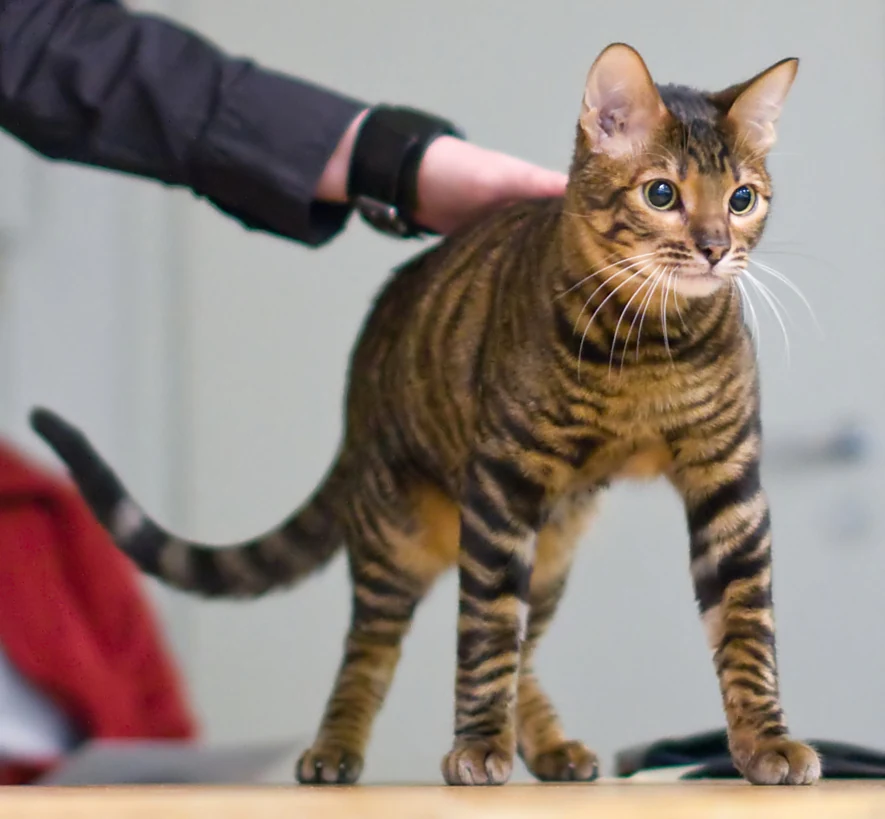
A Toyger’s stripes are usually the first thing you notice. They run across the sides of the body and continue around the legs and tail. The British cat registry GCCF describes a long, muscular body and a particularly dense, soft short coat. Dark stripes often stand against a warm golden or orange-brown background. The GCCF also recognises pale varieties with different eye colours.
“Tabby” describes a coat pattern with stripes, spots or swirling markings. In the Toyger, a striped pattern was deliberately developed further. Judy Sugden began the breed in the United States in the late 1980s. A striped domestic shorthair and a Bengal were among its foundation cats. The aim was an appearance reminiscent of a small tiger, combined with a temperament suited to living with people. No tigers were crossed into the Toyger. The International Cat Association, known as TICA, accepted the breed for championship competition in 2007.
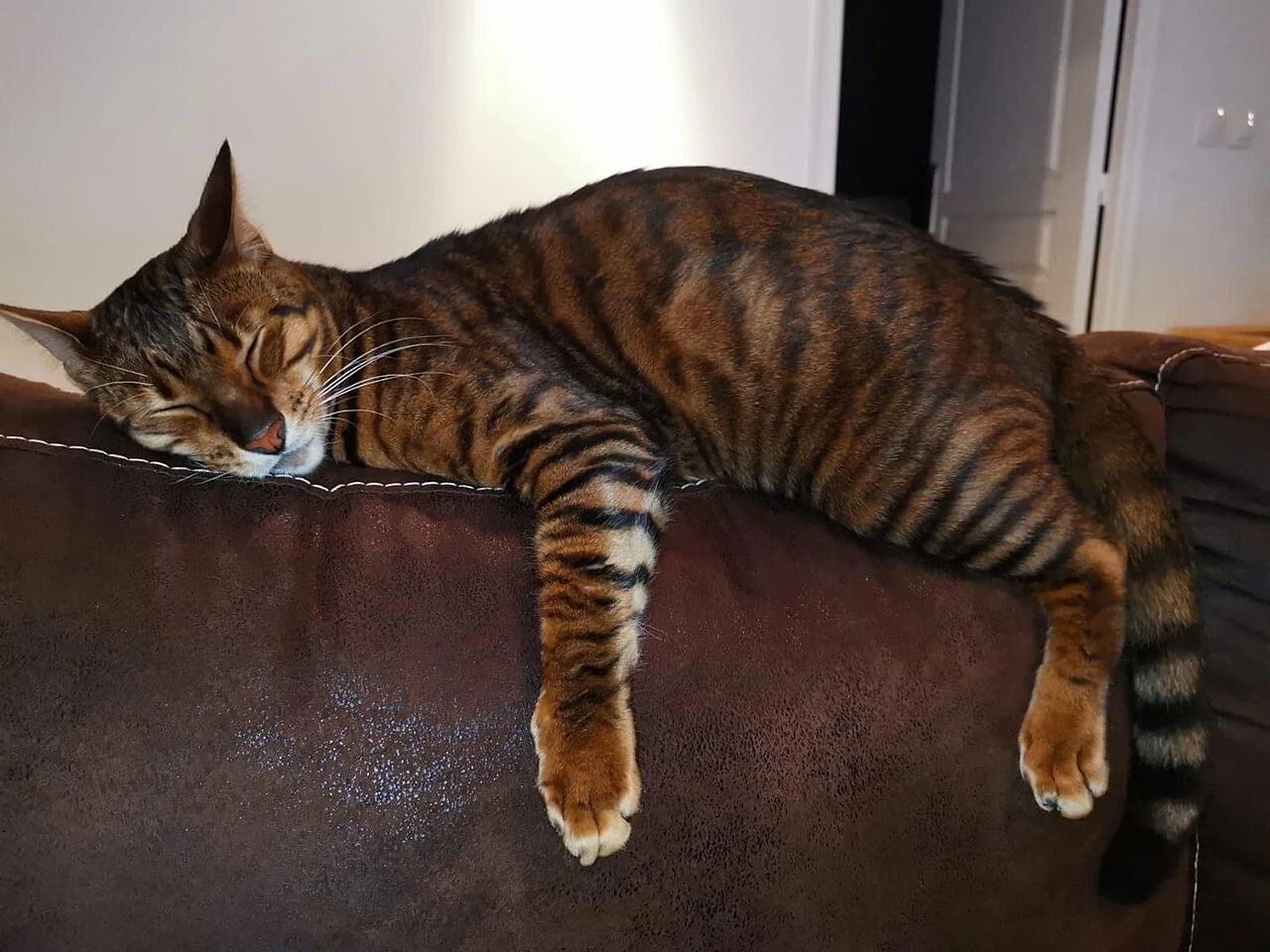
The GCCF describes Toygers as active, intelligent, playful and interested in human company. A cat may enjoy settling on the sofa after a lively game, then return to exploring later on. When meeting a Toyger, you should notice how she approaches people, responds to games and behaves around other animals. The striped coat is only one part of choosing a suitable companion.
Movement and small tasks during the day
A Toyger’s home should provide ways to explore and move. A sturdy scratching tree, firmly secured raised resting places and clear routes between resting areas make indoor life more varied. A box with several suitably sized openings can become a hiding place during games. The cat should always be able to leave it. Quiet places where nobody tries to involve her in play are needed as well.
Shared hunting games can combine stalking, short runs and catching. A wand toy should pause or disappear behind an obstacle from time to time. Your cat should regularly be able to catch and hold it. For search games, you can start by leaving a few pieces of her usual dry food in plain sight, then make the activity a little more challenging. These pieces should be counted within her normal food allowance.
Some Toygers enjoy simple learning games or can be gently introduced to a harness. You should begin with short sessions inside the familiar home and reward your cat with something she enjoys. Whether an outing eventually suits the cat depends on her response. A secured balcony or outdoor enclosure can also offer new sights and scents. A curious cat should not be able to escape through gaps or fall from it.
For practical play, food searches and quiet retreats, read Indoor Cat Enrichment: Play, Food Puzzles and Safe Retreats ↗
Caring for the dense short coat
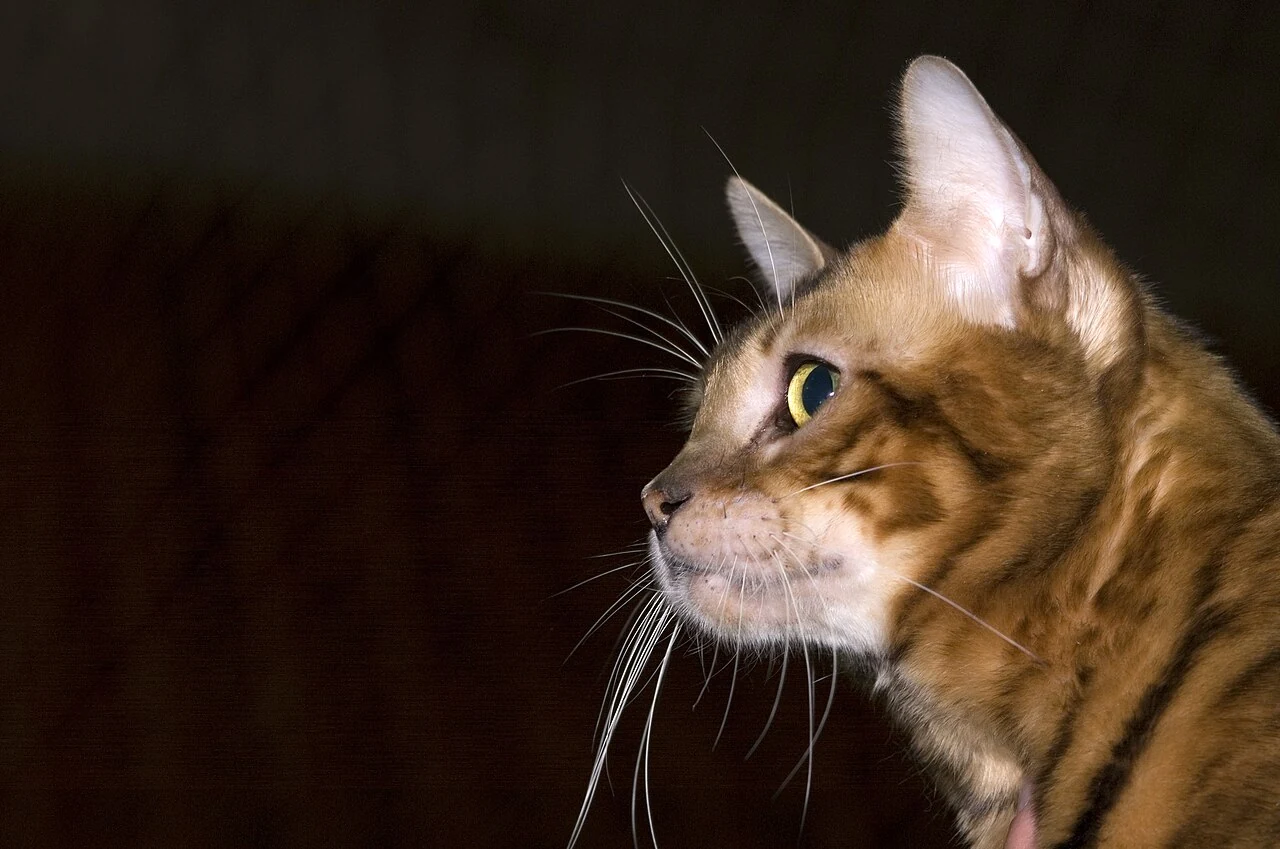
The dense short coat usually needs little grooming work. A gentle weekly session with a soft brush or suitable comb helps remove loose hair. More frequent help may be useful during shedding. The “glitter” mentioned in the breed standard is the coat’s natural sheen in the light. Additional grooming products are not needed to create it.
Grooming should feel comfortable. A few strokes in an area where the cat enjoys being touched are a useful way to begin. This also helps you notice newly sensitive places or changes in the skin. Persistent licking, bald patches and a marked reduction in grooming should be checked. Routine baths are normally unnecessary for a cat that cleans herself thoroughly.
Claws and teeth should also be checked. Useful scratching surfaces support normal claw care. Your veterinary practice can demonstrate suitable dental care and assess whether any claws need trimming. Toys should be inspected for loose or damaged parts. Strings and wand toys should be stored somewhere the cat cannot reach alone after you finish playing together.
Activity through each stage of life
A Toyger kitten is often energetic and curious. Even so, a new home should initially be introduced through a manageable area. Familiar scents, a hiding place and easy access to essentials help the kitten settle. Brief games should use toys she can catch. Hands should not be offered for wrestling, since that habit can become painful with a stronger adult cat.
You should introduce small grooming tasks and the carrier in a pleasant way from an early age. Brief contact with a brush can be followed by a suitable reward. The carrier can remain accessible as a retreat in the room rather than appearing only before a veterinary visit. If another cat joins the home, scents and later visual contact should be introduced gradually. Both animals need their own feeding places, litter trays and resting areas.
For an adult Toyger, food portions should suit her body condition and activity level. As she gets older, quieter games along the floor and intermediate steps to raised places may be more comfortable. Reduced interest in games or a changed gait should be assessed by a vet. After an examination, the environment can be adapted to her needs while keeping familiar activities available.
Understanding breeding health checks
Before buying a Toyger, you should ask for an explanation of the parents’ health records. The GCCF recommends heart ultrasound screening for hypertrophic cardiomyopathy, shortened to HCM, together with DNA tests for PKDef and Bengal PRA in breeding cats. These are recommendations from a British breeding registry. The breeder should explain how the examinations relate to the particular cat and show the relevant records.
HCM causes the muscular walls of the heart to thicken, which can impair its function. An ultrasound shows whether relevant changes are visible at the time of the examination. They can develop later, so a veterinarian experienced in cardiac examinations should advise on any further checks.
PKDef means pyruvate kinase deficiency. The red blood cells lack an important enzyme and may break down too early, causing anaemia, a shortage of healthy red blood cells. Bengal PRA is an inherited disease in which light-sensitive cells in the eye deteriorate and vision can be lost. The respective DNA tests look for particular inherited changes. With these two conditions, carriers with one altered gene copy do not develop the tested form of disease but can pass the change to offspring. Two altered copies mean the cat is genetically affected. You should interpret a result with your veterinary practice rather than relying on the word “tested” alone.
A cat with visibly difficult breathing or open-mouth breathing needs immediate veterinary help. Ongoing preventive care includes appropriate vaccinations, parasite checks and regular examinations. Fellfolio lets you store reports and follow-up appointments in the pet profile, so it remains clear which examination was carried out and when another check was advised.
Is a Toyger right for you?
Could work well if …
- You would enjoy an active, curious cat and can play with her every day.
- Your indoor environment has climbing routes, safe observation places and undisturbed resting areas.
- You are willing to examine and discuss health screening records behind a breeding programme.
Before you bring one home
- A striking striped pattern should not take priority over health and good early care when choosing a cat.
- Regular long absences should be planned with reliable care and suitable activities.
- Children and other pets should meet the cat gradually, with room for her to move away.
Meet other cat breeds.
Selected by size, activity, care and play needs.
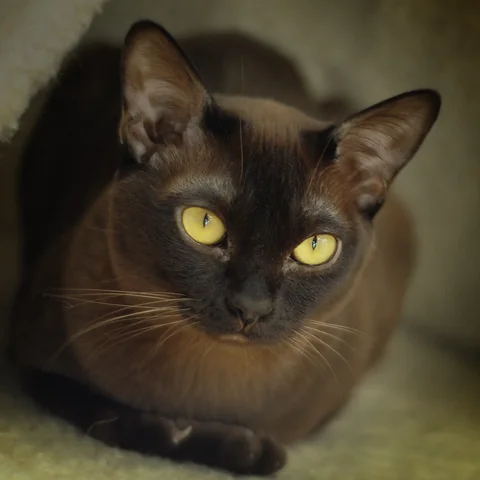
Shorthair cat · Southeast Asian roots
Burmese
Compact, silky-coated and strongly people-oriented, the Burmese often seeks close contact and joins in family life.
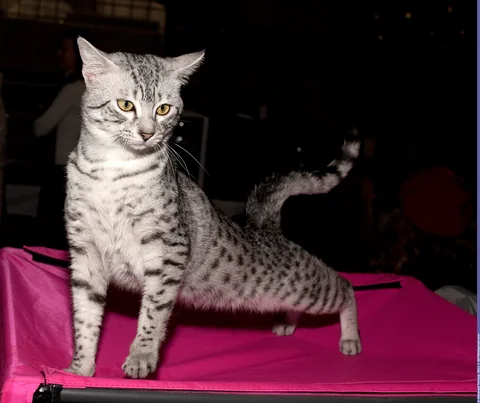
Spotted shorthair · Egypt
Egyptian Mau
The Egyptian Mau is a fast, spotted cat that enjoys playing with familiar people and often watches a new situation carefully before joining in.
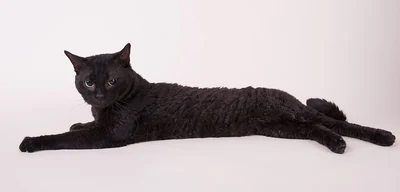
Wavy coated shorthair · Germany
German Rex
The German Rex is a medium sized cat with a short, velvety, wavy coat. Her breed history leads to Berlin, where a curly coated cat became the foundation of the breeding programme. Many German Rex cats are lively and playful and seek closeness with familiar people. The fine coat should be groomed gently.
Sources and photograph credit
- Grooming your cat
Used in this profile for: Day-to-day care, Size and build
- Indoor cats
Used in this profile for: Everyday life, Size and build, Could this breed fit your life?
- Cats and play
Used in this profile for: Everyday life, Day-to-day care, Size and build
- Feline Dental Disease
Used in this profile for: Day-to-day care
- Hypertrophic Cardiomyopathy
Used in this profile for: Health
- Loving Care for Older Cats
Used in this profile for: Size and build
- Bengal progressive retinal atrophy and PRA-b test
Used in this profile for: Health
- Pyruvate kinase deficiency in cats
Used in this profile for: Health
- Introducing your new cat to other cats in your home
Used in this profile for: Everyday life, Size and build, Could this breed fit your life?
- How to keep your cat healthy and happy
Used in this profile for: Health, Could this breed fit your life?
- Toyger breed profile
Used in this profile for: Temperament, Everyday life, Day-to-day care, Size and build, Health, Could this breed fit your life?
- Toyger standard of points, version 1 of 16 October 2019
Used in this profile for: Temperament, Day-to-day care
Photo credits
Portrait · Toyger - Cornish Rex presentation show Riihimäki 2008-11-16 IMG 0101.JPG · Heikki Siltala · CC BY 3.0 · Edited

Everyday life · Olaf Toyger Bellille.jpg · Bellille · CC BY-SA 4.0 · Edited

Coat and features · Toyger (TGR) Eeyaa American Idol (3097994171).jpg · Nickolas Titkov · CC BY-SA 2.0 · Edited
_Eeyaa_American_Idol_(3097994171).jpg)
Coat and features · TGR Eeyaa American Idol (3098860706).jpg · Nickolas Titkov · CC BY-SA 2.0 · Edited
.jpg)