 fellfolio
Wavy coated shorthair · Germany
German Rex
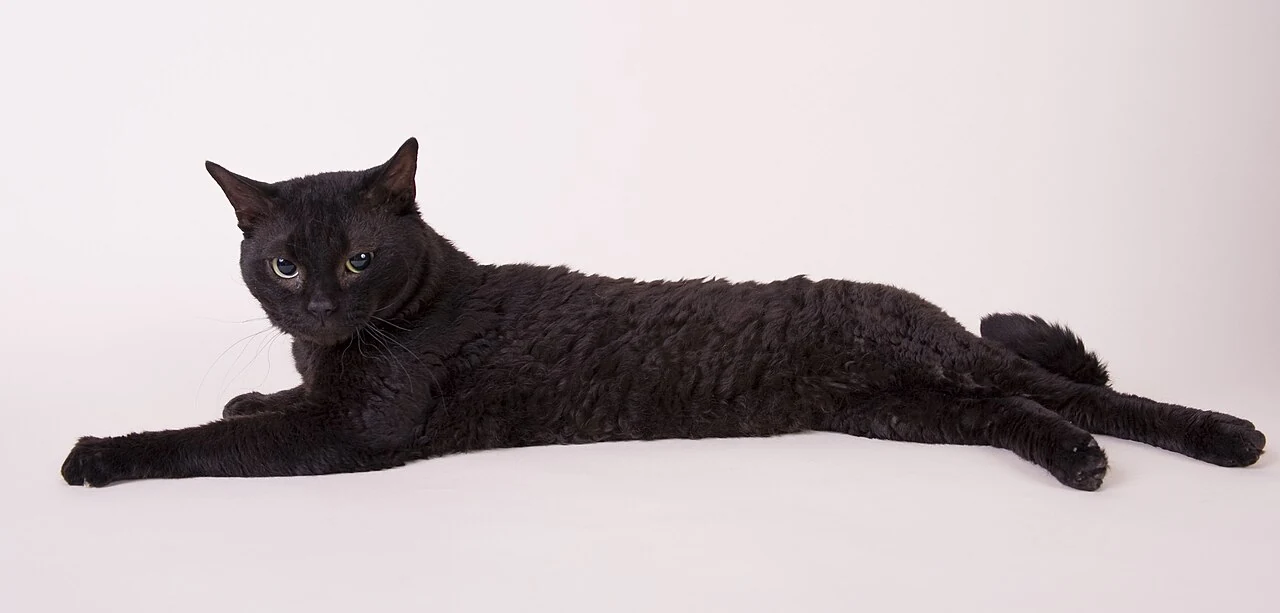
The German Rex is a medium sized cat with a short, velvety, wavy coat. Her breed history leads to Berlin, where a curly coated cat became the foundation of the breeding programme. Many German Rex cats are lively and playful and seek closeness with familiar people. The fine coat should be groomed gently.
At a glance
- Size
- Medium
- Activity
- High
- Care needs
- Low
- Owner experience
- First cat with preparation
A velvety coat and an interest in shared discoveries
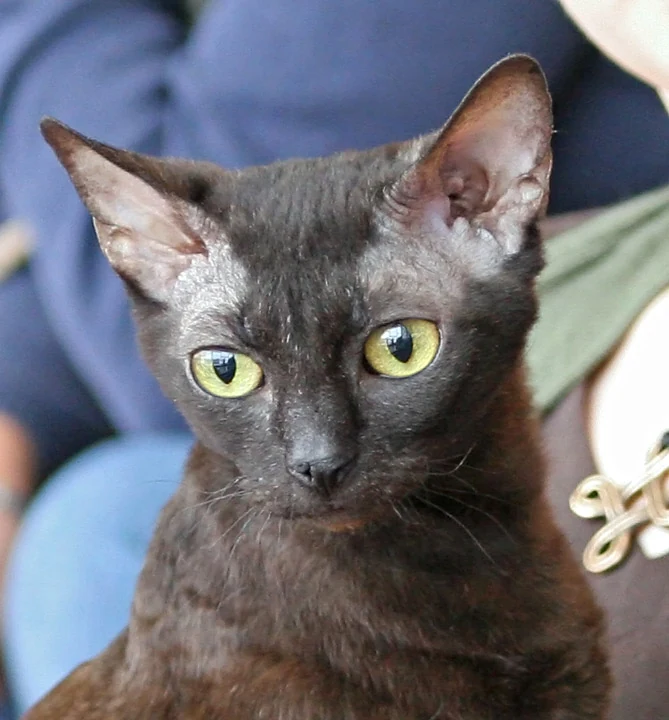
A small movement beneath a sheet of paper may immediately interest a German Rex. She watches closely, extends a paw and tries to catch the hidden toy. The international cat federation FIFe describes the breed as lively, playful and closely bonded to people. Someone who enjoys actively playing with a cat may find much to enjoy here.
Trust also grows during quieter moments. A cat willingly resting beside you need not constantly be stroked or picked up. You should explore which touches she enjoys and watch her signals. If she turns away or withdraws, she should be able to remain undisturbed. In a new home, a quiet beginning and encounters where she chooses to approach help her settle.
Even a sociable cat may initially find an unfamiliar cat overwhelming. Introductions should progress gradually, using separate areas and providing each cat with feeding places, litter trays and retreats. Children should offer toys rather than fingers as prey and avoid disturbing her sleep. This makes shared time more pleasant for everyone.
Games that offer small discoveries
It is worth varying a German Rex’s games. A wand attachment can first disappear around a chair leg. On another occasion, a ball rolls into an open box for her to retrieve with a paw. Small movements and opportunities to watch, stalk and catch are what make these games interesting. The attachment should regularly land within her paws so she can really catch her toy prey.
Not every activity needs running. A simple puzzle feeder or a few pieces of her usual dry food hidden in easily reached places can turn finding the next portion into a search. This amount should be taken from the daily allowance. For shared hunting games, you should choose moments when she is naturally attentive. Brief games can fit between periods of rest.
The home should also offer climbing routes, scratching surfaces and hiding places. A wide window perch may interest her if the window is secured against falls and escapes. Several accessible beds help her choose between company and quiet. If an adult was previously accustomed to outdoor access, you should discuss how the new home could provide it, or what other arrangement would suit her established habits, before adopting her.
For practical play, food searches and quiet retreats, read Indoor Cat Enrichment: Play, Food Puzzles and Safe Retreats ↗
Grooming fine waves gently
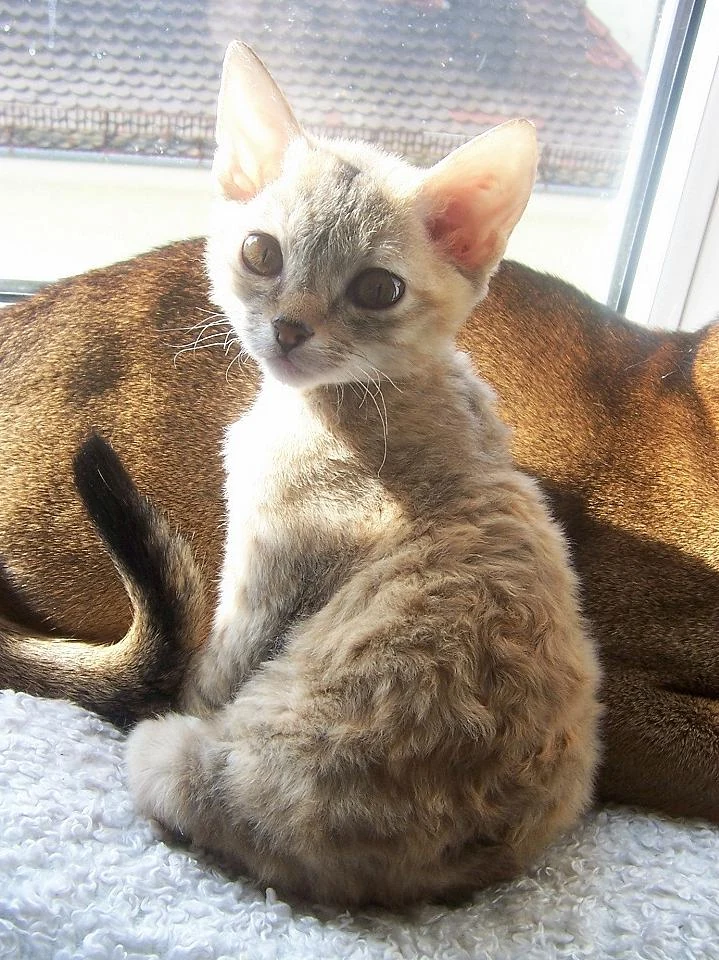
The coat feels soft and velvety because it lacks the longer, coarser guard hairs. The remaining hairs form short waves. Density can vary between cats. FIFe’s standard also describes shorter, curled whiskers.
Grooming should therefore be gentle. A soft brush or a gentle grooming mitt can remove loose hair without pulling hard on the curls. A few light strokes are enough to begin with. You should watch which tool she finds comfortable and how her coat responds. The British Animal Welfare Committee’s advice notes that curved Rex hairs may break more readily during brushing. Heavy pressure and vigorous brushing should be avoided.
Stroking her also offers a chance to check the skin. New bald patches, crusts, redness or unusually frequent licking should be investigated. Whiskers should neither be shortened nor pulled out. These sensory hairs help the cat detect her immediate surroundings. A cat grooming normally generally does not need a bath. A soft damp cloth may be sufficient for local dirt.
The Berlin cat who helped establish the breed
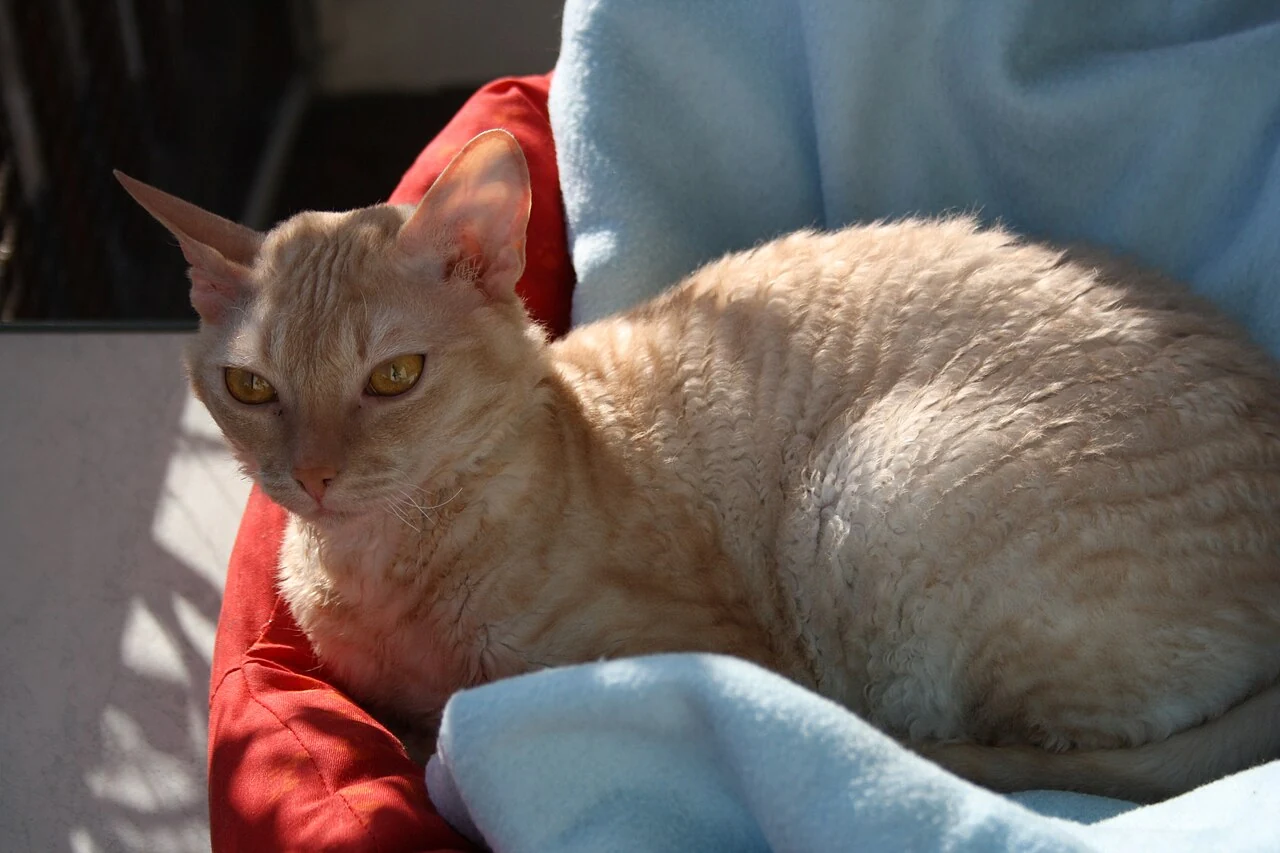
In the summer of 1951, the doctor Rose Scheuer-Karpin noticed a black curly coated cat in a Berlin hospital garden. Staff reported knowing the cat since 1947. Her unusual coat proved to be inherited, and she became the founding female of the later German Rex. FIFe recognised the breed in 1982.
The German Rex is a distinct Rex breed. Rex is a name used for curled or wavy coats in several cat breeds. It does not mean that German Rex, Devon Rex and Cornish Rex share the same body shape or breed history. The German Rex has a rounded head, developed cheeks and medium sized ears. Her body is of medium length, strong and muscular without appearing massive. The medium length tail is well coated.
A kitten should become familiar with grooming in small, pleasant steps. She can first sniff the comb before a few gentle strokes are introduced. An adult usually gives a clearer picture of the games and touches she enjoys. With an older cat, you should notice reduced jumping or difficulty grooming particular places. More accessible beds can help while an examination establishes whether pain is responsible.
Skin, teeth and health history
Before taking a cat home, you should ask about her own and her family’s health history. Previous skin problems, unusual hair loss and available examination records should be discussed. These records help the veterinary team assess her health and plan appropriate checks.
In daily life, you should also watch the condition of her skin and any changes in grooming. If she suddenly scratches or licks frequently, possible causes should be investigated by the veterinary team. Routine care should also include discussion of teeth, weight, vaccinations and parasite protection suited to her lifestyle. Bad breath, drooling or unusual chewing may indicate a painful mouth. Dental care should be introduced gradually with products suitable for cats. If the gums are inflamed or the mouth is painful, the veterinary team should first examine and treat the cause.
A wavy coat does not make the German Rex free of allergens. People may react to proteins from skin and saliva, among other sources. A suspected cat allergy should be assessed medically before bringing a cat home. For a cat already living with you, brief notes and photographs help describe skin changes clearly. Fellfolio provides a shared place for those observations, results and routine appointments.
How a German Rex may fit your daily life
Could work well if …
- You enjoy active games with a cat and can offer climbing routes, hiding places and quiet beds.
- You want closeness to develop willingly and enjoy learning your cat’s preferences.
- You can groom a fine wavy coat gently and notice changes in skin or grooming behaviour.
Before you bring one home
- The fine wavy hair should be groomed gently. Vigorous brushing may break hair and irritate skin.
- A curly coated cat can release allergens just as other cats do. An existing allergy should be discussed medically before adoption.
- Another cat should be introduced gradually. Separate litter trays, feeding places and retreats remain important for a sociable cat.
Meet other cat breeds.
Selected by size, activity, care and play needs.
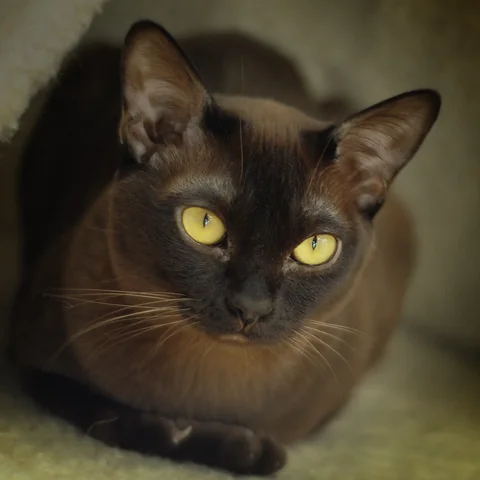
Shorthair cat · Southeast Asian roots
Burmese
Compact, silky-coated and strongly people-oriented, the Burmese often seeks close contact and joins in family life.
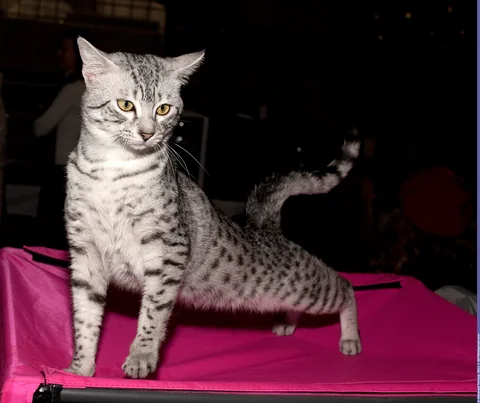
Spotted shorthair · Egypt
Egyptian Mau
The Egyptian Mau is a fast, spotted cat that enjoys playing with familiar people and often watches a new situation carefully before joining in.
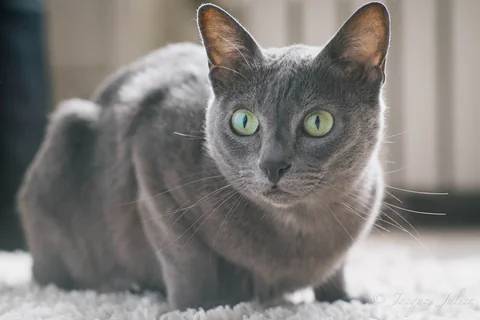
Shorthair · Thailand
Korat
The Korat, with its silver-sheened blue-grey coat, comes from Thailand. Compact and muscular, it seeks familiar company and often plays with impressive persistence.
Sources and photograph credit
- Pet allergies
Used in this profile for: Health
- Opinion on the welfare implications of feline breeding practices
Used in this profile for: Day-to-day care, Health
- Grooming your cat
Used in this profile for: Day-to-day care, Health, Could this breed fit your life?
- Indoor cats
Used in this profile for: Everyday life, Could this breed fit your life?
- Cats and play
Used in this profile for: Everyday life
- Why do cats have whiskers?
Used in this profile for: Day-to-day care
- Feline Dental Disease
Used in this profile for: Health
- Loving Care for Older Cats
Used in this profile for: Size and build
- German Rex breed profile
Used in this profile for: Temperament, Everyday life, Size and build, Could this breed fit your life?
- German Rex breed standard, 1 January 2026
Used in this profile for: Day-to-day care, Size and build
- Introducing your new cat to other cats in your home
Used in this profile for: Temperament
- How to keep your cat healthy and happy
Used in this profile for: Health
Photo credits
Side view · German rex.jpg · Bebopscrx · CC BY-SA 3.0 · Edited

Coat and features · Elmo vom Hause Jung.jpg · Grx-vd-huettenwerken · Public domain

Everyday life · German rex alana.JPG · M. Gerver / Bebopscrx · CC BY-SA 2.5 · Edited

Coat and features · CH Saxonys-Charlotta vom Batu (Lotti) GRX b female EX1 CAC CH Portrait.JPG · Heikki Siltala · CC BY 3.0 · Edited
_GRX_b_female_EX1_CAC_CH_Portrait.JPG)