 fellfolio
Semi-longhair cat · Abyssinian group
Somali
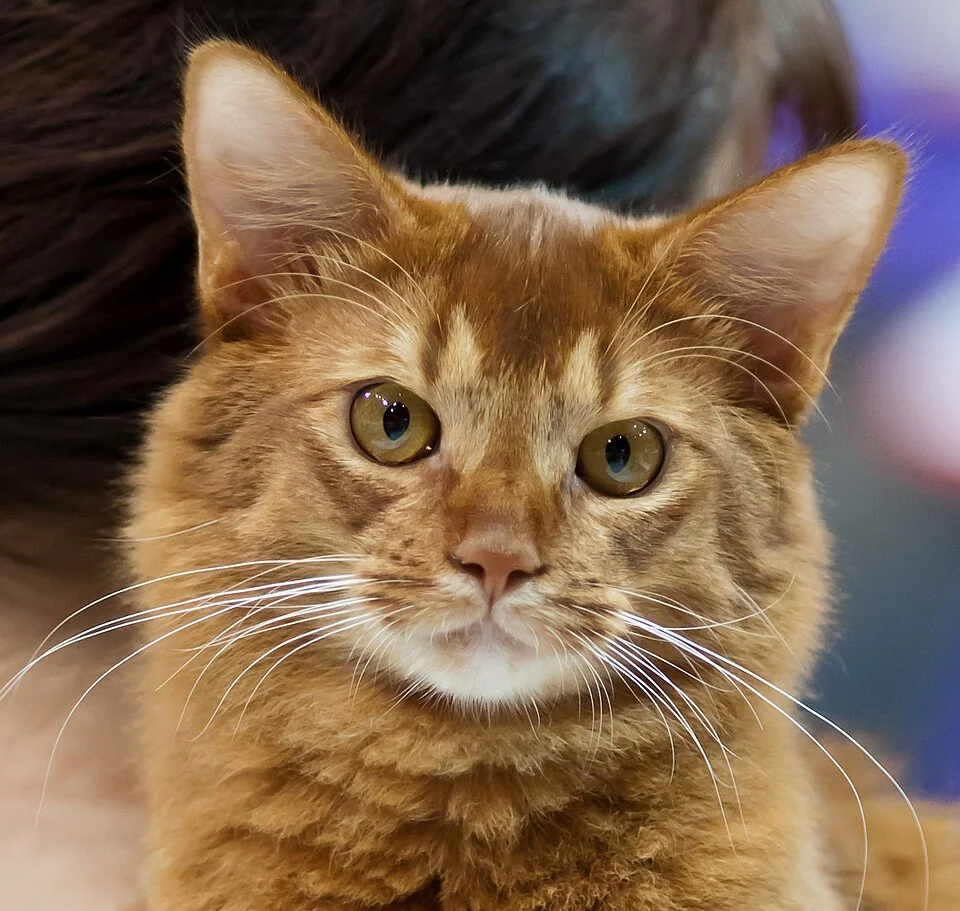
The Somali is closely related to the Abyssinian but has a semi-long coat and a bushy tail. Light and dark bands on individual hairs give the coat its finely shaded appearance.
At a glance
- Size
- Medium
- Weight
- 2.7 to 4.5 kg
- Lifespan
- 12 to 14 yearsUK GCCF cat breed profile
- Activity
- High
- Care needs
- Low
- Enrichment
- Plenty of variety
- Owner experience
- First cat with preparation
Curiosity in a longer coat
The Somali is closely related to the Abyssinian and has a semi-long coat. It likes to follow what is happening at home, seek high observation places and take part in games. Many are friendly and affectionate without wanting to sit still for hours. For play, provide safe routes upwards and room for short hunting games.
Climb, chase and search
A tall cat tree, a cardboard box and a few changing toys can give a Somali plenty to do. A wand toy has a small toy attached to a rod by a cord. Move the toy between different levels and let the cat catch it during the game. Put the wand away after playing together. Use a food puzzle that lets the cat work out small portions of its daily food, or hide a toy for it to find. For a cat that climbs so readily, sturdy furniture and secure windows matter more than a constant supply of new toys.
For practical play, food searches and quiet retreats, read Indoor Cat Enrichment: Play, Food Puzzles and Safe Retreats ↗
Soft coat and healthy gums
The semi-long coat feels soft and, according to the International Cat Association (TICA), mats less readily than its fullness might suggest. Comb gently on a regular basis and check behind the ears, around the chest and along the belly for knots. This helps you find mats before they pull on the skin. Early gum problems are reported in some Somali lines. Get the cat used to a quick look in the mouth and have red gums or changes in eating checked by a vet.
Abyssinian outline, plumed tail
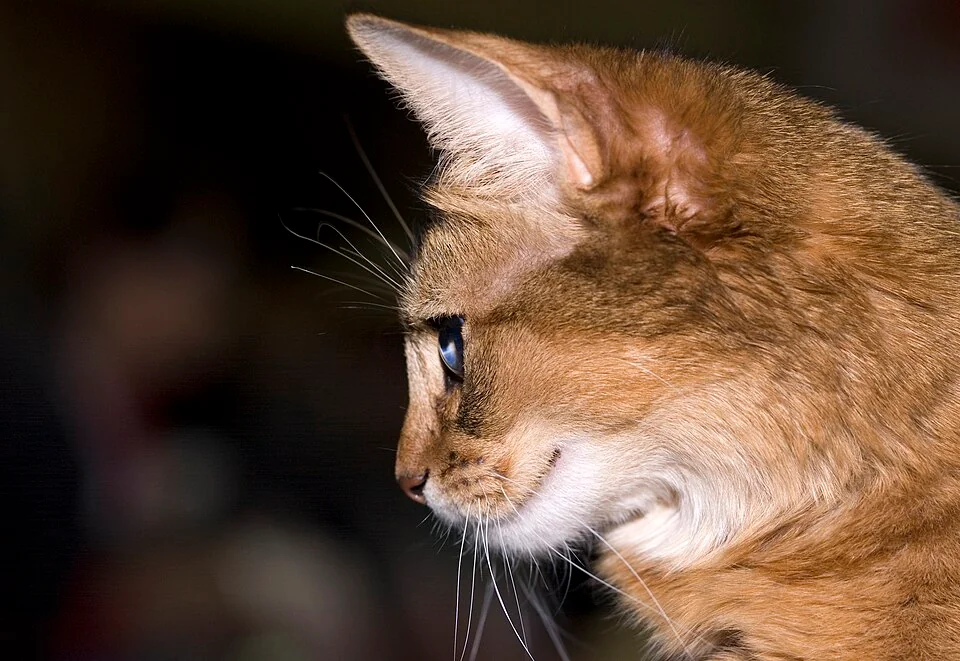
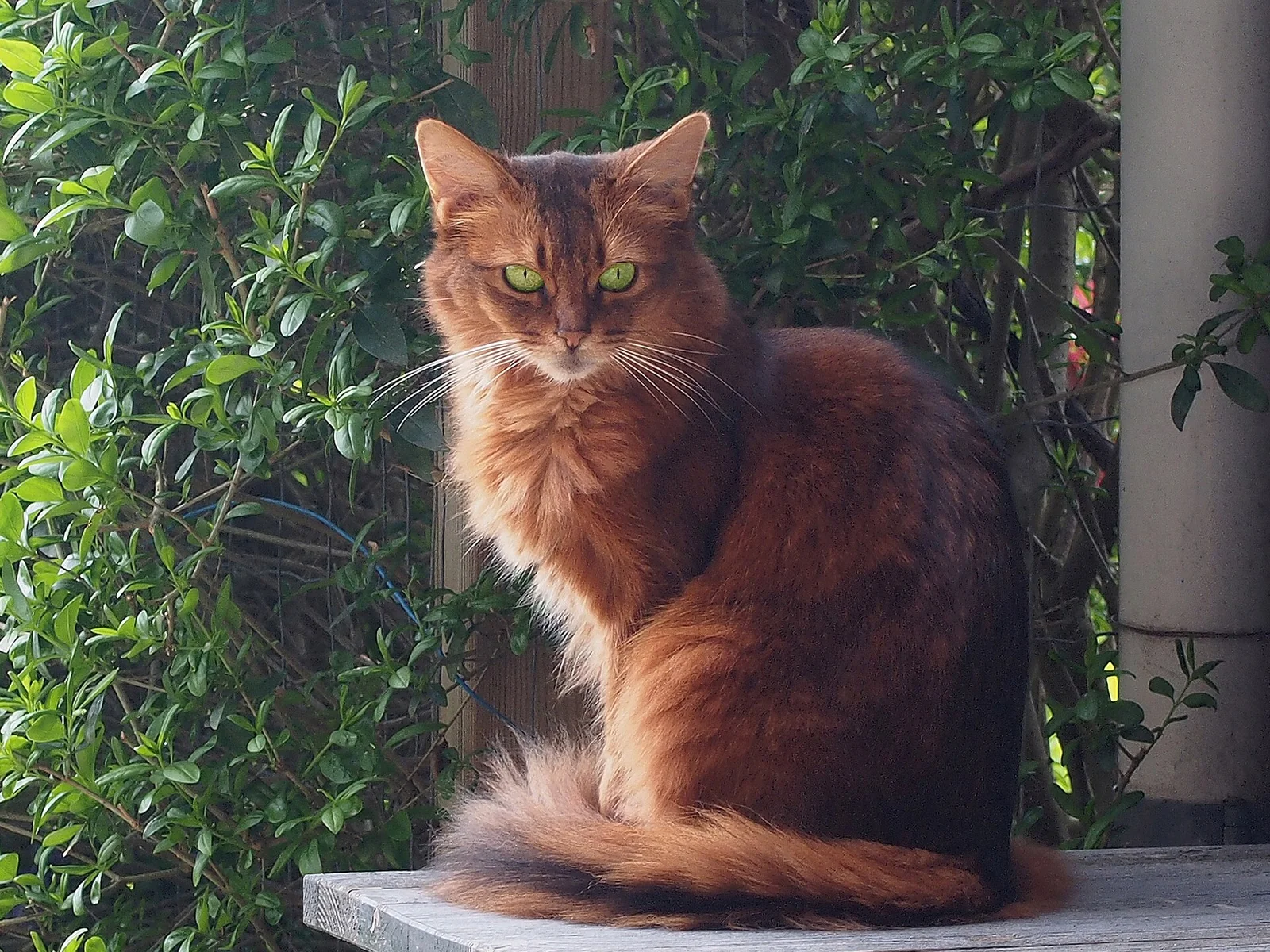
The Somali is medium-sized, agile and firmly muscled, with long slim legs and oval paws. Its tail carries much more hair than an Abyssinian's and looks like a soft plume. Ticking remains a hallmark: light and dark bands on individual hairs give the coat its fine shading. TICA’s weight overview lists adult females at roughly 2.7 to 3.6 kg and males at 3.6 to 4.5 kg.
Genetic tests and kidney health
Genetic tests are available for pyruvate kinase (PK) deficiency and two forms of progressive retinal atrophy (PRA) in Somalis. In PK deficiency, an enzyme in red blood cells does not work adequately; the cells break down too quickly and anaemia can develop. PRA damages the light-sensitive cells of the retina in the eye and can lead to blindness.
Ask for both parents’ written PK results and results for the form of PRA called rdAc. These tests examine particular changes in DNA, the inherited genetic information. For PK deficiency and rdAc, carriers have one copy of the relevant change but do not develop that condition themselves. Two carriers of the same change can produce affected kittens. The rare Rdy form of PRA can blind very young kittens, and a negative rdAc result does not rule it out. Ask about early blindness in the family and targeted Rdy testing if there is reason for concern.
TICA also describes gum problems and renal amyloidosis in some lines. In renal amyloidosis, misfolded proteins collect in kidney tissue and can impair its function. The genetic tests described above do not cover this condition. Ask about known kidney disease in the family. Increased thirst, weight loss or changes in eating need veterinary assessment.
Could this breed fit your life?
Could work well if …
- You enjoy a very active, curious cat and like playing together.
- You can provide secure climbing routes and regular coat and dental care.
May be more difficult if …
- You expect a quiet sofa companion because of the fluffy coat.
- Your home has little room or time for climbing and shared activity.
Meet other cat breeds.
Selected by size, activity, care and play needs.
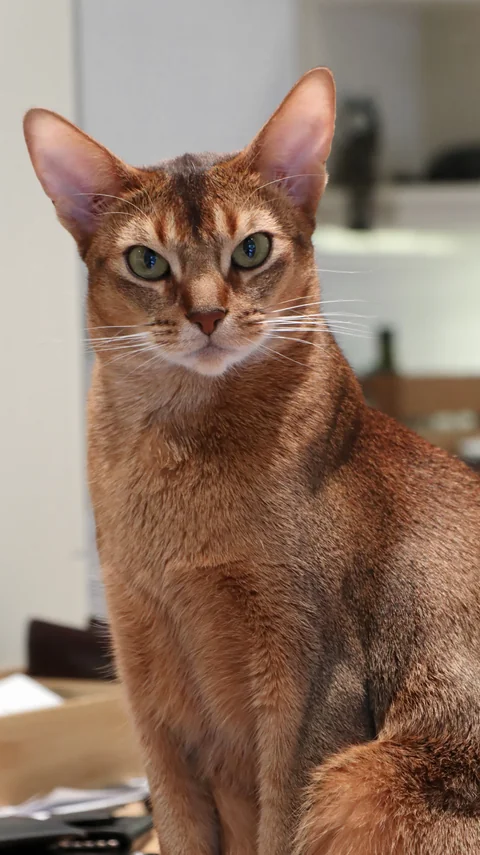
Shorthair cat · Great Britain
Abyssinian
An agile, curious cat that enjoys climbing and joining in household life. Light and dark bands on individual hairs give its short coat a finely shaded appearance.
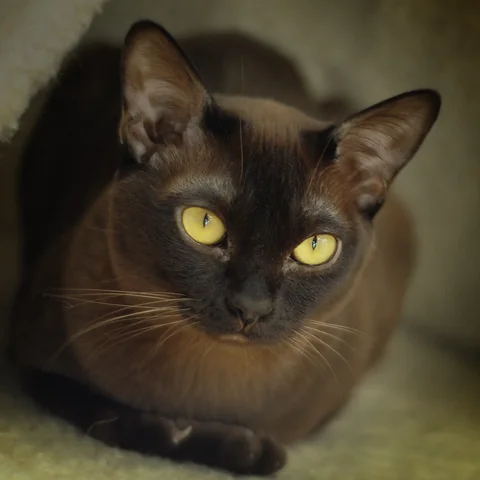
Shorthair cat · Southeast Asian roots
Burmese
Compact, silky-coated and strongly people-oriented, the Burmese often seeks close contact and joins in family life.
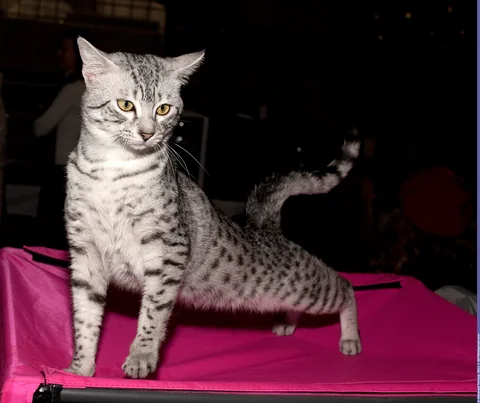
Spotted shorthair · Egypt
Egyptian Mau
The Egyptian Mau is a fast, spotted cat that enjoys playing with familiar people and often watches a new situation carefully before joining in.
Sources and photograph credit
- Cat dental care
Used in this profile for: Day-to-day care
- Renal Amyloidosis
Used in this profile for: Health
- How to Feed a Cat: Addressing Behavioral Needs
Used in this profile for: Everyday life
- Somali
Used in this profile for: Day-to-day care, Lifespan
- Amyloidosis in Cats
Used in this profile for: Health
- Somali
Used in this profile for: Size / Weight, Temperament, Everyday life, Day-to-day care, Size and build, Health, Could this breed fit your life?
- Erythrocyte Pyruvate Kinase Deficiency
Used in this profile for: Health
- Progressive Retinal Atrophy (PRA rdAc) in Cats
Used in this profile for: Health
- Progressive Retinal Atrophy (PRA Rdy) in Abyssinian and Somali Cats
Used in this profile for: Health
Portrait · Kharn-Ka Weinfelderfox (Gismo) SOM o · Heikki Siltala / Catza.net · CC BY 3.0 · Edited
_SOM_o.jpg)
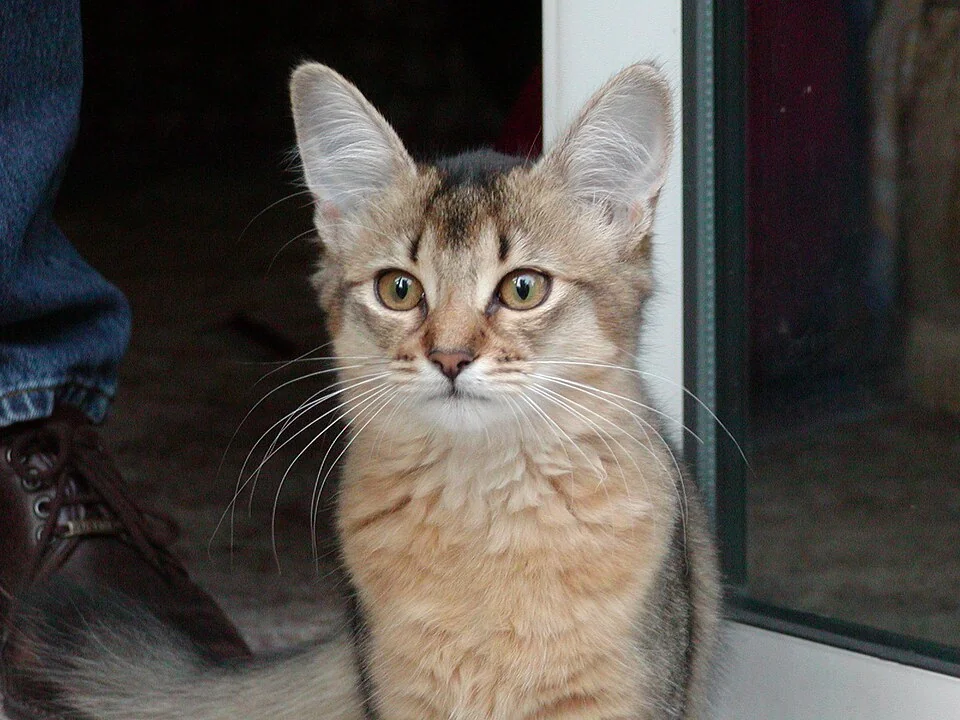
Kitten · Usual Somali kitten age 4 months · RedEd · CC BY-SA 3.0 · Edited

Body shape · Ruddy Somali female · Finn Frode Hansen · CC BY-SA 4.0 · Edited

Coat and features · SOM Anastasija · Nickolas Titkov · CC BY-SA 2.0 · Edited
.jpg)