 fellfolio
Shorthaired cat · Kenya
Sokoke
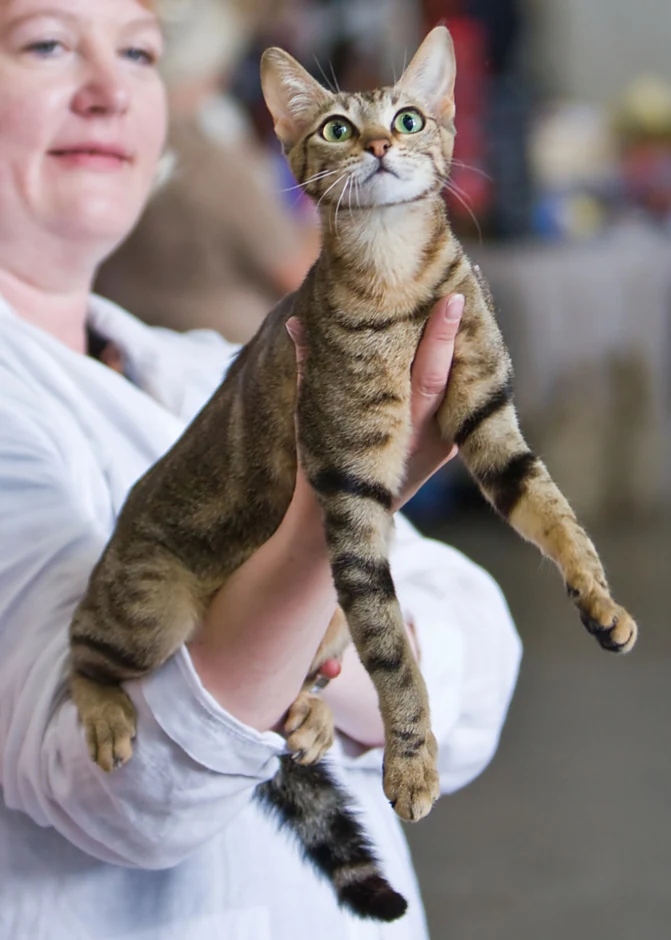
The Sokoke stands out through her dark marbled markings and long, slender body. This rare domestic cat breed comes from Kenya and takes its name from the Arabuko-Sokoke forest area. Many Sokokes enjoy movement and climbing and form close bonds with familiar people.
At a glance
- Size
- Medium
- Activity
- High
- Care needs
- Low
- Owner experience
- First cat with preparation
An attentive climber with close bonds
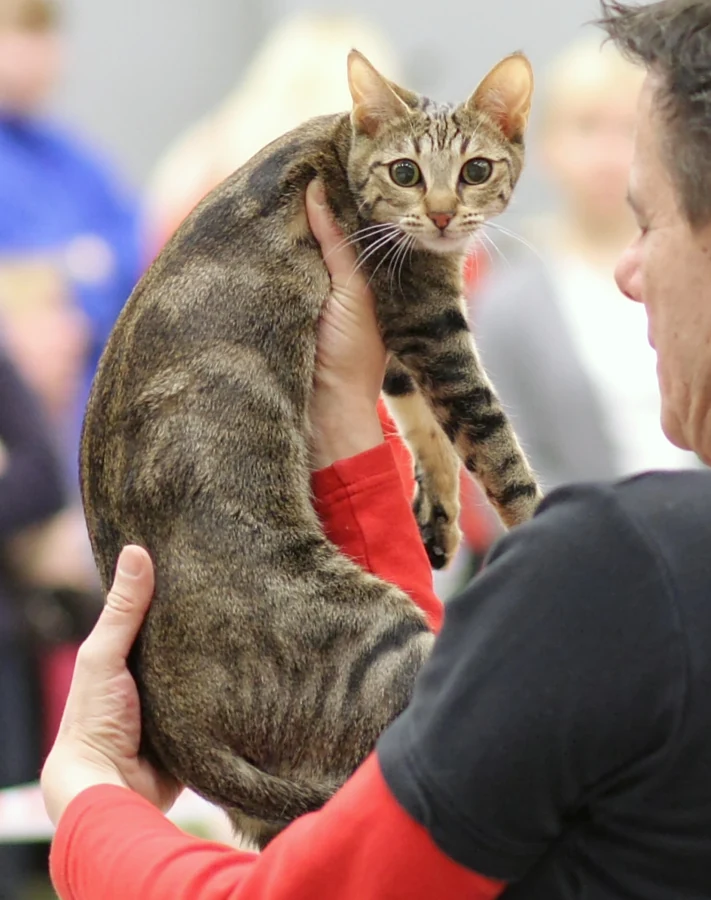
A Sokoke may use a room on several levels. From the floor, she can move to a safe intermediate platform and on to a lookout to watch events below. FIFe, the international cat federation, describes a very active cat who enjoys climbing and readily communicates with her voice. Britain's cat registry GCCF also emphasises close bonds with familiar people.
You should allow time for these bonds when bringing a cat home. A move takes an adult away from familiar places, scents and possibly people or other cats. She should initially have a quiet area of her own, with food, water, a litter tray and hiding places. Once she eats comfortably, rests and willingly seeks contact there, she can gradually explore other rooms. You should not pull her from a hiding place to hurry introductions.
People can build trust through small, pleasant encounters. You might sit quietly nearby or offer a toy without immediately reaching for her. Children should also learn to wait for these invitations. Another cat needs gradual introductions and separate essential places. Whether the two want to play together is better judged from their actual behaviour than from a shared breed name.
Safe routes upwards and time for games
The home should give a Sokoke opportunities to move. Securely fixed climbing furniture, sufficiently wide resting surfaces and accessible intermediate steps create routes she can choose to use. Scratching places should also be positioned thoughtfully. A high perch is of little use if reaching or leaving it requires a risky jump. Windows and an accessible balcony should be secured against escapes and falls.
During play, changing small movements can catch her attention. A toy attachment scurrying briefly across the floor and disappearing behind a box allows time for watching and stalking. She should also catch and hold her toy prey. Loose strings and wand toys should be put away afterwards. A safely constructed hiding place or a fresh cardboard box can provide interest without buying a new toy every day.
For a food search, a few pieces of familiar food should initially be easy to find. Later, they can be offered in several safe places. This amount belongs within the daily allowance. Shared time should be a regular possibility, while resting places remain undisturbed. During a longer absence, the person providing care needs details of food, toilet habits, favourite games and usual behaviour. For a cat with strong bonds, a familiar carer helps keep everyday life dependable.
For practical play, food searches and quiet retreats, read Indoor Cat Enrichment: Play, Food Puzzles and Safe Retreats ↗
A short coat with a distinctive pattern
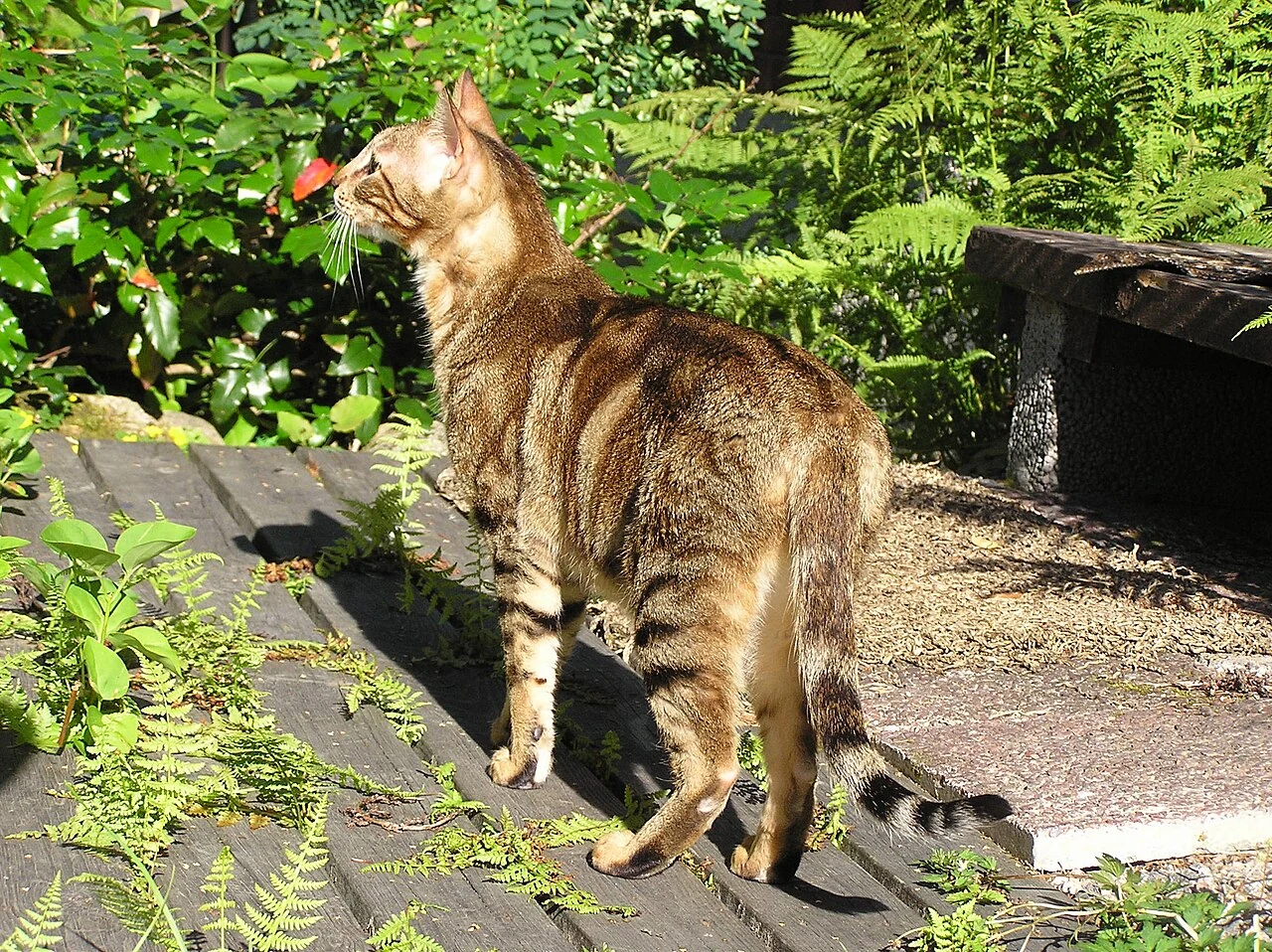
The very short coat lies close to the body and looks glossy. It has little or no undercoat. Within the dark pattern, individual hairs can have alternating lighter and darker sections. This banding changes the appearance of the larger markings and gives the coat its distinctive effect.
Gentle weekly grooming is a useful opportunity to remove loose hair and check the skin and body condition. Even a shorthaired cat should be introduced to it gradually. A few brush strokes may be enough to begin with. Reddened skin, sudden hair loss or unusually frequent licking should be investigated.
An older cat may need help with areas she can no longer reach easily. Brief grooming sessions can provide that support. You should also have possible pain restricting movement assessed. Dental care should be introduced gradually, using suitable cat products and guidance from the veterinary team. A painful mouth should be examined first rather than brushing against the cat's resistance.
A rare domestic breed from Kenya
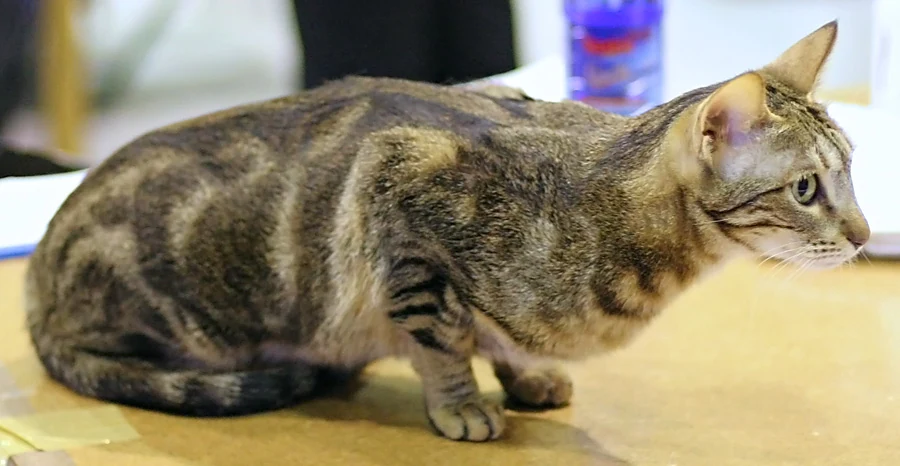
The Sokoke is a domestic cat breed from Kenya. Its development as a deliberately bred population began in 1978, when Jeni Slater established a breeding programme with cats found near Watamu. Gloria Moeldrop brought cats to Denmark in 1983. Further breeding and exhibitions introduced the type to Europe. FIFe recognised the Sokoke in 1994. The name refers to the Arabuko-Sokoke forest in the region of origin.
The standard describes a medium sized, long bodied cat with good muscle, relatively long legs and a fairly small wedge shaped head. The hind legs are longer than the front legs. Eyes range from amber to light green. Large dark marbled markings, softened by banded hairs, are distinctive.
The breed is rare, and its small breeding population makes the choice of breeding animals and preservation of genetic diversity especially important. Someone seeking a kitten should ask about ancestry, health history and early care. An adult Sokoke may already offer a clear picture of preferences and bonds. In later life, shorter games and additional intermediate steps should help her stay active. New uncertainty when jumping should be assessed so possible pain is not overlooked.
Health history and attentive routine care
For a rare breed, specific health records are especially useful. Before taking a cat home, you should ask whether particular conditions have repeatedly occurred in the family and which examinations the parents and cat have had. The GCCF discusses genetic diversity in its Sokoke breeding recommendations. A small population needs careful, documented breeding decisions.
Your veterinary team should explain a suitable preventive care plan for your Sokoke. This includes vaccinations, parasite protection suited to her way of life and regular assessment of body condition and teeth. Observations at home complement these appointments. Changes in eating, weight loss or unusual quietness should be investigated. Bad breath, drooling or chewing on one side may indicate dental problems. Cats sometimes continue eating despite this pain.
Toilet habits also merit attention. Repeated attempts to urinate with little or no urine need immediate veterinary help, because a blocked urethra can be life threatening. More frequent visits to the litter tray or blood in the urine should also be assessed promptly. Fellfolio can keep results, routine appointments and brief observations together. Notes about the time and specific change are more helpful to the veterinary team than a general impression that the cat seems different.
Would a Sokoke suit your home?
Could work well if …
- You enjoy an active cat and can provide safe climbing routes and varied games.
- You want to build trust patiently and let the cat choose when to come close.
- For a rare breed, you are interested in documented ancestry, early care and family health history.
May be less suitable if …
- A move should be prepared with a quiet beginning and time to get acquainted, particularly for an adult cat with close existing bonds.
- Climbing places should be stable, wide enough and accessible along safe routes. Height alone does not provide this.
- In a small breeding population, you should discuss specific health records and breeding decisions rather than assuming rarity means better health.
Meet other cat breeds.
Selected by size, activity, care and play needs.
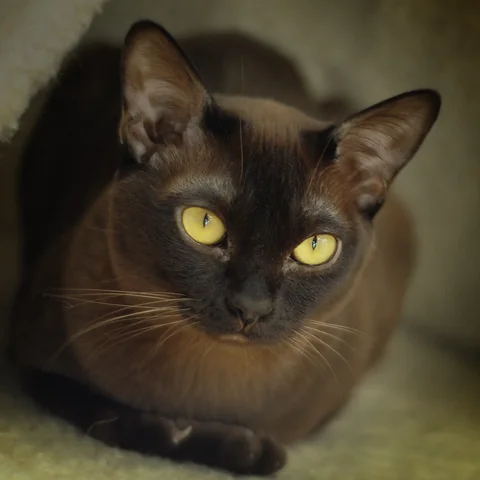
Shorthair cat · Southeast Asian roots
Burmese
Compact, silky-coated and strongly people-oriented, the Burmese often seeks close contact and joins in family life.
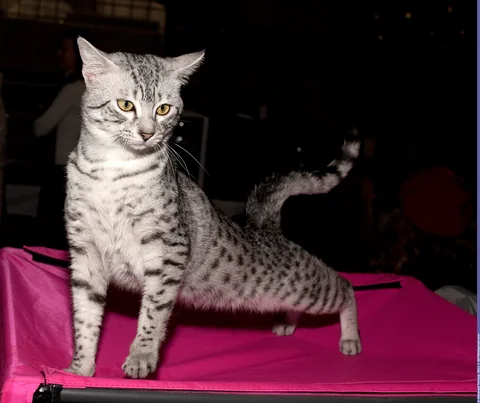
Spotted shorthair · Egypt
Egyptian Mau
The Egyptian Mau is a fast, spotted cat that enjoys playing with familiar people and often watches a new situation carefully before joining in.
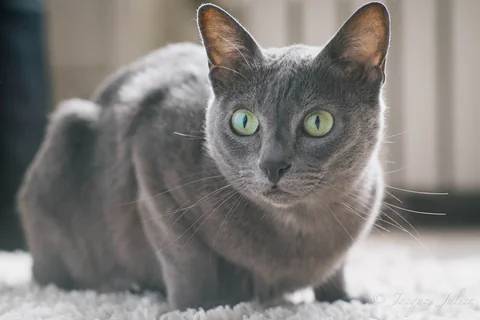
Shorthair · Thailand
Korat
The Korat, with its silver-sheened blue-grey coat, comes from Thailand. Compact and muscular, it seeks familiar company and often plays with impressive persistence.
Sources and photograph credit
- Indoor cats
Used in this profile for: Everyday life, Could this breed fit your life?
- Tips for grooming longhaired cats
Used in this profile for: Day-to-day care
- Cats and play
Used in this profile for: Everyday life
- Feline Dental Disease
Used in this profile for: Day-to-day care, Health
- Feline Lower Urinary Tract Disease
Used in this profile for: Health
- Loving Care for Older Cats
Used in this profile for: Day-to-day care, Size and build
- Introducing your new cat to other cats in your home
Used in this profile for: Temperament, Could this breed fit your life?
- How to keep your cat healthy and happy
Used in this profile for: Everyday life, Health
- Sokoke breed profile
Used in this profile for: Temperament, Everyday life, Size and build, Could this breed fit your life?
- Sokoke breed standard, 1 January 2026
Used in this profile for: Day-to-day care, Size and build
- Sokoke breed profile
Used in this profile for: Temperament, Day-to-day care
- Sokoke breeding policy, December 2019
Used in this profile for: Temperament, Size and build, Health, Could this breed fit your life?
Photo credits
Portrait · Heikki Siltala · CC BY 3.0
.jpg)
Everyday life · Heikki Siltala · CC BY 3.0

Coat and features · Heikki Siltala · CC BY 3.0

Side view · A. Turto (SHD) · CC BY-SA 2.5
