 fellfolio
Shorthaired cat · United States
Snowshoe
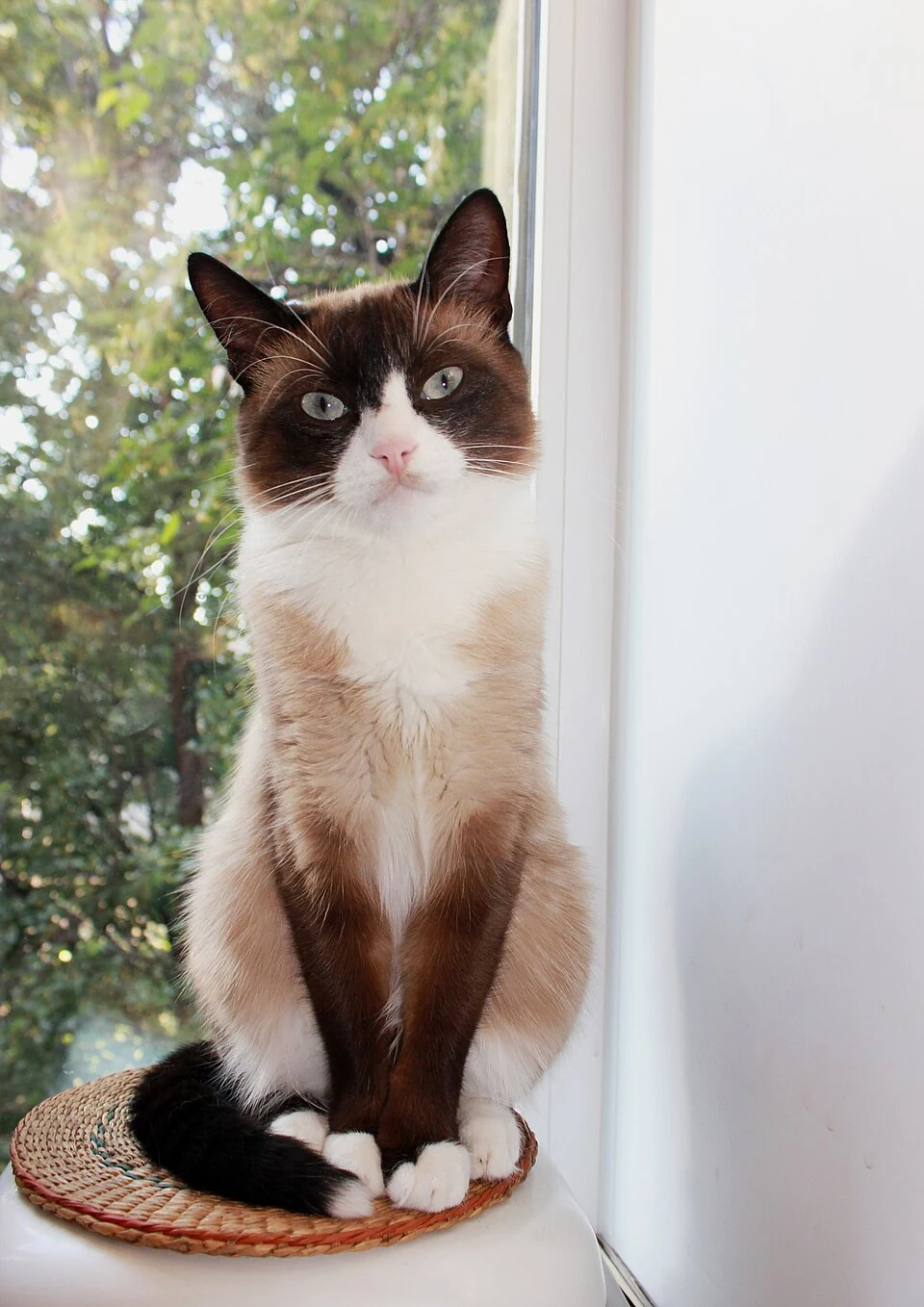
White paws beneath darker legs gave the Snowshoe her name. This blue eyed, shorthaired cat originated in the United States from Siamese and American Shorthair cats. Many Snowshoes enjoy company and shared games. The short coat is manageable to groom, while companionship and activities need time every day.
At a glance
- Size
- Medium
- Weight
- 3.2 to 5.4 kg
- Activity
- High
- Care needs
- Low
- Enrichment
- Enjoys learning together
- Owner experience
- First cat with preparation
White paws and an interest in family life
A Snowshoe might race through the room with a toy, then soon settle beside a familiar person. The international cat federation FIFe and The International Cat Association, TICA, describe a sociable, affectionate and playful cat. Many take an interest in events around the home. Visiting the desk or bringing a ball can be their way of seeking company.
You should learn how much company an individual Snowshoe wants when getting to know her. Some live comfortably with a familiar cat, while others chiefly seek their people's attention. Her previous way of life is therefore useful information before adoption. A cat arriving with a longstanding companion faces different changes from one meeting an unfamiliar cat for the first time.
Her choices should also be respected in a family home. Children can offer a ball or wand toy and wait to see whether she joins in. If she leaves, nobody should carry her back to continue playing. A quiet sleeping place away from the commotion helps combine company with rest. When another cat arrives, both should initially have their own areas so introductions can proceed in small steps.
Shared games and curious discoveries
A Snowshoe needs opportunities to explore her curiosity. A cardboard box, a sturdy scratching place and a raised resting surface offer different activities. These should be accessible during everyday life and securely supported. In a home with several cats, essential routes should not all meet at a single narrow point. Otherwise one cat may constantly have to pass close by another to reach food or the litter tray.
Some Snowshoes enjoy retrieving. You can roll a small cat toy ball and watch whether she brings it back. If she does, you should respond with something pleasant, such as rolling it again or offering a small reward. If she prefers carrying it to her own spot, you can try a different shared game. A wand attachment moving like a small prey animal can also invite stalking and pouncing. She should sometimes be able to catch her toy prey.
Brief games together often fit well into the morning or evening. A simple food puzzle offers a quieter activity. The portion used should come from the daily allowance. Someone regularly away for long periods should arrange suitable care and company before the cat arrives. This also means having someone who notices reduced eating, withdrawal or unusually frequent visits to the litter tray.
For practical play, food searches and quiet retreats, read Indoor Cat Enrichment: Play, Food Puzzles and Safe Retreats ↗
A short coat and gentle dental care
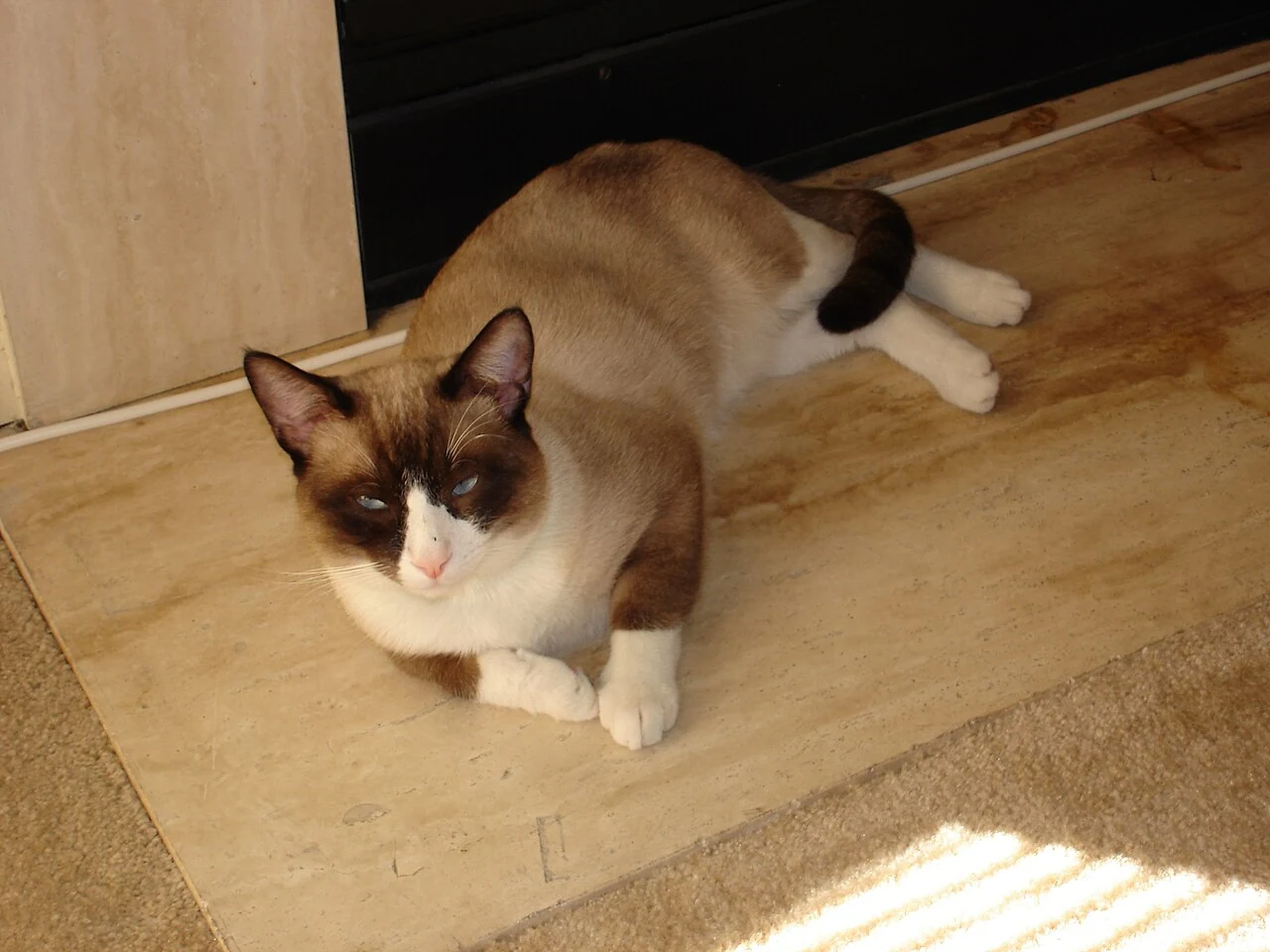
The short to medium short coat lies smoothly against the body and has no noticeable undercoat under the FIFe standard. Gentle brushing about once a week helps remove loose hair. You can also check for skin changes or sensitive places.
For a relaxed start, the brush should initially be used only briefly. If the cat responds calmly, you can gradually increase the time. With an older cat, you should notice whether she still grooms her back and hind legs well. A sudden reduction in grooming may indicate pain or illness and should be investigated.
Teeth and gums deserve attention despite the manageable coat. A gradual introduction to a cat toothbrush and appropriate toothpaste can make daily care easier. The veterinary team should explain suitable techniques and products. Bad breath, drooling or unusual chewing should be assessed before attempting to brush painful areas yourself.
From white footed Siamese kittens to a breed
The Snowshoe's history began in Philadelphia in the 1960s. Breeder Dorothy Hinds Daugherty noticed white paws in three Siamese kittens and developed the type through crosses with bicoloured American Shorthairs, later breeding back to Siamese. These beginnings led to a distinct breed. FIFe recognised the Snowshoe in 2004.
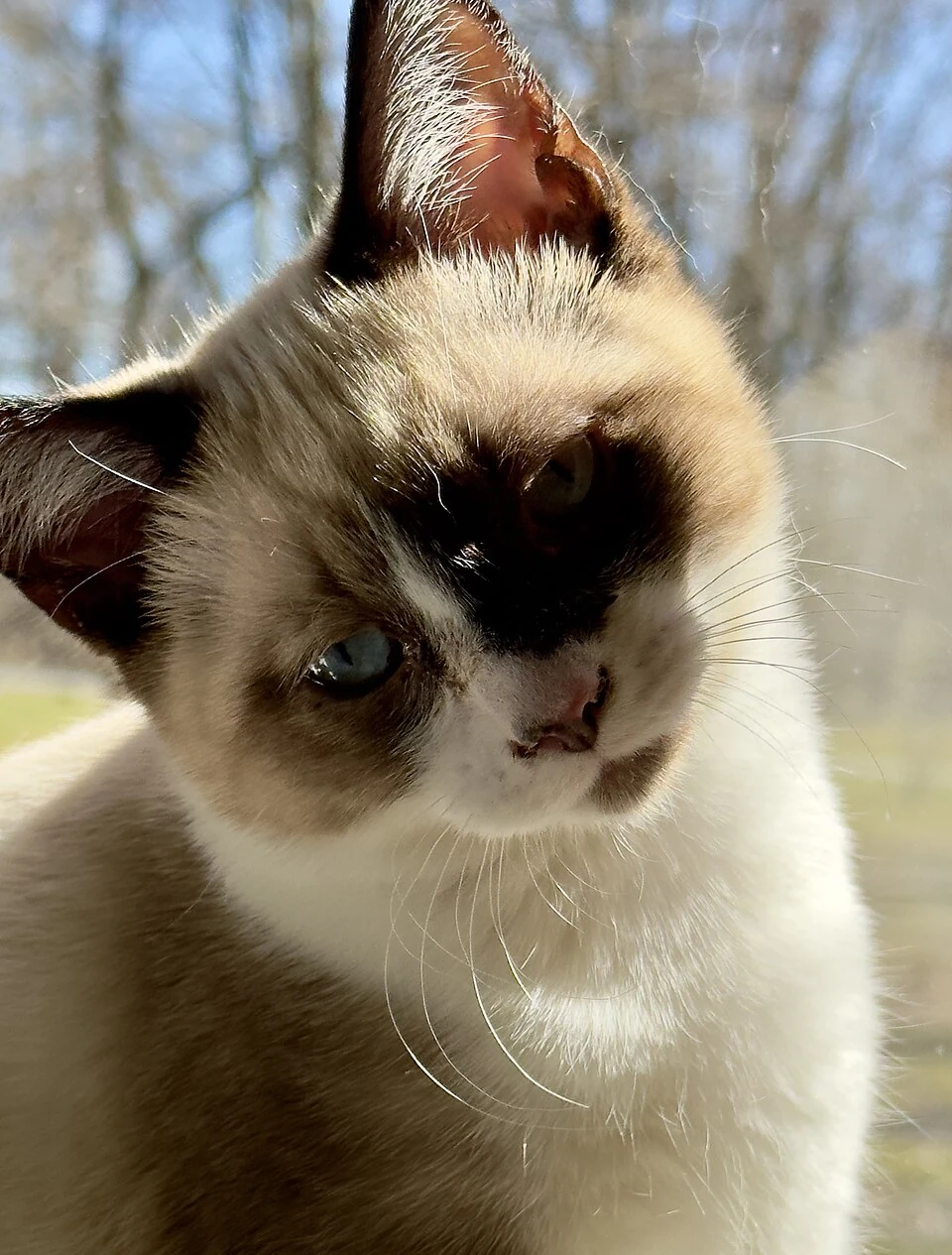
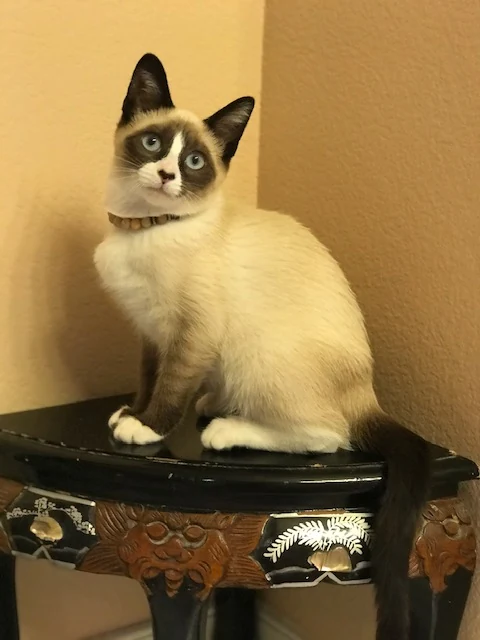
Her pattern combines darker extremities, known as points, with areas of white. The face, ears, legs and tail become darker than the body. Kittens are initially born white, with darker markings appearing as they develop. An inverted white V on the face is preferred in the standard. Markings vary, however. A Snowshoe with less evenly matched patches can still make a suitable family companion.
The body is medium sized, muscular and athletic, with blue eyes. Britain's cat registry GCCF gives females approximately 3.2 to 4.5 kilograms and males approximately 4.1 to 5.4 kilograms, rounded from its figures in pounds. Your veterinary team should assess an appropriate weight for your own cat using her build and body condition.
For a kitten, you should find out which games, sounds and brief grooming activities are already familiar. For an adult Snowshoe, information about familiar people and cats helps you prepare. In later life, favourite activities can be adapted, perhaps rolling a ball over a shorter distance or making a lookout accessible through small steps.
Understanding kidney examination results
The GCCF describes recorded cases of the inherited kidney condition PKD in the Snowshoe. The abbreviation stands for polycystic kidney disease. Fluid filled spaces, called cysts, develop within the kidneys. As they grow, they can displace healthy tissue and impair kidney function.
Before taking home a kitten, you should ask about relevant results in the breeding line. DNA tests examine known inherited changes. A result does not show how severely an affected cat will become ill later. Ultrasound can reveal cysts within the kidneys. Your veterinary team should explain which examinations make sense in the particular case and how existing results should be interpreted.
Increased drinking, weight loss or reduced appetite should be investigated promptly. These changes can have many causes and cannot reliably be attributed to kidney disease at home. Teeth and gums also need regular checks, because cats may continue eating despite pain. Fellfolio can keep examination results together with weight notes and observations. That makes it easier to explain what changed and when during a veterinary appointment.
Would a Snowshoe fit your everyday life?
Could work well if …
- You enjoy an often sociable cat and want to learn which games and forms of contact she chooses.
- You can offer shared time every day and provide scratching places, lookouts and quiet sleeping spots.
- You want to understand health history and plan dependable routine care and help during absences.
May be less suitable if …
- Markings vary between cats. Behaviour and health should matter more than symmetrical white patches when choosing a family companion.
- Another cat should be introduced gradually. Previous companions and play preferences help you choose a suitable match.
- Before buying a kitten, you should ask about documented PKD results in the breeding line and what existing examinations mean.
Meet other cat breeds.
Selected by size, activity, care and play needs.
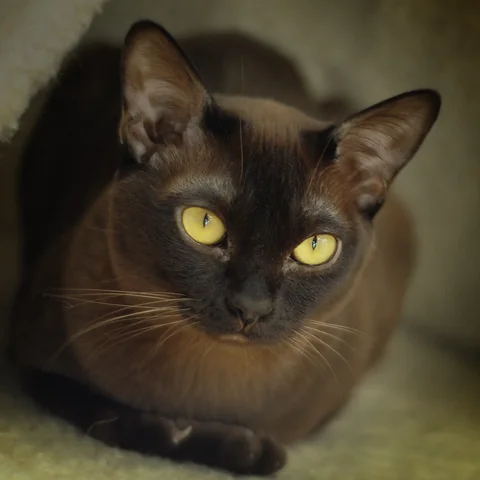
Shorthair cat · Southeast Asian roots
Burmese
Compact, silky-coated and strongly people-oriented, the Burmese often seeks close contact and joins in family life.
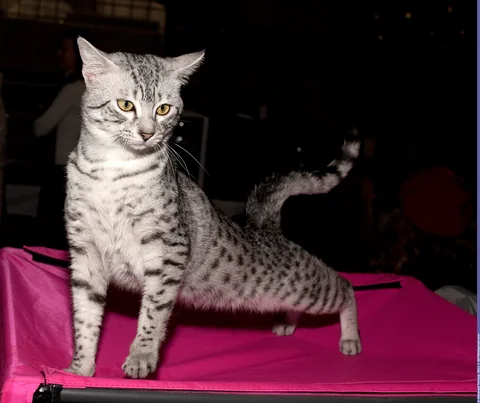
Spotted shorthair · Egypt
Egyptian Mau
The Egyptian Mau is a fast, spotted cat that enjoys playing with familiar people and often watches a new situation carefully before joining in.
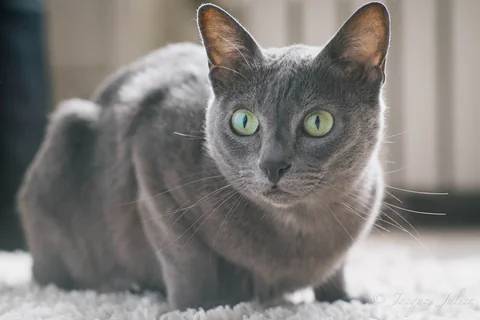
Shorthair · Thailand
Korat
The Korat, with its silver-sheened blue-grey coat, comes from Thailand. Compact and muscular, it seeks familiar company and often plays with impressive persistence.
Sources and photograph credit
- Indoor cats
Used in this profile for: Everyday life, Could this breed fit your life?
- Tips for grooming longhaired cats
Used in this profile for: Care needs, Shedding
- Cats and play
Used in this profile for: Everyday life
- Feline Dental Disease
Used in this profile for: Day-to-day care, Health
- Polycystic Kidney Disease
Used in this profile for: Health
- Loving Care for Older Cats
Used in this profile for: Day-to-day care, Size and build
- Introducing your new cat to other cats in your home
Used in this profile for: Temperament, Everyday life, Could this breed fit your life?
- How to keep your cat healthy and happy
Used in this profile for: Everyday life
- Snowshoe breed profile
Used in this profile for: Temperament, Size and build, Could this breed fit your life?
- Snowshoe breed standard, 1 January 2026
Used in this profile for: Day-to-day care, Size and build
- Snowshoe breed profile
Used in this profile for: Size / Weight, Temperament, Size and build, Health
- Snowshoe breed profile
Used in this profile for: Size / Weight, Temperament, Everyday life, Day-to-day care, Size and build
Photo credits
Portrait · SnowshoeCatRu · CC BY-SA 4.0

Kitten · Aanagram · CC BY-SA 4.0

Everyday life · Cooseman22 · CC BY 2.5
.JPG)
Coat and features · FatalFit · CC0
