 fellfolio
Semi-longhair cats
Nebelung
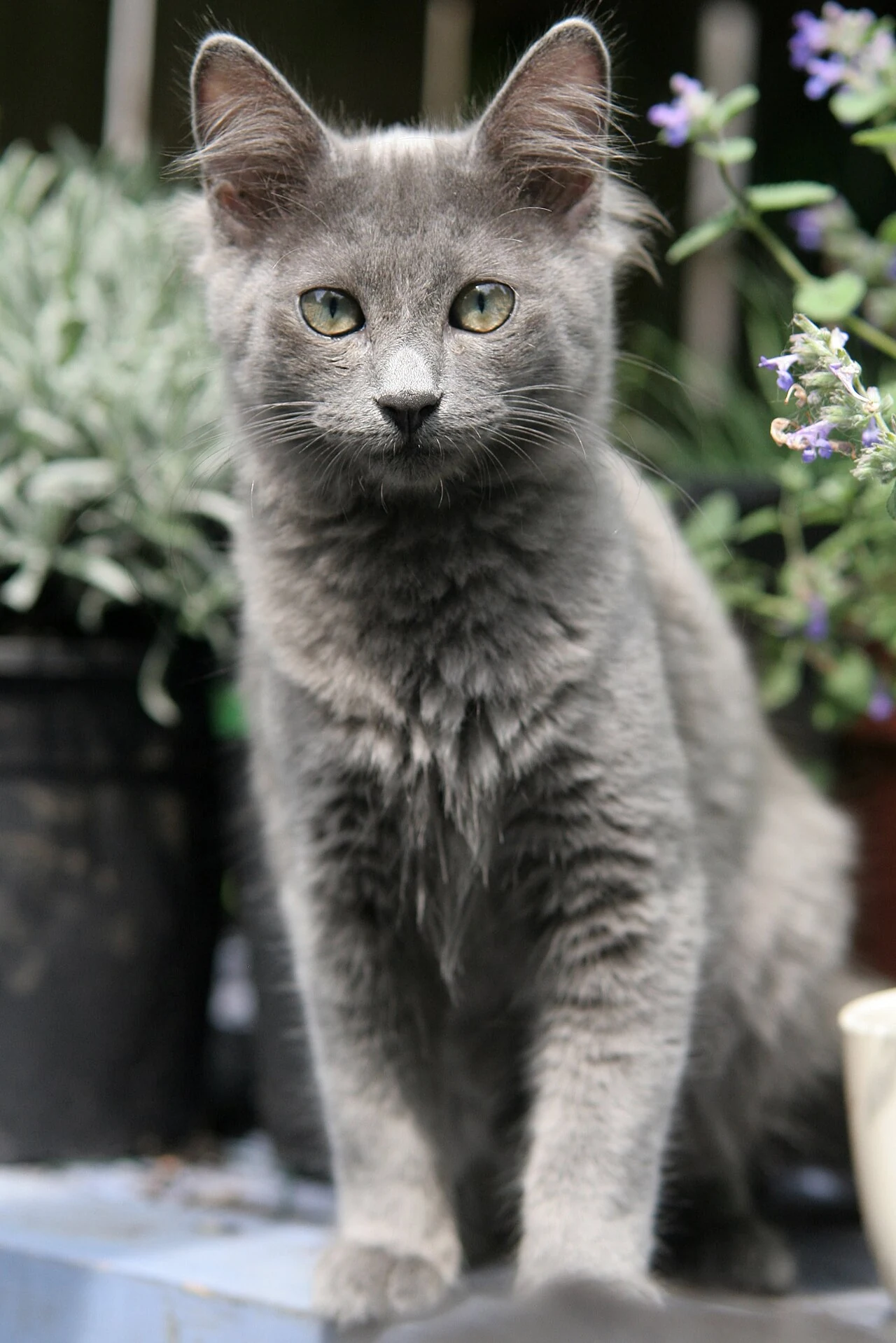
The Nebelung has a silky blue-grey coat with a silver sheen and often forms close bonds with familiar people. New situations may first be watched from a distance. A suitable home offers a calm welcome, opportunities to play and regular help with coat care.
At a glance
- Size
- Medium
- Activity
- Moderate
- Care needs
- Moderate
- Owner experience
- First cat with preparation
Familiar company and a silver-shimmering coat
When visitors arrive, a Nebelung may initially watch from a raised resting place. In familiar surroundings, the same cat can enjoy games and follow a trusted person from room to room. The British cat registry GCCF and the International Cat Association, known as TICA, describe this combination of reserve with strangers and affection towards family. When meeting a cat, you should therefore also find out how she behaves with people she knows.
The name evokes mist and the silvery tips of the blue coat. In cat breeding, “blue” means a blue-grey coat colour. The longer outer hairs lie above a fine undercoat. A long, muscular body, a full tail and green to yellow-green eyes shape the appearance. The coat can look denser or lighter with the seasons.
The breed was developed in the United States during the 1980s by Cora Cobb. Two blue longhaired cats, Siegfried and Brunhilde, were among its foundation cats. TICA accepted the Nebelung for championship competition in 1997. It is a separate breed related to the Russian Blue. A grey longhaired domestic cat cannot be identified as a Nebelung from colour and coat length alone. The ancestry of a pedigree cat should be traceable.
Settling in calmly and playing together
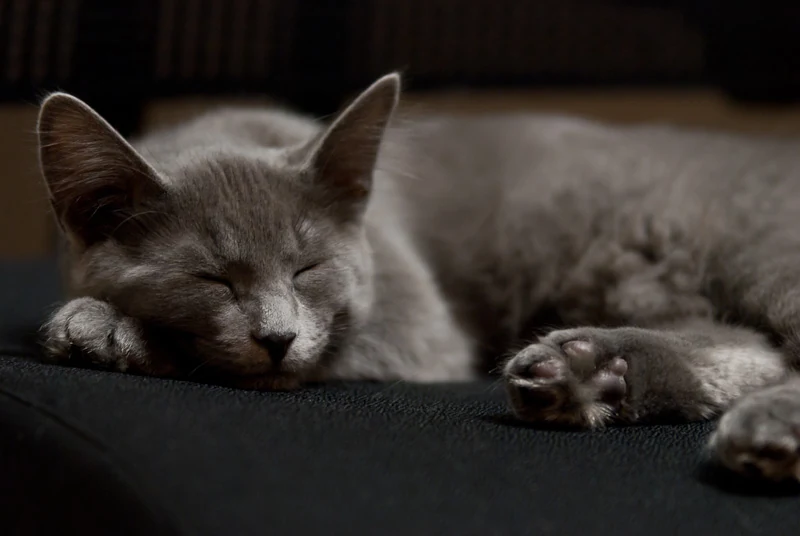
A new home is easier for a reserved cat to explore when she can begin in a quiet room. Food, water, a litter tray, a scratching surface and a hiding place should be available there. She should be able to watch from shelter without anyone pulling her out. Sitting quietly nearby lets her decide when to close the distance. Visitors should also allow her to approach them.
Once your Nebelung has settled, games that involve watching, stalking and then moving can be enjoyable. A toy mouse that disappears behind a box is often more interesting than something waved continuously in front of her nose. The cat should regularly be able to catch the toy. Some Nebelungs retrieve a thrown toy. You can try this with a suitable lightweight toy and see whether your cat enjoys it, without pressuring her to join in.
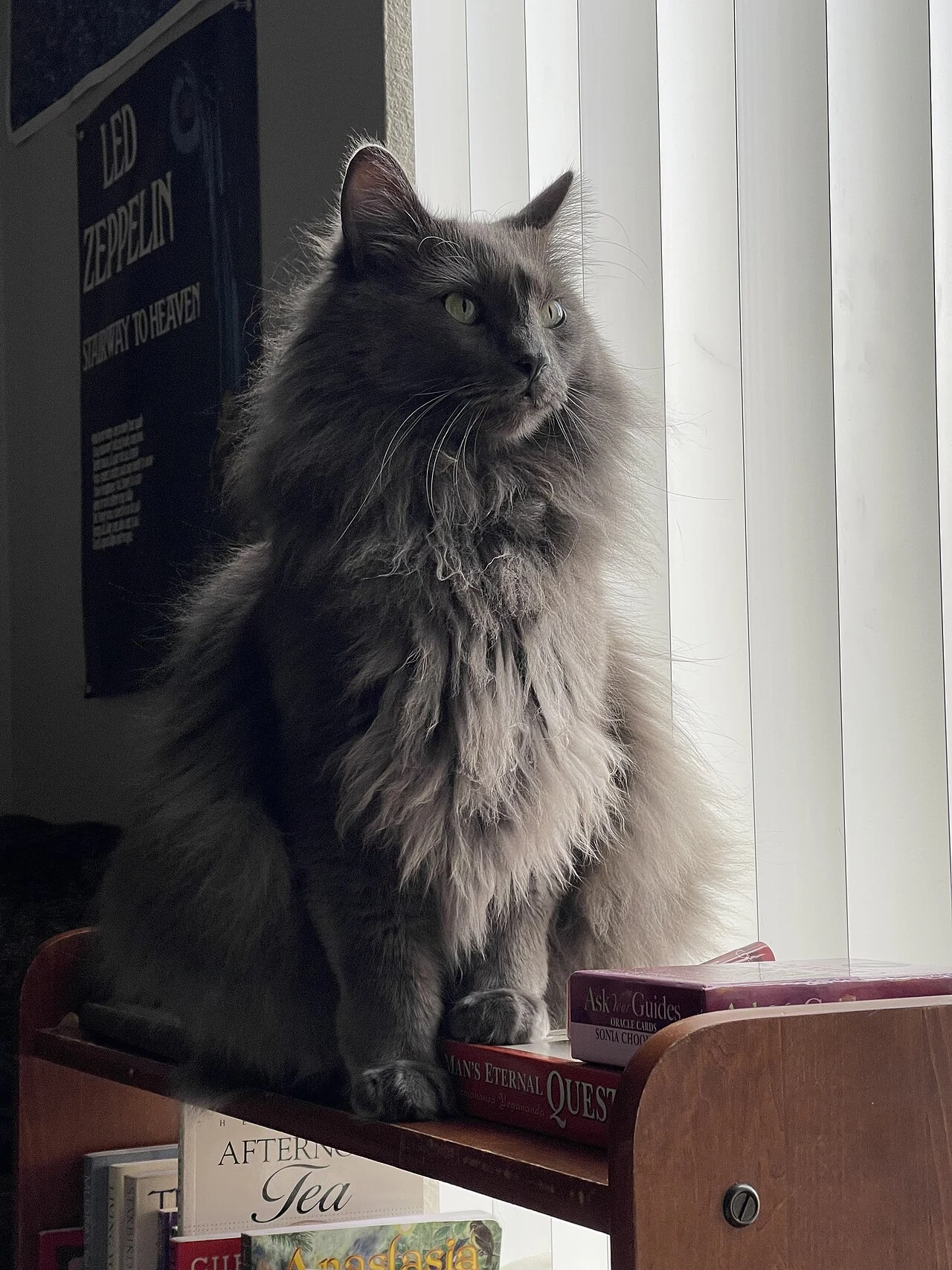
Firmly secured shelves or a sturdy scratching tree provide raised places to watch the room. Sheltered sleeping places at other heights should also be available. In a home with several cats, you should spread out feeding places and litter trays so one cat does not have to pass the other to reach them. A predictable routine, shared games and reliable care can help a more cautious cat feel at ease.
For practical play, food searches and quiet retreats, read Indoor Cat Enrichment: Play, Food Puzzles and Safe Retreats ↗
Caring for the undercoat without pulling
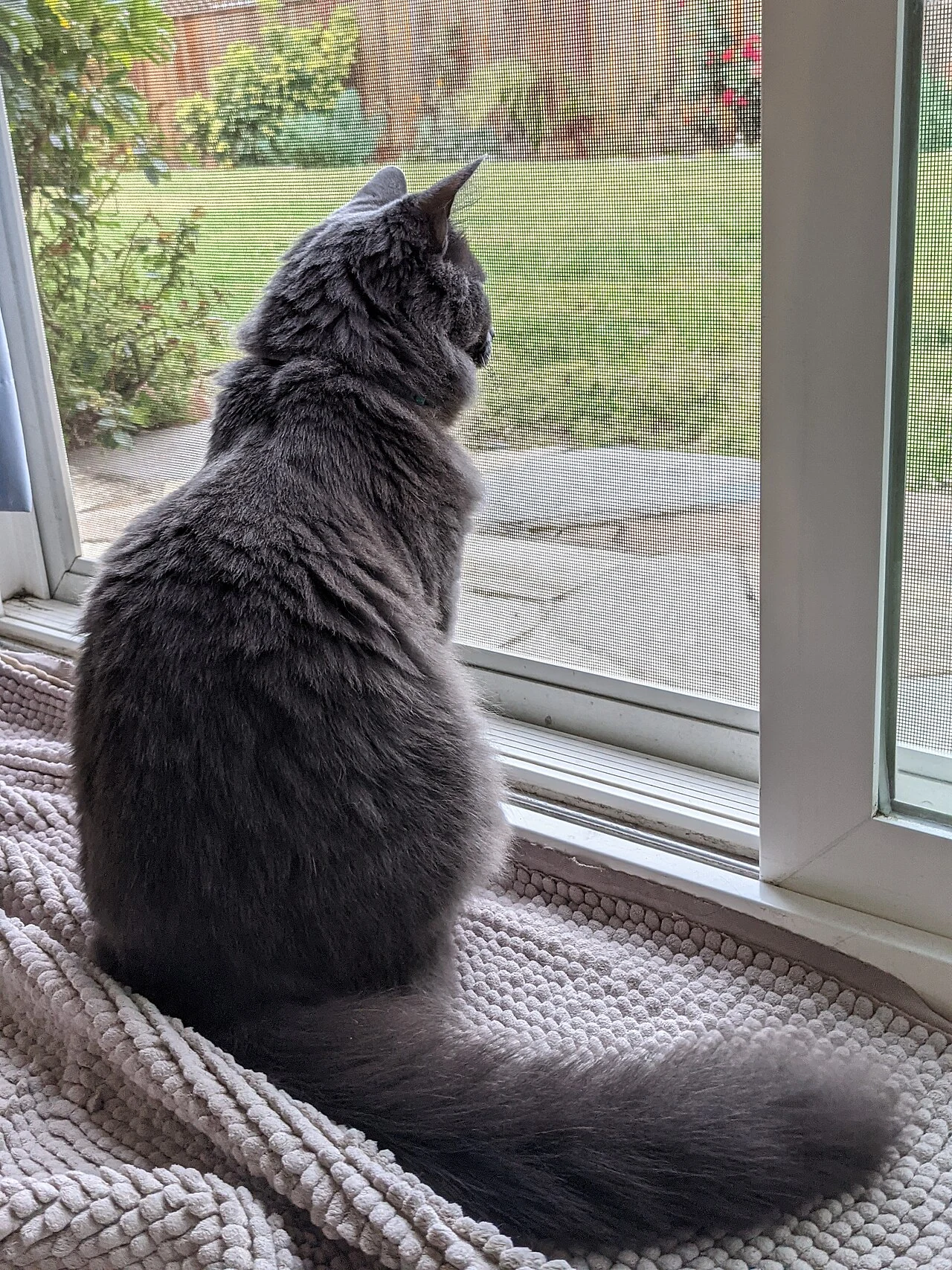
The medium-long coat looks soft and light but contains a dense undercoat. These fine hairs can become caught among the longer hairs. You should comb the coat regularly with a suitable tool and check for small tangles between sessions. A thorough weekly groom can be a starting point. More frequent grooming is needed during shedding, with particularly dense coats or if tangles begin to form.
A brief daily check is often more comfortable than a long session after several days. It lets you see whether the comb passes easily through the coat and whether your cat is still comfortable being touched in different places. A few gentle strokes in an area she enjoys are a good way to introduce grooming. If she turns away or becomes tense, you should give her a break. The undercoat should not be pulled out with force.
Firm mats close to the skin should be dealt with professionally. Trying to cut them out with scissors can easily injure the skin underneath. Your veterinary practice can advise on a suitable approach and grooming tools. A suddenly dull coat, repeated licking or markedly reduced grooming should also prompt an examination. Extra brushing alone will not resolve the cause of these changes.
A home for each stage of life
A Nebelung kitten should have time to become familiar with a new home and new people. Expecting immediate closeness can make it easy to overlook those tentative first steps. A quiet voice, familiar scents and brief invitations to play help her settle. Children should understand that going to a hiding place means the kitten should be left in peace. She can then learn to move confidently around her family.
Her appearance develops gradually too. The full adult coat can take around two years to emerge. Eye colour also changes in young cats, and faint stripes can still be visible in the coat. The breed standards allow for these developments. Gentle early introductions to a comb, a carrier and brief handling for health checks are useful for everyday care.
An older Nebelung may need more grooming help if she can no longer reach parts of her body comfortably. If she jumps less or suddenly dislikes being touched, you should arrange a veterinary examination. Once the cause has been assessed, stable nonslip steps can make a window seat easier to reach. A litter tray with a lower entrance and readily accessible food and water stations can help when moving becomes harder. Familiar resting places and time with her people still matter in old age.
Noticing changes early
Preventive care for a Nebelung should include attention to everyday changes. The dense coat can make changes in body shape less obvious. Regular weighing helps you notice gains or losses. Your veterinary practice should assess an appropriate weight alongside body condition. Food portions should suit the cat’s needs, and food used for search games should count towards the daily allowance.
Reduced activity can be associated with pain, other illness or a home environment that is difficult to use. If your cat suddenly stops playing much, avoids a raised resting place or eats less, you should have the change investigated. Changes in grooming deserve the same attention. A normally reserved cat should not simply be described as shy if she suddenly starts hiding much more often.
Regular veterinary checks, vaccinations and parasite prevention should be planned for her circumstances. Before buying, you should ask about health records, early care and illness in the family. Fellfolio lets you keep weight records, appointments and observations together. Small changes are easier to explain when you can see when they began and compare them with your cat’s previous behaviour.
Is a Nebelung right for you?
Could work well if …
- You would enjoy a cat that forms close ties with familiar people and may be reserved in new situations.
- Your home has quiet retreats and enough space for climbing and games.
- You can make regular combing and brief coat checks part of the routine.
Before you bring one home
- A very busy home should have sheltered areas that children and visitors respect.
- A Nebelung should not be pulled from a hiding place to hurry introductions.
- Another cat should be introduced gradually, with separate feeding places, litter trays and retreats.
Meet other cat breeds.
Selected by size, activity, care and play needs.
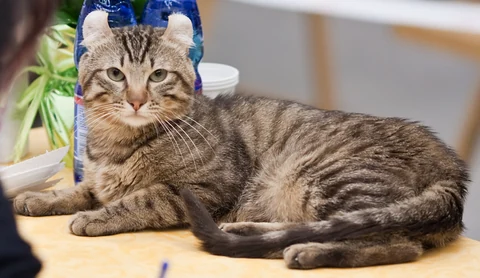
Shorthair and semilonghair · USA
American Curl
The American Curl is recognisable by ears that curve backwards. In everyday life, her curiosity and enjoyment of company often make the stronger impression. She comes with a short or longer silky coat and needs gentle handling around her ears.
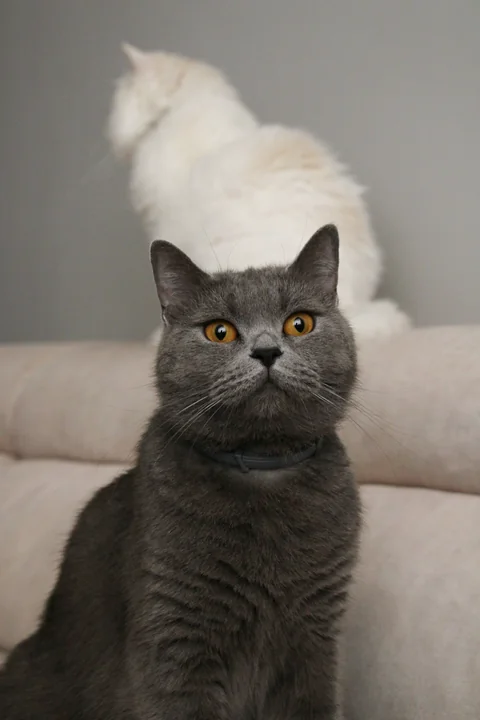
Shorthair cat · Great Britain
British Shorthair
A round face, a dense coat and a generally quiet temperament. British Shorthairs enjoy company but often prefer sitting beside their owners to curling up on a lap.
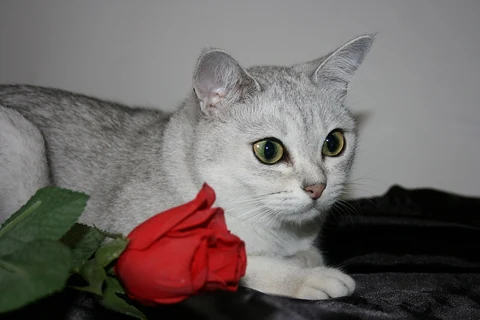
Shorthair and semilonghair · Great Britain
Burmilla
Pale hair roots and darker tips give the Burmilla her characteristic shimmer. Many Burmillas seek human company, readily join a game and enjoy a quiet break afterwards. Preparing for one should include companionship and activities, together with documented health screening in the breeding line.
Sources and photograph credit
- Grooming your cat
Used in this profile for: Day-to-day care, Size and build, Health, Could this breed fit your life?
- Indoor cats
Used in this profile for: Everyday life, Health, Could this breed fit your life?
- Tips for grooming longhaired cats
Used in this profile for: Day-to-day care
- Cats and play
Used in this profile for: Everyday life
- Loving Care for Older Cats
Used in this profile for: Size and build, Health
- Nebelung breed profile
Used in this profile for: Temperament, Everyday life, Day-to-day care, Health, Could this breed fit your life?
- Nebelung standard of points
Used in this profile for: Temperament, Size and build
- Nebelung breed profile
Used in this profile for: Temperament, Everyday life, Day-to-day care, Could this breed fit your life?
- Nebelung breed standard, 1 May 2004
Used in this profile for: Temperament, Day-to-day care, Size and build
- Introducing your new cat to other cats in your home
Used in this profile for: Everyday life, Size and build, Could this breed fit your life?
- How to keep your cat healthy and happy
Used in this profile for: Health
Photo credits
Portrait · Palaya Azadeh.jpg · Nebelung · CC BY 3.0 · Edited

Everyday life · Nebelung cat looking out door.jpg · Mds08011 · CC BY 4.0 · Edited

Portrait · Pinto Nebelung.jpg · Aislingblack · CC BY-SA 4.0 · Edited

Everyday life · Bartolome.jpg · Pematy · CC BY-SA 3.0 · Edited
