 fellfolio
Sparse roan coat · United States
Lykoi
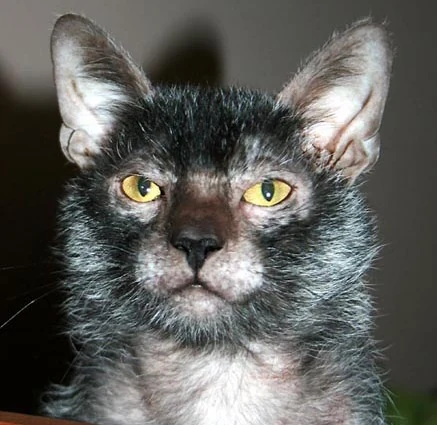
The Lykoi has a distinctive sparse coat of mixed light and dark hairs and a lightly haired facial mask. This young breed developed from domestic cats with a naturally occurring inherited trait. Many Lykoi are attentive, enthusiastic players. Their unusual coat requires skin protection and careful attention to new skin changes.
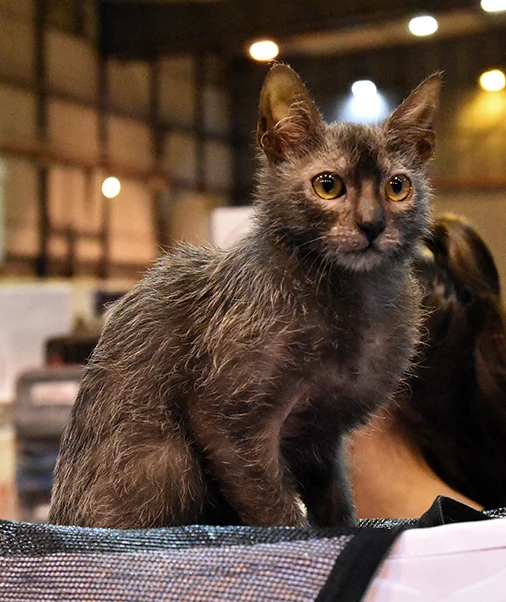
At a glance
- Size
- Medium
- Weight
- 2.7 to 5.4 kg
- Activity
- High
- Care needs
- High
- Owner experience
- Experience recommended
Watching closely, stalking and joining the game
A Lykoi may initially sit beside an unfamiliar toy and study it closely. Once it moves, she follows it with her eyes, crouches and pounces. The cat association TICA describes the breed as playful, curious and closely bonded to people. In a new home, she should have time to become familiar with sounds, rooms and people at her own pace.
Quiet encounters are valuable even for a lively cat. You can sit nearby and wait to see whether she approaches. She might seek a warm lap or prefer to rest beside you. Both offer opportunities for relaxed time together. If she wants distance, you should respect that. Children in particular should learn that a hiding place and a bed should remain undisturbed.
When another cat lives in the household, previous experiences matter. Separate areas and gradual introductions are more helpful than an immediate meeting in the middle of the living room. Afterwards, both cats should still be able to reach food, water and litter trays without having to avoid the other. Whether they eventually sleep close together or prefer separate places becomes clear through daily life.
Hunting games and simple searches
An engaging game can begin with small movements. A toy attachment darts past the edge of a box and briefly disappears. The Lykoi can watch and choose her moment to leap. You should regularly let her hold the toy prey. Chasing an unreachable light spot alone offers no opportunity to catch anything.
Simple searches can appeal to her curiosity as well. A few pieces of her usual dry food can be placed visibly in a puzzle feeder. Once she understands the task, it can become a little harder. These pieces should come from the daily food allowance. For a cat eating only wet food, a suitable, easily cleaned food toy can be used. Leftovers should be removed after the meal.
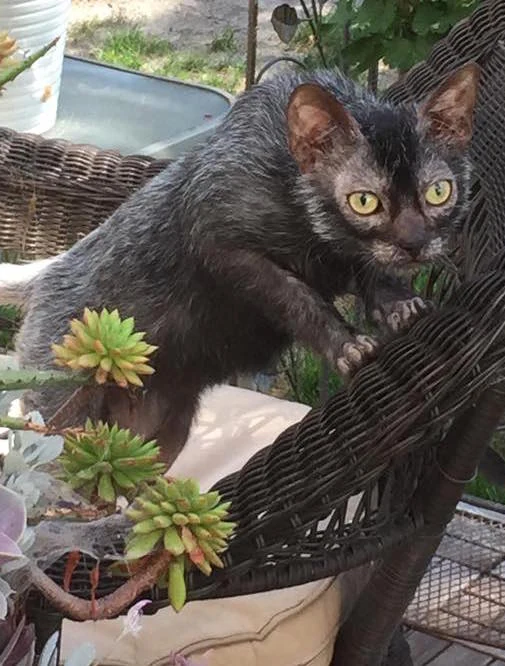
The home should offer scratching surfaces, secure elevated places and hiding spots. Her sparse hair makes soft beds without draughts and access to shade particularly useful. A sunny window perch should not be her only attractive resting place. Heated surfaces must not become hot. She should be able to choose between comfortable places and retreat undisturbed after playing.
For practical play, food searches and quiet retreats, read Indoor Cat Enrichment: Play, Food Puzzles and Safe Retreats ↗
Roan hair and exposed areas
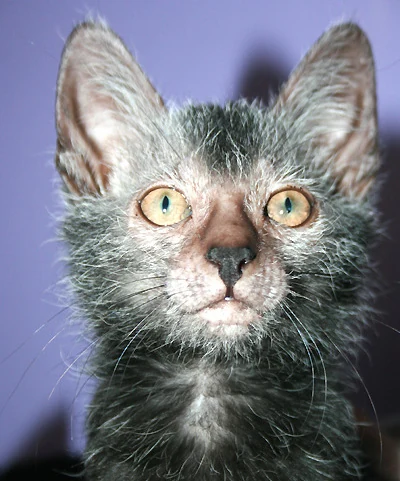
The coat pattern is called roan. This means a mixture of pigmented and white hairs, which can look darker or more silvery depending on their distribution. Hair is particularly sparse around the eyes and muzzle, and coverage elsewhere can vary too. The international cat federation FIFe describes an almost absent undercoat and changes with the season and the individual coat cycle.
During care, you should become familiar with your own cat’s normal skin and hair coverage. A temporarily thinner coat can be part of a coat change. New bumps, blackheads, crusts or inflamed areas should nevertheless be investigated. The skin should not be rubbed vigorously. The veterinary team should explain how best to remove local dirt or excess skin oil for the individual cat.
Sparse hair offers little protection against direct sunlight and cold. A Lykoi should therefore have sheltered warm beds, shade and a cooler retreat in hot weather. Her skin should also be checked regularly for minor injuries. An unusual coat does not remove the need for parasite protection. Suitable products depend on her lifestyle and should be discussed with the veterinary team.
A young breed from domestic cats
The breeding programme began in the United States in 2011 with cats from two unrelated litters. Johnny and Brittney Gobble and Patti Thomas developed the breed from them. Similar coat changes were subsequently seen elsewhere. They arise from genetic changes in domestic cats. The Lykoi is not a cross with a wolf or a wild cat. Her name refers to her wolf-like appearance.
FIFe has provisionally recognised the Lykoi since 2023. Its standard describes a lean, muscular body, large ears and open, attentive eyes. TICA gives females as approximately 2.7 to 4.1 kilograms and males as approximately 3.2 to 5.4 kilograms, rounded from its figures in pounds. These provide a general indication of size. The appropriate food allowance should be guided by the individual and her body condition.
A kitten should be able to explore and learn about care without being held tightly. For an adult, you should ask about previous skin findings and changes in hair coverage. An older Lykoi still needs interesting activities that she can reach comfortably. If she suddenly avoids a familiar jump, the cause should be investigated and the favourite place made easier to access in the meantime.
What is known about skin changes
Skin findings deserve particular attention in this young breed. A veterinary study published in 2026 examined ten Lykoi with skin changes and one comparison cat. Findings included blackheads and small lumps. Tissue samples revealed cysts, cavities containing accumulated material, associated with hair follicles, the structures surrounding hair roots, and skin glands. Severity varied. This small, deliberately selected group cannot yet establish how common these changes are across the breed.
Before taking a Lykoi home, you should ask about skin examinations for her and findings in her relatives. New lumps or inflamed areas should be assessed by a veterinarian. They should neither be dismissed as a normal breed feature nor squeezed at home. Photographs and brief notes about their development make it easier to show changes and keep track of agreed follow-up appointments.
Choosing a Lykoi should also involve consideration of the effects of sparse hair. The British Animal Welfare Committee highlights additional skin and temperature concerns in cats with substantially reduced coats. Whatever her coat, preventive care, weight and teeth still need attention. Bad breath or painful chewing should be assessed by the veterinary team. Fellfolio can keep skin photographs, examination results and appointments together in her pet profile.
Does the particular care suit your life?
Could work well if …
- You can devote time to varied games and relaxed moments together.
- You can protect a sparsely coated cat against cold, intense sunlight and overheated sleeping surfaces.
- You are prepared to document skin changes carefully and arrange veterinary assessment.
Before you bring one home
- Sparse hair creates additional protection needs. These burdens should be considered when choosing a cat.
- New blackheads or skin lumps should be investigated. Current research does not establish a reliable frequency across the breed.
- Hunting play should be directed towards suitable toys. Small pets need a secure, physically separate living area.
Meet other cat breeds.
Selected by size, activity, care and play needs.
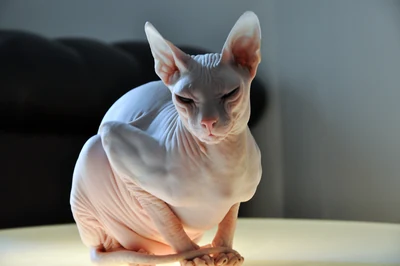
Hairless cat breed · Russia
Donskoy
The Donskoy, also called the Don Sphynx, is a Russian cat breed with little or no coat. She can be lively and very sociable. Her exposed skin makes warmth, protection from sunshine and regular care important parts of everyday life. Anyone considering the breed should also understand the health burdens associated with hairlessness.
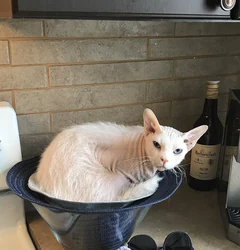
Variable coat coverage · Russia
Peterbald
The Peterbald is a slender, long legged cat from Russia. Depending on coat type, she may be almost hairless, covered in a velvety fuzz or have a coarser short coat. Many Peterbalds seek plenty of contact and enjoy playing. Sparse hair brings additional responsibilities for skin care, warmth and protection from sunlight.
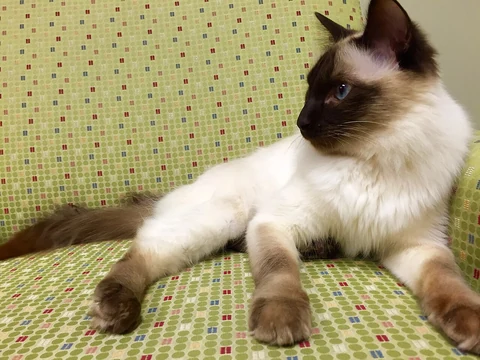
Semilonghaired cat · USA
Balinese
A Balinese often joins the conversation, follows people around the home and is quick to take an interest in a game. Beneath the silky coat is an energetic cat who needs plenty of shared time and satisfying places to climb.
Sources and photograph credit
- Opinion on the welfare implications of feline breeding practices
Used in this profile for: Health
- Grooming your cat
Used in this profile for: Day-to-day care
- Hairless cats and welfare
Used in this profile for: Everyday life, Day-to-day care, Could this breed fit your life?
- Indoor cats
Used in this profile for: Everyday life
- Cats and play
Used in this profile for: Everyday life
- Feline Dental Disease
Used in this profile for: Health
- Loving Care for Older Cats
Used in this profile for: Size and build
- Clinical, histopathological and genetic features of a cutaneous adnexal polycystic syndrome in Lykoi cats: a prospective study of 10 cases
Used in this profile for: Day-to-day care, Health, Could this breed fit your life?
- Lykoi breed profile
Used in this profile for: Size and build
- Lykoi preliminary breed standard, 1 January 2025
Used in this profile for: Day-to-day care, Size and build
- Lykoi breed profile
Used in this profile for: Size / Weight, Temperament, Everyday life, Size and build, Could this breed fit your life?
- Introducing your new cat to other cats in your home
Used in this profile for: Temperament, Could this breed fit your life?
- How to keep your cat healthy and happy
Used in this profile for: Health
Photo credits
Portrait · Dea Chiara De La Vallée Des Dieux 5.jpg · Christine Auverdin Boulanger · CC BY-SA 4.0 · Edited

Kitten · 8-month-old male Lykoi.jpg · steptacular · CC BY-SA 4.0 · Edited

Coat and features · Dea Chiara De La Vallée Des Dieux 2.jpg · Christine Auverdin Boulanger · CC BY-SA 4.0 · Edited

Coat and features · Dieu Eros 1.jpg · Christine Auverdin Boulanger · CC BY-SA 4.0 · Edited
