 fellfolio
Shorthair cats
Khao Manee
The Khao Manee comes from Thailand and is known for a white coat and bright eyes. Breed associations describe a curious, playful cat who enjoys human company. She needs shared activities and an interesting home. Assessment of her hearing also belongs in her health care.
At a glance
- Size
- Medium
- Weight
- 2.7 to 5.0 kg
- Activity
- High
- Care needs
- Low
- Owner experience
- First cat with preparation
A curious cat with a history in Thailand
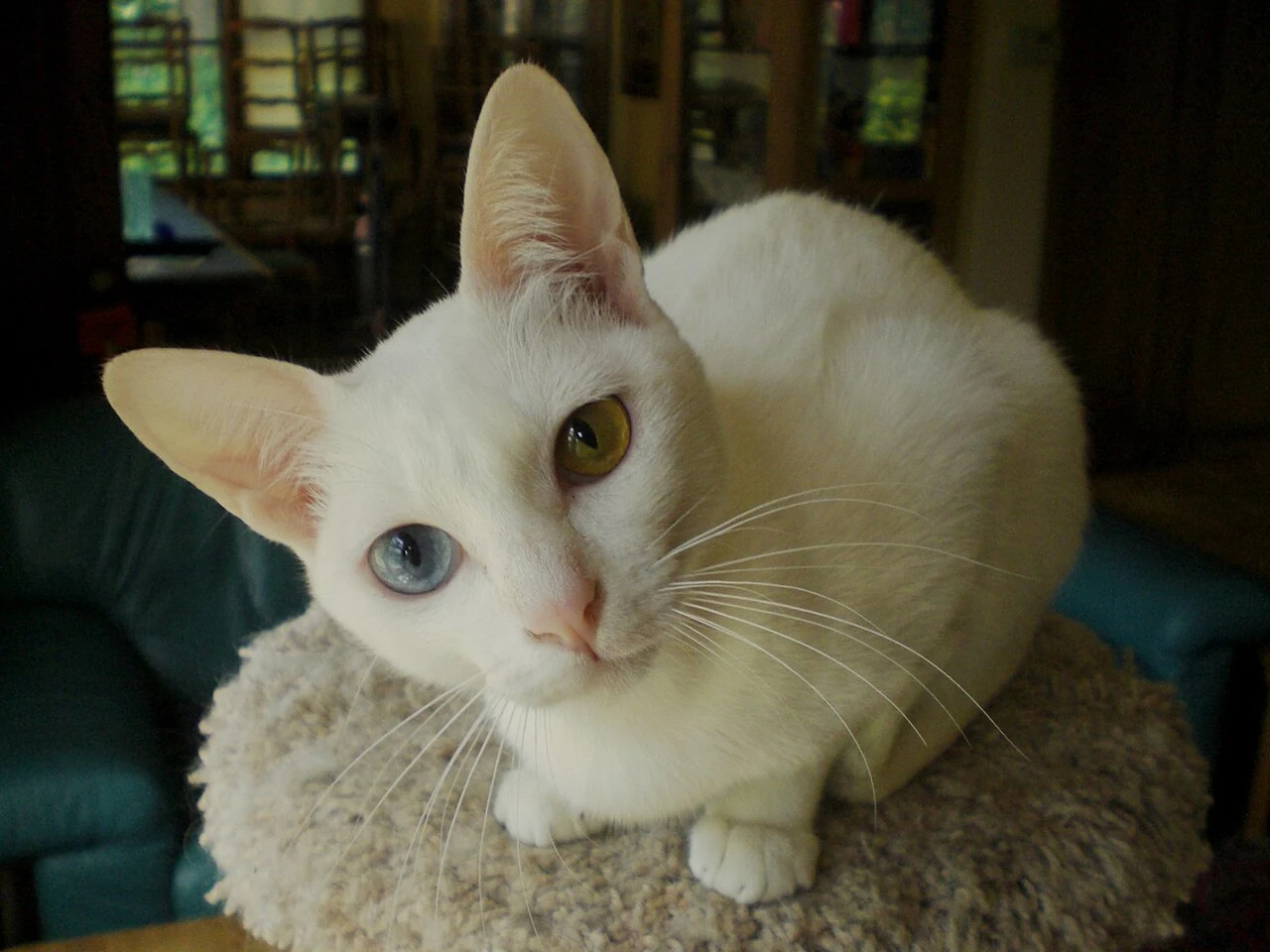
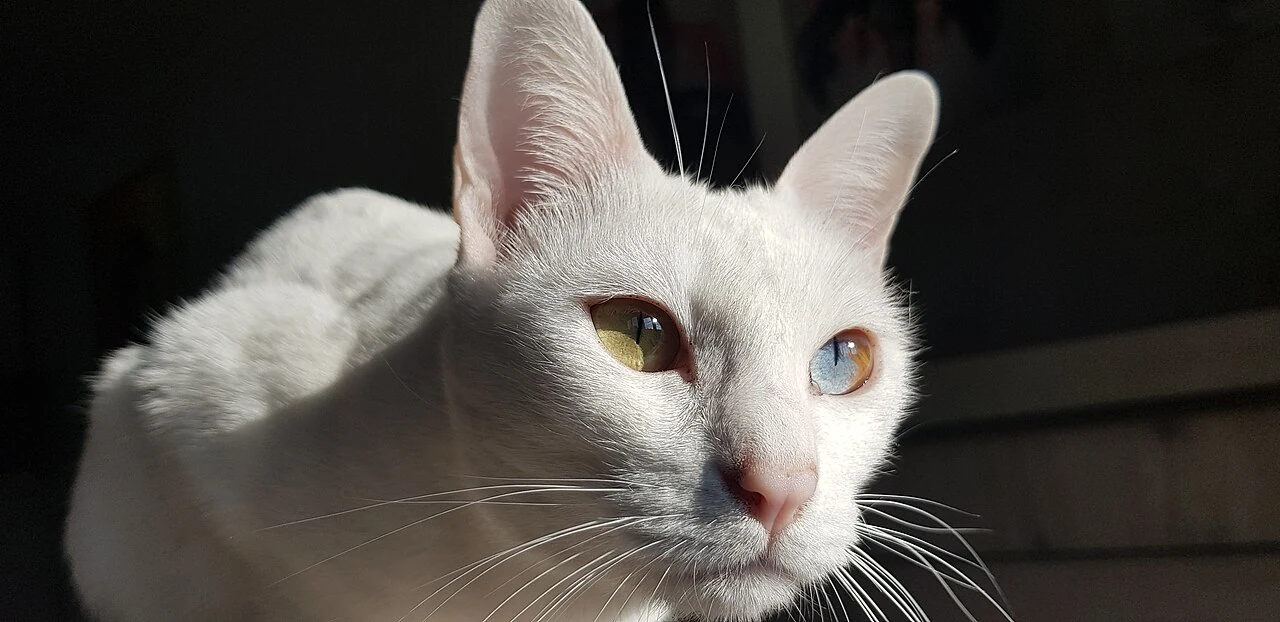
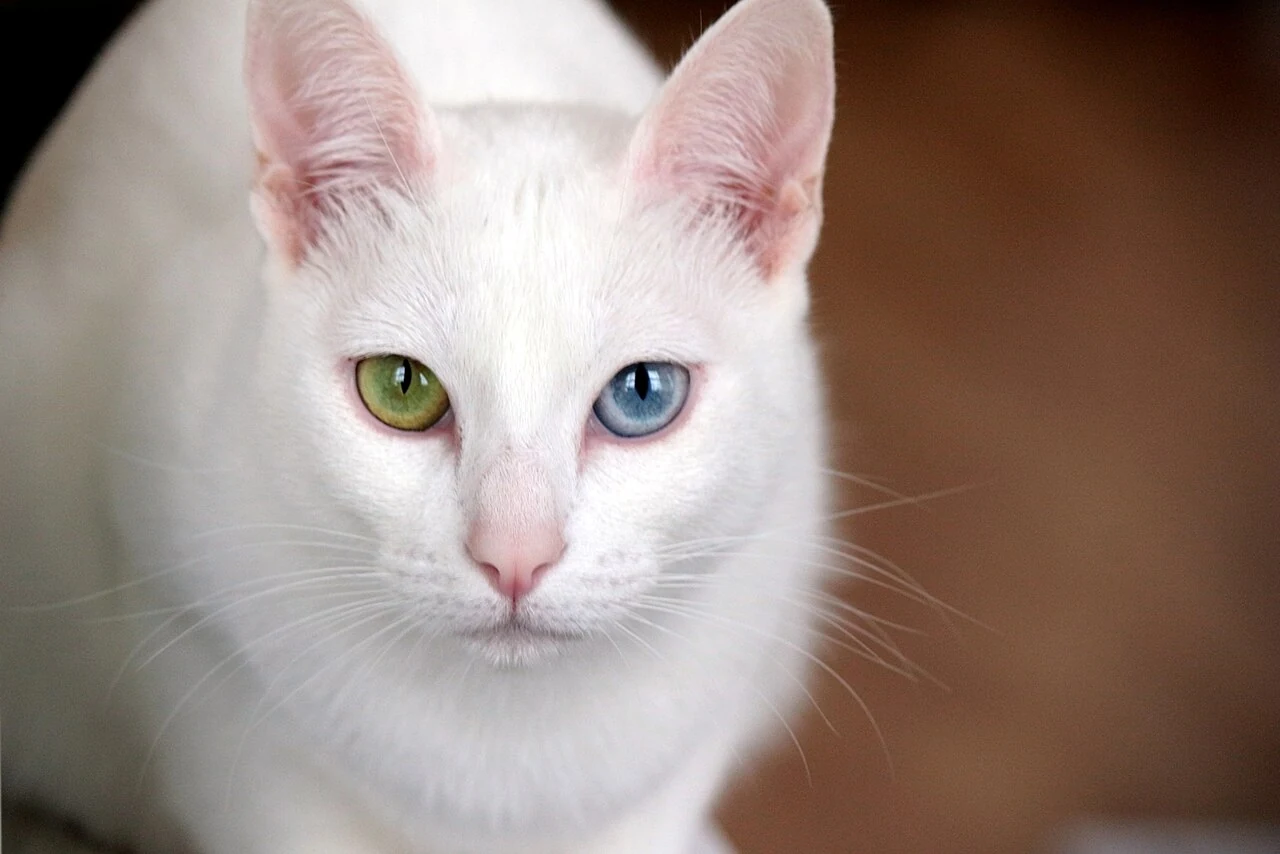
The Khao Manee has a supple, medium-sized body, a short white coat and a gently wedge-shaped head. Her eyes may be blue, green or yellow. Two different eye colours are also possible, but are not essential to the breed. Documented ancestry establishes whether a white cat is a Khao Manee. Appearance alone cannot establish her pedigree.
The breed comes from Thailand’s white native cats. White cats appear in old Thai cat poems, and traditional stories associate them with good fortune and royalty. These accounts form part of the breed’s cultural history. Cats entered a breeding programme in the United States from 1999, bringing the Khao Manee to wider attention outside Thailand.
Breed associations describe an inquisitive, sociable cat who enjoys playing. A Khao Manee may come straight over when a box is unpacked or follow her person through the home. Some carry toys around and offer a running conversation of different sounds. You should learn how much attention your own cat enjoys through everyday contact. If she turns away or settles in a retreat, you should let her rest there undisturbed.
Climbing, playing and living together
A Khao Manee should have daily opportunities to explore, climb and play with her people. A stable scratching tower and securely fitted resting shelves can give her different routes through the home. A sheltered window perch may be interesting if she can watch birds or movement in the garden. Windows and balconies should be secured against escape and falls.
Play gives her an outlet for hunting behaviour. A wand toy can be especially engaging when the attachment disappears behind a chair and then darts back across the floor. Your cat should be able to catch and hold it from time to time. Stalking, chasing and catching then become parts of the same game. Strings and wand toys should be stored out of reach afterwards. For a small food search, a few pieces of her usual dry food can be hidden in easy places.
A sociable cat needs people who spend time with her regularly. Another cat may become a good companion when their ages, experiences and behaviour suit each other. Introductions should be gradual, beginning with separate areas and an exchange of familiar scents. Separate feeding places, litter trays and beds help both cats keep their distance when they need it. A second cat should therefore not be brought home simply to solve long periods without care or company.
For practical play, food searches and quiet retreats, read Indoor Cat Enrichment: Play, Food Puzzles and Safe Retreats ↗
A white coat and sunny places
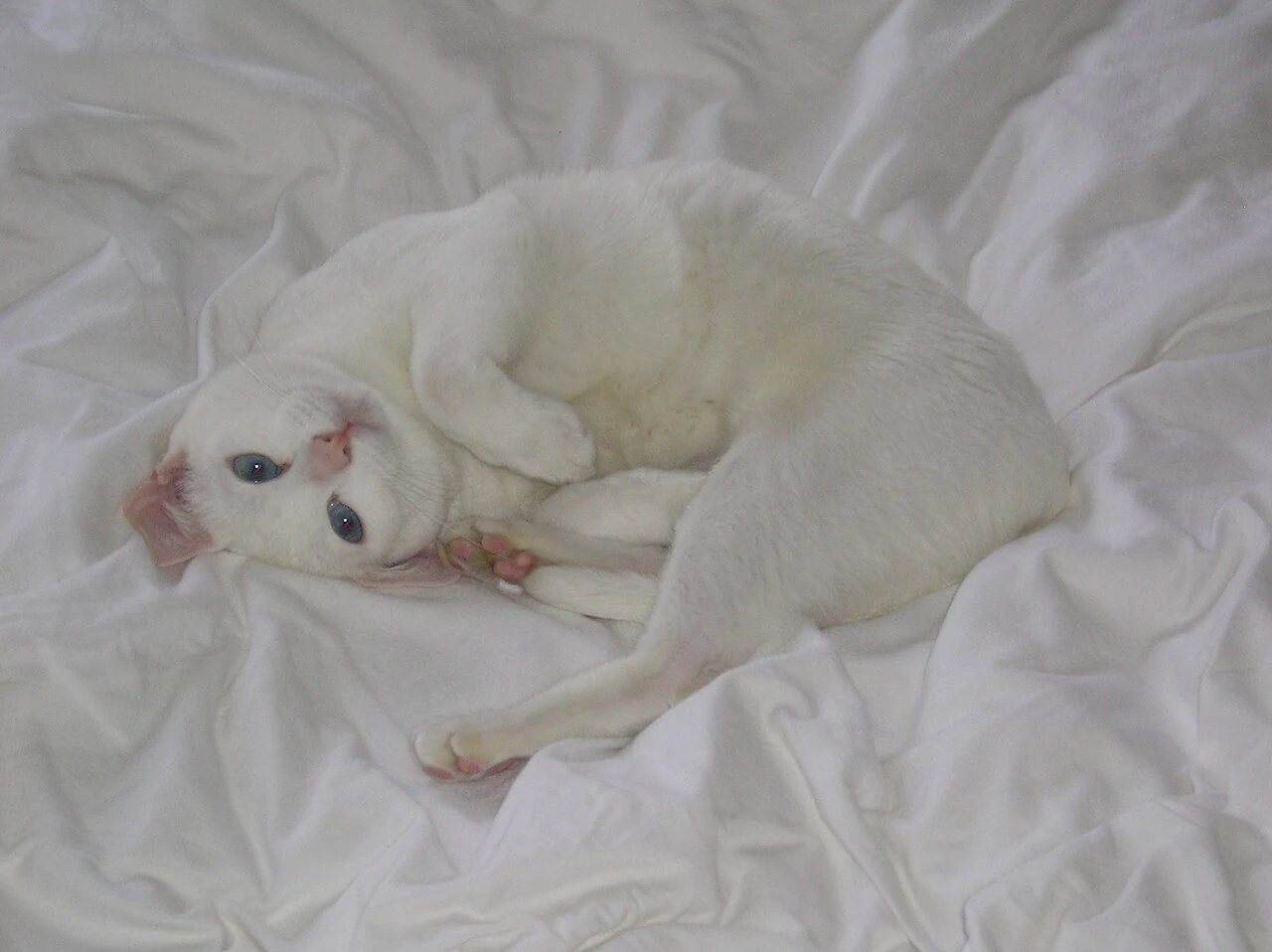
A soft brush or grooming mitt usually suits the short coat. A brief session to remove loose hairs is often more comfortable than prolonged restraint. You should notice whether your cat still welcomes touch and whether her skin or coat changes. A white coat does not normally require regular baths.
The pale, sparsely haired ear tips deserve attention when she spends time in strong sunlight. A secure outdoor area should include shaded places to rest. Redness, crusts or small wounds on the ears should be assessed by a vet. Her mouth, weight and claws also belong in routine health care. Your practice can explain which checks and care measures suit her individual needs.
From young explorer to older cat
The international cat association TICA gives typical weights of approximately 2.7 to 3.6 kilograms for females and 3.6 to 5.0 kilograms for males in its standard. These figures describe breed type. A healthy weight for your own cat should be assessed from her build and body fat.
Young cats should become familiar with brushes, carriers and brief examinations early on. A carrier can stand open in the home with comfortable bedding inside. Calm, gentle handling and a small reward can help build up grooming and examination practice gradually. With an older Khao Manee, you should notice if she visits favourite places less often, plays less or struggles to groom. These changes can indicate pain or other illness and should be investigated.
Assessing hearing reliably
Congenital deafness occurs in white cats. Blue eyes can be associated with it, but eye colour cannot reliably show how well an individual cat hears. Deafness in one ear may go unnoticed at home because the other ear continues to hear. A Khao Manee should therefore have a veterinary hearing assessment on record, or an appropriate examination should be discussed.
A BAER test assesses the hearing system’s response to sound and can identify hearing loss in one or both ears. This testing is available at specialist centres. Clapping behind a cat does not replace it. If your cat is deaf, her home should support visual communication and safety. You should approach her from the front where possible and avoid unexpectedly touching her while she sleeps. Unrestricted outdoor access poses a risk because she may not hear approaching vehicles or dogs.
Even a young, lively cat needs regular health checks. Vaccination and parasite prevention should be planned with your practice around her lifestyle. New changes in eating, drinking, grooming or using the litter tray should not be attributed simply to breed temperament. Hearing assessments, vaccinations and your own observations can be kept together in the pet profile in Fellfolio. This makes useful information available when her vet or carer changes.
What a Khao Manee needs at home
Could work well if …
- A Khao Manee may suit a household with regular company and shared play. Reliable care should also be arranged for long working days.
- An indoor home should offer room for scratching, safe climbing routes and several resting places.
- For a cat who is already deaf, a secure environment and clear visual signals are particularly useful. The cost planner should include examinations and a reserve for veterinary care.
Before you bring one home
- Two different eye colours are not required for a Khao Manee. Eye colour and a white coat alone establish neither breed identity nor hearing ability.
- When another animal lives in the home, you should consider both animals’ experiences and individual behaviour. Separate resources and gradual introductions remain important.
- An unusual response to sounds, or an apparent lack of response, should be discussed with a vet. A hearing test is more informative than experiments with loud noises at home.
Meet other cat breeds.
Selected by size, activity, care and play needs.
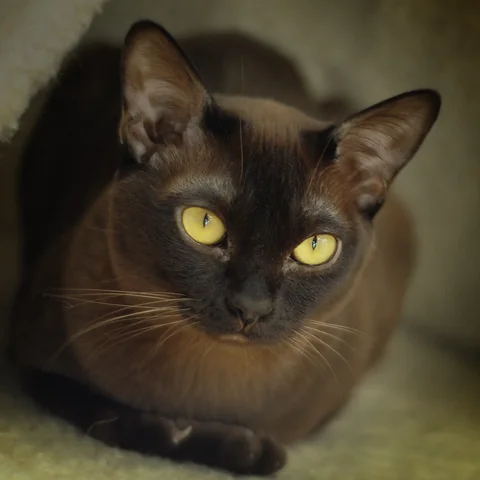
Shorthair cat · Southeast Asian roots
Burmese
Compact, silky-coated and strongly people-oriented, the Burmese often seeks close contact and joins in family life.
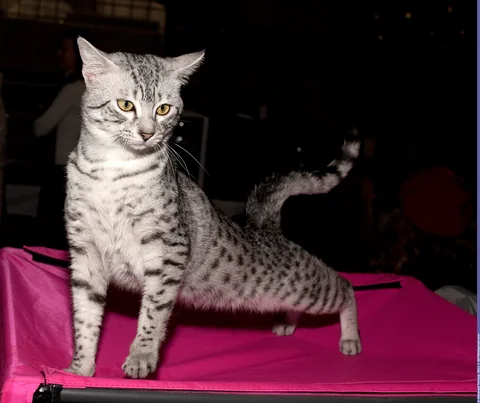
Spotted shorthair · Egypt
Egyptian Mau
The Egyptian Mau is a fast, spotted cat that enjoys playing with familiar people and often watches a new situation carefully before joining in.
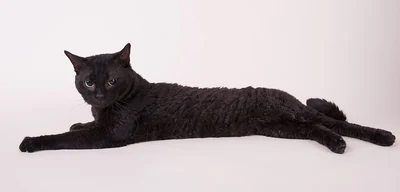
Wavy coated shorthair · Germany
German Rex
The German Rex is a medium sized cat with a short, velvety, wavy coat. Her breed history leads to Berlin, where a curly coated cat became the foundation of the breeding programme. Many German Rex cats are lively and playful and seek closeness with familiar people. The fine coat should be groomed gently.
Sources and photograph credit
- Grooming your cat
Used in this profile for: Day-to-day care, Size and build
- Indoor cats
Used in this profile for: Everyday life, Health, Could this breed fit your life?
- Cats and play
Used in this profile for: Everyday life
- Loving Care for Older Cats
Used in this profile for: Size and build, Health
- Khao Manee breed profile
Used in this profile for: Temperament, Day-to-day care
- Khao Manee registration policy and standard of points
Used in this profile for: Day-to-day care
- Khaomanee breed profile
Used in this profile for: Temperament, Everyday life, Could this breed fit your life?
- Khaomanee breed standard, 1 May 2015
Used in this profile for: Size / Weight, Temperament, Size and build
- Introducing your new cat to other cats in your home
Used in this profile for: Temperament, Everyday life, Could this breed fit your life?
- How to keep your cat healthy and happy
Used in this profile for: Day-to-day care, Health
- White cats and congenital deafness
Used in this profile for: Health, Could this breed fit your life?
- BAER testing for white cats
Used in this profile for: Health
Photo credits
Portrait · Khao Manee "Leela".jpg · Janet Poulsen · CC BY-SA 3.0 · Edited

Everyday life · Khao manee.JPG · Ritadesbois · CC BY-SA 3.0 · Edited

Coat and features · Khao Manee Lily.jpg · Lunile · CC BY-SA 4.0 · Edited

Coat and features · Khao Manee "Gally".jpg · Zackrow · CC BY-SA 4.0 · Edited
