 fellfolio
Shorthair with wild-cat ancestry
Chausie
The Chausie is a tall, active cat descended from crosses between domestic cats and the jungle cat. Her short coat may be solid or finely banded. This guide explains how she differs from the Savannah and what an existing Chausie may need.
At a glance
- Size
- Large
- Activity
- Not sufficiently documented
- Care needs
- Not sufficiently documented
Chausie: jungle-cat ancestry and a curious mind
The name Chausie comes from Felis chaus, the scientific name of the jungle cat. This wild species was crossed with domestic cats. Her wild ancestor therefore differs from that of the Savannah, which originated through crosses with servals. The International Cat Association, known as TICA, has registered the Chausie since 1995. She has been eligible for regular breed competitions there since 2013.
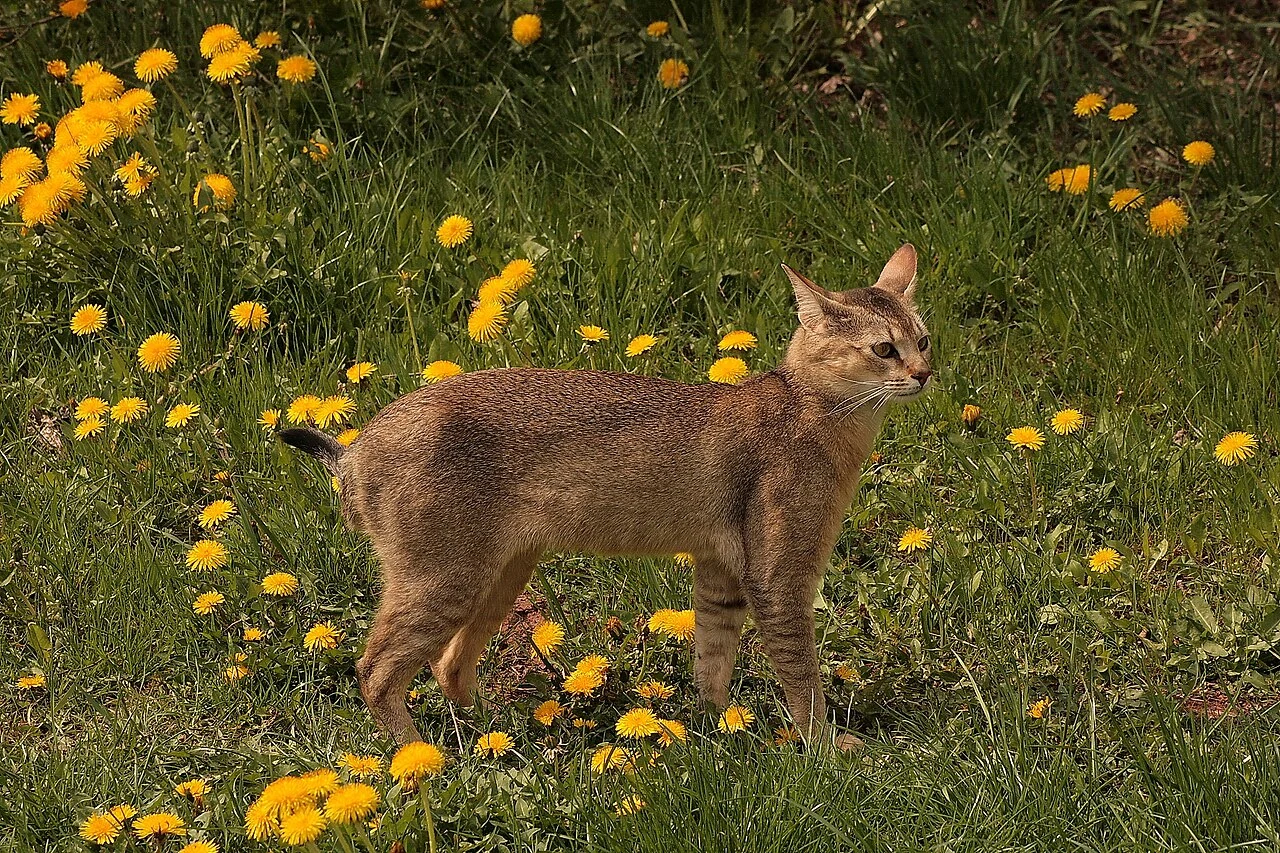
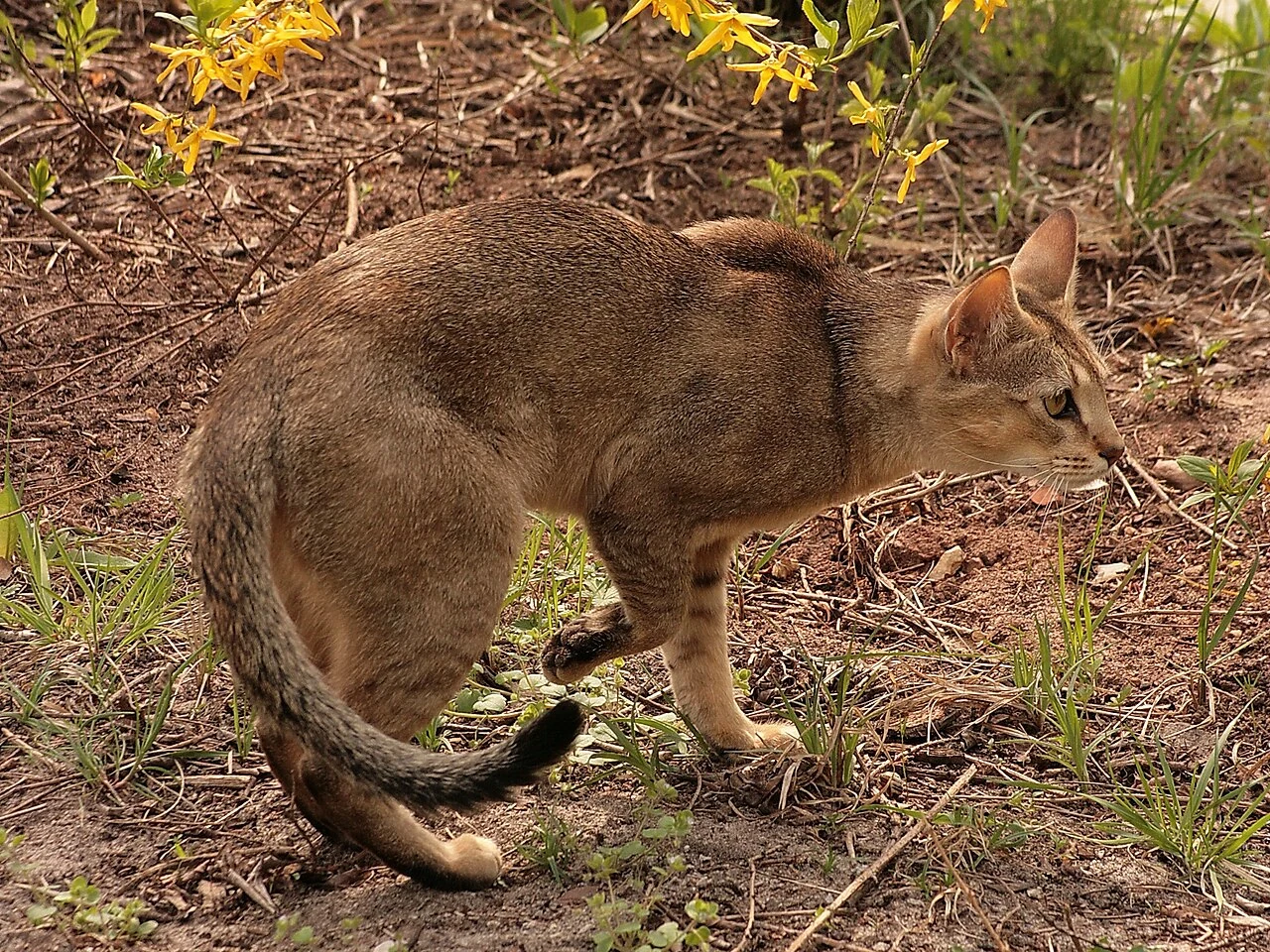
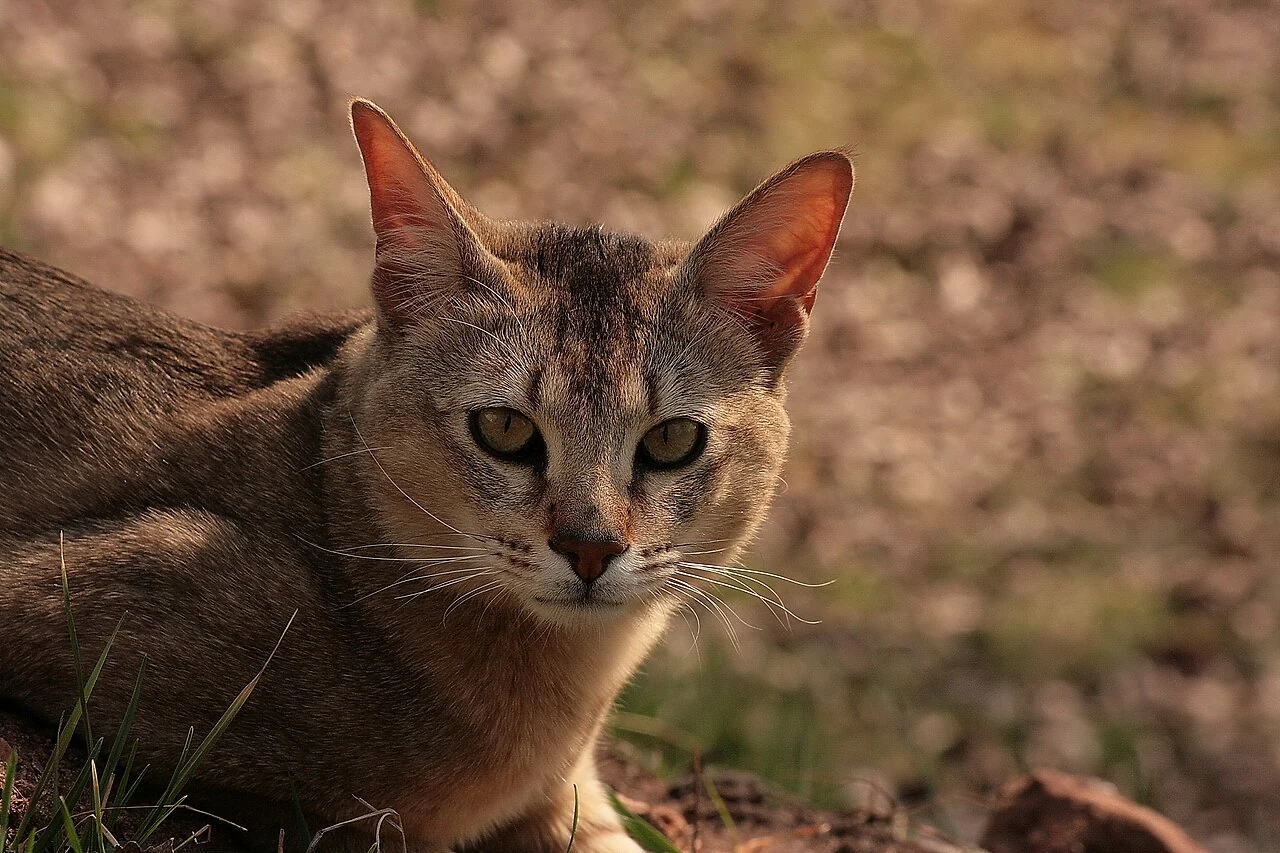
Her body is long, lean and muscular, with tall legs and large ears emphasising that outline. The standard includes black cats and two banded coat patterns. In a ticked tabby coat, individual hairs have alternating light and dark bands, creating a fine pattern across the body. In the black grizzled pattern, each hair is lighter near the skin, then has alternating dark and light bands ending in a dark tip. Those bands give the coat its flecked appearance.
A Chausie may take an energetic part in games and follow familiar people’s activities closely. High places and open cupboards can quickly become interesting. You should understand her usual activities and allow her to choose some distance. Contact should be offered without bringing her out of a retreat.
Room to explore and retreat
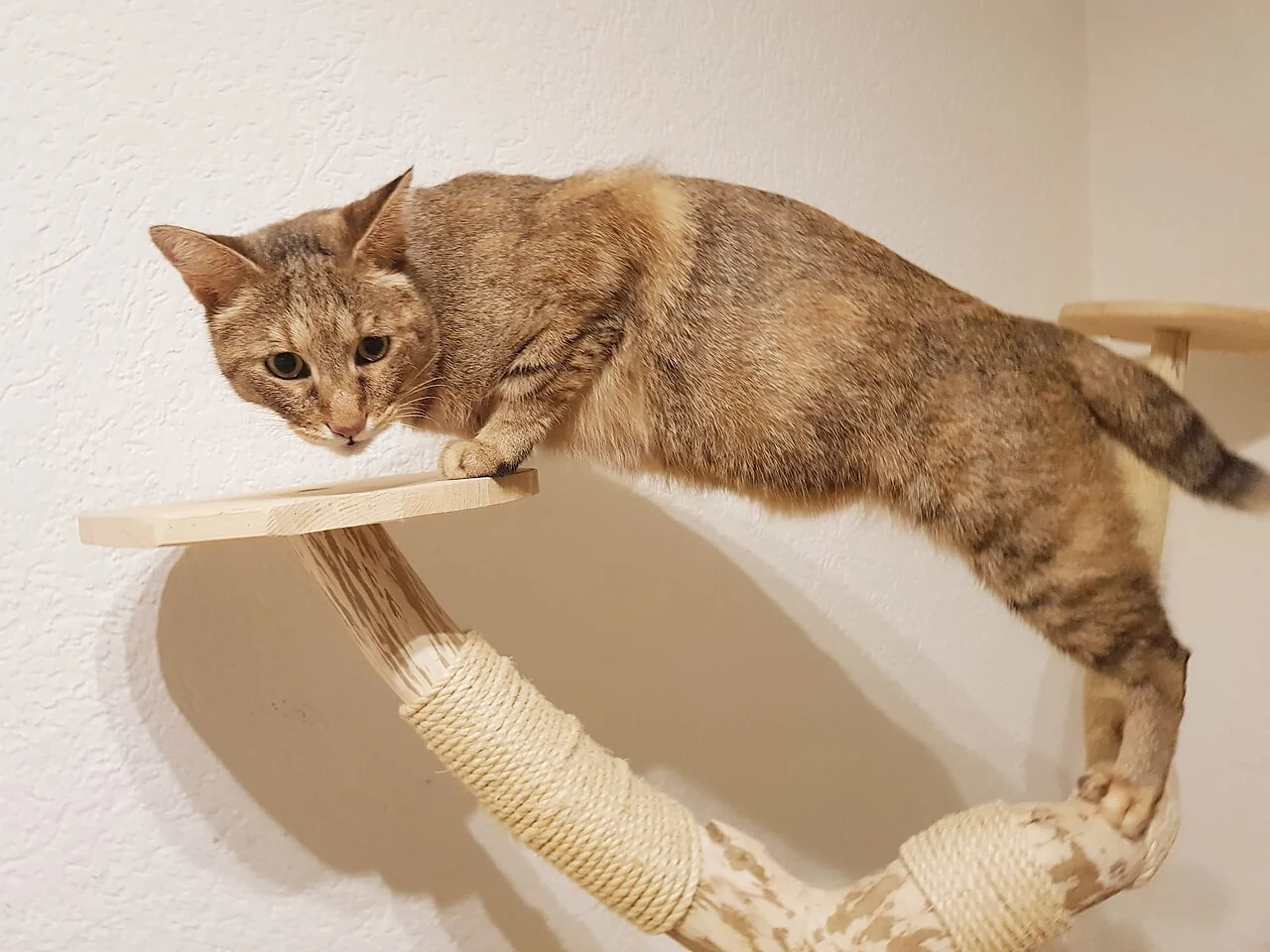
A safe route around the room can be more useful to an existing Chausie than a large collection of loose toys. Scratching surfaces, broad resting platforms and securely fixed climbing structures should let her move without constantly meeting another animal in her path. Sheltered resting places should also be available away from busy routes.
One small task could involve offering some of her usual dry food in a food ball. Individual pieces fall through its openings when the cat rolls it. This should be easy at first, so she can learn how to reach the food. The challenge can be changed once she understands it. Food used this way should come from her daily portion. If she only eats wet food, you can offer short chasing and catching games with a wand toy instead, without adding food.
For a cat with wild ancestry, her environment should be assessed by experienced professionals. The needs of early hybrid generations may exceed what ordinary homes can provide. Secure fastenings and an adequately sized, protected living space should be discussed with an experienced veterinary practice and behaviour professional. Another cat should be introduced gradually, with separate feeding places, litter trays and retreats.
For practical play, food searches and quiet retreats, read Indoor Cat Enrichment: Play, Food Puzzles and Safe Retreats ↗
Short coats, food and weight
The short coat usually needs little elaborate grooming. A gentle brush can remove loose hairs. You should look at the skin and notice whether her own grooming remains normal. A new bald patch, irritated skin or a marked change in grooming should be assessed by your practice.
Regular small meals, fresh water and appropriate nutrition matter. A Chausie’s portions should reflect body condition, age and health. Weight changes are easier to interpret when measurements taken under similar conditions are kept together.
If her food needs to change, the transition should be gradual. Recurring diarrhoea, vomiting or poor appetite should be investigated. Frequently switching foods yourself can make it harder to establish when symptoms occur.
From settling in to later life
A young cat should be able to settle into a manageable, secure area with essential resources easy to find. She can explore quietly before being introduced to every room and person. Brief games should use suitable toys so that hands do not become her usual play target.
For an adult Chausie, information from her previous home is useful. Which people does she accept, where does she sleep and how does she respond to other animals? Those experiences help plan everyday care. New biting, frequent hiding or avoidance of the litter tray should also prompt investigation for pain and illness.
As she gets older, familiar places should become easier to reach. An intermediate step may help her access a favourite viewpoint. Food, water and a litter tray should also be available on the same level. In Fellfolio, carers can keep important health records and their observations organised for the next veterinary appointment.
Preparing for useful examinations
Systematic research into the particular health concerns of hybrid cats remains limited. An individual examination and a Chausie’s history should therefore be central to her care. Reliable origin records, previous results, medicines and any information about diet or digestive problems should be available to the practice.
Weight, mouth and teeth, mobility and changes in eating or grooming should be discussed regularly. The practice can then recommend appropriate preventive care and any further investigations. Before an appointment, you should agree how this cat can be transported and examined as calmly and safely as possible.
A cat who increasingly avoids contact or resists touch should not simply be dismissed as difficult. These changes can relate to discomfort. Observations from ordinary daily life help without repeatedly touching or crowding her to test her reaction.
Supporting an existing Chausie
Everyday care
- Care for an existing Chausie should be planned with an experienced veterinary practice, including living space, safe handling and a dependable replacement carer.
- Feeding, routine checks and reserves in the cost planner should be adapted to the individual. Appearance reveals little about how demanding her care will be.
Health and breeding concerns
- Crossing wild cats with domestic cats raises substantial welfare concerns. This portrait explains the breed and her care without recommending acquisition or further hybrid breeding.
- Coat pattern and size cannot establish ancestry. Origin and generation labels should be supported by reliable documentation.
- Keeping, taking responsibility for or moving a cat across a border may involve specific rules depending on her origins and the region. The relevant authority should assess the particular situation.
Meet other cat breeds.
Selected by size, activity, care and play needs.
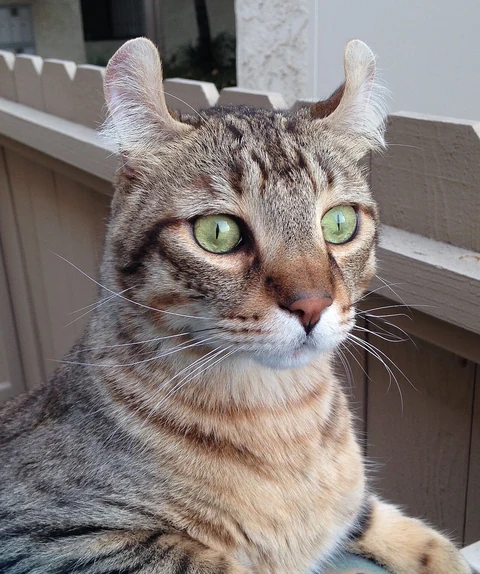
Shorthair and longhair
Highlander
The Highlander is a muscular domestic breed with a short tail and ear tips that curl backwards. Short-haired and long-haired cats occur in the same breed group. This portrait explains those features, coat care and the needs of an existing Highlander.
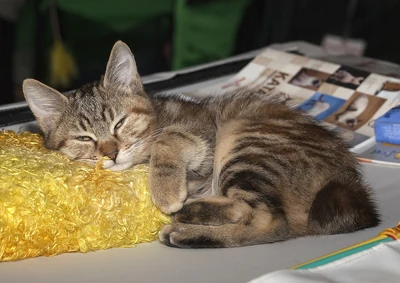
Shorthair and semi-longhair · Kuril region
Kurilian Bobtail
The Kurilian Bobtail is a strong cat with a short tail often resembling a pompom. The breed comes from the Kuril region and has shorthaired and semi-longhaired forms. Many cats are curious and playful and enjoy being close to their people. Safe climbing places, shared games and care suited to the coat length matter in everyday life.
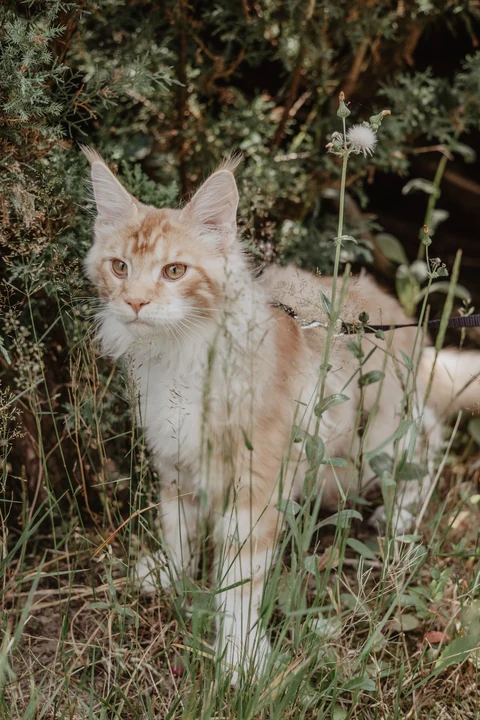
Semi-longhair cat · United States
Maine Coon
The Maine Coon pairs a long, powerful frame with a full coat and bushy tail. Many stay playful and like to keep their people in sight around the home.
Sources and photograph credit
- Opinion on the welfare implications of current and emergent feline breeding practices
Used in this profile for: Everyday life, Health, Could this breed fit your life?
- Feeding your cat
Used in this profile for: Everyday life, Day-to-day care
- Grooming your cat
Used in this profile for: Day-to-day care, Health
- Indoor cats
Used in this profile for: Everyday life
- Cats and play
Used in this profile for: Everyday life, From settling in to later life
- Chausie breed profile
Used in this profile for: Temperament
- Chausie breed standard, effective 1 May 2013
Used in this profile for: Temperament
- Loving Care for Older Cats
Used in this profile for: From settling in to later life
- 2025 Hybrid Cats Position Statement
Used in this profile for: Temperament, Everyday life, Health, Could this breed fit your life?
- Introducing your new cat to other cats in your home
Used in this profile for: Everyday life, From settling in to later life
- What to feed your pet cat
Used in this profile for: Day-to-day care
- How to keep your cat healthy and happy
Used in this profile for: From settling in to later life, Health, Could this breed fit your life?
- Savannah breed profile
Used in this profile for: Temperament
Photo credits
Side view · Chausie IMG 5415.jpg · Wilczakrew · CC BY-SA 3.0 · Edited

Coat and features · Chausie IMG 5308.jpg · Wilczakrew · CC BY-SA 3.0 · Edited

In action · Chausie IMG 5436.jpg · Wilczakrew · CC BY-SA 3.0 · Edited

Everyday life · Chausie Katze.jpg · SavannahGenetics · CC BY-SA 4.0 · Edited
